Source Sustainable Natural Bamboo Cabinet Organizer for Home, Office, School
Compare 30 Sustainable Natural Bamboo Cabinet Organizer options from verified suppliers. These eco-friendly storage solutions feature rectangular designs, custom logos, and various capacities suitable for home, office, and school environments; compare the available evidence and request quotations based on your requirements.
Key considerations
Products List






Comprehensive Sourcing Guide
Sustainable Natural Bamboo Cabinet Organizer Sourcing Guide
Sustainable natural bamboo cabinet organizers occupy a practical niche in the storage products category: they combine renewable raw material sourcing with functional organization for kitchen cabinets, desks, and general household storage. Buyers sourcing this category from China will encounter listings that span simple drawer-type organizers, multilayer desk units, and countryside-style storage boxes, so the first sourcing decision is to define which product form matches your market before comparing quotations.
This guide is written for importers, retail buyers, and promotional-gift distributors evaluating bamboo organizer listings on B2B platforms. It focuses on what can be verified from product pages, what must be confirmed directly with suppliers, and how to structure quality control and long-term procurement discipline. All attributes referenced here are drawn from observed listing data for 30 related products, and buyers should treat every attribute as an observation to confirm rather than a guaranteed specification.
Product Scope and Observed Listing Signals
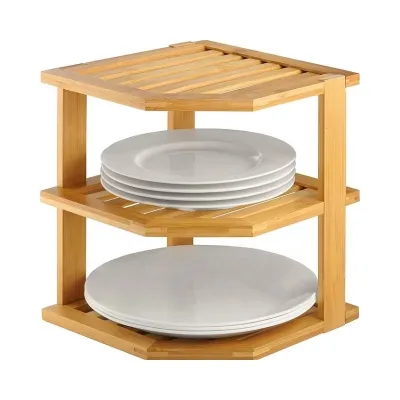
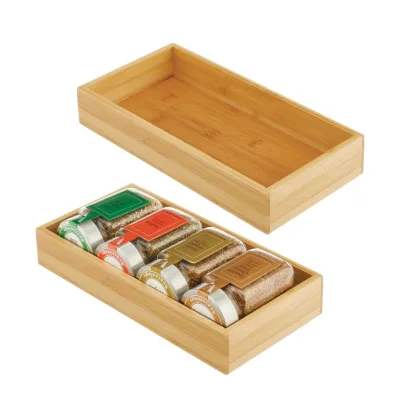
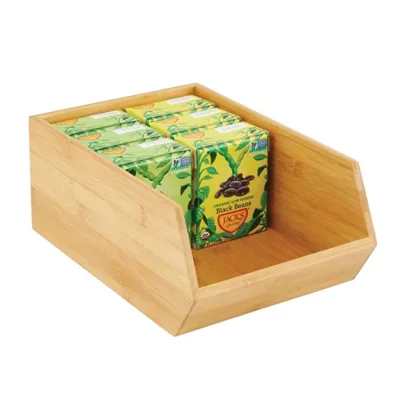
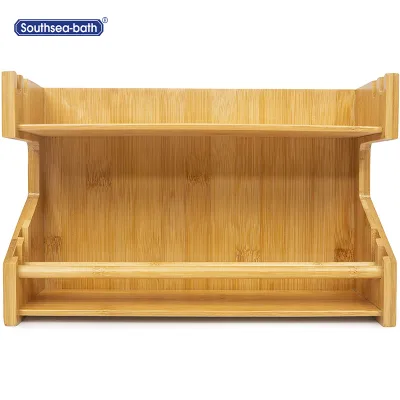
Observed listings in this category cover several recognizable product forms. Storage drawers and storage boxes and bins appear with usage labels spanning ziplock bag storage, food, sundries, and tableware, while desk organizer listings target school, promotional gift, and office applications. Shapes are consistently rectangular or rectangle, sets range from 1-3 pieces to 3-5 pieces, and styles divide between simple, modern, European, and countryside aesthetics. Materials are listed as wooden or bamboo, with several listings specifying Mao bamboo and carbonized bamboo construction.
Two listing signals deserve particular attention when shortlisting. First, customization is broadly available, including customized logos applied via silkscreen and customized sizes, which matters if you need private-label or dimensional variants. Second, listing quality itself is a signal: listings that state whether products are folded or unfolded, disassemblable, and free of password locks, and that specify packing formats such as paper box or carton box, generally indicate suppliers who understand export documentation. Listings with vague or contradictory attributes should trigger deeper due diligence before sampling.
Technical Specifications to Verify
Dimensional data is the most immediate verification point. Observed listings show specific standards such as 31 × 31 × 7.63 cm and 43 × 33 × 7.6 cm, and capacity figures ranging from roughly 1000-2000 ml for certain boxes, while other listings advertise fully customized sizes. Measure your intended cabinet or desk space against the stated dimensions, and confirm whether quoted dimensions refer to the assembled product or the flat-packed unit, since some listings indicate the organizer is unfolded or disassemblable.
Material and construction claims also require confirmation. Listings reference bamboo, wood-bamboo combinations, Mao bamboo as the bamboo type, carbonized bamboo as a technic, and polished surface treatment. Ask suppliers to specify which components are solid bamboo versus bamboo veneer or engineered board, how panels are joined, and whether carbonization affects strength or finish durability. For drawer-type units, request details on slide mechanisms and load-bearing expectations, since these functional elements are rarely visible in listing photos and directly affect customer satisfaction in retail channels.
Compliance and Safety Documentation
One observed listing references product standards of CCC, CE, and SGS, alongside a claim of 100% exporter standard quality and 100% QC-checked products. Treat these as claims to document, not assumptions. If your destination market requires CE marking for relevant product categories, ask the supplier for the actual certificates, verify their validity and scope against the exact product model, and confirm which test laboratory issued them. Never accept a standards logo on a listing page as proof of certification for your specific order.
Beyond market-entry certification, food-contact usage labels on some listings raise additional questions. If you intend to position an organizer for direct or indirect food contact, ask what migration and food-safety testing has been performed on the bamboo and any finishes or adhesives used. Also request documentation on the eco-friendly claim that appears in listing attributes: ask what specifically makes the product eco-friendly, whether bamboo is sourced from managed plantations, and whether any adhesive or coating certifications are available. Suppliers who cannot substantiate these claims may still be workable, but marketing language in your own materials must stay aligned with what is provable.
Cost Drivers and Commercial Terms
Observed listings show a wide price band from roughly 1 to 68 USD and MOQ requirements ranging from 10 to 1,000 pieces, which reflects the diversity of product forms and customization levels in this category. The main cost drivers to clarify in quotations are: material grade and bamboo type, set configuration (1-3 pieces versus 3-5 pieces), size customization, silkscreen logo application, and packing format. Carbonized bamboo, polished finishing, and multilayer construction typically carry different cost structures than basic simple-style units, so request itemized quotations rather than single-line prices.
Commercial terms to confirm with each supplier include the exact MOQ at your chosen specification, since MOQ may differ for customized versus standard items, and the lead time, where one listing cites 7 to 30 workdays after order confirmation. Clarify whether quoted prices are FOB or include other delivery legs, what the packing configuration is per carton, and how freight volume is affected by whether units ship assembled or disassembled. For repeat programs, negotiate whether the silkscreen tooling or size-customization work carries a one-time charge or is amortized into unit pricing at higher volumes.
Supplier Qualification and Quality Control
Qualify suppliers by matching their observed behaviors against your requirements rather than their marketing claims. Useful qualification steps include: confirming the origin listed (several observed listings indicate China generally, while one specifies Fujian, a region associated with bamboo processing), requesting product photos of actual production rather than renders, and asking which listed attributes are standard versus optional. Where a listing states that all products are checked by experienced QC, ask to see the QC process, inspection frequency, and how defects are handled before shipment.
Structure an inspection plan proportionate to order value. For a first order, define an acceptable quality limit for visible defects such as polishing inconsistencies, glue marks, warping, or dimensional deviation from the stated standard, and decide whether you will rely on the supplier's internal checks, a third-party inspection, or a personal visit. For disassemblable or multilayer products, add a functional check: assemble the unit, exercise drawers, and verify that hardware and panels survive repeated handling. Document these criteria in writing before production begins so that inspection results are enforceable rather than negotiable.
Long-Term Procurement Checks
Long-term sourcing success in this category depends on consistency across repeat orders. Lock down the agreed specification using the supplier's own model identifiers, such as the observed product models EB-B6439, EB-BX001-1, EB-61872, and EB-S057, and attach the confirmed standard dimensions, bamboo type, surface treatment, logo artwork, and packing details to every purchase order. Keep a retained sample from each approved production run so that any drift in material color, carbonization tone, or finishing quality can be objectively compared in future inspections.
Also monitor the commercial relationship over time. Reconfirm pricing and MOQs periodically, since raw bamboo costs and freight rates fluctuate, and revalidate certificates when they approach expiry or when the supplier changes materials or adhesives. Track after-sales feedback from your retail or gift channels, particularly on load capacity, joint durability, and finish wear, and feed recurring issues back into specification updates. Suppliers who respond to defect feedback with corrective actions and updated QC criteria are worth retaining; those who treat each order as a one-off transaction justify developing a second qualified source as a hedge.
FAQs
What materials are used for the Sustainable Natural Bamboo Cabinet Organizer?
The Sustainable Natural Bamboo Cabinet Organizer is crafted from high-quality wooden and bamboo materials. These products feature carbonized bamboo techniques and are designed to be eco-friendly. They come in simple or countryside styles suitable for various storage needs.
Can I request a customized logo on the Sustainable Natural Bamboo Cabinet Organizer?
Yes, customization is available for the Sustainable Natural Bamboo Cabinet Organizer. Buyers can request a customized logo applied via silkscreen printing. This option allows businesses to brand the storage boxes and bins effectively for promotional or office use.
What are the standard dimensions for the Sustainable Natural Bamboo Cabinet Organizer?
Standard dimensions vary by model, with common sizes like 31 by 31 by 7.63 cm or 43 by 33 by 7.6 cm. Some models offer customized sizes to fit specific storage requirements. These rectangular units serve as efficient storage drawers or desk organizers.
How long is the delivery time for the Sustainable Natural Bamboo Cabinet Organizer?
The delivery time for the Sustainable Natural Bamboo Cabinet Organizer is typically 7 to 30 workdays after order confirmation. This lead time applies to orders placed with verified manufacturers in China. Buyers should confirm specific timelines based on their order quantity and customization needs.
What certifications do the Sustainable Natural Bamboo Cabinet Organizer products meet?
The Sustainable Natural Bamboo Cabinet Organizer products meet standards such as CCC, CE, and SGS. All products undergo quality checks by experienced QC personnel to ensure they meet exporter standards. These certifications verify the safety and quality of the bamboo storage solutions.
What is the minimum order quantity for the Sustainable Natural Bamboo Cabinet Organizer?
The minimum order quantity for the Sustainable Natural Bamboo Cabinet Organizer ranges from 10 to 1000 units depending on the specific model. Some sets contain 1 to 5 pieces while others are sold individually. Buyers should check specific product details for exact MOQ requirements.
Where are the Sustainable Natural Bamboo Cabinet Organizer products manufactured?
The Sustainable Natural Bamboo Cabinet Organizer products are manufactured in China, specifically in the Fujian region. These items are made from Mao Bamboo and feature polished surface treatments. The origin ensures access to high-quality bamboo resources for production.