Source Flat Shoelaces for Sports, Casual, and Custom Uses
Explore 30 listings for Flat Shoelaces made from polyester, featuring customization options and various sizes for children and adults. Buyers can compare specifications like material, packing, and model numbers to find suitable options for sports, casual, and custom applications.
Key considerations
Products List


Black and Natural White Flat Shoelaces with Custom Tip 100% Cotton Shoelaces
$0.14 - $0.26
MOQ: 500 Pairs


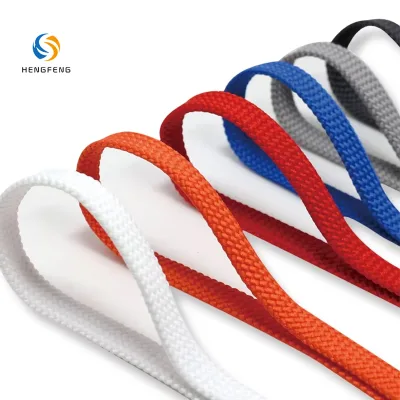
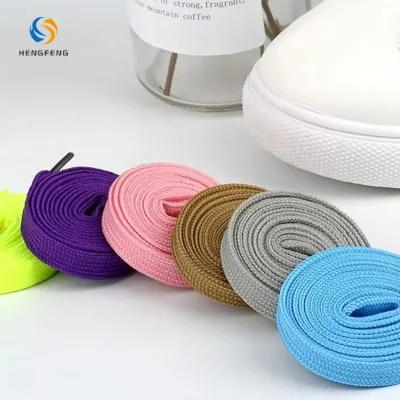
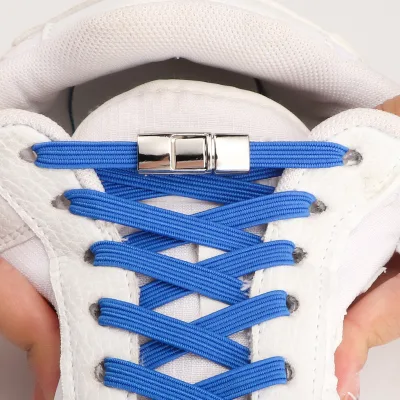
Sports Flat Polyester Tubular Shoelaces Colorful and Stylish Footwear Accessory
$0.18 - $0.31
MOQ: 100 Minimum
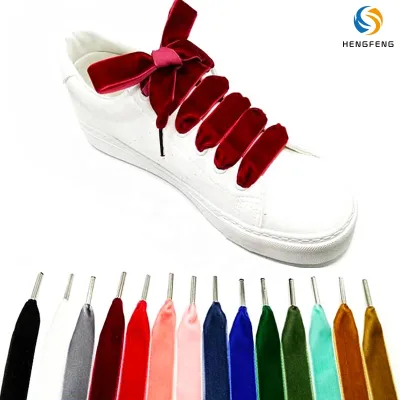
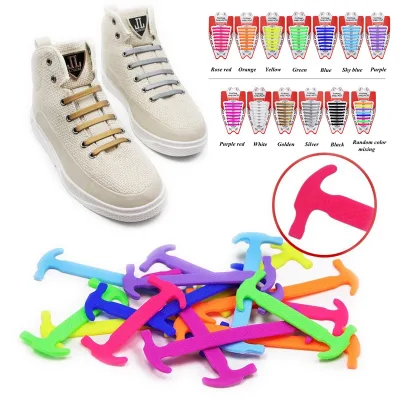
Comprehensive Sourcing Guide
Strategic Sourcing Guide for Flat Shoelaces
Understanding Product Specifications and Material Composition
When initiating a procurement strategy for Flat Shoelaces, the primary focus must be on aligning product specifications with the intended end-use application. Based on available market data, the dominant material composition for these items is polyester, often cited specifically as 100% polyester. This material choice is critical for buyers seeking durability and consistent performance, as polyester offers superior tensile strength and resistance to moisture compared to natural fibers. The product profiles indicate a specific focus on flat geometries, with designations such as "Flat Shoelaces" and "Ovel Shoelaces" appearing in technical descriptions. The flat profile is not merely aesthetic; it influences the friction coefficient and the ease of tying, which are vital for both athletic and casual footwear.
Buyers must scrutinize the dimensional specifications provided by potential suppliers. The market data reveals a range of package sizes and weights that correlate with different product models. For instance, specific batch configurations show package dimensions ranging from 10x1x1 cm to 20x1x2 cm, with gross weights per batch varying between 0.012 kg and 0.060 kg. These variations suggest that the physical dimensions of the laces, such as length and width, are highly variable. One specific listing notes a size specification of "Adult: 115cm1cm" and "Child: 80cm1cm," indicating that width is a standard 1cm for many flat variants, while length is the primary differentiator between adult and child sizes. Procurement teams should verify that the specific model numbers, such as Yk-SL24 or Yk-SL50, correspond to the exact length and width requirements of their footwear designs.
Compliance, Certification, and Safety Standards
In the realm of footwear accessories, compliance is often a secondary concern compared to structural components, yet it remains a vital element of due diligence, particularly when the end product is marketed toward children. The observed product attributes explicitly mention "Applicable User: Children" for certain listings, which triggers a need for rigorous safety verification. While the provided data does not list specific certification bodies or test results, the presence of children as a target demographic necessitates that buyers verify adherence to relevant regional safety standards, such as those regarding chemical content and physical safety.
Buyers should request documentation regarding chemical resistance, as one of the observed product features is explicitly listed as "Chemical Resistance." This attribute suggests that the dyeing and finishing processes used on the polyester material are designed to withstand exposure to cleaning agents and environmental chemicals. However, "Chemical Resistance" is an observation of a specific listing and should not be assumed to be a universal standard for all Flat Shoelaces. Procurement officers must demand specific test reports confirming that the dyes and finishes do not release harmful substances, especially for products intended for children's footwear. Furthermore, the origin of the goods, noted as Zhejiang, China, and Ningbo, China, implies that buyers should be aware of the specific export regulations and quality control expectations associated with these manufacturing hubs. The absence of explicit certification names in the source data means that the buyer's responsibility is to validate that the supplier holds current, valid certifications for the specific markets they intend to serve.
Cost Drivers and Pricing Dynamics
The economics of sourcing Flat Shoelaces are influenced by a complex interplay of material costs, order volume, and packaging requirements. The observed price range in the market spans from $0.05 to $3.41 USD per unit. This wide variance indicates that price is not a static metric but is heavily dependent on the specific customization, length, and order quantity. The lower end of the spectrum likely corresponds to standard, non-customized lengths with minimal packaging, while the higher end may reflect custom branding, specialized dyeing, or longer lengths required for specific athletic applications.
A significant cost driver is the Minimum Order Quantity (MOQ). The data shows an MOQ range from 1 to 5,000 units. This flexibility allows buyers to test the market with small orders but also highlights the economies of scale inherent in this category. For buyers planning large-scale production runs, negotiating a lower unit price by increasing the order volume is a standard strategy. The selling units are listed as "Multiple of 1" or "Multiple Of2," which suggests that some suppliers may require orders in pairs or specific increments. Additionally, the packaging details, such as "600 PCS/Bag" or "200 Pairs/Bag," directly impact the logistics cost. Bulk packaging reduces the per-unit handling cost but may require more storage space. Buyers must calculate the total landed cost, including shipping and handling, rather than focusing solely on the unit price, as the gross weight per batch varies significantly, affecting freight charges.
Typical Applications and Market Segmentation
Flat Shoelaces serve a diverse range of applications, spanning from high-performance athletic footwear to everyday casual wear. The product attributes clearly distinguish between "Applicable User: Children" and "Applicable User: Adults," as well as a "Gender: Unisex" classification. This segmentation requires buyers to tailor their sourcing strategy to the specific demographic of their target market. For children's footwear, the emphasis is often on safety, ease of use, and durability, given the active nature of the end-users. For adult applications, the focus may shift towards aesthetic customization and compatibility with specific shoe styles.
The "Suitable for: Casual Shoes" attribute highlights a primary market segment, but the "Item: Flat Sports Shoe Laces" designation confirms a strong presence in the athletic sector. The "Type: Flat Shoelaces" and "Feature: Flat" descriptions reinforce the versatility of the product. Furthermore, the "Make-up: Kinds of Uses" attribute suggests that these laces are adaptable to various footwear types, including sneakers, boots, and fashion shoes. Buyers should also consider the "Pattern: Printed" option, which indicates that customization for branding or design purposes is a viable market segment. This customization capability allows brands to create unique visual identities through the laces, turning a functional component into a branding opportunity. The "Customization: Available" attribute confirms that suppliers are generally open to bespoke requests, making Flat Shoelaces a flexible component for product differentiation.
Supplier Evaluation and Origin Verification
Selecting the right supplier is paramount to ensuring consistent quality and reliable delivery. The data indicates that the primary manufacturing origins are in China, specifically in the provinces of Zhejiang and Ningbo. These regions are known for their robust textile and footwear accessory industries. When evaluating suppliers, buyers should verify the specific location of the factory, as different cities may have varying levels of infrastructure and regulatory oversight. The "prod_origin" field provides a starting point, but deeper due diligence is required to confirm the factory's capacity and history.
Buyers should assess the supplier's ability to handle the observed "Customization: Available" requests. This includes their capacity for printing patterns, dyeing to specific color codes, and cutting to precise lengths. The "Modelnumber" variations, such as Yk-SL24, Yk-SL50, and 24ykpg17, suggest that suppliers have a range of standard SKUs but may also support custom model development. It is essential to verify the supplier's quality control processes, particularly for the "Chemical Resistance" and "Flat" features. Buyers should request samples to test the tensile strength and colorfastness of the polyester material. Additionally, the "Selling Units" and "Packing Way" details, such as "50pair/Bundle, 2000pair/CTN," should be confirmed to ensure they align with the buyer's logistics and inventory management systems. The "Gross Weight Per Batch" and "Package Size Per Batch" data should be used to calculate shipping costs accurately and to plan warehouse space effectively.
Quality Control and Long-Term Procurement Considerations
Maintaining quality consistency over time is a critical aspect of long-term procurement. The observed variations in "Single Gross Weight" (ranging from 0.022kg to 0.060kg) and "Single Package Size" (ranging from 10x10x1cm to 10x5x1cm) highlight the need for strict quality control protocols. Buyers must establish clear acceptance criteria for weight and dimensions to ensure that every batch meets the specified requirements. The "Feature: Flat" attribute must be consistently maintained, as any deviation could affect the functionality of the laces in the final shoe product.
For long-term partnerships, buyers should focus on the supplier's ability to maintain the "100% Polyester" composition and the "Chemical Resistance" properties. Regular audits and third-party testing can help verify that the material composition remains consistent and that the chemical treatments are effective. The "MOQ: 200" observation suggests that some suppliers may have a baseline order requirement, which buyers should factor into their inventory planning. Additionally, the "Packing Way" details, such as "200 Pairs/Bag" or "OPP" packaging, should be standardized to prevent damage during transit and to ensure easy identification upon receipt.
Buyers should also consider the "Lead Time" and "Production Capacity" of the supplier, even though these specific values are not provided in the source data. Establishing a clear communication channel for order updates and potential delays is essential. The "Customization: Available" feature implies that the supplier can adapt to changing design needs, but this requires a robust project management process to ensure that custom orders are executed without errors. By focusing on these quality control and operational aspects, buyers can build a resilient supply chain that supports their long-term business goals.
Conclusion
Sourcing Flat Shoelaces requires a balanced approach that considers material specifications, compliance requirements, cost dynamics, and supplier capabilities. The market offers a wide range of options, from standard polyester laces to customized, printed variants suitable for both children and adults. By leveraging the observed data on dimensions, weights, and packaging, buyers can make informed decisions that align with their specific product needs. The emphasis on polyester as the primary material and the availability of customization options provide a solid foundation for building a reliable supply chain. However, the absence of explicit certification data and specific lead times necessitates a proactive approach to due diligence. Buyers must verify all claims regarding chemical resistance, safety standards, and material composition through direct communication and testing. Ultimately, successful procurement of Flat Shoelaces depends on a thorough understanding of the product attributes and a strategic partnership with suppliers who can consistently deliver high-quality, compliant products.
FAQs
What material are Flat Shoelaces typically made from?
Flat Shoelaces are typically made from 100% polyester. This material offers superior tensile strength and moisture resistance compared to natural fibers, ensuring durability for both children and adult footwear applications.
Can I order Flat Shoelaces with custom patterns?
Yes, customization is available for Flat Shoelaces including printed patterns. Buyers can request specific designs to match their brand identity, though they must verify the supplier's capacity for custom model development.
What is the minimum order quantity for these laces?
The minimum order quantity ranges from 1 to 5000 units depending on the supplier. Some listings specify an MOQ of 200 pairs, while others allow single item purchases for market testing purposes.
Are these shoelaces suitable for children's shoes?
Yes, specific Flat Shoelaces are designed for children as well as adults. Buyers targeting the children's demographic must verify safety compliance and chemical resistance features to ensure the product meets regional standards.
How are Flat Shoelaces packaged for shipment?
Packaging varies by model, often ranging from 200 pairs per bag to 600 pieces per bag. Bulk shipments may use cartons containing 2000 pairs, with gross weights per batch varying between 0.012 kg and 0.060 kg.
Where are these Flat Shoelaces manufactured?
These products are primarily manufactured in China, specifically in Zhejiang and Ningbo provinces. Buyers should verify the specific factory location to ensure alignment with their logistics and regulatory requirements.
What is the price range for Flat Shoelaces?
The observed price range spans from 0.05 to 3.41 USD per unit. Pricing depends heavily on customization levels, order volume, and specific dimensions like length and width for adult or child sizes.