Source Foam Bicycle Wheel Making Machine for auto parts, sports gear, and custom frames
Compare 30 verified listings for the Foam Bicycle Wheel Making Machine from Henan, China. Buyers can review specifications like hydraulic operation, ISO and CE certifications, and pricing details for industrial applications.
Key considerations
Products List
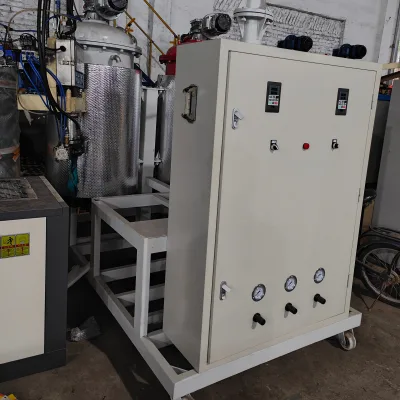


$8500.00 - $9500.00
MOQ: 1 Pieces


1100t EVA Foaming Wheel Making Machine Foaming Vulcanizing Moulding Press with Quickly Opening Speed
$35000.00 - $39999.00
MOQ: 1 Pieces


Bicycle Spoke Thread Rolling Machine/Pipe Threading Rolling Screw Making Machine
$3650.00 - $12500.00
MOQ: 1 Pieces

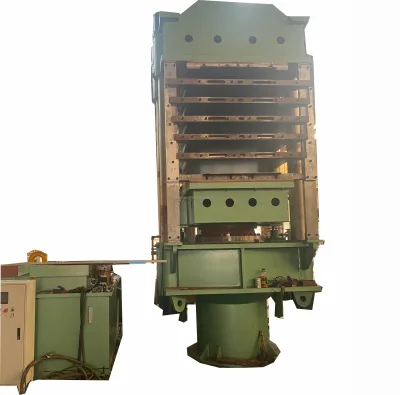

Aluminum Die Casting Machine for Magnesium Alloy Bicycle Wheel Hub Production Line
$76700.00 - $76800.00
MOQ: 1 Pieces


1380ton Cold Chamber Die Casting Machine Making Aluminum Alloy Bicycle Wheels
$249800.00 - $250000.00
MOQ: 1 sets

Aluminum Alloy Bicycle Wheel Manufacturing 880-Ton Die Casting Machine
$147650.00 - $147700.00
MOQ: 1 sets

Professional Bicycle Tyre Making Machine Bike Wheelbarrow Solid Tire Production Line Machine
$9800.00 - $12800.00
MOQ: 1 Pieces

Bicycle Tire Double Layer Vulcanizing Machine for High-Volume Manufacturing
$4100.00 - $6700.00
MOQ: 1 Pieces

Bicycle Tire Double Layer Vulcanizing Machine with User-Friendly Controls
$4000.00 - $6500.00
MOQ: 1 Pieces

Bicycle Tire Double Layer Vulcanizing Machine with Easy Operation Interface
$4000.00 - $6600.00
MOQ: 1 Pieces

Bicycle Tire Double Layer Vulcanizing Machine for Durable Performance
$4100.00 - $6800.00
MOQ: 1 Pieces


Bicycle Tire Double Layer Vulcanizing Machine for Durable and Long-Lasting Tires
$4100.00 - $6800.00
MOQ: 1 Pieces


Hydraulic Motorcycle and Bicycle Bladder Tyre Tire Vulcanizing Press Machine
$10000.00 - $20000.00
MOQ: 1 Pieces

Hydraulic Motorcycle and Bicycle Bladder Tyre Tire Vulcanizing Curing Press
$10000.00 - $20000.00
MOQ: 1 Pieces

Motorcycle Bicycle Rim Making Machine with Motorcycle Roll Forming Machine
$20000.00 - $50000.00
MOQ: 1 Pieces


Comprehensive Sourcing Guide
Strategic Sourcing Guide for Foam Bicycle Wheel Manufacturing Equipment
Understanding the Technical Landscape of Foam Wheel Production
When sourcing equipment for the specific application of foam bicycle wheel making, buyers must navigate a complex array of machinery types that often overlap with general metal processing and molding sectors. The core keyword "Foam Bicycle Wheel Making Machine" implies a specialized production line, yet the available market data reveals a landscape dominated by heavy-duty industrial machinery such as rolling machines, hydraulic presses, and metal processing units. This discrepancy suggests that the manufacturing process for foam wheels often relies on molds or dies produced by these robust metalworking machines, or that the machinery itself is a hybrid system capable of handling both the mold creation and the final forming stages.
The technical specifications observed in the current market highlight a focus on high-capacity, automated systems. Key attributes include a "Full-Automatic" or "Automatic" grade, indicating that the machinery is designed for continuous operation with minimal human intervention. The driving force for these units is frequently hydraulic, with specific references to "Hydraulic Pressure" as the power source. This is critical for foam applications where consistent pressure is required to ensure the foam expands uniformly within the mold. The observed power ratings for such machinery can be substantial, with some units listed at 130 kW, while others utilize a 4 kW driving motor for specific sub-assemblies like spindles.
Dimensional constraints are equally vital. The machinery footprint can be significant, with observed dimensions reaching L40W6H4 meters, suggesting that facility planning must account for large industrial floor space. Furthermore, the weight of these units is considerable, with some configurations weighing up to 32,560 kg. This immense mass necessitates a reinforced foundation and specialized logistics for installation. The operational speed is another key metric; while some high-speed metal processing units operate at spindle speeds of 36 revolutions per minute, the capacity for the specific foam wheel application is often measured in batches, with observed rates ranging from 10 to 20 pieces per hour. This throughput rate is a realistic benchmark for high-precision, high-safety foam wheel production, rather than mass-market toy manufacturing.
Compliance, Certification, and Safety Standards
In the B2B procurement of industrial machinery, compliance with international standards is not merely a formality but a prerequisite for operational safety and market access. The observed market data indicates that reputable suppliers for this category of equipment typically provide certifications such as ISO and CE. These certifications serve as evidence that the machinery meets specific European and international safety and quality benchmarks. For a machine intended to handle high-pressure hydraulic systems and heavy loads, the CE mark is particularly significant, as it validates that the equipment adheres to the essential health and safety requirements of the European Union.
Beyond general certifications, the presence of a "Machinery Test Report" is a high-confidence fact that buyers should demand. This document provides empirical evidence of the machine's performance under load, verifying that the hydraulic pressure, motor output, and structural integrity meet the claimed specifications. The absence of such a report should be treated as a red flag, regardless of the supplier's marketing claims. Additionally, the "High Safety Level" is listed as a key selling point, which implies that the machine design incorporates specific safety features such as emergency stops, protective guards, and automated shutdown mechanisms in case of pressure anomalies.
Buyers must also verify the "Automaticity" and "Structure" of the machine against their specific safety protocols. The observed "Vertical" structure suggests a specific orientation that may impact safety during loading and unloading. The raw materials used in the construction, listed as Stainless Steel (SS) and Carbon Steel (CS), are critical for durability and resistance to corrosion, especially if the foam manufacturing process involves chemicals or moisture. The warranty period, typically observed as 12 months or 1 year, provides a baseline for the manufacturer's confidence in their product's reliability. However, buyers should scrutinize the terms of this warranty, specifically whether it covers the hydraulic system and the motor, which are the most expensive and failure-prone components.
Cost Drivers and Pricing Variables
The pricing of foam bicycle wheel making machines is influenced by a wide range of factors, resulting in a broad observed price range from $0.60 to $250,000 USD. This variance is not indicative of product quality differences alone but rather reflects the distinction between simple tooling, molds, and complete automated production lines. The lower end of the spectrum likely represents individual components, molds, or smaller auxiliary units, while the upper end corresponds to full-scale, high-capacity automated systems with advanced hydraulic controls and safety features.
Several specific cost drivers must be analyzed during the procurement process. First, the "Automatic Grade" is a primary determinant. A "Full-Automatic" system commands a premium over semi-automatic or manual alternatives due to the integration of complex control systems, sensors, and actuators. Second, the power consumption and motor specifications directly impact the cost. Units with a 130 kW power rating will be significantly more expensive than those with a 4 kW motor, reflecting the difference in production capacity and energy requirements.
The customization level is another critical cost factor. The market data indicates that "Customization" and "OEM/ODM" services are available. A standard off-the-shelf machine will be less expensive than a unit modified to produce specific foam wheel diameters (e.g., within the observed 200-1500mm range) or lengths (300-1000mm). Custom molds and tooling, which are essential for the specific geometry of bicycle wheels, add substantial cost to the overall project. Furthermore, the "Condition" of the machine, whether "New" or refurbished, plays a role, though the observed data primarily highlights new units.
Logistics and packaging also contribute to the final landed cost. The observed "prod_packing" methods vary from "by Container" for large units to "by Carton" for smaller components. The sheer weight of the machinery, up to 32,560 kg, necessitates specialized shipping arrangements, likely requiring flat-rack containers or heavy-lift vessels. Buyers should also account for "Sample Freight" costs, which are typically borne by the client, and the potential need for on-site installation and commissioning services, which are often excluded from the base machine price.
Typical Applications and Production Capabilities
While the core keyword focuses on foam bicycle wheels, the technical specifications of the available machinery suggest a broader application scope that includes general metal processing and molding. The observed "prod_model" categories such as "Metal Processing Machines" and "Rolling Machine" indicate that these units are versatile. In the context of foam wheel manufacturing, the primary application of such machinery is likely the production of the molds or dies used in the foam expansion process, or the machine may be a specialized press that utilizes hydraulic pressure to form the foam within a pre-fabricated mold.
The capacity of these machines, observed at 10-20 pieces per hour, aligns well with the production needs of specialized bicycle components. This throughput is sufficient for mid-to-high volume manufacturing but may require multiple units for mass-market production. The "Forging Forming Method" of "Mold Forging" is particularly relevant, as it suggests the machine is designed to shape material within a closed cavity, which is the standard method for creating high-strength, consistent foam wheels.
The dimensional range of the machinery supports the production of various wheel sizes. The observed "Diameter Range" of 200-1500mm and "Length Range" of 300-1000mm covers the spectrum of bicycle wheel sizes, from small children's bikes to large adult models. This flexibility is a significant advantage for manufacturers who need to adapt their production lines to different product lines without investing in entirely new equipment. The "Use Widely" advantage noted in the market data further supports the versatility of these machines across different industries, including automotive, aerospace, and general transportation.
Supplier Evaluation and Verification Protocols
Evaluating suppliers for foam bicycle wheel making equipment requires a rigorous due diligence process that goes beyond standard catalog browsing. The "Factory: Yes" attribute observed in the data is a positive indicator, suggesting that the supplier is a direct manufacturer rather than a trading company. This distinction is crucial for ensuring better control over quality, customization capabilities, and after-sales support. Buyers should verify this claim by requesting a virtual or physical factory audit to confirm the presence of the necessary machinery, such as the hydraulic presses and metal processing units.
The "Place of Origin" is consistently listed as "Henan, China," which is a major industrial hub for heavy machinery. While this provides access to a robust supply chain, buyers must ensure that the specific supplier has a proven track record in exporting to their target market. The "Quality: High Quality" attribute is a common marketing claim; therefore, it must be substantiated by third-party test reports and customer references. The "Machinery Test Report" mentioned earlier is a non-negotiable document that should be reviewed by a qualified engineer to verify the machine's performance metrics.
Customization capabilities are another key evaluation point. The "OEM ODM: Accept" status indicates that the supplier is willing to tailor the machine to specific needs. Buyers should assess the supplier's engineering team's ability to handle custom designs, particularly for the "Size: Custmoized" (Customized) specifications. The ability to produce molds with specific diameters and lengths is essential for the foam wheel application. Additionally, the "Sample: Free" offer, with freight costs borne by the client, allows buyers to evaluate the machine's output quality before committing to a full purchase. This is a valuable risk mitigation strategy.
Quality Control and Long-Term Procurement Considerations
Ensuring the long-term reliability of foam bicycle wheel making equipment requires a proactive approach to quality control and maintenance planning. The "Warranty" period of 12 months or 1 year provides a baseline for support, but buyers should negotiate extended warranty terms for critical components like the hydraulic pump and motor. The "Core Components" listed as "MOTOR" and "pump" are the heart of the machine; their failure would halt production entirely. Therefore, verifying the brand and quality of these components is essential.
The "Condition: New" status is a standard expectation, but buyers should also consider the availability of spare parts. Given the "High Safety Level" and complex hydraulic systems, the machine will require regular maintenance. The "Automaticity" of the machine means that software updates and sensor calibration will be necessary over time. Buyers should inquire about the supplier's policy on software support and the availability of replacement parts for the hydraulic system.
Long-term procurement considerations also include the scalability of the production line. As demand for foam bicycle wheels grows, the ability to add more units or upgrade existing ones is crucial. The "Customization: Available" feature suggests that the supplier can assist in scaling the operation. However, buyers must ensure that the "prod_standard" (e.g., XLB-DQ, 12, 16, 20) is compatible with future expansions. The "Standard" values observed may refer to specific industry benchmarks or internal supplier standards, and their alignment with international norms should be verified.
Finally, the "High Efficiency" feature is a key performance indicator for long-term cost management. A machine that operates at 10-20 pieces per hour with minimal downtime will offer a better return on investment than a slower, less reliable unit. Buyers should analyze the energy consumption relative to the output rate, considering the 130 kW power rating for larger units versus the 4 kW motor for smaller components. By focusing on these long-term factors, buyers can secure a procurement strategy that ensures sustained productivity and safety in their foam bicycle wheel manufacturing operations.
Comparative Analysis of Machine Specifications
To facilitate a clearer understanding of the available options, the following table summarizes the key technical and operational specifications observed in the market. This comparison highlights the diversity in power, capacity, and customization options, allowing buyers to match specific production requirements with the appropriate machinery.
| Specification Category | High-Capacity Unit | Standard Unit | Specialized/Custom Unit |
|---|---|---|---|
| Power Rating | 130 kW | 4 kW (Driving Motor) | Variable (Hydraulic Pressure) |
| Production Capacity | 10-20 PCS/H | 10-20 PCS/H | Customized |
| Dimensions (LWH) | 40m * 6m * 4m | Standard Industrial | Customized |
| Weight | 32,560 KG | Standard | Customized |
| Automatic Grade | Full-Automatic | Automatic | Customized |
| Structure | Vertical | Vertical | Vertical |
| Diameter Range | 200-1500mm | 200-1500mm | Customized |
| Length Range | 300-1000mm | 300-1000mm | Customized |
| Certification | ISO, CE | CE, ISOCCC | ISO, CE |
| Warranty | 1 Year | 12 Months | Negotiable |
| Raw Material | SS, CS | SS, CS | Customized |
| MOQ | 500 | 1-500 | Negotiable |
This table illustrates that while the core specifications remain consistent across different models, the customization options allow for significant flexibility. The "High-Capacity Unit" represents the most robust solution for large-scale production, while the "Specialized/Custom Unit" offers the adaptability needed for niche applications. Buyers should use this comparison as a starting point for detailed discussions with suppliers, ensuring that all technical requirements are met before finalizing a purchase.
FAQs
What certifications do foam bicycle wheel making machines have?
The machines typically hold ISO and CE certifications to ensure safety and quality compliance. Some models also carry ISOCCC certification. Buyers should verify the specific machinery test report provided with each unit to confirm these standards are met.
How much does a Foam Bicycle Wheel Making Machine cost?
Prices range from 0.60 to 250,000 USD depending on the configuration and automation level. Full-automatic systems with high power ratings like 130 kW command higher prices than smaller units. The final cost also depends on customization needs and shipping arrangements.
Can I customize the size of the machine for my factory?
Yes, customization is available for dimensions and specifications to fit specific production needs. The machine supports customized sizes and can be tailored for different diameter ranges up to 1500mm. OEM and ODM services are accepted to meet unique manufacturing requirements.
What is the production capacity of these machines?
The observed capacity ranges from 10 to 20 pieces per hour for high-precision operations. This throughput is suitable for specialized production lines requiring consistent quality. The actual rate may vary based on the specific model and the complexity of the foam wheel design.
Where are these machines manufactured and shipped from?
The machines originate from Henan, China, a major industrial hub for heavy machinery. They are shipped using various methods including container shipping for large units. Buyers should expect the place of origin to be China for most available models.
What warranty is provided for the hydraulic system?
A standard warranty of 1 year or 12 months is typically provided for the machinery. This coverage often includes core components like the motor and pump. Buyers should review the specific terms to understand if the warranty covers hydraulic pressure systems fully.