Source Foam Car Tire Polish for shine, care, and cleaning
Compare 30 listings of Foam Car Tire Polish from verified Chinese manufacturers. Buyers can evaluate customization options, packaging details, and volume capacities ranging from 300ml to 1000ml for bulk procurement.
Key considerations
Products List


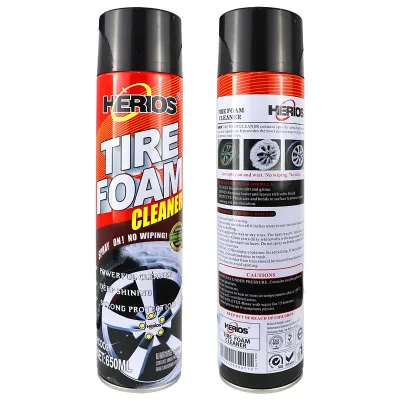
Car Care Tire Foam Polish / Tire Cleaner Spray / Spray Tire Foam Cleaner
$0.90 - $1.20
MOQ: 7500 Pieces


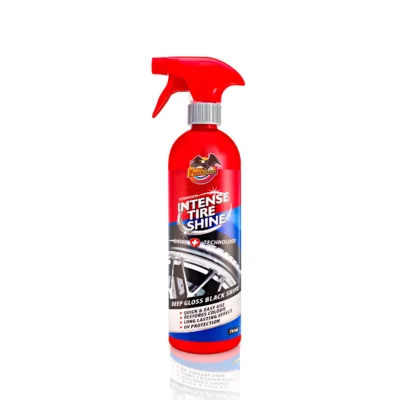

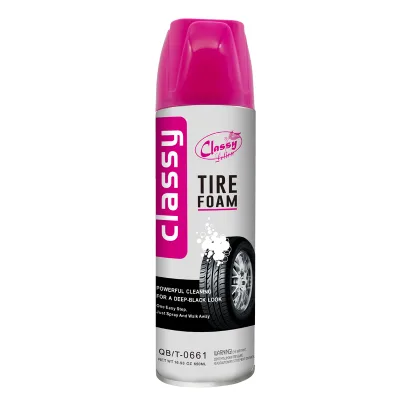


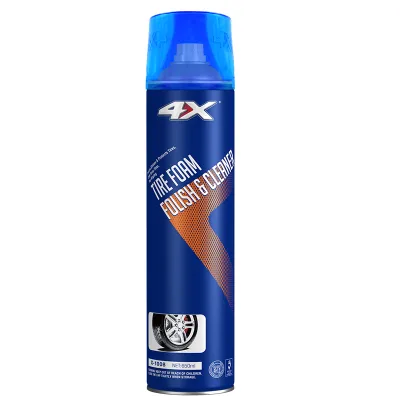
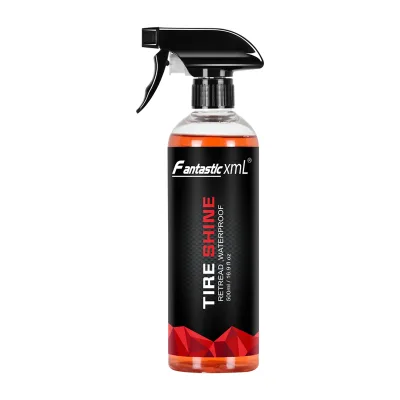
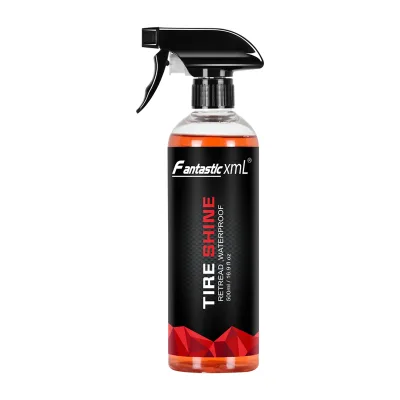
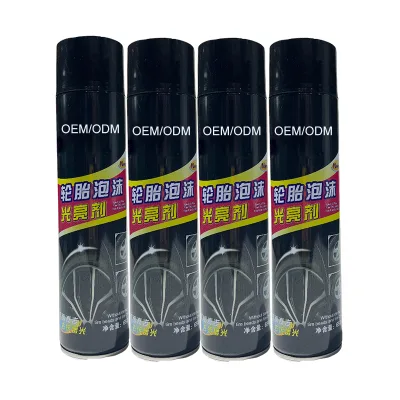
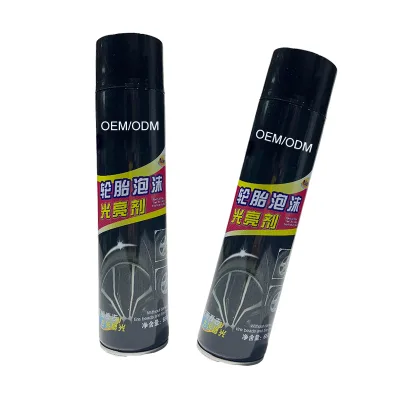
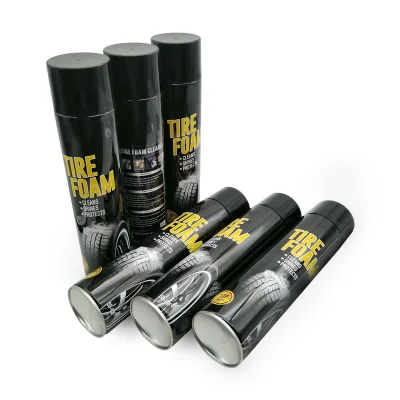


Comprehensive Sourcing Guide
Strategic Sourcing Guide for Foam Car Tire Polish
The global automotive care market has witnessed a significant shift toward high-performance, foam-based tire care solutions. For B2B procurement professionals, sourcing "Foam Car Tire Polish" requires a nuanced understanding of formulation chemistry, packaging logistics, and supplier capabilities. Unlike traditional liquid dressings, foam formulations offer superior adhesion and even coverage, making them a preferred choice for detailing centers and retail distributors. This guide synthesizes observed market data and technical specifications to provide a disciplined framework for evaluating potential supply chains. Buyers must navigate a landscape where product attributes vary widely, from base ingredients like glycerin and water to specialized cleaning agents, necessitating rigorous due diligence before contract finalization.
Technical Specifications and Formulation Analysis
When evaluating Foam Car Tire Polish, the primary technical differentiator lies in the formulation's ability to generate stable foam while delivering shine and protection. The market data indicates a diverse range of product volumes, with observed capacities spanning from 300ml to 1000ml, and specific models listed with weights such as 500ml and 650ml. A critical observation in the current supply pool is the variation in base materials. Some products are explicitly formulated with Glycerinum and water, suggesting a focus on moisturizing and non-staining properties, while others are categorized broadly as "Cleaner" or "Car Care Cleaner."
Buyers must verify the specific functional claims against the physical specifications. For instance, products labeled with the function "car tire shine and car tire care" often utilize a foam application method to ensure the product penetrates tire treads without excessive runoff. The "Tire Foamy Cleaner" designation implies a dual-action formula designed to clean and polish simultaneously. However, the "Use On" attribute specifically noting "Tire clean" suggests that some items may be primarily cleaning agents rather than long-term dressings. Procurement teams should request batch-specific safety data sheets (SDS) to confirm the presence of surfactants that enable foam generation and to verify the absence of harsh solvents that could degrade rubber over time.
The physical specifications also vary significantly. While some entries list a single package size of 22x5x5 cm, others indicate a single gross weight of 1.0 kg or 0.0 kg, which may reflect different packaging densities or data entry inconsistencies. The "Single volume" attribute is listed as 0 cm³ in some records, which is a clear data anomaly requiring immediate clarification from the supplier. To ensure consistency, buyers should standardize their requirements around verified volume ranges, such as the observed 450 mL and 650 ML options, rather than relying on unverified weight metrics which can fluctuate based on liquid density.
Compliance, Certification, and Safety Standards
In the automotive care sector, compliance is not merely a regulatory formality but a prerequisite for market access. While the supplied data does not explicitly list specific international certifications like ISO or REACH, the presence of "Eco-friendly" as a product feature indicates a growing segment of the market aligning with environmental standards. Buyers should verify if the "Eco-friendly" claim is backed by third-party testing or if it is a self-declared attribute. The "Quality: High-Quality" label is a common marketing term and does not constitute a verified standard; therefore, procurement teams must demand evidence of quality control protocols.
Expiration dates are a critical compliance factor for chemical products. The observed data presents a wide variance, with some products listed with a 3-year expiration and others with a 5-year shelf life. This discrepancy suggests that formulation stability varies by manufacturer. For long-term inventory planning, buyers should prioritize suppliers who can guarantee a minimum shelf life of at least 3 years from the date of manufacture. Furthermore, the "Place of Origin" is consistently noted as Guangdong, China, a major manufacturing hub. While this location offers logistical advantages, buyers must ensure that the specific factory complies with the environmental and safety regulations of their target export markets.
The "Material" attribute lists "Cleaner" as a generic category for some items, which is insufficient for regulatory compliance. Detailed ingredient lists are mandatory to assess compliance with VOC (Volatile Organic Compound) limits in regions like the European Union and North America. Buyers should require suppliers to provide a full ingredient declaration to ensure the product does not contain banned substances. Additionally, the "Service" attribute mentions ODM/OEM and OBM capabilities, which implies that the supplier can customize formulations. This customization must be accompanied by rigorous testing to ensure that modified formulas still meet safety and performance standards.
Cost Drivers and Pricing Dynamics
The pricing structure for Foam Car Tire Polish is influenced by several factors, including volume, packaging complexity, and customization requirements. The observed listed price range in the market data is 0.3 to 3.64 USD, a broad spectrum that reflects differences in product concentration, brand positioning, and order volume. The Minimum Order Quantity (MOQ) is a significant cost driver, with observed ranges spanning from 2 units to 12,000 units. A specific high-confidence fact notes an MOQ of 3000 pieces for certain items, which is typical for OEM/ODM engagements but may be prohibitive for smaller retailers.
Buyers must analyze the cost per unit relative to the packaging details. The data indicates that 1.1 kg products use pouch and plastic packaging, while 10 kg and 15 kg products utilize plastic buckets and iron drums. Larger bulk packaging, such as 180 kg drums, is available for industrial applications. The "Packaging Details" section also notes that all weights can be packaged according to customer requirements, which introduces a variable cost element. Custom packaging solutions often incur higher setup fees and may impact the unit price, especially for smaller order volumes.
The "Selling Units" attribute lists "Single item," which suggests that the base price may be for a single unit rather than a bulk case. However, the "Packing" attribute specifies 24 pcs/ctn, indicating that the standard shipping unit is a carton containing 24 items. Procurement strategies should focus on optimizing the order quantity to balance the MOQ requirements with storage capacity. For example, ordering multiples of the 24 pcs/ctn carton size can reduce shipping costs per unit. Additionally, the availability of free samples is a valuable cost-saving tool, allowing buyers to validate product quality before committing to large orders, thereby mitigating the risk of purchasing unsuitable inventory.
Typical Applications and Market Segmentation
The applications for Foam Car Tire Polish extend beyond simple aesthetic enhancement. The primary function is identified as "car tire shine and car tire care," which encompasses cleaning, polishing, and protecting the tire surface. The "Use" attribute highlights "Polishing" and "Tire Foamy Cleaner," indicating that these products are designed for both maintenance and restoration. The "Usage" method is specified as "spray," which is the standard application technique for foam products, allowing for quick and even coverage on vertical tire surfaces.
Market segmentation reveals distinct use cases. Retail consumers typically prefer smaller volumes, such as the 300ml to 500ml range, which are convenient for home detailing. In contrast, professional detailing centers and fleet maintenance operations often require larger volumes, such as the 650ml or bulk drum options, to maximize efficiency. The "Type" attribute categorizes these products as "Cleaner & Wash" and "Car Care Cleaner," suggesting that some formulations are designed for frequent use as part of a wash cycle, while others are intended for periodic deep cleaning and dressing.
The "Color" attribute lists "Wihte" (likely a typo for White), which may refer to the foam color or the packaging design. This visual characteristic can be important for branding, as a distinct foam color can signal product quality to the end consumer. The "Smell" attribute notes a "Fresh" scent, which is a common consumer preference in the automotive care sector. Buyers should consider whether the scent profile aligns with their target market's expectations, as strong chemical odors can be a deterrent for retail customers. The "Expiration Date" of 3 to 5 years also influences application planning, as products with longer shelf lives are more suitable for stockpiling in anticipation of seasonal demand spikes.
Supplier Evaluation and Verification Protocols
Evaluating suppliers for Foam Car Tire Polish requires a multi-faceted approach that goes beyond surface-level product listings. The "Brand Name" attribute includes entries like "POWEREAGLE" and "CLASSY," indicating that some suppliers offer private label opportunities while others sell under their own brands. The "Service" attribute confirms ODM/OEM and OBM capabilities, suggesting that suppliers are willing to customize products. However, the "factory: have" attribute is a generic confirmation that needs to be substantiated with factory audit reports.
Buyers should verify the "Place of Origin" consistency, as the data lists both "Guangdong, China" and "GuangDong." While these refer to the same region, inconsistent data entry can be a red flag for the supplier's attention to detail. The "Model Number" varies significantly, with entries like "pe-3," "SAIGAO2025," "BSJ-0661," and "CC-113." This variety suggests a broad product portfolio, but buyers must ensure that the specific model they select matches their technical requirements. The "Single package size" and "Single gross weight" discrepancies noted earlier highlight the need for physical verification of product specifications before signing contracts.
Quality control is paramount, especially given the "Quality: High-Quality" claim. Buyers should request samples to test the foam stability, adhesion, and drying time. The "Sample: Free" attribute is a positive indicator, allowing for low-risk evaluation. However, buyers must also assess the supplier's ability to maintain consistency across batches. The "Customization: Available" attribute implies flexibility, but customization can introduce variability. Therefore, suppliers should be required to provide a quality assurance plan that outlines how they manage batch-to-batch consistency, particularly for custom formulations.
Long-Term Procurement Considerations
Sourcing Foam Car Tire Polish is not a one-time transaction but a strategic partnership that requires long-term planning. The "Expiration Date" of 3 to 5 years allows for flexible inventory management, but buyers must implement a first-in, first-out (FIFO) system to prevent product degradation. The "Packaging Details" section notes that packaging can be customized, which is beneficial for brand differentiation but requires careful management of packaging inventory. Suppliers that offer flexible packaging options can help buyers adapt to changing market trends, such as the shift toward eco-friendly materials.
The "MOQ" range of 2 to 12,000 units offers scalability, but buyers must align their order volumes with their sales forecasts to avoid overstocking. The "Service" attribute includes OBM (Original Brand Manufacturing), which allows suppliers to manufacture products under the buyer's brand. This is a valuable option for companies looking to build a proprietary product line. However, the transition from OEM to OBM requires a clear understanding of intellectual property rights and brand protection strategies.
Finally, buyers should monitor the "Feature" attribute, such as "Eco-friendly," as market regulations and consumer preferences evolve. Products that meet emerging environmental standards will have a competitive advantage. The "Capacity" range of 300-500ml and 500-1000ml provides options for different market segments, but buyers should ensure that their product mix aligns with their distribution channels. By focusing on these long-term considerations, procurement professionals can build a resilient supply chain that delivers consistent value and adapts to market dynamics.
FAQs
Can I customize the packaging for Foam Car Tire Polish orders?
Yes, customization is available for packaging requirements. Suppliers offer options ranging from pouches and plastic buckets to iron drums, allowing you to select 1.1 kg, 10 kg, 15 kg, or 180 kg formats based on your specific business needs.
What is the minimum order quantity for these tire care products?
The minimum order quantity varies significantly across suppliers, ranging from 2 units up to 12,000 units. Some specific listings require a minimum of 3,000 pieces, so you must verify the MOQ with the manufacturer before placing an order.
Which capacity sizes are available for Foam Car Tire Polish?
Available capacities span from 300 ml to 1,000 ml, with specific models listed at 450 ml, 500 ml, and 650 ml. You can find products in single package sizes of 22x5x5 cm or bulk options depending on the supplier's inventory.
How long is the shelf life of the tire shine products?
Shelf life varies by formulation, with observed expiration dates of either 3 years or 5 years. Buyers should confirm the specific expiration date for the batch they intend to purchase to ensure it meets their inventory planning requirements.
What are the base materials used in these tire cleaning products?
Some products are explicitly formulated with Glycerinum and water, while others are categorized broadly as cleaners. You should request detailed ingredient lists to verify the specific composition and ensure compliance with your regional safety standards.
Can I get free samples before placing a bulk order?
Yes, free samples are available for many of the listed tire care products. This allows you to test the foam stability and application quality before committing to a larger purchase that meets your specific volume and packaging requirements.
Which suppliers offer OEM or ODM services for this product?
Multiple suppliers in Guangdong, China, offer OEM, ODM, and OBM services for customization. You can work with these vendors to develop unique formulations or packaging solutions tailored to your brand identity and market positioning.