Source Foldable Space-Saving Clothes Drying Rack for Living Room, Yard, Wardrobe
Compare 30 listings of the foldable space-saving clothes drying rack designed for living rooms, yards, and wardrobes. Buyers can evaluate specifications like size, material, and weight to find the right wall-mounted solution for their needs.
Key considerations
Products List
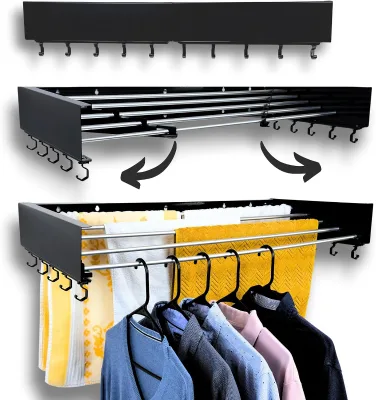
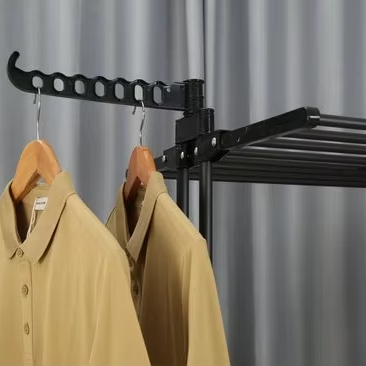
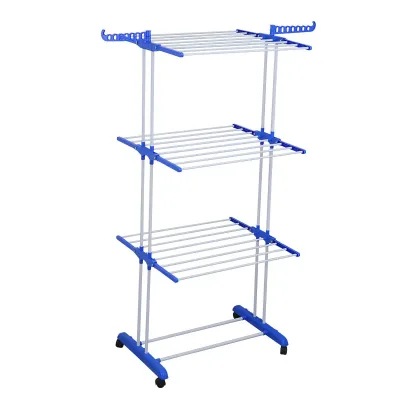
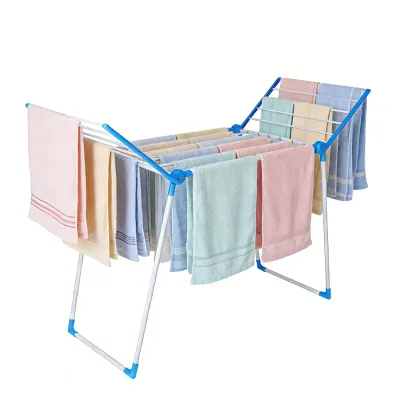
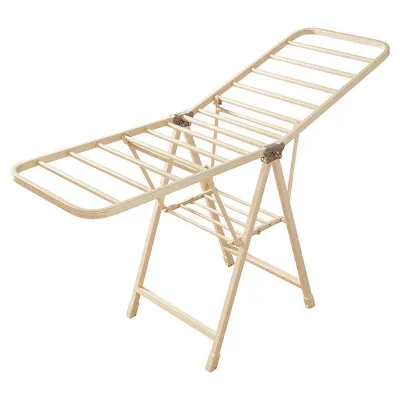
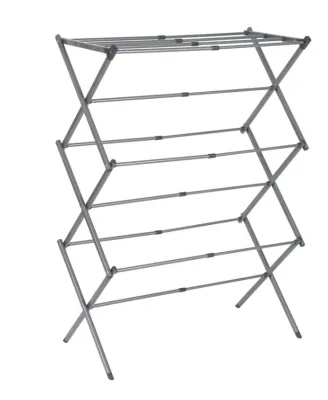
Good Quality Folding Clothes Rack Laundry Airer Drying Rack Folding Laundry
$10.23 - $16.41
MOQ: 10 Minimum
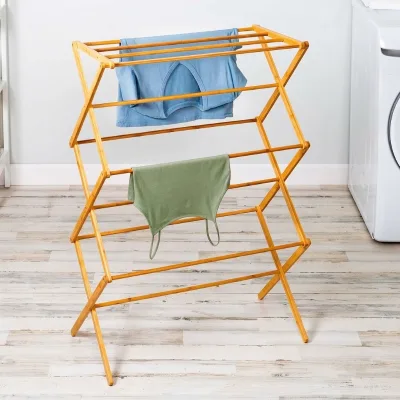
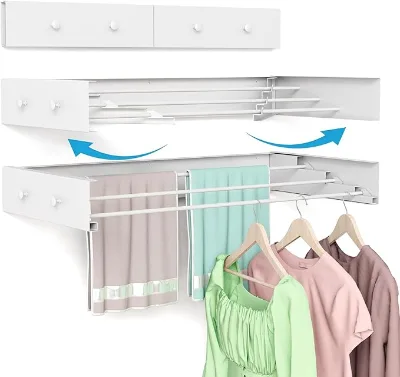
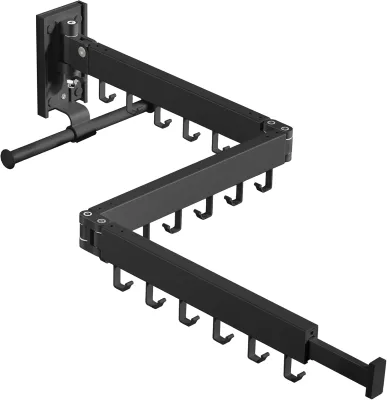
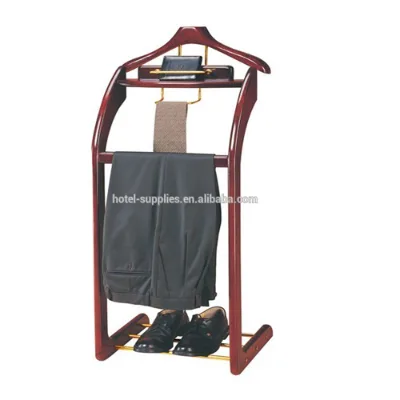


Bamboo Wooden Folding Clothes Drying Rack, Laundry Drying Rack, 14.1 X 29 X 12.1 Inch
$10.00 - $20.00
MOQ: 300 Pieces


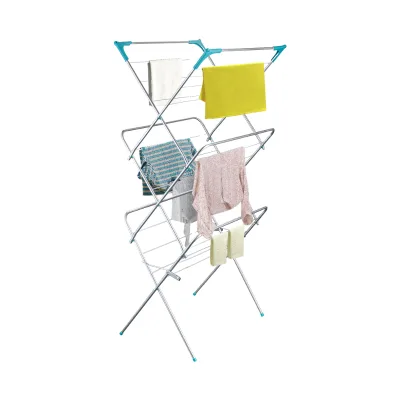
Hanger Rack, Clothes Drying Rack, Space-Saver, for Laundry, Balcony, Mudroom, Bedroom
$0.03 - $0.03
MOQ: 250000 Pieces


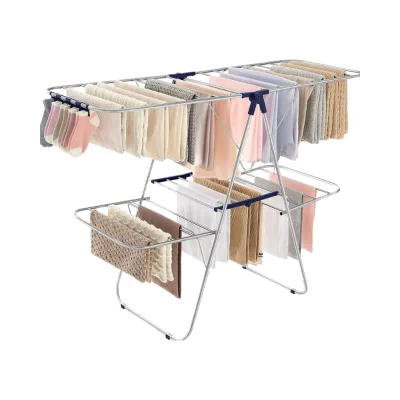
Folding Garment Rack - Rolling Clothes Hanger - Adjustable Height - Black
$21.00 - $28.00
MOQ: 20 Pieces



Comprehensive Sourcing Guide
Strategic Sourcing Guide for Foldable Space-Saving Clothes Drying Racks
Understanding Product Architecture and Technical Specifications
When sourcing a foldable space-saving clothes drying rack, the buyer must first distinguish between the general category of drying solutions and the specific technical attributes of wall-mounted, multi-functional units. The product landscape includes items described as "Space-Saving Laundry Rack Multi-functional Laundry Drying Rack" with a specific model number such as ZSY-260813-88. These units are engineered for specific environments, including living rooms, yards, and wardrobes, utilizing a "Wall Mounted Type" installation mechanism. The structural integrity of these racks relies on a composite material composition, typically combining PP (Polypropylene) plastic with metal components. This hybrid approach allows for the "Glossy" finish and "Modern" or "Fashionable" aesthetic often required in contemporary home settings.
The dimensional specifications are a critical area of observation. The open size for these racks is frequently observed in a range of 60cm, 80cm, 100cm, and 120cm, though some listings may indicate a single large dimension of 170cm by 76cm. Buyers must note that dimensional tolerance can vary significantly between product listings; observed data includes tolerances of greater than or equal to ±2cm for general dimensions, while other specifications suggest a tighter tolerance of less than ±1mm. This discrepancy highlights the necessity for buyers to verify the specific tolerance requirements for their intended application before placing an order. The physical weight of the unit is also a defining characteristic, with specific observations noting a weight of 3.8kg for the 100cm variant and 5.2kg for the 120cm variant. The single gross weight is often recorded around 5.0kg, which impacts shipping logistics and handling requirements.
The functional design emphasizes flexibility and multifunctionality, often described as "Foldable" and "Adjustable." The shape is predominantly rectangular, and the configuration is typically a "Single" tier system, though the term "Clothing Organizer" suggests broader utility. The color palette is generally limited to standard industrial finishes such as White, Black, and Grey. Understanding these architectural details is the first step in ensuring the selected product meets the spatial and load-bearing requirements of the end-user.
Compliance Verification and Certification Protocols
In the B2B procurement of home organization products, verifying compliance and certification status is paramount, yet the available data presents a complex picture regarding origin and standards. While some product listings indicate a place of origin in Guangdong, China, a significant portion of the data references Andorra as the place of origin. This divergence requires immediate clarification from the supplier, as the country of origin dictates the regulatory framework, including REACH compliance for European markets or CPSIA considerations for the United States.
Buyers must not assume that a product listing automatically satisfies specific safety standards. The provided facts do not explicitly confirm the presence of certifications such as ISO 9001 or specific material safety reports. Instead, the procurement strategy must focus on requesting documentation that validates the "Plastic + Metal" material composition. Specifically, the PP plastic type used must be verified for food-grade or household safety, ensuring it does not leach harmful substances when exposed to moisture or sunlight. The metal component, described simply as "Metal," requires verification of its alloy composition to ensure resistance to rust and corrosion, particularly for units intended for "YARD" or outdoor use.
Furthermore, the "Logo" attribute indicates that customization is possible, which introduces a compliance layer regarding trademark and labeling laws. Buyers must ensure that any custom branding added to the product does not violate intellectual property rights in the destination market. The absence of explicit certification data in the product facts means that the buyer's responsibility is to mandate third-party testing reports as a condition of the purchase agreement. This verification process should cover mechanical strength, chemical safety, and dimensional accuracy to mitigate the risk of product failure or regulatory non-compliance upon arrival.
Cost Drivers and Pricing Dynamics
The pricing structure for foldable space-saving drying racks is influenced by a complex interplay of material costs, manufacturing complexity, and order volume. The observed listed price range in the market spans from $0.03 to $165 USD. This vast disparity suggests that the lower end of the spectrum may represent individual components, promotional samples, or highly simplified models, while the higher end likely reflects fully assembled, premium units with advanced features or bulk packaging configurations.
A primary cost driver is the Minimum Order Quantity (MOQ). The observed MOQ range is extensive, stretching from 1 piece to 250,000 pieces. Some specific product data points to an MOQ of 200 pieces, while other entries suggest a requirement of 1*40HQ (a full 40-foot high-cube container). This variation indicates that unit pricing is highly elastic; buyers purchasing small quantities will face a significantly higher per-unit cost compared to those securing full container loads. The "Selling Units" are listed as "Single item," which can be misleading if the supplier's internal logistics require bulk packaging.
Packaging costs also play a significant role in the final landed cost. The product is described as being packed "Each piece in a inner box, several pieces in a carton," with a single package size of 110x5x11 cm. The weight tolerance is noted as less than ±10%, which affects shipping calculations. Buyers must calculate the volumetric weight versus the actual weight, as the "Single gross weight" of 5.0 kg combined with the packaging dimensions will determine the freight cost. Additionally, the "technics" of the product, such as the "Glossy" finish, may add to the manufacturing cost due to additional finishing steps. When evaluating suppliers, buyers should request a detailed breakdown of costs to understand how much of the price is attributed to raw materials (PP and Metal) versus labor and packaging.
Typical Applications and Usage Scenarios
The versatility of the foldable space-saving clothes drying rack makes it suitable for a diverse range of applications, from compact urban apartments to larger residential spaces. The "Specific Use" is explicitly defined as a "Wall Mounted Dry Rack," indicating that the primary application is to free up floor space by utilizing vertical wall area. This makes the product particularly valuable for "Living Room," "Wardrobe," and "YARD" environments where floor space is at a premium or where outdoor drying is necessary but space is limited.
The "Functional Design" features, including "Flexible," "Multifunction," and "Foldable" capabilities, allow the rack to adapt to different usage scenarios. In a living room, the rack can be folded flat against the wall when not in use, maintaining the aesthetic of the room while providing a temporary drying solution. In a yard, the wall-mounted nature allows for secure attachment to exterior walls, protecting clothes from ground moisture while maximizing exposure to sunlight. The "Style" is described as "Modern" and "Fashionable," suggesting that the product is designed to blend seamlessly with contemporary interior design trends, making it acceptable for visible areas like living rooms rather than being relegated to utility rooms.
The "Usage" is categorized as "Household," and the "Product" is identified as a "Clothing Organizer." This confirms that the primary application is for drying clothes, but the "Key words" also include "Clothes Metal Hanger," implying that the rack may be compatible with or designed to work alongside standard hangers. The "Single" tier configuration suggests a focus on simplicity and ease of use, reducing the complexity of loading and unloading garments. Buyers should consider the specific needs of their target market; for instance, a market focused on small apartments may prioritize the "Space Saving" and "Wall Mounted" attributes, while a market with larger homes may focus on the "Adjustable" and "Flexible" aspects for handling larger loads.
Supplier Evaluation and Operational Due Diligence
Evaluating suppliers for foldable space-saving drying racks requires a rigorous assessment of their operational capabilities, particularly given the conflicting data points regarding origin and specifications. The presence of "dibangni" and "fa" as brand names, alongside a model number like ZSY-260813-88, suggests a market populated by various manufacturers and private labelers. Buyers must verify the actual manufacturer behind the brand name to ensure consistency in quality and supply chain stability.
The "Place of Origin" data presents a critical red flag, with some listings citing Guangdong, China, and others citing Andorra. This inconsistency necessitates a direct inquiry to the supplier to confirm the true manufacturing location. The country of origin affects not only shipping logistics but also tariff implications and compliance with local regulations. A supplier claiming to be based in Andorra but manufacturing in Guangdong may be a trading company, which could impact the ability to negotiate directly on manufacturing costs or access technical support.
Buyers should also scrutinize the "Packing" and "Logistics" capabilities. The observation of "Each piece in a inner box, several pieces in a carton" with a single package size of 110x5x11 cm requires verification of the carton dimensions and the number of units per carton. This information is essential for calculating container loading efficiency. The "Weight tolerance" of less than ±10% is a standard metric, but buyers should confirm if the supplier adheres to this strictly, as deviations can lead to shipping cost overruns. Additionally, the "Logo" customization option should be evaluated for the supplier's capability to handle branding requirements without compromising the structural integrity of the product.
Quality Control and Long-Term Procurement Considerations
Ensuring consistent quality in foldable space-saving drying racks involves a multi-stage quality control process that addresses material integrity, dimensional accuracy, and functional performance. The "Material" composition of "PP + Metal" must be tested for durability and resistance to environmental factors. The "Thickness" is listed as "Other," which is a vague descriptor that requires clarification. Buyers should request specific thickness measurements for both the plastic and metal components to ensure they meet the load-bearing requirements of the intended application.
Dimensional tolerance is another critical quality metric. The observed data shows a wide range, from ">=±2cm" to "<±1mm". This inconsistency suggests that different suppliers or product lines have varying standards. Buyers must define their acceptable tolerance range in the purchase order and request pre-shipment inspection reports that verify the "Open size" (60/80/100/120cm) and "Single package size" against these standards. The "Weight" observations, such as 3.8kg for the 100cm model, should be cross-referenced with the actual weight of the received goods to ensure that the material density and construction match the specifications.
Long-term procurement considerations also include the scalability of the supply chain. The "MOQ" range of 1 to 250,000 pieces indicates that the supplier can accommodate both small trial orders and large-scale production runs. However, buyers should assess the supplier's ability to maintain quality consistency as order volumes increase. The "Functional Design" features, such as the "Foldable" mechanism, are prone to wear and tear over time. Buyers should request samples for stress testing to evaluate the longevity of the hinges and locking mechanisms. Finally, the "Color" options (White, Black, Grey) should be verified for colorfastness, ensuring that the finish does not fade or discolor when exposed to sunlight or moisture, particularly for units intended for outdoor use. By addressing these quality and operational factors, buyers can secure a reliable supply of high-performance drying racks that meet their specific market demands.
FAQs
What are the available open sizes for this drying rack?
The open sizes are available in 60, 80, 100, and 120 centimeters. Buyers should verify the specific dimensional tolerance, as some listings indicate a variance of plus or minus two centimeters while others suggest tighter tolerances.
How is the product constructed and what materials are used?
The rack is constructed from a combination of PP plastic and metal components. This hybrid design provides a glossy finish and modern style, though the specific metal alloy and plastic thickness require supplier verification for durability.
Can I add a custom logo to the drying rack?
Yes, you can add a logo directly on the products. This customization option allows for branding but requires confirmation that the supplier adheres to intellectual property laws in your destination market before proceeding.
What is the minimum order quantity for this item?
The minimum order quantity varies significantly, with some listings requiring 200 pieces while others demand a full 40-foot high-cube container. Buyers must confirm the specific MOQ before placing an order to avoid unexpected costs.
Where is the manufacturing location for this product?
The place of origin is listed as Guangdong, China, though some data points reference Andorra. This discrepancy requires immediate clarification from the supplier to ensure accurate tariff classification and regulatory compliance for your shipment.
How much does the 100cm and 120cm unit weigh?
The 100cm variant weighs 3.8 kilograms and the 120cm variant weighs 5.2 kilograms. The single gross weight is often recorded around 5.0 kilograms, which impacts shipping calculations and volumetric weight assessments.