Source Food Grade Sodium Carboxymethyl Cellulose for Meat, Drinks, and Baked Goods
Compare 30 listings for Food Grade Sodium Carboxymethyl Cellulose from Chinese suppliers. Buyers can review specifications like viscosity and pH, packaging options, and certifications including HACCP and ISO for applications in meat, drinks, and baked goods.
Key considerations
Products List


High Purity White Powder Food Grade Sodium Carboxymethyl Cellulose (CMC)
$700.00 - $750.00
MOQ: 1 Tons


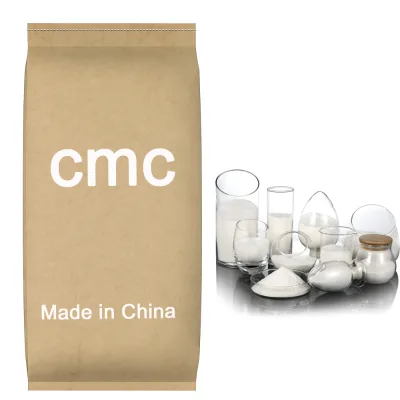


Premium Food-Grade Sodium Carboxymethyl Cellulose for Food Applications
$2000.00 - $2400.00
MOQ: 16 Tons
Comprehensive Sourcing Guide
Strategic Sourcing Guide for Food Grade Sodium Carboxymethyl Cellulose
Procuring Food Grade Sodium Carboxymethyl Cellulose (CMC) requires a disciplined approach that balances technical performance with rigorous supply chain verification. As a versatile hydrocolloid, this additive serves critical functions in texture modification, stabilization, and viscosity control across a diverse array of food categories. Buyers must navigate a complex landscape where product attributes vary significantly between industrial-grade and food-grade specifications. This guide outlines the essential parameters for sourcing, focusing on the specific characteristics observed in the current market, including packaging standards, certification requirements, and application-specific performance metrics.
Technical Specifications and Physical Attributes
Understanding the physical and chemical properties of the product is the first step in defining a precise procurement requirement. The core material is identified as Carboxymethyl Cellulose Sodium, often listed under the model designation "Food Additives CMC" or "High Quality CMC." In its raw form, the product typically presents as a white powder with no odor, existing in a solid state. These physical observations are critical for quality assurance, as deviations in color or the presence of an odor can indicate contamination or degradation.
The solubility and viscosity of the CMC are paramount functional attributes. Market listings indicate a viscosity range of 100 to 10,000, a broad spectrum that suggests the need for buyers to specify the exact viscosity grade required for their specific formulation. The pH level is generally observed between 6.0 and 8.5, which aligns with the neutral to slightly alkaline nature required for compatibility with many food systems. While some data points mention a storage condition of 2-8°C, the standard storage method for the general product is listed as "Normal," implying ambient storage is acceptable for most inventory scenarios provided the environment remains dry.
A critical distinction in specifications is the grade. The product is explicitly categorized as "Food Grade," ensuring it meets the purity standards necessary for human consumption. However, buyers must remain vigilant, as the same chemical structure is also utilized in non-food applications such as water treatment, textile auxiliary agents, and oil drilling. The procurement specification must explicitly mandate the food-grade designation to prevent cross-contamination or the receipt of industrial-grade material. The model specification "100%" often appears in listings, which buyers should verify against independent laboratory analysis to confirm the purity of the carboxymethyl cellulose content.
Compliance and Certification Verification
In the food industry, regulatory compliance is non-negotiable. The sourcing landscape for food grade CMC is characterized by a variety of certification claims. High-confidence data indicates that suppliers may hold HACCP, ISO, FDA, and BRC certifications. The presence of multiple certifications, such as the combination of HACCP, FDA, ISO, and BRC, suggests a robust quality management system, but buyers must verify the validity of each certificate individually rather than assuming a blanket compliance status.
The standard for the product is frequently cited as "25kg/Bag" or "25kg per bag," which serves as a baseline for packaging standards. However, the "Food Grade" status is the primary compliance indicator. Buyers should not rely solely on the "Food Grade" label but must request current certificates of analysis (CoA) and certificates of compliance (CoC) that specifically reference the intended application. While some background information mentions CE certification, this is noted as low-confidence and should not be used as a primary verification metric for food safety. Instead, the focus must remain on food-specific regulatory approvals like FDA and BRC, which are explicitly supported by the observed data.
Cost Drivers and Pricing Dynamics
The pricing of Food Grade Sodium Carboxymethyl Cellulose is influenced by several factors, including the viscosity grade, the level of purity, and the scale of the order. The observed listed price range in the market spans from 1 to 3,500 USD, a wide variance that reflects differences in product specifications, packaging formats, and order volumes. This range is not indicative of a single product price but rather the spectrum of available options from bulk industrial bags to smaller, specialized packaging units.
The Minimum Order Quantity (MOQ) is another significant cost driver, with observed ranges extending from 1 to 5,000 units. Buyers purchasing small quantities may face a higher unit cost, while those ordering in bulk can leverage economies of scale. The loading capacity is a critical logistical cost factor, with a standard load of 20 metric tons per 20-foot container (20mt/20FCL) observed in the market. This standardization allows for efficient freight planning but requires buyers to align their order volume with container capacity to optimize shipping costs.
Payment terms also play a role in the total cost of ownership. The standard payment structure observed involves a 50% TT (Telegraphic Transfer) in advance and a 50% TT against the copy of the Bill of Lading. This terms structure is common in international trade but requires buyers to assess the financial risk associated with the advance payment. Additionally, the origin of the product is consistently listed as China, which influences shipping lead times and potential tariffs depending on the buyer's location.
Typical Applications and Usage Scenarios
The versatility of food grade CMC is evident in its extensive application list. The product is suitable for use in meat products, drinks, flour products, condiments, jelly, ice cream, and baked goods. This broad applicability stems from its ability to act as a thickener, stabilizer, and water-retention agent. In meat products, it helps maintain moisture and texture. In drinks and flour products, it provides stability and prevents separation. For jelly and ice cream, it controls crystallization and improves mouthfeel.
However, the product data also lists usage in non-food sectors, including water treatment chemicals, textile auxiliary agents, surfactants, rubber auxiliary agents, plastic auxiliary agents, paper chemicals, leather auxiliary agents, electronics chemicals, coating auxiliary agents, and oil drilling auxiliary agents. This dual-use nature presents a risk of misclassification. Buyers must ensure that the specific batch they purchase is designated and certified for food applications. The "Main Active Ingredient" is confirmed as Carboxymethylcellulose Sodium, but the presence of other chemical applications in the product description necessitates a clear distinction in the purchase order to avoid receiving industrial-grade material intended for oil drilling or textile processing.
Supplier Evaluation and Packaging Standards
Evaluating suppliers requires a focus on their ability to maintain the integrity of the product from production to delivery. The packaging is a primary indicator of supplier professionalism. The standard packaging is consistently observed as a "Woven Bag" or "25kg Net Bag," with some options available in "1000kg Net Bag" for bulk industrial shipments. The packaging material is sometimes listed as "Paper" or "Plastic," suggesting that buyers should specify the exact material requirement to ensure compatibility with their storage and handling systems.
The origin of the product is China, and the loading port is typically Xingang Port. Buyers should verify the supplier's logistics capabilities to ensure timely delivery from this port. The lead time is observed as "Within 7 Days After Received The Order," which is a relatively short turnaround time for production and dispatch. However, this should be interpreted as the production lead time, and total delivery time will depend on shipping duration and customs clearance.
When evaluating suppliers, buyers should look for those who explicitly state "Customization: Available." This indicates flexibility in meeting specific viscosity or packaging requirements. The "Feature: Eco-Friendly" attribute is also noted, which may be relevant for buyers with sustainability goals, though the specific environmental claims should be verified against the supplier's documentation.
Quality Control and Long-Term Procurement
Maintaining consistent quality over the long term is essential for food manufacturers. The shelf life of the product is listed as greater than 12 months, providing a reasonable window for inventory management. However, the stability of the product is noted as "Flammable" in some contexts, which requires careful storage and handling protocols to mitigate fire risks. The storage method is generally "Normal," but specific conditions like 2-8°C are mentioned for certain formulations, highlighting the need for precise storage instructions based on the specific grade purchased.
For long-term procurement, buyers should establish a relationship with suppliers who can provide consistent batch-to-batch quality. The "Standard: Cellulose Ether" classification provides a baseline for the chemical family, but the specific "Food Grade" designation must be maintained. Regular third-party testing is recommended to verify the viscosity, pH, and purity of each shipment. The "Loading: 20mt/20FCL" standard suggests that buyers should plan their orders to maximize container utilization, which can reduce per-unit logistics costs.
Conclusion
Sourcing Food Grade Sodium Carboxymethyl Cellulose requires a meticulous approach that prioritizes technical specifications, regulatory compliance, and supplier reliability. The market offers a wide range of products, from basic 25kg bags to specialized bulk packaging, with certifications ranging from HACCP to BRC. Buyers must navigate the distinction between food-grade and industrial-grade applications carefully, ensuring that the product meets the specific needs of their food formulations. By focusing on verified certifications, clear packaging standards, and consistent quality control measures, buyers can secure a reliable supply of this essential food additive. The observed data provides a solid foundation for making informed decisions, but continuous verification of supplier claims and product attributes remains the cornerstone of successful procurement in this sector.
FAQs
What certifications do Food Grade Sodium Carboxymethyl Cellulose suppliers typically hold?
Suppliers often hold HACCP, ISO, FDA, and BRC certifications. Buyers must verify each certificate individually rather than assuming blanket compliance status for the product.
How is Food Grade Sodium Carboxymethyl Cellulose typically packaged for shipment?
The product is commonly packaged in 25kg woven bags or 1000kg net bags. Packaging materials may include paper or plastic, requiring specific buyer selection.
Can I customize the viscosity or packaging for this additive?
Customization is available for specific viscosity grades and packaging formats. Buyers should specify exact requirements to ensure the product meets their formulation needs.
What is the standard lead time for receiving orders of this product?
Delivery typically occurs within 7 days after the order is received. This lead time covers production and dispatch from the origin port in China.
Which applications are suitable for Food Grade Sodium Carboxymethyl Cellulose?
It is used in meat, drinks, flour products, condiments, jelly, ice cream, and baked goods. Buyers must ensure the batch is certified for food use and not industrial applications.
What is the shelf life of Food Grade Sodium Carboxymethyl Cellulose?
The shelf life is greater than 12 months under normal storage conditions. Some specific grades may require storage between 2-8°C to maintain stability.