Find Food Powder Mixing Machine for Pharma, Food, and Chemical
Source 30 food powder mixing machines from verified suppliers. Compare specifications for pharmaceutical, food, and chemical applications to find the right equipment for your production needs.
Key considerations
Products List

Pharmaceutical Food Powder Mixing Machine Three-Dimensional Mixer (HD400)
$6000.00 - $7500.00
MOQ: 1 Sets


Powder Mixer Food Mixing Machinery Equipment Industrial Powder Mixer
$18000.00 - $25000.00
MOQ: 1 Pieces
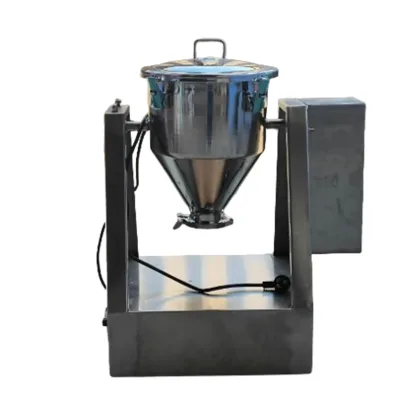


Factory Stock Stainless Steel Food Dry Powder Heating Horizontal Mixer
$2100.00 - $4200.00
MOQ: 1 Pieces


Comprehensive Sourcing Guide
Strategic Sourcing Guide for Food Powder Mixing Equipment
Procuring industrial mixing machinery for the food sector requires a disciplined approach that balances technical performance with regulatory compliance. The market for food powder mixing machines is vast, ranging from small-scale laboratory units to large-volume continuous processing lines. Buyers must navigate a landscape where specifications vary significantly between models, and where the distinction between a standard mixer and a specialized unit for high-speed or shear mixing is critical. This guide outlines the essential factors for evaluating suppliers and selecting equipment that meets the rigorous demands of food production, based on current market observations and standard industry practices.
Technical Specifications and Operational Capabilities
The core of any sourcing decision lies in the technical specifications of the equipment. When evaluating food powder mixing machines, buyers must first determine the required volume and load capacity. Market data indicates that tank volumes can range widely, with specific models offering capacities such as 400 liters, while others in the same category may support larger loads. The maximum load capacity is a distinct parameter from the tank volume; for instance, a 400-liter tank might have a maximum safe load weight of 200 kilograms. Selecting a machine with insufficient load capacity can lead to operational inefficiencies or equipment failure, while oversized units may result in unnecessary energy consumption and capital expenditure.
The power source and motor specifications are equally vital. Most industrial units operate on electric power sources, with motor ratings varying based on the mixing intensity required. A typical configuration for a high-performance unit might feature a 4 kilowatt motor, capable of driving a main shaft with a rotary speed range of 0 to 15 revolutions per minute. However, not all applications require low-speed rotation. Some food processing needs, such as granulation or high-intensity blending, necessitate high-speed mixers or shear mixers. The stirring type also plays a pivotal role; options include diving stirrers for specific fluid dynamics or horizontal structures for uniform powder distribution.
The shape of the mixing drum is another critical technical attribute. Common configurations include double cone shapes, which are excellent for gentle tumbling of free-flowing powders, and circular groove designs often associated with shear mixing. The operating type further defines the workflow; continuous operating systems are preferred for high-volume production lines, whereas batch operations may be suitable for smaller, multi-product facilities. Buyers should verify whether the machine is designed for a single product or requires frequent changeovers, as this influences the cleaning protocols and structural design.
Compliance, Certification, and Regulatory Standards
In the food industry, compliance is not optional; it is a prerequisite for market entry. When sourcing mixing equipment, buyers must rigorously verify the certifications held by the manufacturer. The most common certifications observed in the global market include ISO 9001 for quality management and ISO 14001 for environmental management. Additionally, the CE mark is a frequent requirement for equipment sold in European markets, indicating conformity with health, safety, and environmental protection standards. Some suppliers may also hold ISO and CE certifications simultaneously, which suggests a broader adherence to international standards.
Beyond general certifications, the material of construction is a primary compliance factor. Stainless steel is the industry standard for food-grade equipment due to its corrosion resistance, ease of cleaning, and non-reactive nature. Buyers must confirm that all product contact surfaces are made of high-grade stainless steel to prevent contamination. The finished dosage form the machine is intended to produce, such as granules, also dictates the necessary hygiene standards. If the machine is part of a line producing specific pharmaceutical or food-grade granules, the design must facilitate easy cleaning to prevent cross-contamination between batches.
Buyers should also be aware of regional standards. While some suppliers list their products as meeting CE standards, others may reference specific model standards like GHL-10 or GHL-200, which denote different capacity or design tiers. It is essential to request documentation proving that the specific model ordered meets the local regulatory requirements of the destination country. Relying solely on a general "CE" claim without verifying the specific directive or standard number can lead to compliance gaps during customs clearance or facility inspections.
Cost Drivers and Pricing Variables
Understanding the cost structure of food powder mixing machines is essential for budgeting and ROI analysis. The observed price range in the market is extremely broad, spanning from $1 to $550,000. This variance is driven by several factors, including the machine's capacity, automation level, and material quality. A basic 200-liter mixer will naturally cost significantly less than a 2000-liter continuous operating unit with advanced shear capabilities. The "Automatic Grade" of the machine is a major cost driver; full-automatic systems command a premium over semi-automatic or manual models due to the integrated control systems and reduced labor requirements.
Additional cost factors include the customization options available. While many suppliers offer customization, the extent of this customization directly impacts the final price. Customizations might involve specific motor ratings, unique drum shapes, or specialized control interfaces. The packing method also influences logistics costs; equipment shipped in plywood cases or wooden bases requires different handling and freight arrangements compared to standard export packing. Buyers should request a detailed breakdown of costs, separating the base machine price from customization fees, shipping, and installation costs.
It is important to note that the Minimum Order Quantity (MOQ) for these industrial units is often flexible, with many suppliers offering an MOQ of 1 unit. This allows buyers to purchase single units for pilot plants or small-scale operations without being forced into bulk orders. However, the lead time and production schedule should be clarified, as custom orders may extend the delivery window. Buyers should avoid assuming a fixed price based on online listings, as final quotes often depend on the specific configuration and current raw material costs.
Typical Applications and Industry Segmentation
Food powder mixing machines serve a diverse range of applications across the food, chemical, and pharmaceutical industries. The versatility of these machines allows them to handle various materials, from fine powders to granules. In the food industry, these mixers are used for blending dry ingredients such as flour, spices, and nutritional supplements. The specific application area, such as chemical or food processing, dictates the required hygiene level and material compatibility.
The mixing process itself varies by application. For instance, high-speed mixers are often employed for applications requiring rapid dispersion of ingredients, while shear mixers are ideal for breaking down agglomerates in powder blends. Some units are equipped with additional capabilities like granulating, which allows for the conversion of powders into granules within the same machine, streamlining the production process. The working type, whether it is a shear mixer or a standard powder mixer, determines the suitability for specific food products.
Buyers must align the machine's capabilities with their specific production needs. A machine designed for the pharmaceutical industry, which often requires strict adherence to Good Manufacturing Practices (GMP), might be over-engineered for a simple dry spice blending operation, leading to unnecessary costs. Conversely, a basic food mixer may lack the precision required for pharmaceutical-grade granulation. The product name, such as "HD400 Three-Dimensional Mixer" or "Plastic Mixer," often hints at the intended use, but the technical specifications must be cross-referenced with the actual application requirements to ensure a perfect fit.
Supplier Evaluation and Quality Assurance
Evaluating suppliers requires a focus on reliability, technical support, and quality assurance processes. The origin of the equipment is a significant indicator of supply chain stability; many suppliers are located in industrial hubs such as Zhangjiagang, Jiangsu, China, which is known for its manufacturing capabilities. However, the location alone does not guarantee quality. Buyers should verify the supplier's track record in producing equipment for the food industry specifically, as the standards for food machinery differ from those for general industrial use.
Quality control should be a central part of the supplier evaluation. Buyers should inquire about the testing procedures used before shipment, including load tests and performance checks. While specific test results are not always publicly listed, reputable suppliers should be willing to provide evidence of their quality control processes. The condition of the equipment, typically listed as "New," should be verified, and buyers should ensure that the machine is not a refurbished unit sold as new unless explicitly stated.
The warranty period is another critical metric for supplier reliability. A standard warranty of one year is common in the market, but buyers should review the terms carefully to understand what is covered, including parts, labor, and on-site support. Suppliers that offer comprehensive warranty terms and responsive technical support are generally more reliable partners for long-term procurement. Additionally, the availability of spare parts and the lead time for replacements should be confirmed to minimize downtime in the event of a failure.
Long-Term Procurement and Maintenance Considerations
Procuring a Food Powder Mixing Machine is a long-term investment that extends beyond the initial purchase. Buyers must consider the total cost of ownership, including energy consumption, maintenance requirements, and the potential for future upgrades. The power rating of the machine, such as a 4kW motor, directly impacts operational costs, and energy-efficient models should be prioritized where possible. The structure of the machine, whether horizontal or vertical, also affects maintenance accessibility; horizontal structures often allow for easier access to internal components for cleaning and repair.
Maintenance planning should include the availability of cleaning protocols. Machines with complex structures or hard-to-reach areas may require more time and resources for cleaning, which can impact production throughput. The packing method, such as wooden cases or plywood cartons, should be durable enough to protect the machine during shipping but also consider the ease of unpacking and installation. Buyers should also evaluate the scalability of the equipment; if production volumes are expected to grow, the machine should have the capacity to handle increased loads without requiring a complete replacement.
Finally, the customization options available should be viewed as a strategic asset. As production needs evolve, the ability to customize the machine for new products or processes can extend the lifespan of the equipment. Buyers should work with suppliers who offer flexible customization services, allowing for adjustments to the mixing drum shape, stirring type, or control systems as the business grows. By focusing on these long-term factors, buyers can ensure that their investment in food powder mixing machinery remains productive and compliant for years to come.
FAQs
What is the maximum load capacity for the HD400 mixer?
The maximum load capacity is 320 liters for the HD400 model. This is distinct from the tank volume of 400 liters, ensuring safe operation within specified weight limits of 200 kilograms.
Which certifications do these food powder mixers typically hold?
These machines commonly hold ISO 9001, ISO 14001, and CE certifications. Buyers should verify specific model compliance, as some units may list CE and ISO standards simultaneously for broader regulatory adherence.
Can the machine be customized for specific industrial needs?
Yes, customization is available for various industrial requirements. Buyers can request specific configurations, though the extent of customization will directly impact the final price and production timeline.
What is the power source and motor rating for these units?
The power source is electric with a typical motor rating of 4 kilowatts. This configuration drives the main shaft with a rotary speed range of 0 to 15 revolutions per minute.
How are these machines packed for international shipping?
Packing options include plywood cases, wooden cases, or wooden bases depending on the model. Standard export packing is also available, ensuring durability during transit from the origin in China.
What is the warranty period for new industrial mixers?
A standard warranty of one year is provided for new equipment. Buyers should review terms carefully to understand coverage for parts, labor, and on-site support during the warranty period.