Source Galvanized Rod Bar Railings for walkways, bridges, and platforms
Find and compare 30 listings for Galvanized Rod Bar Railings suitable for steel walkways, bridges, and structural platforms. Buyers can review specifications including material types, surface treatments, and customization options to identify the right components for industrial applications.
Key considerations
Products List


Modern Style Solid Bar Metal Outdoor Balustrades Design Rod Railing for Balcony
$75.00 - $110.00
MOQ: 1 Meters

Customized Balustrade USA Standard Stainless Steel Horizontal Rod Bar Railing
$75.00 - $110.00
MOQ: 1 Pieces


$32.00 - $40.00
MOQ: 100 Square Meters


Interior Carbon Steel Balustrade Solid Rod Stair Railing Handrail Design
$65.00 - $120.00
MOQ: 50 Meters


$600.00 - $800.00
MOQ: 1 Tons


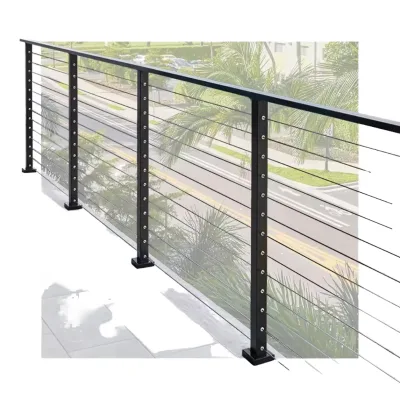


$30.20 - $33.50
MOQ: 500 Square Meters


Comprehensive Sourcing Guide
Strategic Sourcing Guide for Galvanized Rod Bar Railings
Understanding Product Variants and Material Specifications
When sourcing Galvanized Rod Bar Railings, buyers must first navigate the diverse landscape of material compositions and manufacturing methods available in the global market. The term "Galvanized Rod Bar Railings" often encompasses a spectrum of products ranging from carbon steel structures to stainless steel assemblies, each serving distinct functional requirements. Based on observed market data, the primary material distinction lies between carbon steel and stainless steel options. Carbon steel variants are frequently utilized for heavy-duty structural applications, such as steel structure walkways, foot pedals, and drain covers, where the galvanized coating provides essential corrosion resistance against environmental exposure. In contrast, stainless steel options, often specified as 304, 316, or 316L grades, are preferred for applications requiring higher hygiene standards or superior resistance to aggressive chemical environments, such as in marine settings or food processing facilities.
The manufacturing method is another critical differentiator that influences the final product's integrity and cost. The market features products produced via machine welding, which ensures consistent joint strength and dimensional accuracy for flat shape components. Additionally, some variants are formed through casting processes, creating solid rod structures that may offer unique aesthetic or load-bearing characteristics. The surface treatment process is equally vital; while the core keyword emphasizes galvanization, observed listings indicate a variety of finishing techniques. Some products undergo hot-dip galvanizing, while others may feature powder coating or general surface coating treatments. Buyers must verify whether the "galvanized" designation refers to the base material protection or an additional layer applied over a coated frame. The specific model numbers observed, such as MWN-WC12, PR-ML, and HT-S-G-001, suggest that manufacturers offer highly customized configurations rather than a single standardized SKU, necessitating a detailed review of technical drawings before ordering.
Technical Specifications and Design Parameters
Defining the precise technical specifications is the cornerstone of a successful procurement strategy for Galvanized Rod Bar Railings. The physical attributes of these products vary significantly based on the intended application, ranging from simple handrails to complex structural frameworks. A key specification to evaluate is the shape and form of the rod bars. Observed data indicates that products are available in flat shapes, round holes, and solid rod configurations with diameters typically ranging from 8mm to 12mm. The balustrade designs can be either round or square, allowing for customization to match architectural aesthetics or safety codes. Furthermore, the height of the railing is often a customizable parameter, enabling buyers to meet specific building code requirements or site-specific safety protocols.
The structural integrity of the railing system is often defined by the type of steel used. For instance, reinforcing steel bars are categorized by their forming technique, such as hot-rolled equal bars, which provide uniform strength across the length of the material. The alloy composition is another technical factor; while some products are non-alloy, others may incorporate specific stainless steel grades to enhance durability. The connection methods, such as machine welding, play a crucial role in the overall stability of the assembly. Buyers should also consider the packing specifications, as these can impact the condition of the product upon arrival. Options range from pallets and metal pallets to plywood cases and wooden cases, with specific bundle counts like 10 pieces per bundle or 200 to 400 pieces per pallet being common. These logistical details are not merely administrative but directly influence the handling, storage, and installation efficiency of the railings on-site.
Compliance, Certification, and Quality Standards
Navigating the complex web of certifications and quality standards is essential for ensuring that Galvanized Rod Bar Railings meet international safety and performance requirements. The market data reveals a variety of certification claims, including ISO, CE, RoHS, and ASTM approvals. Some listings explicitly mention compliance with Chinese standards such as Yb/T4001-1998, while others reference international standards like GB, ASTM, AISI, DIN, and JIS. The presence of SGS approval is also noted in several product descriptions, indicating that third-party verification of quality and standards is a common practice in this sector. However, buyers must exercise caution, as certification claims can vary between individual suppliers and specific product models. It is imperative to verify that the specific unit being purchased carries the relevant certification rather than assuming that a supplier's general portfolio includes all listed standards.
Quality assurance in this sector is often tied to the manufacturing origin and the specific quality management systems employed. Products originating from regions like Anping, Guangdong, and Shandong in China are prominent in the market, each potentially adhering to different local and international benchmarks. The standard "SGS ISO CE" or "SGS ISO" suggests a multi-layered approach to quality control, where independent testing agencies validate the product against established norms. For structural applications, such as steel workshops, platforms, and bridges, compliance with standards like ASTM and GB is non-negotiable. Buyers should request specific test reports or certificates of conformity that correspond to the exact model number and material grade ordered. Relying solely on a supplier's general certification status without verifying the specific product batch can lead to compliance gaps, particularly when dealing with critical infrastructure projects where failure is not an option.
Cost Drivers and Procurement Economics
The pricing structure for Galvanized Rod Bar Railings is influenced by a complex interplay of material costs, manufacturing complexity, and logistical factors. The observed price range in the market spans from $0.10 to $1,100 USD, a vast disparity that reflects the difference between small, single-component rods and large, fully assembled railing systems. The primary cost driver is the material type; stainless steel variants, particularly those using 304 or 316 grades, command a premium over carbon steel options due to the higher raw material costs and the additional processing required to achieve the desired corrosion resistance. The surface treatment method also significantly impacts the final price. Galvanization, powder coating, and specialized finishing processes add layers of cost that must be factored into the total budget.
Minimum Order Quantities (MOQs) represent another critical economic factor, with observed ranges extending from 1 unit to 10,000 units. This wide range indicates that suppliers cater to both small-scale renovation projects and large-scale industrial deployments. For buyers with lower volume requirements, the per-unit cost may be higher due to the fixed costs of setup and packaging. Conversely, bulk orders can leverage economies of scale, reducing the unit price but requiring significant capital outlay and storage capacity. The packaging method, whether in wooden cases, plywood crates, or standard pallets, also contributes to the overall cost, especially for international shipments where freight charges are calculated based on volume and weight. Buyers should carefully analyze the total landed cost, including shipping, duties, and handling fees, rather than focusing solely on the base product price. Understanding the relationship between MOQ, material grade, and finishing options is essential for optimizing the procurement budget without compromising on quality or safety standards.
Supplier Evaluation and Geographic Considerations
Evaluating potential suppliers requires a thorough assessment of their geographic location, manufacturing capabilities, and track record. The supply chain for Galvanized Rod Bar Railings is heavily concentrated in China, with key production hubs identified in Anping, Guangdong, and Shandong. Each of these regions has developed specialized expertise in metal fabrication and steel processing. Anping, for instance, is renowned for its wire mesh and metal structure industries, while Shandong and Guangdong are known for their robust manufacturing bases capable of producing complex steel components. Buyers should verify the specific origin of the product to ensure it aligns with their quality expectations and logistical needs.
When assessing suppliers, it is crucial to look beyond the basic product listing and investigate their manufacturing methods and quality control processes. The presence of certifications like ISO and SGS is a positive indicator, but buyers should seek evidence of how these standards are implemented in daily operations. Questions regarding the customization capabilities of the supplier are also vital, as many listings indicate that customization is available for shape, size, and finishing. A supplier's ability to adapt to specific project requirements, such as custom heights or unique hole shapes, can be a decisive factor in the selection process. Additionally, buyers should evaluate the supplier's packaging standards to ensure that the products arrive in optimal condition. The variety of packaging options, from metal pallets to wooden cases, suggests that suppliers are aware of the need to protect their products during transit, but the specific handling procedures should be confirmed to prevent damage.
Long-Term Procurement and Application Suitability
Selecting the right Galvanized Rod Bar Railings involves considering the long-term performance and suitability of the product for its intended application. The observed applications for these products are diverse, ranging from drain covers and foot pedals to steel structure walkways, bridges, and structural roofing. Each application imposes different demands on the railing system. For instance, a steel structure bridge requires a high degree of structural integrity and resistance to dynamic loads, whereas a foot pedal in a public area may prioritize ease of cleaning and slip resistance. The choice between carbon steel and stainless steel should be guided by the environmental conditions the railing will face. Carbon steel with galvanization is suitable for general outdoor use, while stainless steel is preferred for environments with high moisture or chemical exposure.
Long-term procurement considerations also include the maintenance requirements and lifespan of the railing system. Products with powder-coated frames or galvanized surfaces generally offer extended service life, but the quality of the coating and the thickness of the galvanization layer are critical factors. Buyers should inquire about the expected lifespan of the product under specific conditions and whether the supplier offers warranties or guarantees on the finish. Furthermore, the availability of replacement parts or the ability to source additional units in the future should be considered to ensure the longevity of the installation. By aligning the technical specifications, material choices, and supplier capabilities with the specific application requirements, buyers can secure a solution that delivers value and safety over the long term.
FAQs
What certifications do Galvanized Rod Bar Railings typically have?
These railings often carry ISO, CE, and ASTM certifications. Some listings also specify SGS approval or RoHS compliance. Buyers should verify that the specific model ordered matches the claimed certification rather than assuming all products from a supplier share the same standards.
Which materials are used for Galvanized Rod Bar Railings?
Products are commonly made from carbon steel or stainless steel grades like 304 and 316. Carbon steel is often used for structural walkways, while stainless steel suits environments requiring higher hygiene. The material choice depends on the specific application and corrosion resistance needs.
How are these railings manufactured and finished?
Manufacturing methods include machine welding for flat shapes and casting for solid rods. Surface treatments vary from hot-dip galvanizing to powder coating. The frame finishing may be coated or left uncoated depending on the specific product model and intended use.
Can the dimensions and shape of the railings be customized?
Yes, customization is available for height, hole shape, and balustrade design. Buyers can request specific dimensions like solid rod diameters of 8mm, 10mm, or 12mm. Customization allows the product to meet unique project requirements for steel structures or walkways.
What are the standard packaging options for these products?
Packaging options include pallets, metal pallets, plywood cases, and wooden cases. Some items are bundled with 10 pieces per bundle before being placed on larger pallets. The specific packing method depends on the product model and shipping requirements.
Where are these galvanized railings typically manufactured?
Products originate from key manufacturing hubs in China, including Anping, Guangdong, and Shandong. Each region has specialized expertise in metal fabrication. Buyers should confirm the specific origin to ensure alignment with quality expectations and logistical needs.