Source Gas Heating Stir-Fry Robot for Restaurants, Catering, and Food Processing
Find and compare 30 gas heating stir-fry robot models from Chinese manufacturers. Evaluate options featuring stainless steel construction, various voltage inputs, and automated cooking functions to streamline commercial kitchen operations.
Key considerations
Products List


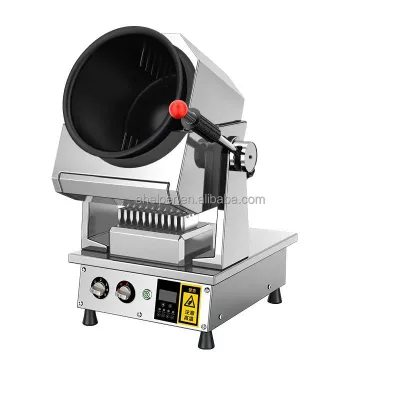
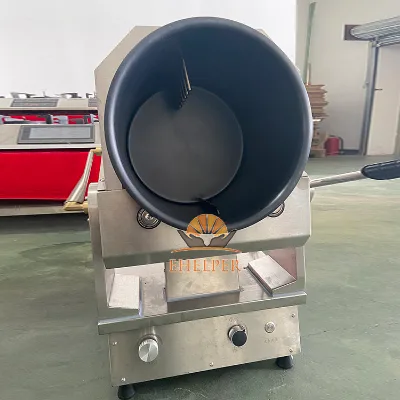
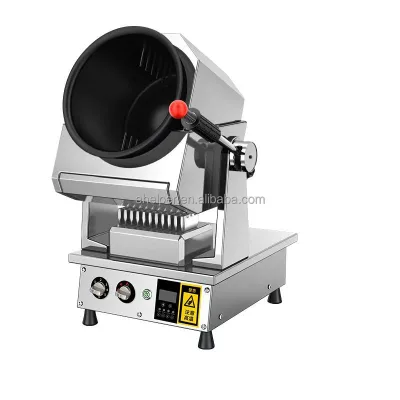
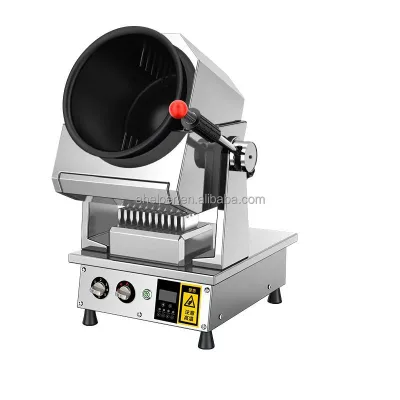
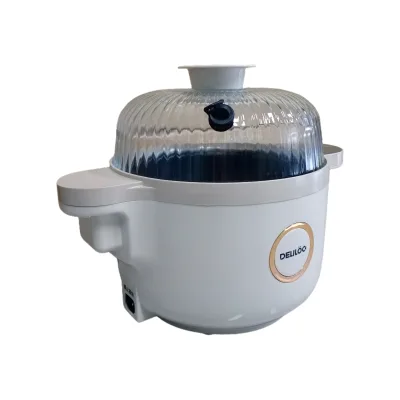


EV Fried Rice Machine Restaurant Automatic Pot Stirrer Cooking Robot
$1350.00 - $1380.00
MOQ: 1 Pieces

Automatic Wok Machine Gas Cooking Machine Stir Fry Machine Robot Cooker Machine
$1350.00 - $1380.00
MOQ: 1 Pieces

Restaurant Kitchen Use Automatic Stir Fry Machine Gas Cooking Rotating Fried Rice Robot Cooker
$1350.00 - $1380.00
MOQ: 1 Pieces

Intelligent Stir Fry Machine Robot Cooker Wok Fry Pan Full Automatic Electric Gas Cooking Machine
$1350.00 - $1380.00
MOQ: 1 Pieces


Commercial Kitchen Industrial Automatic Gas Drum Stir Fry Machine Food Cooking Robot Machine
$3600.00 - $6000.00
MOQ: 1 Pieces


Gas Heating Cooking Machine Robot Automatic Hotel Cooking Pot with Mixer
$4000.00 - $5500.00
MOQ: 1 set

Intelligent Multi-Function Automatic Gas Fried Rice Eggs Automatic Cooking Robot Machine
$3600.00 - $6000.00
MOQ: 1 Pieces

Anti-stick Woks and Stir Pans Fast Heating Automatic Stir Fry Robot Wok
$2900.00 - $4900.00
MOQ: 1 units
Comprehensive Sourcing Guide
Gas Heating Stir-Fry Robot Sourcing Guide
Sourcing automated cooking equipment requires a clear distinction between electric and gas-powered systems, as the operational infrastructure and safety protocols differ significantly. While the observed market data highlights a strong presence of electric models with voltages ranging from 110V to 380V, buyers seeking gas heating solutions must navigate a specialized subset of the market. Gas-fired stir-fry robots offer distinct advantages in thermal responsiveness and energy efficiency for high-volume commercial kitchens, but they introduce complexities regarding gas line installation, ventilation requirements, and specific safety certifications that do not apply to their electric counterparts.
This guide focuses on the critical evaluation steps for procuring gas heating stir-fry robots, leveraging general industry knowledge of commercial kitchen automation. Buyers must verify that the supplier explicitly supports gas configurations, as many manufacturers listed in general catalogs may only offer electric variants. The decision to source gas equipment involves assessing the kitchen’s existing utility infrastructure, ensuring that the chosen model aligns with local gas pressure standards and that the supplier provides adequate documentation for gas-specific compliance in the destination country.
Product Scope and Observed Listing Signals
The current market landscape for automated cooking machines is dominated by electric units, with observed listings frequently specifying voltages of 220V, 380V, or multi-voltage options like 110V/220V/380V. Models such as the DLB-TZS50 and DLB-GQ30J are explicitly described with electric power sources, indicating that gas heating is not the primary offering in the general aggregate of available products. Consequently, buyers must actively filter for gas-specific attributes, as the default assumption from general product titles like "Stir Fry Machine" or "Automatic Cooking Machine" often points toward electric thermal processing units.
When evaluating listings, buyers should look for explicit mentions of gas types, such as natural gas, LPG, or propane, and verify the burner configuration. The observed data shows a wide range of capacities, from small batches of 0.5-3kg to larger industrial capacities up to 79kg, which applies to both electric and gas variants. However, gas models typically require verification of BTU output and gas consumption rates, metrics that are not present in the standard electric-focused specifications. Buyers must treat the presence of a "Timing Device" or "Digital Display" as common features across both types, but the heating mechanism remains the primary differentiator requiring specific confirmation.
Technical Specifications to Verify
Gas heating stir-fry robots require precise verification of gas pressure ratings and connection types to ensure compatibility with the kitchen’s utility supply. Unlike electric models that rely on voltage and phase (e.g., 380V, 3 Phase), gas units must be matched to the local gas pressure, whether it is low, medium, or high pressure, and the specific gas composition available in the region. Buyers should request detailed technical sheets that specify the gas inlet pressure, burner type, and total gas consumption per batch, as these factors directly impact cooking performance and operational costs.
The material construction of the cooking pot and heating chamber is critical for durability and food safety, with stainless steel #304 being a common standard observed in the market. For gas models, the integrity of the heat exchanger and the resistance of the pot material to direct flame exposure must be assessed. Additionally, buyers should verify the stirring mechanism’s compatibility with gas heating, ensuring that the rotation speed and torque are sufficient to handle the thermal dynamics of gas-fired cooking, which may differ from the more uniform heat distribution of electric induction or heating elements.
Compliance and Safety Documentation
Gas-powered equipment introduces specific safety risks that necessitate rigorous documentation and certification beyond standard electrical safety checks. Buyers must ensure that the supplier provides certificates for gas appliance compliance, such as CE marking for gas directives in Europe or equivalent standards in other regions, which cover gas tightness, flame failure devices, and ventilation requirements. The absence of gas-specific certification in general product listings is a red flag, and buyers should explicitly request proof of compliance with local gas safety regulations before finalizing any purchase.
Ventilation and exhaust system integration is another critical compliance area for gas stir-fry robots. Unlike electric units that primarily generate waste heat, gas models produce combustion byproducts that must be effectively removed from the kitchen environment. Buyers should verify that the supplier provides guidelines for exhaust hood sizing and placement, ensuring that the robot’s heat and gas output are compatible with the kitchen’s existing ventilation infrastructure. This verification step is essential to maintain air quality and meet occupational health and safety standards in commercial food preparation areas.
Cost Drivers and Commercial Terms
The cost structure for gas heating stir-fry robots is influenced by the complexity of the gas burner system, the material quality of the pot, and the level of automation features such as menu storage and voice broadcast. While observed electric models show a price range of $73.7 to $8,500, gas models may command a premium due to the additional engineering required for safe and efficient gas combustion. Buyers should anticipate that higher-capacity units, such as those with a 2.5-79kg capacity, will involve higher costs due to the larger gas burners and more robust construction needed to handle increased thermal loads.
Commercial terms for gas equipment often include additional considerations for installation and maintenance. Buyers should clarify whether the quoted price includes gas connection kits, regulators, or safety valves, as these components may vary by region and are not always standard. Furthermore, the availability of spare parts for gas-specific components, such as burners, thermocouples, and gas valves, should be confirmed to ensure long-term operational reliability. The observed MOQ of 1-1 suggests that single-unit purchases are feasible, but buyers should negotiate for comprehensive training and support packages to mitigate the risks associated with gas appliance operation.
Supplier Qualification and Quality Control
Supplier qualification for gas heating stir-fry robots requires a deeper dive into their manufacturing capabilities and quality control processes for gas-specific components. Buyers should verify that the supplier has experience in producing gas appliances and can provide references or case studies of successful installations in similar markets. The observed data indicates that many suppliers offer OEM/ODM capacity, which is beneficial for customizing gas models to specific kitchen layouts or operational requirements, but buyers must ensure that the supplier maintains strict quality control over gas tightness and combustion efficiency.
Quality control checks should include factory acceptance tests that simulate real-world gas heating conditions, verifying the stability of the flame, the accuracy of temperature control, and the effectiveness of safety interlocks. Buyers should request test reports or certificates from independent laboratories that assess the gas appliance’s performance and safety standards. Additionally, the supplier’s ability to provide detailed assembly and installation instructions, including gas line connection diagrams and safety warnings, is a key indicator of their professionalism and commitment to customer safety.
Long-Term Procurement Checks
Long-term procurement success for gas heating stir-fry robots depends on the availability of ongoing technical support and maintenance services. Buyers should establish a clear service agreement with the supplier that covers routine maintenance, troubleshooting, and the supply of replacement parts for gas-specific components. The observed customization options, such as digital displays and voice broadcasts, may require software updates or hardware replacements over time, so buyers should ensure that the supplier provides long-term support for these features as well.
Energy efficiency and environmental impact are also critical considerations for long-term procurement. Buyers should monitor the gas consumption rates of the installed units and compare them against industry benchmarks to identify any deviations that may indicate inefficiency or maintenance issues. Regular audits of the gas appliance’s performance, including flame quality and heat distribution, should be conducted to ensure consistent cooking results and compliance with safety standards. By proactively managing these aspects, buyers can maximize the lifespan and ROI of their gas heating stir-fry robots while maintaining a safe and efficient kitchen environment.
FAQs
Can I find gas heating stir-fry robots with CE certification?
Yes, gas heating stir-fry robots with CE certification are available in the current product listings. These units often feature stainless steel construction and come with options for customized OEM or ODM services to meet specific operational needs.
What voltage options are available for these automatic cooking machines?
The available voltage options include 220V, 380V, and 110V configurations. Some models support single-phase power while others require three-phase power, allowing flexibility for different electrical infrastructure setups in commercial kitchens.
Which models offer timing devices for automated cooking cycles?
Certain models like the DLB-TZS50 come equipped with timing devices for precise control. Other variants may operate without timing devices, so buyers should verify specific model specifications to ensure the desired automation level is included.
How much capacity do these stir fry machines typically handle?
Machinery capacity ranges from 0.5 kg to 79 kg per batch depending on the specific model. Smaller units like the DLB-GQ30J handle 2-3 kg, while larger industrial versions can process up to 79 kg in a single cycle.
Can suppliers provide customized packaging for these electric cooking units?
Yes, suppliers offer customized packaging options including sea freight containers, pallets, and wooden boxes. This flexibility ensures safe transport and allows buyers to tailor packaging to their specific logistics requirements and destination markets.
What is the typical lead time for ordering these stainless steel machines?
Lead times vary based on customization and order volume, but standard models are often available for immediate shipment. Customized orders may require additional time for manufacturing and quality assurance processes before delivery from the Guangdong origin.