Source GMP Certified Perfume Chiller for Mixing, Filtration, and Cooling
Compare 30 GMP Certified Perfume Chiller units from verified Chinese manufacturers. These machines support mixing, filtration, and cooling for viscous fluids and liquid suspensions in industrial applications. They feature air cooling, stainless steel construction, and spiral stirring types suitable for various production needs.
Key considerations
Products List

High Ambient Air-Cooled Chiller from ISO 9001 certified manufacturing
$6888.00 - $7800.00
MOQ: 1 Pieces


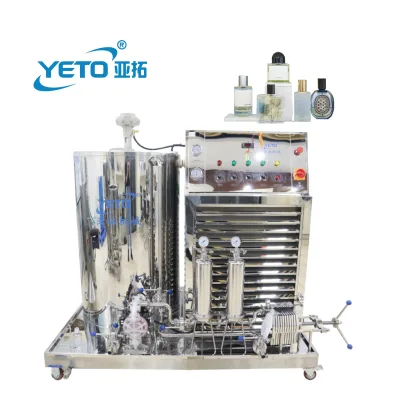


Semi-Auto Perfume Freezing Filter Perfume Manufacturing Equipment with Chiller
$6000.00 - $8000.00
MOQ: 1 Pieces

Perfume Chiller Mixer Machine Perfume Freezer Mixer Perfume Mixing Machine
$6000.00 - $9000.00
MOQ: 1 Pieces

500L Perfume Making Machine Chiller Filter Perfume Mixing Machine with Pump
$6000.00 - $12000.00
MOQ: 1 Pieces


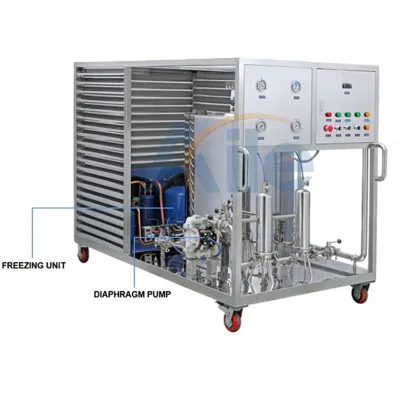
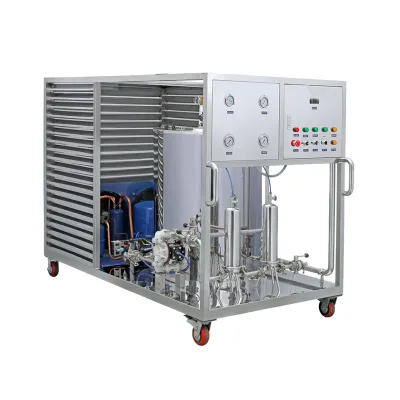
Parfum Perfume Freezing Filter Parfum Freezing Equipment Parfum Making Machine
$7163.62 - $7675.31
MOQ: 1 pieces


Perfume Making Machine Chiller Mixing Cooling Machine to Make Perfume
$5500.00 - $8500.00
MOQ: 1 Pieces


Perfume Making Machine Perfume Industry Equipment Perfume Chilling
$10000.00 - $15000.00
MOQ: 1 Pieces


Customized Big Capacity Liquid Perfume Freezing Filter Chiller Machine Fragrance Mixing Making Tank
$4800.00 - $7200.00
MOQ: 1 Pieces

Comprehensive Sourcing Guide
GMP Certified Perfume Chiller Sourcing Guide
Procuring a GMP Certified Perfume Chiller requires a nuanced understanding of how refrigeration integrates with mixing and filtration processes in cosmetic manufacturing. The core keyword highlights equipment that not only cools but often combines chilling with mixing and filtering functions, such as the 500L or 100L perfume mixing machines observed in current listings. Buyers must recognize that "GMP certified" is often a process claim rather than a standalone product certificate, meaning the equipment design must facilitate hygiene, cleanability, and traceability to meet Good Manufacturing Practice standards.
The observed market signals indicate a strong presence of integral units from China, specifically Guangzhou, with models like the SPX and SCM-VA series. These machines frequently feature stainless steel construction, air-cooled systems, and spiral stirring types designed for viscous fluids or liquids with suspended solids. The price range of $500 to $15,000 USD suggests significant variation in capacity and automation levels, with many suppliers offering customization for specific production line needs. Understanding these baseline attributes is crucial for aligning procurement with actual facility requirements rather than generic specifications.
Product Scope and Observed Listing Signals
The product scope for perfume chillers extends beyond simple temperature control to include integrated mixing, freezing, and filtration capabilities. Listings frequently describe units as "perfume making machines" or "chilling filter mixers," indicating a multi-functional approach where cooling is paired with agitation to ensure homogeneity and clarity. The observed mixing drum shapes vary, including disc and conical designs, which directly impact the shear forces and mixing efficiency for different fragrance viscosities. Buyers should verify if the unit includes additional capabilities like milling or granulating, as these features can streamline the production workflow by reducing the need for separate processing steps.
Observed specifications reveal a focus on industrial applications with capacities ranging from 100L to 500L, catering to mid-scale to large-scale perfume production. The units are typically new, air-cooled, and operate at 380V/50Hz, with noise levels described as ultra-low or low, which is critical for maintaining a comfortable working environment in enclosed manufacturing spaces. The packing is consistently noted as wooden cases, suggesting robust protection for international shipping. Procurement teams must assess whether the observed mixing capacity aligns with their batch sizes, as mismatched capacities can lead to inefficient production cycles or underutilized equipment.
Technical Specifications to Verify
Technical verification must begin with the material composition, as stainless steel is the standard for hygiene and corrosion resistance in perfume production. Buyers should confirm the grade of stainless steel used in the mixing drum and piping, ensuring it meets food-grade or cosmetic-grade standards to prevent contamination. The insulation material, often listed as foam glass, plays a vital role in maintaining consistent temperatures and energy efficiency. It is essential to verify the thickness and quality of this insulation, as poor insulation can lead to temperature fluctuations that compromise the stability of volatile fragrance compounds.
The cooling method and air source pressure are critical technical parameters that must be validated against facility infrastructure. Most observed units are air-cooled, requiring adequate ventilation and ambient temperature control to function efficiently. The air source pressure is typically specified around 0.5-0.6MPa, which must be compatible with the plant's compressed air system. Additionally, the stirring type, such as spiral mixing, and the working speed must be evaluated for their ability to handle the specific viscosity of the perfume being produced. Buyers should also check the filtration specifications, such as the 1.0μm stair filter, to ensure it meets the clarity requirements of the final product.
Compliance and Safety Documentation
Compliance documentation is paramount when sourcing equipment for GMP-regulated environments. While certifications like CE, RoHS, and ISO are frequently listed, buyers must distinguish between product certifications and facility certifications. The CE mark indicates conformity with health, safety, and environmental protection standards for products sold within the European Economic Area, but it does not automatically imply GMP compliance for the manufacturing process. Buyers should request detailed documentation on how the equipment design supports GMP principles, such as ease of cleaning, lack of dead legs, and material traceability.
ISO certifications, including ISO 9001 for quality management and ISO 22716 for cosmetic GMP, are often referenced in supplier backgrounds. However, these certifications typically apply to the manufacturer's quality system rather than the individual machine. Procurement teams must verify if the supplier has a documented quality control process that ensures each unit meets the specified standards. It is also crucial to confirm that the electrical components and controls comply with relevant safety standards, such as RoHS, to ensure environmental safety and operational reliability. Buyers should insist on comprehensive manuals and compliance certificates for all critical components.
Cost Drivers and Commercial Terms
Cost drivers for perfume chillers include capacity, material quality, and the level of integration with mixing and filtration systems. The observed price range of $500 to $15,000 USD reflects these variables, with higher prices typically associated with larger capacities, advanced automation, and superior stainless steel grades. Customization options, such as specific mixing drum shapes or integrated chillers, can significantly impact the final cost. Buyers should analyze the total cost of ownership, including energy consumption, maintenance requirements, and potential downtime, rather than focusing solely on the initial purchase price.
Commercial terms often include a minimum order quantity (MOQ) of 1 unit, allowing for flexible procurement for pilot projects or small-scale production. The standard packing by wooden case is a key logistical consideration, as it affects shipping costs and insurance requirements. Buyers should negotiate clear terms regarding delivery, installation, and after-sales support, as these factors can influence the overall value of the procurement. It is advisable to clarify the lead time and warranty conditions, ensuring that any delays or defects are addressed promptly to minimize production disruptions.
Supplier Qualification and Quality Control
Supplier qualification requires a thorough assessment of the manufacturer's capabilities and quality control processes. Given that many suppliers are located in Guangzhou, China, buyers should verify the supplier's production capacity, technical expertise, and track record in the cosmetic machinery industry. Requesting references from existing clients, particularly those in the perfume or cosmetics sector, can provide valuable insights into the reliability and performance of the equipment. Buyers should also evaluate the supplier's ability to provide customization, as this indicates flexibility and technical competence.
Quality control measures should be explicitly defined in the procurement contract, including pre-shipment inspections and testing protocols. Buyers should insist on witnessing factory acceptance tests (FAT) to verify that the equipment meets all specified technical parameters, such as cooling efficiency, mixing uniformity, and filtration clarity. Documentation of material certificates and component origins is essential for ensuring traceability and compliance. Establishing a clear communication channel for technical support and spare parts availability is also crucial for long-term operational success.
Long-Term Procurement Checks
Long-term procurement checks focus on the sustainability and scalability of the equipment investment. Buyers should assess the availability of spare parts and the supplier's commitment to providing technical support over the equipment's lifecycle. Regular maintenance schedules and cleaning protocols must be established to ensure the equipment remains in compliance with GMP standards. Monitoring the performance of the chiller and mixing systems over time can help identify potential issues early, preventing costly downtime and product quality issues.
It is also important to stay updated on changes in regulatory standards and industry best practices that may affect equipment requirements. Buyers should periodically review their procurement strategy to ensure it aligns with evolving business needs and technological advancements. Engaging with industry networks and attending trade shows can provide insights into new technologies and potential suppliers. By maintaining a proactive approach to equipment management and supplier relationships, buyers can ensure the long-term success and efficiency of their perfume production operations.
FAQs
What certifications do the perfume chillers have?
The products hold RoHS, UR, ISO, and CE certifications. These standards ensure compliance with safety and environmental regulations for industrial applications. Buyers can verify these documents directly with the Guangzhou-based manufacturers before placing orders.
Can I customize the mixing capacity for my needs?
Yes, customization is available for mixing capacities ranging from 100 to 249 liters. The equipment supports various drum shapes like disc or conical designs. This flexibility allows buyers to select units that fit specific production lines without compromising performance.
How is the cooling method implemented in these machines?
These units utilize an air-cooled method for efficient temperature control. The system operates at ultra-low noise levels while maintaining high-speed mixing capabilities. This design ensures stable operation in industrial environments without requiring complex water cooling infrastructure.
What is the standard voltage for the equipment?
The selected voltage is 380V at 50Hz for standard operation. This specification supports heavy-duty industrial applications involving viscous fluids or liquids with suspended solids. Buyers should confirm their local power supply matches these requirements before installation.
Which materials are used for the mixing drum construction?
The mixing drums are constructed from stainless steel for durability and hygiene. Insulation materials include foam glass to maintain precise temperature control during the freezing process. This combination ensures long-term reliability for perfume and cosmetic production lines.
How are the machines packed for international shipping?
Products are packed in wooden cases to ensure safe transit. This robust packaging protects the integral unit structure and sensitive components during long-distance shipping. Buyers can expect secure delivery to their facility regardless of the destination location.