Source Granules Fly Killing Bait for Farms, Warehouses, and Restaurants
Find 30 verified granules fly killing bait options from Chinese manufacturers. Compare formulations like Dinotefuran and Azamethiphos for effective pest control in farms, warehouses, and restaurants. Request free samples to ensure quality assurance for your specific application needs; compare the available evidence and request quotations based on your requirements.
Key considerations
Products List




Comprehensive Sourcing Guide
Granules Fly Killing Bait Sourcing Guide
Procurement of granular fly killing bait requires distinguishing between specific active ingredients and formulation types, as the market offers diverse options ranging from acetamiprid-based solutions to azamethiphos granules. Buyers must verify whether the product functions primarily as a contact insecticide or a stomach agent, since this determines the efficacy against different fly life stages and environmental conditions. The observed listings indicate that some products are specifically engineered for ant control, while others target flies directly, necessitating a clear definition of the target pest before selecting a supplier.
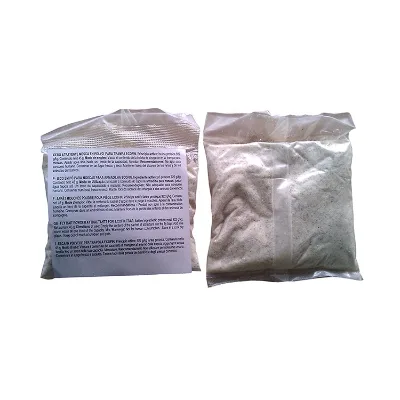
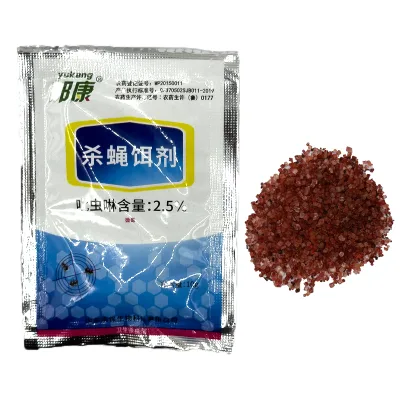
The physical form of the bait is equally critical, with observations showing both powder and granular appearances available in the supply chain. Granules are often preferred for outdoor or large-scale agricultural applications due to their resistance to wind and rain, whereas powders might be better suited for indoor or confined spaces. Sourcing teams should confirm the exact formulation percentage, such as the 0.15% dinotefuran or 1% azamethiphos variants, to ensure the concentration matches the specific infestation severity and regulatory requirements of the destination market.
Product Scope and Observed Listing Signals
The product scope for granular fly bait encompasses a wide array of chemical compositions and application methods, including specialized formulations like dinotefuran and fenthion granules. Buyers should note that some listings describe products with physical agent effects, while others emphasize toxicological effects such as nerve poisons, which dictates the safety protocols required during handling and application. The diversity in product models, from specific pest-targeted baits to general insecticides, means that a single SKU may not satisfy all operational needs across different facilities.
Listing signals reveal that packaging varies significantly, ranging from aluminum foil bags to drums and plastic bottles, which impacts storage and logistics planning. Some suppliers offer customized labeling and packaging sizes, including 100g, 500g, or 25kg drums, allowing for flexibility in distribution channels. However, the presence of free samples for quality assurance suggests that buyers should prioritize testing before committing to large orders, as the visual appearance and texture of the granules can vary between organic synthesis sources and different manufacturing batches.
Technical Specifications to Verify
Technical verification must begin with the active ingredient concentration and the specific mode of action, ensuring the product aligns with the intended pest control strategy. Buyers should confirm whether the granules function as a stomach agent or a contact insecticide, as this influences the placement strategy and the speed of kill. The model numbers, such as Dinotefuran 0.15%Rb or Azamethiphos 1% Granule, serve as critical identifiers that must be cross-referenced with the chemical composition to avoid purchasing ineffective or mislabeled products.
Physical properties like melting point and molecular weight are often listed as unavailable or zero in generic listings, requiring direct inquiry with the manufacturer for precise data. The forming species and function, such as bag molding or automatic filling, indicate the production method which can affect the consistency of the granule size and density. Procurement teams should request detailed specifications on particle size distribution and solubility, as these factors determine how the bait interacts with the environment and the target pest's feeding behavior.
Compliance and Safety Documentation
Safety documentation is paramount when sourcing products with toxicological effects classified as nerve poisons or physical agents, as these classifications dictate the handling and storage requirements. Buyers must ensure that the supplier provides comprehensive Material Safety Data Sheets (MSDS) that detail the toxicity levels, particularly noting the distinction between high and low toxicity reagents. The presence of low toxicity reagents in some formulations suggests a potential for safer handling, but this must be verified against the specific active ingredient concentration to ensure regulatory compliance.
Regulatory compliance extends to the labeling and export standards, with observed listings indicating origins in China and export destinations in Southeast Asia. Buyers should verify that the product standards, such as 1kg/bag or 25kg/drum, align with local import regulations and that the customized labels meet the language and warning requirements of the destination country. Additionally, the application areas, including restaurants, farms, and warehouses, require specific safety certifications to ensure the bait does not pose a risk to non-target organisms or human health in these sensitive environments.
Cost Drivers and Commercial Terms
Cost drivers for granular fly killing bait are heavily influenced by the active ingredient concentration, the complexity of the formulation, and the packaging requirements. Products with higher concentrations of specialized chemicals like dinotefuran or azamethiphos typically command higher prices, while bulk packaging in drums may offer economies of scale compared to smaller retail units. The observed price range of 0.03 to 8000 USD reflects the vast difference between small sample quantities and large industrial orders, making it essential for buyers to define their volume needs clearly.
Commercial terms such as Minimum Order Quantity (MOQ) and lead times vary significantly, with observed ranges from 1 to 30,000 units. Buyers should negotiate terms that balance inventory costs with supply chain reliability, especially when dealing with customized packaging or specific formulation requests. The availability of free samples for quality assurance can reduce initial risk, but the final contract must clearly define the payment terms, shipping methods (by sea or by air), and the responsibilities for quality assurance testing upon delivery.
Supplier Qualification and Quality Control
Supplier qualification requires a rigorous assessment of the manufacturing capabilities, particularly regarding the automatic grade and forming functions used in production. Buyers should verify that the supplier utilizes automatic filling and sealing machines to ensure consistent product quality and prevent contamination during the packaging process. The material type, often described as powder or film, must be compatible with the granular bait to maintain stability and prevent degradation during storage and transit.
Quality control protocols should include regular testing of the active ingredient concentration and the physical integrity of the granules. Suppliers offering customized labels and specific model numbers demonstrate a capacity for tailored production, but this flexibility must be backed by robust quality assurance systems. Buyers should request evidence of batch testing and consistency checks, ensuring that the high-effective quality claims are substantiated by actual performance data rather than marketing assertions.
Long-Term Procurement Checks
Long-term procurement success depends on establishing a reliable supply chain that can consistently meet the evolving needs of pest control operations. Buyers should monitor the supplier's ability to maintain the specified standards, such as the 25kg per drum or 100g plastic bottle formats, over extended periods. Regular audits of the production line, including the forming, filling, and sealing processes, will help ensure that the product quality remains consistent and that any deviations are addressed promptly.
Continuous evaluation of the product's performance in the field is essential to validate the initial selection and identify any necessary adjustments. Buyers should track the efficacy of the bait against target pests like flies and ants, comparing results against the stated application areas and pest types. By maintaining open communication with the supplier and reviewing the toxicological effects and safety data regularly, procurement teams can ensure that the granular fly killing bait remains a safe and effective component of their integrated pest management strategy.
FAQs
What active ingredients are used in granules fly killing bait?
Granules fly killing bait typically utilizes active ingredients such as Azamethiphos 1% or Fenthion 5%. These formulations are designed as contact insecticides or stomach agents to effectively target fly populations. The products are often available in powder or granule forms, ensuring broad application across farms, warehouses, and garbage dumps for reliable pest control results.
Can granules fly killing bait be customized for specific packaging needs?
Yes, customization is available for granules fly killing bait to meet specific client requirements. Packaging options include drums, aluminum foil bags, or plastic bottles with weights like 100g, 500g, or 25kg. These flexible packaging solutions support various distribution channels and storage conditions, ensuring product integrity during transport by sea or air from manufacturing origins.
Which specifications are standard for granules fly killing bait products?
Standard specifications for granules fly killing bait include models like Azamethiphos 1% Granule and Fenthion 5% Granule. These products are classified as pesticide grade and are formulated for high effectiveness against flies. The active ingredients are sourced through organic synthesis, providing a reliable chemical basis for insecticidal action in agricultural and sanitation environments.
How is the toxicity of granules fly killing bait classified?
The toxicity of granules fly killing bait is generally classified as low toxicity for reagents, ensuring safer handling during application. While some components may have specific toxicological effects, the formulations are designed to minimize risk to non-target organisms. This classification supports their use in sensitive areas like restaurants and farms, provided standard safety protocols are followed during handling.
What are the primary places of use for granules fly killing bait?
Granules fly killing bait is primarily used in restaurants, farms, warehouses, and garbage dumps. These locations require effective insecticide and acaricide solutions to maintain hygiene and prevent pest infestations. The bait's formulation allows for targeted application in these environments, ensuring efficient pest management while adhering to safety standards for public health and agricultural productivity.