Source Heat Gun for Shrink Wrapping, Paint Removal, and Soldering
Compare 30 Heat Gun models from verified manufacturers in China. Buyers can evaluate power ratings, temperature ranges, and certifications like CE and UL to find the right tool for industrial or DIY applications.
Key considerations
Products List


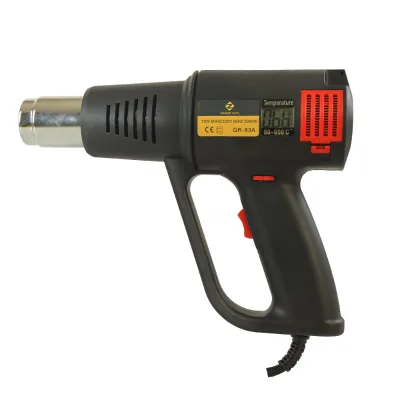
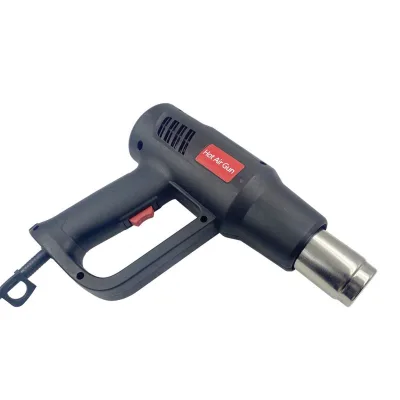
2000W High Performance Hot Air Gun Adjustable Temperature Control Heat Gun
$6.00 - $9.00
MOQ: 1000 Pieces




Comprehensive Sourcing Guide
Strategic Sourcing Guide for Industrial Heat Gun Procurement
Technical Specifications and Performance Parameters
When evaluating heat guns for industrial and commercial applications, buyers must prioritize the alignment between technical specifications and operational requirements. The core functionality of these devices relies on the precise conversion of electrical energy into thermal output. Based on observed market data, rated output power is a primary differentiator, with units ranging from 1000W to 2000W. The 1500W class, often associated with model identifiers such as Ytl-015, represents a standard baseline for general-purpose tasks, while higher capacity units like the 1800W and 2000W variants (e.g., Ytl-020, Ytl-020s) are designed for heavy-duty stripping, shrink-wrapping, or plastic welding.
Temperature control is another critical specification. Thermal temperature ranges observed in the supply chain vary significantly, spanning from 300-500℃ for standard models to broader ranges of 50-550℃ and 50-600℃ for advanced units. This variance dictates the suitability of the tool for specific materials; for instance, lower temperature ranges may suffice for delicate plastic shrinkage, whereas higher ranges are necessary for metal annealing or adhesive removal. Air speed is equally vital for heat distribution efficiency. Data indicates air flow rates between 240-480L/Min and 300-500L/Min, suggesting that buyers should match airflow volume to the surface area being treated to ensure uniform heating without overheating specific spots.
Power supply compatibility is a frequent point of failure in international procurement. The market exhibits a split between 110V and 220V systems, with some units supporting dual voltage (110V/220V 50-60Hz). Specific models are rated for 220V, while others operate on 220-240V at 50/60Hz. Buyers must verify the exact voltage rating against their local grid infrastructure to prevent equipment damage. Furthermore, the distinction between corded and cordless units is essential. While most industrial heat guns are mains-powered, a segment of the market offers rechargeable options with brushless motors, 5V/2A charging, and working times of 4-8 hours. These portable units, often constructed from ABS material, are ideal for remote locations but require verification of charging times, typically around 4 hours, to ensure workflow continuity.
Compliance and Certification Verification
In the global B2B market, compliance is not merely a formality but a prerequisite for market access and operational safety. The observed product attributes indicate a strong emphasis on international safety standards. Common certifications listed in the supply chain include GS, UL, RoHS, CE, and ISO. The presence of CE certification is particularly prevalent, often appearing as a standalone attribute or as a product standard (e.g., "prod_standard: CE"). This certification is mandatory for selling within the European Economic Area and signals adherence to health, safety, and environmental protection standards.
Buyers should not assume that a single listing satisfies all regulatory requirements. The "prod_standard" field sometimes lists the power rating (e.g., 1500W) rather than a regulatory standard, which requires careful interpretation. When a listing explicitly states "GS" or "UL," it implies testing against specific German or American safety benchmarks, respectively. However, the absence of a specific certification in a product description does not confirm non-compliance, but it does necessitate a direct request for test reports. For instance, while many units list "RoHS," which restricts hazardous substances, buyers should verify if this applies to the entire assembly or just specific components.
The "Business Type" attribute often lists "Manufacture," suggesting that some suppliers are direct producers. This can be advantageous for certification verification, as manufacturers typically maintain the original test documentation. Conversely, trading companies may aggregate products from various factories, potentially complicating the traceability of certifications. Buyers must request copies of valid certificates that match the specific model number, such as Ytl-015 or Hg121, rather than accepting generic certification claims. The "Standard Color Box" packing mentioned in some listings often includes compliance documentation, but this should be confirmed during the pre-shipment inspection phase.
Cost Drivers and Pricing Dynamics
Understanding the cost structure of heat guns is essential for budgeting and negotiating effective procurement contracts. The observed price range in the market is exceptionally broad, spanning from $0.40 to $2,800. This wide disparity is not indicative of a single product category but rather reflects a spectrum from basic consumer-grade tools to high-end industrial systems. The lower end of the price spectrum, often around $0.40 to a few dollars, typically corresponds to simple, non-branded units with basic features, potentially lacking advanced digital displays or robust motor technology.
The upper end of the price range, reaching up to $2,800, likely encompasses industrial-grade systems with complex features, such as precise digital temperature control, specialized nozzles, or integrated safety systems. The "Feature" attribute highlights "Temperature Digital Display" and "Cool / Hot Air" capabilities as value-adds that likely influence pricing. Units with brushless motors, as seen in the rechargeable segment, generally command a premium over brushed motor counterparts due to their longevity and efficiency.
Minimum Order Quantity (MOQ) is a significant factor in total cost of ownership. The observed MOQ range spans from 1 to 3000 units. A low MOQ of 1 allows for sample testing and small-batch procurement, which is crucial for verifying quality before scaling. However, higher MOQs, such as 3000 units, often unlock significant per-unit cost reductions. Buyers should analyze the trade-off between the unit price and the capital tied up in inventory. Additionally, customization availability is a key cost driver. The "Customization: Available" attribute suggests that branding, color variations (e.g., Blue or Red), and specific packaging options can be tailored. While customization adds value, it may increase the unit cost or require a higher MOQ to be economically viable.
Typical Applications and Use Cases
The versatility of heat guns makes them suitable for a diverse array of industrial and commercial applications. The primary use case is thermal forming and shrinking, where the "Cool / Hot Air" feature allows operators to manage heat distribution precisely. The "Temperature Adjustable" and "Temperature Digital Display" features are critical here, enabling operators to set exact temperatures to avoid damaging sensitive materials like PVC piping or electronic components. The observed thermal temperature ranges of 300-600℃ cover most standard industrial shrinking and bending tasks.
Another significant application is adhesive removal and paint stripping. The high air speed (up to 500L/Min) and high power consumption (up to 2000W) models are particularly effective in softening adhesives and paints on metal or wood surfaces. The "Rated Output Power" of 1500W to 2000W ensures sufficient thermal energy to break down stubborn bonds quickly. In the electronics sector, heat guns are used for soldering and desoldering components. The precision offered by digital temperature displays and adjustable airflow allows for delicate work on circuit boards without causing thermal shock.
For field applications, the rechargeable models with "Brushless Motor" technology offer distinct advantages. These units, with a working time of 4-8 hours, are ideal for construction sites, automotive repair, or maintenance tasks where access to mains power is limited. The "Round" contact type and "ABS" material construction provide durability and ergonomic handling in rough environments. The "Service: ODM/OEM" attribute indicates that suppliers can tailor these tools for specific industry needs, such as creating specialized nozzles for automotive interior repair or custom handles for construction crews.
Supplier Evaluation and Business Model Analysis
Selecting the right supplier is as important as selecting the right product. The "Business Type: Manufacture" attribute is a strong indicator of a direct factory relationship. Sourcing directly from manufacturers often provides better control over quality, pricing, and lead times. These suppliers are more likely to have the technical expertise to support customization requests and provide detailed product specifications. However, buyers should verify the physical location, as the "prod_origin" is listed as "China," with specific mentions of "Zhejiang, China." Zhejiang is a known manufacturing hub, but verifying the specific city or industrial zone can help assess the supplier's logistical capabilities and supply chain stability.
The "Service: ODM/OEM" capability suggests that the supplier can produce private-label goods or modify existing designs. This is valuable for buyers looking to brand the products or integrate specific features into the design. When evaluating such suppliers, buyers should request samples of previous OEM work to assess their manufacturing consistency. The "prod_packing" attribute, which lists "Box" or "Standard Color Box," indicates the level of packaging standardization. Consistent packaging is essential for branding and protecting the product during transit.
Buyers should also consider the "Customization: Available" aspect. If a buyer requires specific colors (e.g., Blue or Red) or custom branding, the supplier's ability to execute these changes efficiently is a key performance metric. The "Contact Type: Round" and "Material: ABS" details provide insight into the build quality. A supplier that uses high-grade ABS and offers brushless motor technology is likely to produce more durable and reliable products. Buyers should request material safety data sheets (MSDS) and motor specifications to ensure the components meet their durability requirements.
Quality Control and Long-Term Procurement Considerations
Implementing a robust quality control (QC) protocol is essential for mitigating risks in Heat Gun procurement. Given the wide range of observed specifications, from 1000W to 2000W power consumption and varying temperature ranges, QC should focus on verifying these parameters against the agreed-upon specifications. Thermal temperature accuracy and air speed consistency are critical metrics. Buyers should conduct functional tests on a random sample of units to ensure the "Temperature Digital Display" accurately reflects the actual output and that the "Air Speed" remains within the specified 240-500L/Min range.
Electrical safety is another paramount concern. With voltage ratings ranging from 110V to 240V, buyers must verify that the insulation and wiring meet the required safety standards. The presence of certifications like CE, UL, and RoHS should be cross-referenced with the actual product batch. A third-party inspection agency can perform these checks, ensuring that the "Certification" claims are valid and that the products are not counterfeit.
For long-term procurement, the "Working Time" and "Charging Time" of rechargeable models require ongoing monitoring. If the battery life degrades faster than the specified 4-8 hours, it indicates a quality issue with the cells or the charging circuit. Buyers should establish a warranty policy that covers motor failures and battery degradation. The "Standard Color Box" and "Box" packaging should be inspected for damage, as poor packaging can lead to product failure during transit.
Finally, the "Model No." variations (e.g., Ytl-015, Ytl-016, Ytl-020, Hg121) suggest a modular product line. Buyers should ensure that spare parts, such as nozzles and heating elements, are compatible across models to simplify maintenance. The "Power Supply" compatibility (110V/220V) should be clearly documented to prevent confusion in multi-region operations. By focusing on these technical and operational details, buyers can build a resilient supply chain that delivers consistent performance and value over time.
Comparative Analysis of Key Product Attributes
To facilitate decision-making, the following table summarizes the key technical attributes observed in the market, highlighting the variations that buyers should consider during the selection process.
| Attribute Category | Observed Range / Options | Procurement Consideration |
|---|---|---|
| Rated Output Power | 1000W - 2000W (e.g., 1500W, 1600W, 1800W, 2000W) | Higher power is required for heavy-duty stripping; lower power suffices for delicate tasks. |
| Thermal Temperature | 300-500℃ to 50-600℃ | Verify the maximum temperature needed for the specific material being processed. |
| Air Speed | 240-480L/Min to 300-500L/Min | Higher airflow ensures faster heating but may require more precise control to avoid damage. |
| Power Supply | 110V, 220V, 110V/220V, 220-240V | Must match local grid voltage; dual-voltage units offer flexibility for international use. |
| Power Source | Mains (Electric) or Rechargeable | Rechargeable units (4-8h work time) are ideal for remote sites; mains units offer continuous power. |
| Motor Type | Brushed (implied) or Brushless | Brushless motors offer longer life and better efficiency, often found in premium models. |
| Certifications | CE, GS, UL, RoHS, ISO | Verify specific certifications for target markets; CE is common, UL/GS for US/Germany. |
| Customization | Available (Color, Branding, Packaging) | Assess MOQ requirements for customization; colors observed include Blue and Red. |
| Material | ABS | Ensure ABS grade is impact-resistant for industrial environments. |
| Origin | China (including Zhejiang) | Verify factory location for logistics planning and potential tariff implications. |
This comparative overview underscores the importance of matching specific product attributes to the buyer's operational needs. By carefully analyzing these parameters, procurement teams can select heat guns that deliver optimal performance, safety, and cost-efficiency for their specific applications.
FAQs
What certifications do heat guns typically have?
Heat guns typically hold GS, UL, RoHS, CE, and ISO certifications. These standards ensure safety and environmental compliance, but buyers must verify that specific models like Ytl-015 or Hg121 possess valid certificates before purchasing.
Which power supply options are available for heat guns?
Available power supply options include 110V, 220V, and dual voltage 110V/220V at 50-60Hz. Some rechargeable models use 5V/2A charging, so buyers must match the voltage rating to their local grid infrastructure to prevent equipment damage.
How does the rated output power vary across models?
Rated output power ranges from 1000W to 2000W depending on the specific model. Standard units like Ytl-015 offer 1500W, while heavy-duty variants such as Ytl-020s provide 2000W for demanding industrial tasks like plastic welding.
Can I customize the color and branding of heat guns?
Customization is available for colors like Blue and Red, as well as branding and packaging. Buyers should note that customization may require a higher Minimum Order Quantity and can influence the final unit cost significantly.
What is the thermal temperature range for industrial heat guns?
Thermal temperature ranges vary from 300-500°C for standard models up to 50-600°C for advanced units. Higher temperature capabilities are necessary for metal annealing, while lower ranges suffice for delicate plastic shrinkage applications.
Where are these Heat Gun products manufactured?
Products are manufactured in China, with specific origins noted in Zhejiang. Buyers should verify the exact factory location to assess logistical capabilities and supply chain stability when selecting a direct manufacturer or trading company.