Source Heavy Duty Diesel Tow Truck for Construction, Recovery, and Logistics
Compare 30 Heavy Duty Diesel Tow Truck listings from verified suppliers. Buyers can evaluate specifications like horsepower, axle configurations, and fuel capacity to find suitable units for construction, recovery, and logistics operations.
Key considerations
Products List


Heavy Duty 10 Ton Wrecker Truck Tow Truck for Ultimate Recovery Solutions
$56000.00 - $58000.00
MOQ: 1 Pieces

Heavy Duty Wrecker Truck Tow Truck for Reliable Vehicle Recovery Anytime
$40000.00 - $42000.00
MOQ: 1 Pieces


Heavy Duty Wrecker Truck Tow Truck with Advanced Towing Technology and Features
$23000.00 - $25000.00
MOQ: 1 Pieces

Heavy-Duty Wrecker Truck Tow Truck with Enhanced Towing Capacity for All Vehicles
$48000.00 - $50000.00
MOQ: 1 Pieces

Road Tow Truck Wrecker Tow Truck with Heavy Duty Performance and Durability
$58000.00 - $60000.00
MOQ: 1 Pieces


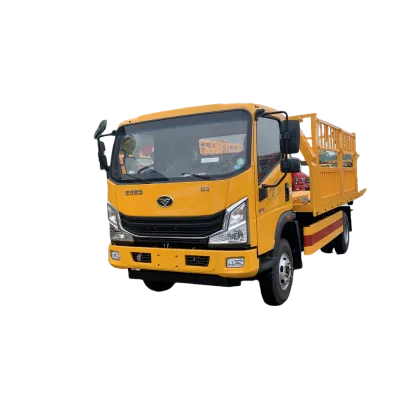


Versatile Heavy Duty Tow Wrecker Truck for All-Terrain Towing Needs
$34800.00 - $38200.00
MOQ: 1 Pieces


Heavy-Duty Wrecker Tow Truck for Reliable Vehicle Recovery for Sale
$18800.00 - $26200.00
MOQ: 1 Pieces


Comprehensive Sourcing Guide
Strategic Sourcing Guide for Heavy Duty Diesel Tow Trucks
Understanding Technical Specifications and Performance Parameters
When sourcing a Heavy Duty Diesel Tow Truck, the primary focus must be on aligning the vehicle's mechanical capabilities with the intended operational load. The market offers units with significant variation in engine displacement and power output, which directly dictates the vehicle's ability to recover heavy loads. Buyers should expect to encounter engine configurations ranging from 6 to 8 liters in capacity, with specific displacement models observed at 9.726L, 11.596L, and 12.42L. These engines typically deliver horsepower within the 336HP to 460HP range, with a specific subset of models falling between 351 and 450hp. This power band is critical for maintaining performance under heavy stress conditions.
The transmission systems selected for these units are equally vital for torque management. Common transmission models include the HW19710, HW19712, and HW19716 series, alongside automated manual transmissions (AMT) from manufacturers such as ZF, specifically the ZF12 AMT and ZF16 AMT. The drive configuration is another key variable; while 4×2 setups exist for lighter duties, heavy duty applications often require 6×4 or 8×4 configurations to distribute the immense weight of the towed load. The rear axle ratio is a specific technical parameter that buyers must verify, as observed ratios include 4.77, 4.42, 4.27, 5.73, and 5.263. A lower numerical ratio generally indicates higher top speed, while a higher ratio provides greater torque for steep grades.
Fuel management is a significant operational cost driver. The fuel tank capacity for these heavy duty units typically ranges from 300 to 400 liters, constructed from aluminum alloy to reduce overall weight while maintaining durability. Fuel consumption rates are observed to vary between 30 and 60 liters per 100 kilometers, a wide range that depends heavily on the specific engine model, load weight, and driving conditions. Buyers should note that the gradeability of these trucks is rated between 20% and 40%, a figure that is explicitly dependent on the horsepower output of the specific unit selected.
Compliance, Certification, and Regulatory Standards
Navigating the regulatory landscape is a non-negotiable aspect of sourcing heavy duty commercial vehicles. The certification requirements vary significantly based on the target export market. In the context of international trade, buyers must verify that the vehicle holds certifications such as CCC (China Compulsory Certification), E-MARK, ISO9001 (Factory), and CE for components. For specific regional markets, compliance with ECE, GCC, ISO, and DOT standards is often required. It is essential to understand that not every listed product satisfies every certification; the presence of a certification label on a general product page does not guarantee that a specific unit configuration is certified for the buyer's destination.
The vehicle's standard dimensions and structural integrity must also align with local road regulations. Observed standard dimensions for these units include lengths of 10650mm, 9680mm, and 9650mm, with widths generally around 2550mm and heights near 3563mm. However, specific chassis models, such as the Dfh1180ex8, may have different dimensional profiles, such as 8950mm or 8850mm in length. The gross vehicle weight (GVW) is another critical compliance metric, with observed values ranging from 14,060 kg to 18,000 kg. Exceeding local weight limits can result in fines and operational bans, making precise verification of the GVW against local laws imperative before purchase.
Furthermore, the braking system is a primary safety component that must meet rigorous standards. The standard configuration for these heavy duty trucks includes a dual-circuit air brake system, an engine exhaust brake, and an Anti-lock Braking System (ABS). These features are designed to ensure stability and stopping power when managing heavy loads. Buyers should request specific test results or compliance documents for the braking system to ensure they meet the safety standards of their operating region.
Cost Drivers and Pricing Structure Analysis
The pricing for heavy duty diesel tow trucks is influenced by a complex interplay of factors, including engine specifications, transmission type, and customization levels. The observed price range for these units in the market spans from $1,000 to $120,000 USD. This vast range indicates that the base price is likely for a minimal configuration, while the upper end reflects fully equipped, high-horsepower models with advanced features. It is crucial for buyers to understand that the final cost is not static; it is heavily dependent on the specific options selected.
One of the primary cost drivers is the engine model. Units equipped with engines like the WD615.47, D12.42, MC11, or MC13 will command different price points based on their power output and fuel efficiency. Similarly, the choice between a manual transmission and an automated manual transmission (AMT) will impact the overall cost. The AMT options, such as the ZF12 or ZF16, typically add to the price due to their complexity and ease of operation.
Customization is another significant factor. The product attributes indicate that customization is available, allowing buyers to tailor the vehicle to specific needs. This can include modifications to the towing mechanism, additional lighting, or specialized bodywork. The level of customization directly correlates with the final price. Additionally, the condition of the vehicle is a key variable; all observed units are listed as "New," but the degree of newness and the warranty terms can vary, affecting the value proposition. Buyers should request a detailed breakdown of costs to understand how much of the price is attributed to the chassis, engine, transmission, and optional features.
Typical Applications and Operational Use Cases
Heavy duty diesel tow trucks are designed for a wide array of demanding applications, ranging from highway recovery to construction site support. The high load capacity, observed between 41 and 50 tons, makes these vehicles suitable for recovering heavy commercial trucks, buses, and construction machinery. The specific drive configurations, such as 6×4 and 8×4, provide the necessary traction for off-road or uneven terrain, which is common in construction zones or accident recovery sites.
The seating capacity and occupancy are also relevant to the operational context. Units are typically configured with 2 to 3 seats, accommodating a driver and one or two recovery operators. This configuration ensures that the crew can work together efficiently during complex recovery operations. The approach and departure angles, observed at 17 degrees and 8 degrees respectively, are critical for navigating obstacles without damaging the vehicle's undercarriage.
The fuel tank capacity of 300 to 400 liters supports long-haul operations, reducing the frequency of refueling stops. This is particularly important for tow trucks that may need to travel significant distances to reach a stranded vehicle. The gradeability of 20% to 40% ensures that the truck can handle steep inclines, which is essential for recovering vehicles stuck on hills or in mountainous regions. Buyers should assess their specific operational environment to determine if the standard specifications meet their needs or if additional modifications are required.
Supplier Evaluation and Quality Assurance Protocols
Evaluating suppliers requires a meticulous approach to ensure that the purchased vehicles meet quality and safety standards. The origin of the vehicles is a key indicator, with major production hubs located in Shandong and Hubei, China. Buyers should verify the specific origin of the unit they are purchasing, as different regions may have varying quality control standards. The condition of the vehicle is listed as "New," but buyers should request documentation to confirm the manufacturing date and any previous usage history.
Quality control should be a central part of the procurement process. Buyers must verify that the supplier adheres to ISO9001 standards and that the components used in the vehicle, such as the braking system and transmission, carry CE certification. The product packing is described as polished, waxed, and rustproof before shipment, which is a positive indicator of attention to detail. However, buyers should inspect the vehicle upon arrival to ensure that the rustproofing and polishing have not been compromised during transit.
The brand of the vehicle is another factor to consider. Dongfeng is a prominent brand in this sector, known for producing reliable heavy duty trucks. Buyers should research the reputation of the specific brand and model they are considering. It is also important to verify the warranty terms and the availability of after-sales support. A supplier that offers comprehensive training and spare parts support can significantly reduce the total cost of ownership.
Long-Term Procurement and Maintenance Considerations
Long-term procurement considerations extend beyond the initial purchase price to include maintenance, parts availability, and operational efficiency. The fuel consumption rate of 30 to 60 liters per 100 kilometers is a critical metric for calculating the total cost of ownership. Buyers should analyze their specific operational patterns to estimate fuel costs accurately. The choice of engine and transmission can significantly impact fuel efficiency, so selecting the right configuration is essential.
Maintenance is another key factor. The dual-circuit air brake system, engine exhaust brake, and ABS require regular inspection and servicing to ensure safety and reliability. Buyers should establish a maintenance schedule that aligns with the manufacturer's recommendations. The availability of spare parts is crucial for minimizing downtime. Suppliers that offer a robust network of service centers and a ready supply of parts can help ensure that the vehicle remains operational for years.
The customization options available also play a role in long-term value. A vehicle that can be adapted to changing operational needs offers greater flexibility and longevity. Buyers should consider the potential for future upgrades or modifications when selecting a tow truck. Finally, the resale value of the vehicle should be considered. Vehicles from reputable brands with a history of reliability tend to hold their value better, providing a better return on investment in the long run.
Summary of Key Technical Parameters
To assist buyers in their decision-making process, the following table summarizes the key technical parameters observed in the market for heavy duty diesel tow trucks.
| Parameter | Observed Range / Specific Values |
|---|---|
| Engine Capacity | 6-8L |
| Horsepower | 336HP - 460HP (Specific: 351-450hp) |
| Transmission Models | HW19710/12/16, ZF12 AMT, ZF16 AMT |
| Drive Configuration | 4×2, 6×4, 8×4 |
| Fuel Tank Capacity | 300-400L (Aluminum Alloy) |
| Gross Vehicle Weight | 14,060 kg - 18,000 kg |
| Curb Weight | 7,000-15,000 kg (Specific: 8,000/8,400/11,600 kg) |
| Tire Specification | 12.00r20, 315/80r22.5 (Steel Radial/Tubeless) |
| Braking System | Dual Circuit Air Brake, Engine Exhaust Brake, ABS |
| Certifications | CCC, E-MARK, ISO9001, CE, ECE, GCC, DOT |
| Gradeability | 20%-40% (Dependent on HP) |
| Fuel Consumption | 30-60 L/100 Km |
This summary provides a quick reference for buyers to compare different models and ensure that the selected vehicle meets their specific operational requirements. By carefully evaluating these parameters, buyers can make informed decisions that balance performance, compliance, and cost-effectiveness.
FAQs
What engine models are available for heavy duty diesel tow trucks?
Available engine models include Wd615.47, D12.42, Mc11, and Mc13. These units typically feature displacements ranging from 9.726L to 12.42L and horsepower between 336HP and 460HP to handle heavy loads.
Which certifications are required for international Heavy Duty Diesel Tow Truck sales?
Common certifications include CCC, E-MARK, ISO9001 for the factory, and CE for components. Specific regional markets may also require ECE, GCC, ISO, or DOT compliance depending on the destination.
How is the load capacity defined for heavy duty diesel tow trucks?
The load capacity for these units typically ranges from 41 to 50 tons. This high capacity supports the recovery of heavy commercial vehicles and construction machinery on various terrains.
Can buyers customize the Heavy Duty Diesel Tow Truck specifications?
Yes, customization is available to tailor the vehicle to specific operational needs. Buyers can request modifications to dimensions, towing mechanisms, or other features to match their requirements.
What is the typical fuel tank capacity for these heavy duty diesel tow trucks?
The fuel tank capacity generally ranges from 300 to 400 liters. These tanks are constructed from aluminum alloy to reduce weight while ensuring durability for long-haul operations.
Which transmission types are offered for heavy duty diesel tow trucks?
Options include manual transmissions like HW19710 and automated manual transmissions such as ZF12 AMT or ZF16 AMT. The choice affects torque management and operational ease.