Source Heavy Duty Steel Industrial Workbench for Workshop Storage and Company Use
Compare 30 Heavy Duty Steel Industrial Workbench options featuring customizable sizes, multi-drawer configurations, and steel or iron construction. These units support workshop storage, home office tasks, and research institute applications with OEM and ODM support available.
Key considerations
Products List
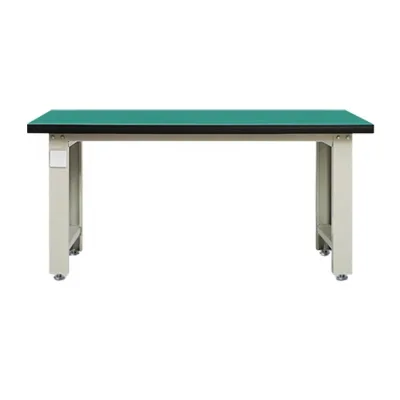


$110.00 - $170.00
MOQ: 100 Pieces


$60.00 - $110.00
MOQ: 50 Pieces


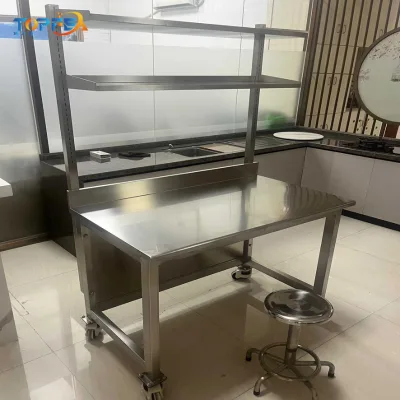


Comprehensive Sourcing Guide
Strategic Sourcing Guide for Heavy Duty Steel Industrial Workbenches
Understanding the Technical Architecture of Heavy Duty Workbenches
When sourcing heavy duty steel industrial workbenches, the primary focus must be on the structural integrity and material composition that define the product's lifespan under rigorous conditions. The core material for these units is consistently identified as steel or iron, providing the necessary tensile strength to support heavy loads without deformation. In the current market, the structural design often features a cabinet-type configuration, which distinguishes these units from simple open-frame tables. This cabinet style integrates storage directly into the load-bearing structure, enhancing stability while maximizing floor space efficiency.
The dimensions of these workbenches are not uniform; they vary significantly to accommodate different workshop layouts and operational needs. Available specifications include composite countertop sizes ranging from 1200mm in width up to 2100mm, with depths typically standardized at 750mm and heights at 800mm. Some specialized models extend the height to 825mm or 950mm to accommodate specific machinery or ergonomic requirements. The depth of 750mm is a common standard, offering sufficient workspace for tools and materials while maintaining a compact footprint. Buyers must verify the exact width and depth combinations, as models are available in various configurations such as 1200x600x800mm, 1500x750x800mm, and 2100x750x800mm.
A critical technical feature to evaluate is the load-bearing capacity. These units are explicitly categorized as "Heavy Duty," indicating they are engineered to withstand significant weight, making them suitable for industrial environments where heavy components, machinery, or dense tooling are stored and manipulated. The structural frame is often reinforced to ensure that the "Heavy" classification is not merely a marketing term but a verified engineering specification. Additionally, the presence of multi-drawer options allows for the organization of small parts, though this is often an optional configuration that buyers must select based on their specific storage needs. The absence of wheels in many standard models suggests a fixed installation design, prioritizing absolute stability over mobility, which is essential for precision work and heavy assembly tasks.
Compliance Standards and Certification Verification
In the industrial procurement sector, compliance is not a suggestion but a prerequisite for safety and liability management. While specific certification bodies are not universally mandated for all workbenches, buyers must verify that the product adheres to recognized structural standards. The market data indicates specific dimensional standards, such as W2100D750H800 mm or W1200~2100D750H800 mm, which serve as benchmarks for dimensional accuracy. These standards ensure that the workbenches fit into pre-defined facility layouts and comply with spatial regulations.
Buyers should request documentation confirming that the steel or iron materials used meet industry-grade specifications for tensile strength and corrosion resistance. Although specific third-party certifications like ISO or CE are not explicitly listed in the general product attributes, the presence of a "New" condition and a "3-year warranty" implies a manufacturer's confidence in the product's durability and adherence to quality norms. The warranty period is a significant indicator of the manufacturer's commitment to product longevity; a three-year term suggests that the product is expected to withstand daily industrial wear and tear without structural failure.
Furthermore, the origin of the product plays a role in compliance. The supply chain for these workbenches originates from specific manufacturing hubs in China, including Jilin, Tianjin, Qingdao, and general production in China. Each of these regions may have different local regulatory environments, but the export standards generally align with international safety requirements for industrial furniture. Buyers must ensure that the supplier can provide a Declaration of Conformity or a similar document that validates the product's safety features, particularly regarding edge safety, stability, and load limits. The "Heavy" bearing capacity claim must be backed by test data or engineering calculations that the supplier can provide upon request.
Cost Drivers and Pricing Dynamics in the Market
The pricing structure for heavy duty steel workbenches is influenced by several variables, including material costs, customization levels, and logistical factors. The observed price range in the market spans from $60 to $1,500 USD, reflecting the vast difference between basic, single-item units and complex, multi-drawer, custom-configured systems. The lower end of the spectrum likely represents standard, non-customized models with minimal features, while the higher end encompasses units with specialized dimensions, integrated storage solutions, and custom finishes.
Material costs are a primary driver, given that the core construction relies on steel or iron. Fluctuations in global steel prices can directly impact the final cost of the workbench. Additionally, the complexity of the manufacturing process affects pricing. Models with composite countertops, specific dimensional tolerances, or custom colors require more precise machining and finishing, which increases production costs. The "Customized" attribute is available, but the "Non-Customized" option is also listed, indicating that buyers can choose between standard off-the-shelf units and bespoke solutions. Customization typically incurs a premium due to the setup costs and reduced economies of scale.
Logistics and packaging also contribute to the total cost of ownership. The standard packaging involves carton boxes or pallets, depending on the size and weight of the unit. Shipping heavy steel furniture from manufacturing hubs like Ningbo or Shanghai involves significant freight costs, which are often factored into the final price. The supply ability of 1,000 cartons per month suggests that the manufacturer has the capacity to handle large orders, which can help stabilize pricing for bulk purchases. However, buyers should be aware that the Minimum Order Quantity (MOQ) can range from 1 to 100 units, meaning that small buyers may face higher per-unit costs compared to those placing large orders.
Typical Applications and Operational Environments
Heavy duty steel workbenches are designed for a wide array of industrial and commercial applications where durability and functionality are paramount. The primary usage is identified as "Workshop Equipment," making them ideal for automotive repair shops, manufacturing plants, and assembly lines. In these environments, the workbenches serve as the central hub for tool organization, component assembly, and equipment maintenance. The "Heavy Duty" classification ensures that they can support the weight of heavy machinery parts, power tools, and raw materials without sagging or collapsing.
Beyond traditional workshops, these units are also suitable for "Company" and "Research Institute" settings. In research facilities, the stability and flat surface of the workbench are crucial for conducting experiments, assembling prototypes, and organizing sensitive equipment. The "Home Office Workshop" application indicates that these units are versatile enough for serious hobbyists or small-scale entrepreneurs who require industrial-grade equipment in a smaller footprint. The "Workplace Storage" feature highlights their dual role as both a work surface and a storage solution, helping to maintain a clutter-free and efficient workspace.
The specific use cases also include environments where "ESD" (Electrostatic Discharge) protection might be required, as indicated by model numbers like ESD-2175F. This suggests that the workbenches can be adapted for electronics manufacturing or handling sensitive components where static control is critical. The "Multi-functional" feature further expands their utility, allowing them to be used for welding, grinding, or general fabrication tasks. The "New" condition of the products ensures that buyers receive units free from previous wear, which is essential for maintaining high standards of safety and performance in any operational setting.
Supplier Evaluation and Supply Chain Reliability
Selecting the right supplier is a critical step in the procurement process, as it directly impacts product quality, delivery timelines, and after-sales support. The market data indicates that suppliers are located in various regions of China, including Jilin, Tianjin, Qingdao, and general production sites. Buyers should evaluate suppliers based on their "Supply Ability," which is listed as 1,000 cartons per month. This capacity suggests that the manufacturer can handle both small and large orders, but buyers must confirm if this capacity is consistent and reliable during peak demand periods.
The "Brand Name" associated with these products is "chaacong," which serves as a point of reference for brand recognition and reputation. While the brand name is a useful identifier, buyers should not rely solely on the brand but should investigate the manufacturer's track record, production facilities, and quality control processes. The "Port of Dispatch" being listed as Ningbo or Shanghai provides insight into the logistical capabilities of the supplier, as these are major shipping hubs with established infrastructure for international trade.
Buyers should also assess the supplier's flexibility regarding customization. The availability of "Oem" and "Odm" support indicates that the supplier is capable of producing custom designs or private-label products. This is particularly important for companies with specific branding or functional requirements. The "Customization" attribute being "Available" suggests that the supplier is open to tailoring products to meet unique needs, but buyers must clarify the scope of customization, including lead times and additional costs.
Quality Control and Long-Term Procurement Considerations
Ensuring the quality of heavy duty steel workbenches requires a rigorous approach to quality control (QC) and long-term planning. The "3-year warranty" is a significant factor in long-term procurement, as it provides a safety net against manufacturing defects and structural failures. However, buyers should understand the terms and conditions of this warranty, including what is covered and what constitutes a valid claim. The warranty period also reflects the expected lifespan of the product, suggesting that with proper maintenance, these workbenches can serve for many years.
Quality control should begin at the manufacturing stage, with a focus on material integrity, weld quality, and surface finish. Buyers should request samples or visit the production facility to verify that the steel or iron used meets the specified standards. The "Composite countertop" option adds another layer of complexity to QC, as the bonding of the countertop to the steel frame must be secure and durable. The "Packing" details, such as carton boxes or pallets, are also critical for ensuring that the products arrive in good condition, free from damage during transit.
Long-term procurement considerations include the availability of spare parts and the ease of maintenance. The "Multi Drawers Optional" feature means that buyers may need to source replacement drawers or hardware in the future. Ensuring that the supplier can provide these parts is essential for maintaining the functionality of the workbench over time. Additionally, the "Color" being customizable allows for branding consistency, but buyers should verify that the paint or coating is durable and resistant to chipping or fading in industrial environments.
Comparative Analysis of Model Specifications
To assist buyers in making informed decisions, the following table compares key specifications of various models found in the market. This comparison highlights the diversity in dimensions, materials, and features available to meet different operational needs.
| Model Number | Standard Dimensions (WDH) | Material | Bearing Capacity | Key Features |
|---|---|---|---|---|
| ESD-2175F | 2100 x 750 x 800 mm | Steel | Heavy | ESD Protection, Multi-functional |
| ESD | 1200~2100 x 750 x 800 mm | Steel | Heavy | Variable Width, Customizable |
| EZD-1575Y | 1500 x 750 x 800 mm | Steel | Heavy | Standard Size, Workshop Use |
| E-ZDG-J | 900~2100 x 750 x 800 mm | Steel | Heavy | Wide Width Range, Flexible |
| E-XTG2175 | 2100 x 750 x 825 mm | Steel | Heavy | Extended Height, Heavy Duty |
| HLT-102 | 2850 x 800 x 950 mm | Metal | Heavy | Extra Large, Pallet Packing |
| Generic | 1200-2100 x 600-750 x 800 mm | Iron/Steel | Heavy | Composite Countertop, Optional Drawers |
This table illustrates that while the core material and bearing capacity remain consistent, the dimensions and specific features vary significantly. Buyers should select the model that best aligns with their spatial constraints and operational requirements. The "Heavy" bearing capacity is a common thread across all models, ensuring that the workbenches are suitable for demanding industrial applications. The availability of variable widths and heights allows for customization to fit specific workshop layouts, while the "Composite Countertop" option provides a durable and easy-to-clean surface for various tasks.
FAQs
What is the warranty period for these workbenches?
The warranty period is three years. This coverage applies to the steel and iron construction, ensuring durability against industrial wear and tear for heavy-duty applications in workshops and research institutes.
Which dimensions are available for the composite countertop?
Available dimensions include widths from 1200mm to 2100mm with depths of 750mm and heights of 800mm. Specific models also offer variations like 1200x600x800mm or extended heights up to 950mm for specialized machinery.
Can I customize the color and drawer configuration?
Yes, color is customizable and multi-drawer options are available. Buyers can select specific configurations to match workshop aesthetics or storage needs, though some models may be listed as non-customized depending on the specific unit.
How much is the minimum order quantity for these units?
The minimum order quantity starts at one unit. This allows buyers to purchase single items for immediate use, though bulk orders may benefit from the supplier's monthly capacity of 1000 cartons.
Where are the products manufactured and shipped from?
Products originate from locations including Jilin, Tianjin, Qingdao, and general China regions. Shipments are dispatched from major ports such as Ningbo and Shanghai to ensure efficient logistics for international buyers.
What material is used for the heavy duty structure?
The structure is made of steel and iron to ensure heavy load-bearing capacity. This material choice provides the necessary tensile strength and stability required for workshop equipment and workplace storage applications.