Source Hexagon Head Black Eye Bolt for Machinery Building Environmental
Find 30 Hexagon Head Black Eye Bolt options from verified suppliers in China. Compare specifications including DIN standards, carbon steel grades, and surface treatments like black oxide or galvanizing for machinery, chemical, and building applications.
Key considerations
Products List


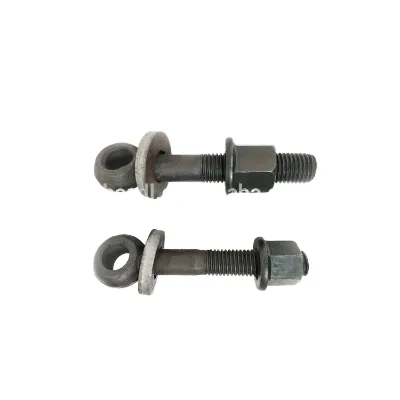


$1.00 - $2.00
MOQ: 500 Pieces


Comprehensive Sourcing Guide
Strategic Sourcing Guide for Hexagon Head Black Eye Bolts
Understanding Product Specifications and Variants
When sourcing hexagon head black eye bolts, buyers must first navigate the complex landscape of product attributes, as the term "eye bolt" often conflates distinct mechanical designs. The provided market data reveals a significant divergence in head styles and structural forms. While the core search term specifies a "hexagon head," the available product facts indicate that manufacturers frequently list "Hexagon Head" and "Hexagon Flange Head" as distinct categories alongside "Round Head" variants. A critical observation from the supply data is the presence of products labeled with "Head Style: Hexagonal" and "Head Type: Hexagon Flange Head," yet other entries explicitly describe "Type: eye bolt" with "Head Style: Round." This suggests that a buyer searching for a hexagon head configuration must rigorously verify the specific drawing or technical drawing provided by the supplier, as the generic keyword may yield round-head variants or flange-head bolts that do not meet the intended load-bearing geometry.
The material composition is another primary specification to validate. The supply chain data indicates that Carbon Steel is the predominant base material for these fasteners. However, the grade of this steel varies significantly across listings, with specific mentions of Grade 8, Grade 10.9, and customizable options. The distinction between Grade 8 and Grade 10.9 is substantial in terms of tensile strength and yield point, directly impacting the safety factor of the application. Furthermore, the thread type is listed as customizable in several entries, meaning the pitch and thread profile may not adhere to standard ISO or DIN metrics unless explicitly confirmed. Buyers should not assume that a "Hexagon Head Black Eye Bolt" will possess a standard thread pitch without requesting a detailed specification sheet, as the data shows a range of models including DIN 6921, DIN 960, and DIN 6914-6915, each with unique dimensional requirements.
Compliance, Standards, and Certification Verification
Compliance with international standards is paramount when procuring industrial fasteners, particularly those used in structural or heavy machinery applications. The observed product data highlights a mix of standards, including DIN (Deutsches Institut für Normung), GB (Guobiao, the Chinese national standard), and specific model numbers like DIN 6921 and DIN 934. DIN 6921, for instance, typically refers to flange nuts or specific bolt configurations, and its presence in the data suggests that some suppliers may be listing related hardware under the eye bolt category. Buyers must verify if the specific item they are purchasing is certified to DIN 6921 or if that standard applies to a different component in the assembly.
Certification status is another critical verification point. The supply data explicitly mentions ISO9001 certification for certain listings. While this indicates that the manufacturer has a quality management system in place, it does not guarantee that every batch of bolts meets specific mechanical property requirements. Buyers should request the Certificate of Conformity (CoC) or Mill Test Certificate (MTC) for the specific batch being ordered. The data also notes origins in Zhejiang, Hebei, and Ningbo, China. While these are major manufacturing hubs, the specific factory location does not inherently validate the quality of the product. A buyer should confirm if the ISO9001 certification is current and if it covers the specific manufacturing processes involved in the production of the eye bolt, such as forging, threading, and surface treatment.
Surface Treatment and Environmental Durability
The "black" descriptor in the core keyword refers to the surface finish, which is a critical factor for corrosion resistance and aesthetic requirements. The supply facts list multiple surface treatment processes, including "Black Oxide," "Galvanizing," and "Hot Galvanizing." It is essential to distinguish between these finishes, as they offer different levels of protection. Black oxide is primarily a cosmetic finish that offers minimal corrosion resistance compared to galvanizing. Hot galvanizing, often referred to as hot-dip galvanizing, provides a thick zinc coating that offers superior protection against rust and corrosion, making it suitable for outdoor or harsh chemical environments.
The application data lists "Chemical Industry," "Environmental," and "Building" as key use cases. For applications in the chemical industry or environmental sectors, the choice of finish is not merely aesthetic but functional. A black oxide finish may degrade rapidly in a corrosive chemical environment, whereas a hot-galvanized finish would be more appropriate. Buyers must ensure that the "black" finish they are ordering is compatible with the operating environment. If the requirement is for a black appearance with high corrosion resistance, a black zinc plating or a specific black oxide overcoat might be necessary, but this must be explicitly defined in the purchase order. The data also mentions "Finish: Black" and "Finish: Hot Galvanizing" as separate attributes, indicating that suppliers may offer both options, and the buyer must select the one that aligns with the project's durability requirements.
Cost Drivers and Pricing Structure Analysis
The pricing structure for hexagon head black eye bolts is influenced by several variables, including material grade, surface treatment, order quantity, and customization requirements. The observed price range in the market data spans from $0.01 to $1,000 USD, a wide variance that reflects the difference between a single small bolt and a large industrial order or a specialized custom component. The minimum order quantity (MOQ) is equally variable, ranging from 1 to 10,000 pieces. This flexibility allows buyers to source small quantities for prototyping or large volumes for mass production, but it also means that unit costs will fluctuate significantly based on the order size.
Material grade is a primary cost driver. As noted in the specifications, grades range from 8 to 10.9, with customizable options available. Higher grades typically require more precise heat treatment and higher-quality raw materials, which increases the unit cost. Additionally, the surface treatment process adds to the cost; hot galvanizing is generally more expensive than black oxide due to the energy and material costs involved in the zinc bath process. Customization of the thread type or model number can also introduce additional costs, as it may require retooling or special production runs. Buyers should be aware that the "Selling Units" are listed as "Single item" in some contexts, but the MOQ of 1,000 pieces in other entries suggests that bulk pricing is the norm for standard items. Understanding these cost drivers helps in negotiating effectively and budgeting for the total cost of ownership, including potential shipping and handling fees.
Typical Applications and Load-Bearing Considerations
The applications for hexagon head black eye bolts are diverse, ranging from general machinery and building construction to the chemical industry and environmental engineering. The data explicitly lists "Machinery," "Chemical Industry," "Environmental," and "Building" as key sectors. In the building sector, these bolts are often used for lifting, anchoring, or securing structural components. In the chemical industry, they may be used for securing equipment or piping systems where corrosion resistance is critical. The "Environmental" application suggests use in waste management or water treatment facilities, where exposure to moisture and chemicals is common.
However, the term "eye bolt" implies a specific load-bearing function, typically involving a loop or eye for attaching ropes, chains, or cables. The data mentions "Type: eye bolt" alongside "Head Type: Hexagon Flange Head," which can be confusing. In standard engineering practice, eye bolts are designed to handle axial loads (pulling straight out) and angular loads (pulling at an angle). The hexagon head provides the necessary torque for installation, while the flange head offers a larger bearing surface to prevent the bolt from pulling through the material. Buyers must ensure that the specific eye bolt they select is rated for the intended load. The data does not provide specific load ratings, so buyers must request the manufacturer's load charts or engineering data sheets. Relying on generic product descriptions without verifying the load capacity can lead to catastrophic failure in lifting or anchoring applications.
Supplier Evaluation and Quality Control Protocols
Evaluating suppliers for hexagon head black eye bolts requires a multi-faceted approach, focusing on their technical capabilities, quality control systems, and logistical reliability. The supply data indicates origins in Zhejiang, Hebei, and Ningbo, China, which are known for their manufacturing clusters. However, the presence of multiple origins suggests that buyers should not assume uniform quality across all suppliers from these regions. It is crucial to verify the supplier's ability to meet specific standards, such as DIN or GB, and to confirm their ISO9001 certification status.
Quality control should be a central part of the procurement process. Buyers should request evidence of in-process quality control, such as tensile strength tests, hardness tests, and coating thickness measurements. The data mentions "Test results" as a potential attribute, though no specific values are provided. Buyers should insist on seeing recent test reports for the specific batch they are ordering. Additionally, the packing methods listed, such as "Cartons+Plastic Bags," "25kg/Carton+Pallet," and "Strong Wooden Pallets," indicate that packaging is a consideration for preventing damage during transit. Buyers should ensure that the packaging is robust enough to protect the bolts, especially if they are being shipped internationally.
Long-Term Procurement and Supply Chain Stability
Long-term procurement of hexagon head black eye bolts requires a focus on supply chain stability and the ability to scale production. The data shows a wide range of lead times, with one entry specifying a "Delivery Time: 7 Days," while others may have longer lead times depending on customization and order volume. Buyers should establish clear communication channels with suppliers to understand their production capacity and lead time variability. Customization options, such as thread type and model number, can extend lead times, so it is important to plan accordingly.
Sustainability and compliance are also becoming increasingly important in long-term procurement. Buyers should consider the environmental impact of the manufacturing processes, such as the use of zinc in galvanizing or the chemicals used in black oxide treatments. Ensuring that suppliers adhere to environmental regulations can mitigate risks associated with supply chain disruptions. Furthermore, maintaining a relationship with a reliable supplier can help in managing inventory levels and ensuring a steady supply of critical components. The ability to source from multiple origins, such as Zhejiang, Hebei, and Ningbo, provides a buffer against regional disruptions, but buyers should still maintain a primary supplier relationship for consistency and quality assurance.
In conclusion, sourcing hexagon head black eye bolts requires a meticulous approach to verifying specifications, standards, and supplier capabilities. By focusing on the technical details, compliance requirements, and long-term supply chain considerations, buyers can ensure they procure high-quality fasteners that meet the demands of their specific applications. The diversity in the market data highlights the importance of due diligence, as the term "Hexagon Head Black Eye Bolt" encompasses a wide range of products with varying characteristics. Buyers must navigate this complexity carefully to secure the right components for their projects.
FAQs
What materials are used for hexagon head black eye bolts?
Carbon steel is the predominant base material for these fasteners. Buyers should verify the specific grade, as options include Grade 8, Grade 10.9, or customizable alternatives depending on the supplier listing.
Which surface treatments are available for black eye bolts?
Available finishes include Black Oxide, Galvanizing, and Hot Galvanizing. Black oxide offers minimal corrosion resistance, while hot galvanizing provides superior protection suitable for chemical or environmental applications.
Can I find hexagon head black eye bolts with ISO certification?
Yes, some listings explicitly mention ISO9001 certification for quality management systems. Buyers must request specific batch certificates to confirm mechanical properties rather than relying solely on general factory certification.
What standards apply to hexagon head black eye bolts?
Products often comply with DIN and GB standards, with specific models like DIN 6921, DIN 934, and DIN 960. Buyers must verify if the standard applies to the exact component being purchased.
How does the MOQ vary for these fasteners?
Minimum order quantities range from 1 to 10,000 pieces depending on the supplier. Some listings specify an MOQ of 1,000 pieces, while others allow single item purchases for prototyping purposes.
Where are these bolts typically manufactured?
Products originate from major manufacturing hubs in Zhejiang, Hebei, and Ningbo, China. The specific location does not guarantee quality, so buyers should verify the factory's capabilities and certifications.
What is the typical delivery time for these bolts?
One observed delivery time is 7 days for standard orders. Lead times may vary significantly based on customization requirements, order volume, and specific supplier production capacity.