Source Hex Threaded Thermocouple Thermowell for HVAC, Process, and Lab
Compare 30 listings for Hex Threaded Thermocouple Thermowell from verified Chinese manufacturers. Buyers can evaluate materials like 304SS and 316SS, connection types, and certifications such as CE and ISO9001 for industrial temperature measurement needs.
Key considerations
Products List
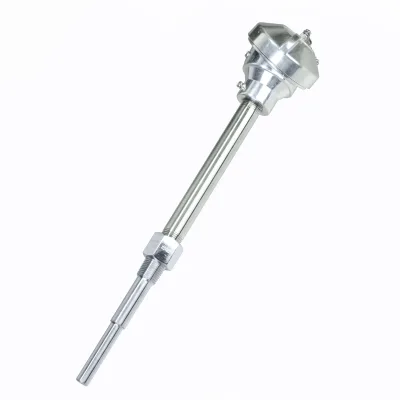


Stainless Steel Thread Probe Thermocouple Thermowell for Temperature Sensor
$0.08 - $0.18
MOQ: 1000 Pieces


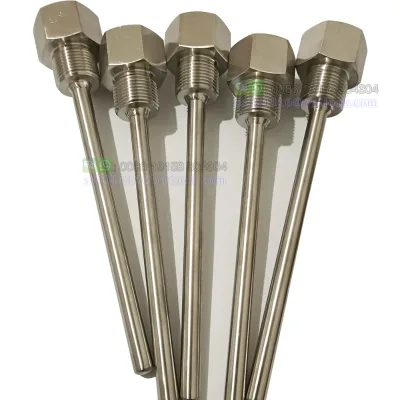
China Factory Thermocouple Custom Stainless Steel Male Threaded Thermowell
$5.11 - $51.06
MOQ: 1 pieces


Comprehensive Sourcing Guide
Strategic Sourcing Guide for Hex Threaded Thermocouple Thermowells
Understanding Core Technical Specifications and Design Variants
When sourcing hex threaded thermocouple thermowells, buyers must first distinguish between the sensor element itself and the protective housing, known as the thermowell. The provided product data indicates a diverse range of configurations, including specific models such as the "Assembly thermocouple with elbow 90" and various thread sizes like 1/8", 5/8", and 1/2". These dimensions are critical for ensuring compatibility with existing industrial piping and vessel flanges. The thermowell serves as a pressure boundary, protecting the delicate thermocouple junction from harsh process media while allowing for replacement without shutting down the system.
Material selection is a primary technical driver. The observed inventory lists Stainless Steel (304SS, 316SS) and Brass as the standard construction materials. For general industrial applications, 304SS offers a balance of corrosion resistance and cost-effectiveness. However, for environments involving chlorides, acids, or higher temperatures, 316SS is the preferred specification due to its superior resistance to pitting and crevice corrosion. The data also notes that dimensions are customizable, suggesting that buyers should not assume standard off-the-shelf lengths will suffice for deep-tank or high-pressure applications. The "hex threaded" aspect refers to the external threading designed for easy installation and removal using standard wrenches, a feature essential for maintenance-heavy facilities.
The connection types observed include flange, thread, and welding options. While the core keyword focuses on hex threading, the broader product ecosystem supports flange and welding connections for different pressure ratings. The "Installation Type" is frequently listed as Wall-Mounted, though in the context of thermowells, this often refers to the mounting orientation relative to the process vessel. Buyers must verify if the specific hex-threaded unit is designed for direct insertion into a threaded port or if it requires a specific adapter. The "Single package size" of 20x10x10 cm and a weight of 1 kg provide a baseline for logistics planning, though customized dimensions will alter these metrics.
Compliance, Certification, and Regulatory Verification
Navigating the compliance landscape for industrial temperature sensors requires rigorous verification of certifications. The supplied facts confirm the presence of IECEE certification, which is vital for electrical safety components, and CE marking, indicating conformity with health, safety, and environmental protection standards for products sold within the European Economic Area. Additionally, ISO9001 certification is frequently cited, serving as a proxy for a supplier's commitment to quality management systems rather than a specific product attribute.
Buyers must treat these certifications as observations of the supplier's capabilities rather than automatic guarantees for every SKU. The data lists "Certificate: CE, ISO9001" and "Certification: IECEE" alongside specific product attributes. It is the procurement professional's responsibility to request valid, current certificates for the specific batch being ordered. The "IECEE" designation is particularly relevant for the electrical safety of the thermocouple assembly, ensuring that the internal wiring and junctions meet international safety standards.
Furthermore, the "Machinery test report" is listed as "Provided." This is a crucial document for buyers in regulated industries such as pharmaceuticals, food and beverage, or oil and gas. A test report validates that the thermowell has undergone specific performance checks, such as pressure testing or thermal response verification. Buyers should not rely solely on the presence of a test report in the general listing; they must request the actual document to verify the test conditions, the specific model tested, and the pass/fail criteria. The "Calibration" options listed as Type K, J, E, N, T, R, S, and B indicate a broad capability, but the buyer must confirm that the calibration certificate for the specific unit matches the required process temperature range and accuracy class.
Cost Drivers and Pricing Structure Analysis
The observed price range of 0.05 to 200 USD reflects the extreme variability inherent in thermocouple thermowell sourcing. This wide spectrum is driven by several factors, primarily material grade, customization level, and production complexity. The lower end of the spectrum likely corresponds to standard brass or 304SS units with minimal customization and standard thread sizes. Conversely, the upper end likely encompasses 316SS units with complex geometries, specialized coatings, or custom lengths and thread configurations.
The "Customization: Available" and "prod_standard: customized" attributes suggest that pricing is highly dynamic. A standard hex-threaded thermowell may be a commodity item, but a unit requiring a specific alloy, a unique elbow angle, or a specialized surface finish will incur significant engineering and manufacturing costs. The "Production Process: Integration" implies that some suppliers manufacture the thermowell and the thermocouple assembly in-house, which can affect the final price compared to sourcing the components separately.
Minimum Order Quantity (MOQ) is another critical cost driver. The observed MOQ range of 1 to 1000 units indicates that suppliers are flexible, catering to both prototype development and mass production. For buyers requiring small batches, the unit price may be higher due to setup costs. However, for larger orders, the economies of scale should significantly reduce the per-unit cost. The "Selling Units: Single item" suggests that purchasing is possible in small increments, but buyers should negotiate volume discounts based on the total annual requirement.
| Cost Factor | Impact on Price | Verification Requirement |
|---|---|---|
| Material Grade (304SS vs 316SS) | High | Verify mill test reports for material composition. |
| Custom Dimensions | High | Confirm CAD drawings and tooling fees. |
| Thread Size (1/8" vs 1/2") | Medium | Ensure compatibility with existing flange standards. |
| Calibration Type | Medium | Request specific calibration certificates for the batch. |
| Packaging (Carton vs Wooden) | Low | Confirm packaging meets export requirements. |
Typical Industrial Applications and Operational Context
The "Usage: Industrial" designation and "Measuring Medium: Temperature" attribute confirm that these thermowells are designed for robust process environments. The "Theory: Thermocouple Thermometer" and "Sensing Type: Thermocouple" indicate their primary function is precise temperature monitoring in systems where direct sensor exposure is prohibited. The "Heating capacity: Efficient and rapid heating" attribute, while seemingly contradictory for a passive thermowell, likely refers to the system's overall thermal response or is a misattribution in the source data that buyers should clarify. In practice, thermowells are passive devices; their thermal response time depends on the mass of the well and the thermal conductivity of the material.
Common applications for hex threaded thermocouple thermowells include chemical processing, where 316SS is essential for resisting corrosive acids; food and beverage processing, where hygiene and easy cleaning are paramount; and HVAC systems, where wall-mounted installations are common. The "Power Source: Electric" and "Voltage: 110 V" attributes in the data likely refer to the associated signal conditioning or transmitter units rather than the thermowell itself, which is a passive sensor. Buyers must ensure that the electrical components they source alongside the thermowell match their facility's voltage standards.
The "Output Signal Type: Digital Type" suggests that the complete assembly may include a transmitter that converts the analog thermocouple signal into a digital format (e.g., 4-20mA HART or digital bus protocols). This integration simplifies the installation process by reducing wiring complexity and improving signal integrity over long distances. The "Type K / J / E / N / T / R / S / B" calibration options allow for a wide range of temperature measurements, from cryogenic to ultra-high-temperature processes, making these units versatile for diverse industrial sectors.
Supplier Evaluation and Service Capabilities
Evaluating a supplier for thermocouple thermowells requires looking beyond the product listing to their service capabilities. The data highlights "Serivce: OEM, ODM," indicating that the supplier can manufacture products under the buyer's brand (OEM) or design custom solutions (ODM). This flexibility is valuable for companies with specific branding or unique engineering requirements. The "Place of origin: Zhejiang, China" and "China (Mainland)" locations identify the primary manufacturing hubs, which are known for high-volume production capabilities. However, buyers should also note the "Jiangsu" origin mentioned in some records, suggesting a multi-location supply chain that may offer different logistical advantages.
The "Warranty" terms vary, with some listings showing "6 Months" and others "1year." This inconsistency underscores the need for buyers to explicitly negotiate warranty terms in the purchase agreement. A one-year warranty is standard for industrial components, but the specific coverage (e.g., material defects vs. workmanship) must be defined. The "Production Process: Integration" suggests that the supplier controls the entire manufacturing chain, which can lead to better quality control and faster lead times compared to fragmented supply chains.
Buyers should verify the supplier's ability to handle "Customized" orders efficiently. The "Single package size" and "prod_packing" details (Carton, Exported Bag+Carton) indicate standard packaging practices, but for large or custom orders, the packaging strategy may need to be adapted to prevent damage during transit. The "Technics: Casting" attribute points to specific manufacturing methods, which may be relevant for certain thermowell designs but less common for threaded variants. Buyers should confirm the specific manufacturing technique used for their order to ensure it meets the required mechanical strength and dimensional accuracy.
Quality Control Protocols and Long-Term Procurement Strategy
Quality control for thermocouple thermowells must be rigorous, given the critical role these sensors play in process safety and efficiency. The "Machinery test report: Provided" is a key indicator of a supplier's quality culture. Buyers should request these reports to verify that the thermowells have been tested for pressure integrity, thermal response, and dimensional accuracy. The "Certification: CE, ISO9001" and "IECEE" status provide a baseline for quality management, but on-site audits or third-party inspections may be necessary for high-risk applications.
Long-term procurement considerations include the availability of spare parts and the consistency of the supply chain. The "Customization: Available" feature is a double-edged sword; while it allows for tailored solutions, it can complicate future replacements if the supplier changes their design or discontinues a specific thread size. Buyers should maintain detailed records of the specific model numbers, thread specifications, and material grades used in their facilities to ensure continuity. The "Single gross weight: 1.000 kg" and "Weight (KG): 1" provide a baseline for shipping cost calculations, but buyers should anticipate variations for custom orders.
The "Installation Type: Wall-Mounted Type" and "Connection type: flange, thread, welding" highlight the versatility of the product line. However, for long-term success, buyers must ensure that the selected thermowells are compatible with their existing infrastructure. The "Standard: customized" attribute suggests that many units are made to order, which can lead to longer lead times. Buyers should factor this into their inventory planning and consider maintaining a stock of standard hex-threaded units for critical applications.
Finally, the "Output Signal Type: Digital Type" and "Calibration" options indicate that the system is designed for modern industrial automation. Buyers should plan for the integration of these digital signals into their control systems, ensuring that the communication protocols are compatible with their existing PLCs or SCADA systems. By focusing on these technical, compliance, and logistical factors, buyers can secure a reliable supply of high-quality hex threaded thermocouple thermowells that meet their specific industrial needs.
FAQs
What certifications are available for hex threaded thermocouple thermowells?
Available certifications include IECEE, CE, and ISO9001. These indicate compliance with electrical safety and quality management standards, though buyers must verify specific batch certificates for the ordered units.
Which materials are used for hex threaded thermocouple thermowells?
Standard materials include 304SS, 316SS, and Brass. Buyers should select 316SS for corrosive environments and 304SS for general industrial applications, noting that dimensions are often customizable.
Can I get customized dimensions for hex threaded thermocouple thermowells?
Yes, customization is available for size, dimension, and standard specifications. This allows for tailored thread sizes like 1/8 inch or 1/2 inch to fit specific piping and vessel requirements.
How long is the warranty period for hex threaded thermocouple thermowells?
Warranty periods typically range from 6 months to 1 year. Buyers should explicitly confirm the specific warranty terms in the purchase agreement as they vary by supplier and product listing.
What is the minimum order quantity for hex threaded thermocouple thermowells?
The minimum order quantity ranges from 1 to 1000 units. This flexibility supports both prototype development and mass production, with unit prices often decreasing for larger volume orders.
Which connection types are supported for hex threaded thermocouple thermowells?
Supported connection types include flange, thread, and welding. The hex threaded design facilitates easy installation, but buyers must verify compatibility with existing flange standards and process ports.