Source High Frequency Coil Bobbin for Transformers, Inductors, and Antennas
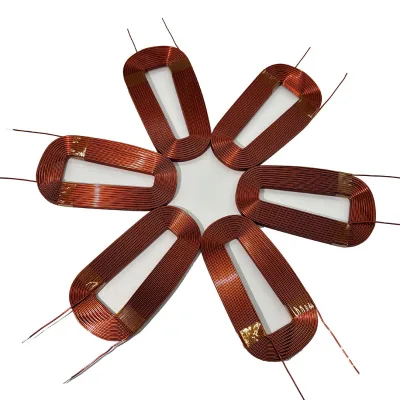
Find 30 High Frequency Coil Bobbin options for transformer, inductor, and antenna applications. Compare specifications like wire diameter, winding width, and motor types to select the right component for your manufacturing needs; compare the available evidence and request quotations based on your requirements.
Key considerations
Products List

High Frequency Horizontal Transformer Coil Winding Machine Bobbin Winding Machine
$999999.00 - $9999999.00
MOQ: 1


$0.01 - $1.00
MOQ: 5000 Pieces




Comprehensive Sourcing Guide
High Frequency Coil Bobbin Sourcing Guide
Procuring high frequency coil bobbins requires distinguishing between generic winding components and specialized units designed for specific magnetic structures. The market offers diverse configurations, ranging from hive coils to multilayer designs, each serving distinct operational needs like deflection or antenna applications. Buyers must carefully align their component selection with the intended nature of operation, ensuring the physical structure matches the electrical requirements of the final assembly.
Verification of the bobbin's compatibility with the winding motor and supply voltage is critical before finalizing any order. While some units operate on standard AC 220V systems, others may require specific DC motor integration for precise winding control. Understanding the mechanical dimensions and weight constraints is equally important, as these factors directly influence the integration of the bobbin into existing production lines or transformer winding machines.
Product Scope and Observed Listing Signals
The observed product listings reveal a wide spectrum of specifications, including wire diameters ranging from 0.08mm to 1.00mm and winding widths fixed at 200mm. These variations indicate that suppliers cater to both delicate, high-frequency applications and heavier-duty industrial tasks. Buyers should scrutinize the listed mechanical dimensions, such as the 760680720mm footprint, to ensure the equipment fits within their designated workspace without requiring costly facility modifications.
Listing signals also highlight significant differences in packaging and origin, with some products originating from Fujian, China, while others come from broader Chinese manufacturing hubs. The packaging forms vary from generic export cartons to specialized wooden cases with paper cartons, reflecting different shipping requirements and protection levels. Procurement teams must verify the specific packaging form, such as epoxy resin inductance or power coils, to ensure the components arrive undamaged and ready for immediate assembly.
Technical Specifications to Verify
Technical due diligence must focus on the winding motor capabilities and the maximum winding speed, which can reach up to 3000rpm in high-performance units. The memory number of 999 suggests advanced programmability for complex winding patterns, a feature essential for maintaining consistency in high-frequency applications. Buyers should confirm that the stepping motor for spreading and the 1/8HP DC motor for winding are compatible with their existing power infrastructure and control systems.
The composition of the magnetizer and the structure of the winding are equally vital verification points, with options including ferrite coils, copper coils, and rare earth magnets. These material choices directly impact the inductor value and the overall efficiency of the magnetic circuit. It is imperative to match the specific structure, such as a tubular coil or a fixed inductor, with the intended range of application, whether it involves power measurement, protection, or coupling functions.
Compliance and Safety Documentation
Compliance verification is a non-negotiable step, as the market listings indicate certifications such as RoHS, CE, and ISO are commonly available. However, the specific standard listed, whether it is CE, ISO9001, or a combination including CCC and SGS, must be confirmed for each batch. Buyers should request current certification documents to ensure the products meet the regulatory requirements of their target export markets, particularly regarding electrical safety and environmental restrictions.
Safety documentation must also address the nature of operation, ensuring that components designed for deflection coils or antenna coils meet specific safety thresholds. The presence of certifications like RoHS confirms the absence of hazardous substances, which is crucial for electronics manufacturing. Procurement teams should verify that the supplier provides a Declaration of Conformity that explicitly covers the specific model numbers, such as gw-9800 or YX-1006, to avoid regulatory penalties during customs clearance.
Cost Drivers and Commercial Terms
Cost drivers in this sector are heavily influenced by the level of customization and the complexity of the winding structure. While some units are available as generic fixed inductors, others require custom configurations for specific applications like power measurement or protection. The price range observed in the market is extremely broad, suggesting that factors like material composition, such as rare earth magnets versus standard magnets, significantly impact the final unit cost.
Commercial terms must be clearly defined regarding the minimum order quantity and the lead time for customized orders. The observed MOQ range of 1 to 10,000 units indicates flexibility, but buyers should negotiate based on their specific volume needs to optimize unit pricing. Additionally, the warranty period, typically listed as one year, should be explicitly stated in the contract to protect against premature failures in high-stress high-frequency environments.
Supplier Qualification and Quality Control
Supplier qualification should prioritize manufacturers with a proven track record in producing high-frequency components with consistent quality. The presence of multiple certifications, including ISO and CE, suggests a baseline level of quality management, but buyers must verify the actual production capabilities for specific models like the Coil Bobbin Uu or Wire Bobbin Eer. It is essential to audit the supplier's quality control processes to ensure they can maintain the tight tolerances required for variable inductors and multilayer coils.
Quality control checks must extend to the physical inspection of the winding width and mechanical dimensions to prevent assembly issues. Buyers should implement a rigorous incoming inspection protocol that tests the wire diameter and verifies the structural integrity of the magnetizer. Given the high-speed operation capabilities of these machines, ensuring that the components can withstand 3000rpm without mechanical failure is a critical quality metric that must be validated before mass production begins.
Long-Term Procurement Checks
Long-term procurement success depends on establishing a reliable supply chain that can adapt to changing technical requirements and market demands. Buyers should maintain open communication channels with suppliers to monitor updates in standards, such as new ISO or CE regulations, that might affect component specifications. Regular reviews of the supplier's ability to deliver customized solutions will ensure that the procurement strategy remains aligned with evolving product development cycles.
Continuous performance monitoring is necessary to assess the reliability of the components in real-world high-frequency applications. Buyers should track failure rates and warranty claims to identify any systemic quality issues early in the product lifecycle. By maintaining a detailed record of supplier performance and component behavior, organizations can make data-driven decisions about future sourcing strategies and mitigate the risks associated with supply chain disruptions.
FAQs
What is the maximum winding speed for this coil winder machine?
The maximum winding speed reaches 3000rpm, ensuring efficient production for high-frequency coil bobbins. This performance is supported by a 1/8HP DC motor for winding and a stepping motor for spreading. The machine operates on AC 220V at 50Hz, providing stable power for consistent output in industrial settings.
Can the coil winder machine be customized for specific needs?
Yes, customization is available for this coil winder machine to meet specific production requirements. The equipment supports various coil structures, including hive coils and multilayer coils. Buyers can request tailored solutions for different inductor values and applications, ensuring the machine adapts to unique manufacturing workflows and component specifications.
What certifications does the High Frequency Coil Bobbin equipment hold?
The equipment holds RoHS, CE, and ISO certifications, ensuring compliance with international safety and quality standards. These certifications verify that the machine meets rigorous regulatory requirements for manufacturing environments. Buyers can rely on these documented standards when sourcing equipment for global operations requiring certified industrial machinery.
What are the mechanical dimensions and weight of the machine?
The mechanical dimensions are 760x680x720mm, making it compact for factory floors. The unit weighs 37kgs, facilitating easier installation and relocation. These physical attributes ensure the machine fits standard workspace constraints while providing the necessary stability and robustness for continuous high-frequency coil bobbin winding operations.
How many memory programs can the coil winder store?
The coil winder machine can store up to 999 memory programs. This extensive storage capacity allows operators to save numerous winding parameters for different coil bobbins. It reduces setup time when switching between production runs, enhancing operational efficiency for manufacturers handling diverse high-frequency inductor and transformer winding tasks.
What is the wire diameter range supported by this machine?
The machine supports a wire diameter range of 0.08 to 1.00mm. This versatility allows for winding various types of high-frequency coil bobbins with different gauge requirements. The precise control ensures consistent winding quality across the specified range, accommodating diverse component specifications for electronic and transformer applications.