Source High Frequency Flour Tumbler Sieve for Food, Chemicals, and Experiments
Compare 30 High Frequency Flour Tumbler Sieve models from Henan suppliers. These circular and linear vibrating screens offer customizable options for food processing, chemical handling, and laboratory experiments with varying mesh sizes and capacities.
Key considerations
Products List


Round Tumbler Powder Filter Swing Screen Circular Vibrating Sieving Sifting
$2000.00 - $4000.00
MOQ: 1 Pieces
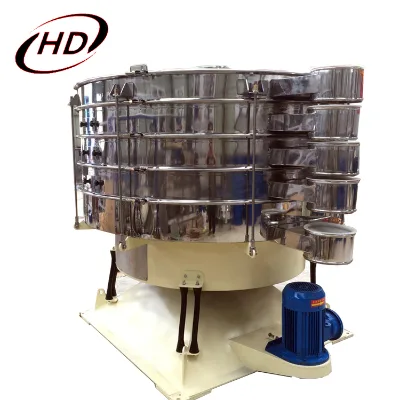


Food Powder Sieving Machine Multi-Layer Vibrating Screen Stainless Steel Swing Tumbler Sieve
$4790.00 - $6000.00
MOQ: 1 Pieces

Factory Direct Sales Customizable Flour Sieving Machine Tumbler Vibrating Screen Sifter Price
$2280.00 - $4180.00
MOQ: 1 Pieces

Stainless Steel Powder Filtering Centrifugal Vibrating Sifter Sieve for Flour
$3680.00 - $4180.00
MOQ: 1 Pieces

High Quality Low Noise Vibration Sifter Feed Screening Grading Tumbler Vibrating Sieve
$3203.00 - $3361.00
MOQ: 1 Set/Sets


Powder Round Tumbler Vibrating Screen Flour Tumbler Sifter Machine Round Swing Screen
$3203.00 - $3361.00
MOQ: 1 Set/Sets


Tumbler Screen Swing Vibrating Sieve Vibro Filter Machine Screening Sifter for Powder
$3203.00 - $3361.00
MOQ: 1 Set/Sets
Comprehensive Sourcing Guide
Strategic Sourcing Guide for High Frequency Flour Tumbler Sieve Equipment
Understanding Technical Specifications and Operational Mechanics
When sourcing high-frequency flour tumbler sieve equipment, buyers must first distinguish between the specific mechanical architectures available in the current market. The core functionality of these machines often centers on high-frequency vibration, designed specifically for lightweight fine shaker applications and experimental shaker requirements. The observed market data indicates that these units frequently operate as circular vibrating screens, though linear vibrating screen configurations are also present. The running track of the equipment is a critical differentiator; circular tracks are typical for high-frequency applications, while linear tracks serve distinct separation needs in mining or heavy industrial contexts.
A primary technical consideration is the shaft configuration. The available inventory includes models with both single and double shaft numbers, which directly impacts the stability and frequency of the vibration. The transmission structure is fundamentally defined by the vibrating screen mechanism itself, often driven by a motor as a core component. For flour processing, the material of construction is paramount. The supply chain offers units fabricated from SUS304 or 316L stainless steel, which are essential for food processing hygiene, alongside carbon steel options for less corrosive environments. The sieve area varies significantly, with observed ranges from 0.0907 square meters up to 0.98 square meters, and machine diameters spanning from 40cm to 2600mm.
Power consumption is another vital specification. Buyers should expect power ratings ranging from 0.25kW for smaller experimental units to 2.2kW for larger industrial models. Voltage requirements are flexible, with suppliers offering compatibility for 220V, 380V, 415V, and 450V systems, ensuring adaptability to various regional power grids. The noise level is a critical ergonomic factor, with specific models certified to operate below 75db. The mesh size capability is equally important for flour processing, typically ranging from 2 to 500 mesh, allowing for precise particle separation. The number of layers can be customized from 1 to 5, enabling multi-stage separation within a single unit footprint.
Compliance, Certification, and Material Standards
In the food processing sector, compliance with international standards is non-negotiable. The primary certification observed in the current market for this equipment category is the CE mark. While other certifications like REACH are mentioned in broader industry contexts, the CE certification is the explicit standard verified for these vibrating screens. Buyers must verify that the specific unit they procure carries valid CE documentation, ensuring the electrical and mechanical safety standards of the European Union are met. This is particularly relevant for the motor and electrical components, which are listed as core components of the assembly.
Material compliance is equally stringent. For flour and chemical applications, the use of SUS304 or 316L stainless steel is the industry standard to prevent contamination and ensure corrosion resistance. Carbon steel is available but requires careful evaluation regarding its suitability for direct food contact. The "Customized" standard noted in product attributes suggests that while base models exist, buyers often require specific material grades or surface finishes to meet their internal quality protocols. The warranty period for these units is typically standardized at 1 year, which serves as a baseline for the manufacturer's confidence in their build quality.
When evaluating compliance, buyers should also look for evidence of factory visits and video outgoing-inspection services. These features indicate a supplier's transparency and willingness to validate the production process. The presence of a factory visit option ("Yes") and provided video inspections suggests that the manufacturer is open to third-party verification of their production lines and quality control processes before shipment. This is a crucial step in mitigating the risk of receiving non-compliant equipment.
Cost Drivers and Pricing Variables
The pricing for high-frequency flour tumbler sieve equipment is highly variable, driven by a complex interplay of specifications and customization levels. The observed price range in the market spans from $10 to $9,400 USD. This wide disparity is not indicative of quality differences alone but rather reflects the vast differences in scale, power, and material composition. A unit priced at the lower end likely represents a small, single-layer experimental shaker with a 0.25kW motor and a 40cm diameter. Conversely, the higher price points correspond to large-scale industrial units with diameters up to 2600mm, multi-layer configurations (up to 5 layers), and robust stainless steel construction.
The customization factor is a significant cost driver. While "Customization" and "Customized" are listed as available attributes, the extent of this customization directly impacts the final cost. Buyers requesting specific mesh sizes, non-standard dimensions, or specialized motor configurations will incur higher costs compared to purchasing standard models. The weight of the machine is another indicator of cost; units weighing up to 1750 KG require significantly more raw material and heavier-duty supporting devices, such as coil springs, which adds to the manufacturing expense.
Packaging and logistics also influence the final landed cost. The standard packaging for these units is a wooden box or a standard export wooden box. This heavy-duty packaging is necessary to protect the vibrating mechanisms during transit but adds to the overall shipping weight and volume. Buyers should factor in the cost of this specialized packaging when calculating their total procurement budget. The selling unit is typically a single item, meaning that bulk discounts may not apply in the same way as they would for consumable goods, but rather through volume orders of identical large-scale units.
Typical Applications and Operational Scope
The versatility of high-frequency flour tumbler sieves extends beyond simple flour processing. The primary application is in food processing, where the equipment is used to separate fine particles and ensure uniformity in the final product. However, the observed usage data indicates these machines are also deployed in chemical processing, mining, and experimental laboratory settings. The "Lightweight Fine Shaker" and "Experiments Shaker" designations highlight their utility in R&D environments where precise control over vibration frequency and amplitude is required.
In the chemical industry, the ability to handle various materials is crucial. The equipment is designed to process chemicals, requiring corrosion-resistant materials like 316L stainless steel. The "High-Quality Machines" attribute suggests that these units are built to withstand the abrasive nature of certain chemical powders. In mining applications, the "Mine Shaker" usage points to the robustness of the design, capable of handling heavier loads and larger volumes, although the primary focus for flour processing remains on fine separation.
The capacity of these units varies, with observed ranges from 3 to 4 tons per hour for specific models. This throughput capability makes them suitable for both small-scale artisanal flour production and larger industrial operations. The "Big capacity" and "simple operation" features are key selling points for buyers looking to integrate these machines into existing production lines without requiring extensive operator training. The ability to handle different mesh sizes (2~500) allows for a single machine to perform multiple separation tasks, increasing operational efficiency.
Supplier Evaluation and Verification Protocols
Evaluating suppliers for high-frequency vibrating screens requires a rigorous approach to verifying their capabilities and reliability. The geographic origin of the equipment is a significant factor, with the majority of suppliers located in Henan, Xinxiang, China. This region is known as a hub for mining and screening machinery, offering a concentration of specialized manufacturers. Buyers should verify the "Place of Origin" and "Factory Visit" status to ensure the supplier has a physical presence and operational capacity.
The availability of "Video outgoing-inspection" is a strong indicator of a supplier's commitment to quality assurance. This feature allows buyers to conduct remote audits of the production line and the specific unit before it leaves the factory. It is essential to request these videos and review them for signs of quality craftsmanship, proper assembly of core components like the motor, and adherence to the specified material standards. The "Warranty" period of 1 year is a standard benchmark, but buyers should also inquire about the terms of the warranty, including coverage for parts and labor.
Supplier reputation can be assessed through their "Why Choose Us" statements, which often highlight "High-Quality Machines and 24-Hour Online Service." While these are marketing claims, the presence of 24-hour support indicates a commitment to after-sales service, which is critical for industrial equipment that may experience downtime. Buyers should also check for the "Brand Name" associated with the equipment, as established brands like HONGDA may offer more consistent quality control than generic manufacturers.
Quality Control and Long-Term Procurement Considerations
Quality control in the manufacturing of high-frequency flour tumbler sieves involves rigorous testing of the vibration mechanics, motor performance, and structural integrity. The "Condition" of the product is listed as "New," but buyers must ensure that the units are not refurbished or reconditioned without disclosure. The "Supporting Device" of coil springs is a critical component that affects the longevity and performance of the machine; buyers should verify the quality and durability of these springs during the inspection phase.
Long-term procurement considerations include the availability of spare parts and the ease of maintenance. The "Simple operation" feature suggests that the design is user-friendly, but the complexity of the "Transmission Structure" and "Vibrating Screen" mechanism means that regular maintenance is necessary. Buyers should request a maintenance schedule and a list of recommended spare parts from the supplier. The "Customized" nature of the equipment may complicate the sourcing of spare parts, so it is vital to ensure that the supplier can provide long-term support for customized models.
The "Dimension" and "Weight" of the machine are also important for long-term planning. A unit with dimensions of 1700mm1800mm2300mm and a weight of 1750 KG requires significant floor space and structural support. Buyers must ensure their facility can accommodate these requirements before placing an order. The "Noise" level of below 75db is a positive attribute for worker safety and comfort, but it is essential to verify that this level is maintained over the lifespan of the machine, as wear and tear can increase noise levels.
Comparative Analysis of Key Specifications
To facilitate decision-making, buyers should compare the key specifications of available models. The following table summarizes the observed variations in critical attributes:
| Specification | Small/Experimental Unit | Large/Industrial Unit |
|---|---|---|
| Model Number | QD-ZDS400 | YBS-1200 |
| Diameter | 40cm | 1000mm-2600mm |
| Power | 0.25kW | 2.2KW |
| Sieve Area | 0.0907 m² | 0.98 m² |
| Weight | Not specified (Lighter) | 1750 KG |
| Layers | 1-5 Layers | 1-5 Layers |
| Material | SUS304/316L | SUS304/316L |
| Voltage | 220V/380V/415V/450V | 220V/380V/415V/450V |
| Capacity | Variable | 3-4 t/h |
| Noise | Below 75db | Below 75db |
This comparison highlights that while the fundamental technology remains consistent, the scale and power requirements vary dramatically. Buyers must align their selection with their specific throughput needs and facility constraints. The "Mesh" range of 2~500 is consistent across the board, ensuring that the separation capability is not a limiting factor regardless of the unit size.
Final Procurement Recommendations
In conclusion, sourcing high-frequency flour tumbler sieve equipment requires a meticulous approach to technical verification, compliance checking, and supplier evaluation. Buyers should prioritize units with CE certification, stainless steel construction, and verified factory inspection capabilities. The wide price range and customization options mean that there is a solution for every budget and application, from small-scale experiments to large-scale industrial processing. By carefully analyzing the specifications, understanding the cost drivers, and conducting thorough due diligence on suppliers, buyers can secure reliable equipment that meets their operational needs and ensures long-term performance in the demanding environment of flour and chemical processing. The focus should remain on the core components, material quality, and the supplier's ability to provide ongoing support and warranty coverage.
FAQs
What certifications are available for High Frequency Flour Tumbler Sieve equipment?
CE certification is explicitly verified for these vibrating screens to ensure electrical and mechanical safety standards. While other standards exist, the CE mark is the primary compliance document observed for this equipment category in the current market.
Which materials are used to construct High Frequency Flour Tumbler Sieve units?
Units are fabricated from SUS304 or 316L stainless steel for food processing hygiene, alongside carbon steel options. The material choice depends on whether the application requires corrosion resistance for chemicals or standard durability for other industrial uses.
How does the mesh size capability affect the separation process for flour?
The mesh size capability typically ranges from 2 to 500 mesh, allowing for precise particle separation. This wide range enables the machine to handle both coarse and fine powders, ensuring uniformity in the final flour product.
Can the number of layers be customized for specific production needs?
Yes, the number of layers can be customized from 1 to 5 to enable multi-stage separation within a single unit. This flexibility allows buyers to optimize the footprint and efficiency of their specific production line requirements.
What is the typical noise level for these high frequency vibrating screens?
Specific models are certified to operate below 75db, which is a critical ergonomic factor for the workplace. This low noise level ensures a safer environment for operators while maintaining the high-frequency vibration required for effective screening.
Which voltage options are supported by the High Frequency Flour Tumbler Sieve motors?
Suppliers offer compatibility for 220V, 380V, 415V, and 450V systems to ensure adaptability to various regional power grids. This flexibility allows the equipment to be deployed in different countries without requiring extensive electrical modifications.
What is the standard warranty period for these vibrating screen machines?
The warranty period for these units is typically standardized at 1 year. This baseline reflects the manufacturer's confidence in their build quality and provides buyers with a standard period for coverage against defects.