Source High Frequency PVC Welding Rods for School Office Sports
Compare 30 listings for High Frequency PVC Welding Rods with varying tensile strengths, sizes, and certifications. Buyers can evaluate options from Baoding and Jiangsu suppliers offering custom lengths and colors for indoor applications.
Key considerations
Products List


100% Virgin PVC Welding Rods, Plastic Welding Rods with White, Grey Color
$820.00 - $2000.00
MOQ: 2 Tons









Comprehensive Sourcing Guide
Strategic Sourcing Guide for High Frequency PVC Welding Rods
Understanding Product Specifications and Material Variability
When sourcing high-frequency PVC welding rods, buyers must first navigate a complex landscape of material compositions and dimensional specifications. The core product category, often identified by model numbers such as PVC-R, LDSY153, or WR-003, is defined by its primary function: joining PVC materials through heat and pressure. However, the supplied data reveals significant variability in the attributes of these products, requiring precise verification before procurement.
The material composition is a critical starting point. While the majority of listings specify "PVC" as the primary material, some entries explicitly note "100% Virgin PVC," which is generally preferred for high-strength applications to ensure consistency and lack of impurities. Conversely, other data points indicate "PE" (Polyethylene) as a material option, suggesting that some suppliers may offer hybrid or alternative polymer welding rods under similar search terms. Buyers must explicitly confirm whether the rod is pure PVC or a blend, as this dictates the welding temperature and technique required.
Dimensional specifications vary widely across the market. The standard diameter range observed in high-confidence facts spans from 2.0mm to 4.0mm, with some specific models offering thicknesses of 4mm or 4.5mm. The shape is predominantly described as a "Round rod," though the data also mentions "Single, Double, Triangle" configurations, indicating that cross-sectional geometry is a customizable variable. Length is frequently listed as "Customized" or "Custom," with some standard packaging details noting lengths of 100m per roll. This variability means that a buyer cannot assume a standard length; they must define their specific length requirements to avoid compatibility issues with their welding equipment.
| Attribute | Observed Range/Options | Verification Requirement |
|---|---|---|
| Material | PVC, 100% Virgin PVC, PE | Confirm polymer type matches welding gun requirements. |
| Diameter | 2.0mm - 4.0mm, 4.5mm | Match to joint gap and welding tip size. |
| Shape | Round, Single, Double, Triangle | Verify geometry for specific joint types. |
| Length | Custom, 100m/Roll | Confirm roll length for inventory planning. |
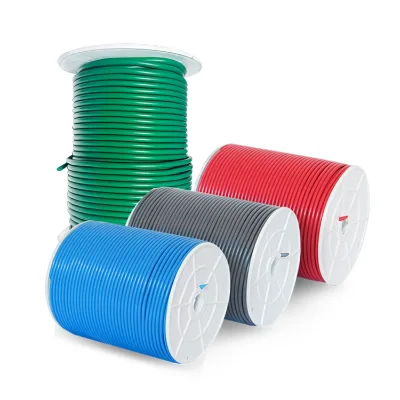
| Color | Grey, White, Blue, Black, Red, Yellow, Light Green | Select for aesthetic matching or identification. |
Technical Performance and Physical Properties
The technical performance of PVC welding rods is not uniform across all suppliers. The supplied facts highlight distinct ranges for tensile strength, which is a primary indicator of the weld's durability. One set of data indicates a tensile strength range of 4150MPa, while another entry specifies a significantly higher range of 81130MPa. This discrepancy suggests that the market offers both standard-grade and high-performance rods. Buyers must not assume that all "PVC welding rods" possess the higher strength; the specific application dictates the necessary grade. For structural repairs or high-stress environments, the 81~130MPa range is likely required, whereas general-purpose sealing might suffice with the lower range.
Contraction percentage and water absorption are other critical physical properties. The data indicates a contraction percentage of less than 0.4% and water absorption of less than 0.01%. These low values are essential for maintaining dimensional stability and preventing degradation in moist environments. However, because these values are presented as specific observations rather than universal guarantees, buyers should request test reports for the specific batch they intend to purchase. The "Tenacity" is described as "Strong" in some entries, but this is a qualitative descriptor that requires quantitative backing through tensile testing.
Surface treatment is another area of variation. Some products feature "Simple Color" treatments, while others offer a wide palette including Light Green, Blue, Dark Grey, Black, Red, and Yellow. The color is often customizable, as noted by the "Customed" attribute. For industrial applications where color coding identifies different pipe schedules or materials, this customization is a valuable feature. However, for aesthetic applications, the availability of specific shades like "Light green" or "Dark Grey" must be confirmed against the supplier's current inventory.
Compliance, Certification, and Safety Standards
Navigating the compliance landscape for PVC welding rods requires careful attention to the certifications listed in supplier profiles. The most frequently cited certifications in the provided data are SGS and RoHS. SGS is a global inspection, verification, testing, and certification company, and its presence suggests that the product has undergone third-party verification for quality and safety. RoHS (Restriction of Hazardous Substances) compliance indicates that the product meets specific restrictions on hazardous materials, which is crucial for applications in schools, offices, and sports areas where environmental safety is paramount.
However, the data also lists "Product Type: Others" and "Kind: Plastic Bar," which can sometimes indicate that the product does not fit neatly into standard industrial categories. This ambiguity reinforces the need for buyers to verify that the specific certification applies to the exact model number they are purchasing. For instance, a product with the model number LDSY146 might have different certification status than one labeled LDSY153.
Standards for the product are also mentioned, with references to "2mm-4mm dia" and "2mm~4mm" as prod_standard. While these look like dimensional standards, they may also imply adherence to a specific manufacturing standard for that diameter range. Buyers should ask for the full standard designation (e.g., ISO, ASTM, or GB standards) rather than relying on the dimensional shorthand. Additionally, the "Warranty: 3 Years" mentioned in some listings is a significant value-add, but it should be scrutinized to understand what specific defects or performance failures are covered under this warranty period.
Cost Drivers and Procurement Economics
The cost of high-frequency PVC welding rods is influenced by several factors, including material purity, dimensional customization, and packaging requirements. The observed price range in the market is vast, spanning from $0.8 to $2200 USD. This extreme variance is likely due to differences in order volume, material quality (virgin vs. recycled), and packaging complexity. A single item priced at $0.8 suggests a low-volume or sample purchase, while the $2200 figure likely represents a bulk order of specialized, high-tensile strength rods with custom packaging.
Minimum Order Quantity (MOQ) is another critical cost driver. The observed MOQ range is 1 to 1000 units. For small-scale projects or testing purposes, suppliers offering an MOQ of 1 are essential. However, for large-scale industrial procurement, negotiating an MOQ closer to 1000 can significantly reduce the unit price. The packaging details also impact cost; options range from "Plastic Bags" to "Masked Film and Packed by Wooden Pallet." Wooden pallets and shrink film add to the shipping weight and cost but provide better protection for long-distance transport, especially when the port of dispatch is Shanghai.
Lead times are generally consistent, with most suppliers indicating a delivery time of "Within 2 Weeks." This is a relatively short lead time, suggesting that these products are often kept in stock or have efficient production lines. However, for customized colors or specific diameters outside the standard 2.0mm-4.0mm range, buyers should verify if the lead time extends beyond the standard two weeks. The "Place of Origin" varies between Baoding, Hebei Province, China, and Jiangsu, China, which may affect shipping logistics and tariffs depending on the buyer's location.
Typical Applications and Usage Scenarios
The versatility of PVC welding rods allows them to be used in a wide array of settings, from residential repairs to large-scale infrastructure. The data explicitly lists applications in "School, Mass, Office, Sports area etc," indicating a strong presence in public and commercial facilities. The "Usage: Indoor" attribute suggests that while these rods are suitable for interior environments, their performance in outdoor, high-UV exposure scenarios might be limited unless specific UV-resistant additives are included.
The "Feature: Waterproof, Fire resistance, Green" attributes highlight the functional benefits that make these rods suitable for demanding environments. Waterproofing is essential for plumbing and drainage systems, while fire resistance is a critical safety feature for commercial buildings and schools. The "Green" feature likely refers to environmental friendliness, possibly linked to the RoHS certification and the use of 100% virgin PVC, which avoids the release of toxic fumes during welding compared to some recycled materials.
The "Design Style: Modern" and "Application" notes suggest that these rods are not just functional but also contribute to the aesthetic finish of a project. In office and sports areas, the availability of colors like "Light green," "Blue," and "Dark Grey" allows for seamless integration with existing infrastructure. The "After-sale Service: Online Technical Support" is particularly valuable for buyers who may not have specialized welding staff on-site, ensuring that the correct welding parameters are used to achieve the desired bond strength.
Supplier Evaluation and Quality Assurance
Evaluating suppliers for PVC welding rods requires a multi-faceted approach. The "Brand Name: PLASTICOLOR" is one specific identifier, but buyers should not limit their search to a single brand. Instead, they should look for suppliers who provide clear documentation on their production process and quality control measures. The "Surface Treatment: Simple Color" implies a straightforward manufacturing process, but buyers should verify if the color is consistent throughout the rod or just a surface coating, as this affects the weld integrity.
Quality control should focus on verifying the tensile strength and contraction percentage. Since the data shows two distinct tensile strength ranges (4150MPa and 81130MPa), buyers must request a Certificate of Analysis (CoA) for the specific batch they are purchasing. This document should confirm that the rod meets the claimed strength and that the water absorption is indeed below 0.01%. The "Tenacity: Strong" claim should be backed by physical test results rather than marketing language.
Packaging is a key indicator of supplier reliability. The options of "Plastic Bags" versus "Masked Film and Packed by Wooden Pallet" suggest different levels of care in handling. For international shipping from Shanghai, wooden pallets are often necessary to prevent damage during transit. Buyers should also check the "Port of dispatch" to ensure it aligns with their logistics strategy. A supplier with a port of dispatch in Shanghai may offer better shipping rates to major global ports compared to those with less accessible locations.
Long-Term Procurement and Maintenance Considerations
For long-term procurement, buyers should consider the warranty and after-sales support. A "Warranty: 3 Years" is a strong indicator of supplier confidence in their product. However, the terms of this warranty must be clearly understood. Does it cover material defects only, or does it include performance failures due to improper welding? The "After-sale Service: Online Technical Support" is a crucial component of long-term success, as it provides a resource for troubleshooting welding issues that may arise during the project lifecycle.
Inventory management is another consideration. With a "Length: Customized" option, buyers can optimize their inventory by ordering lengths that match their specific project needs, reducing waste. However, this customization may impact the lead time and cost. Buyers should balance the need for custom lengths with the benefits of standard sizes, which are likely more readily available and cost-effective.
Finally, the "Product Type: Others" and "Kind: Plastic Bar" classifications suggest that buyers should be prepared for a diverse market. Not all products will fit neatly into standard categories, and flexibility in procurement is key. By maintaining a relationship with suppliers who offer a range of materials, from standard PVC to high-strength variants, buyers can ensure they have the right tools for any application, from simple indoor repairs to complex industrial welding tasks.
FAQs
What material options are available for High Frequency PVC Welding Rods?
Most listings specify PVC or 100% Virgin PVC, though some data points indicate PE as an alternative. Buyers must confirm the exact polymer type matches their welding gun requirements before procurement to ensure compatibility and safety.
Which certifications should I verify for High Frequency PVC Welding Rods?
The most frequently cited certifications are SGS and RoHS, indicating third-party quality verification and compliance with hazardous substance restrictions. Buyers should request documentation for the specific model number to ensure the certification applies to their batch.
How long is the delivery time for High Frequency PVC Welding Rods?
Most suppliers indicate a delivery time of within 2 weeks for standard orders. However, customized colors or specific diameters outside the standard range may extend this timeline, so verification is required before finalizing the purchase.
What is the price range for High Frequency PVC Welding Rods?
The observed price range spans from 0.8 to 2200 USD, driven by order volume and material quality. A single item might cost 0.8 USD, while bulk orders of specialized rods with custom packaging can reach 2200 USD.
Can I customize the color of High Frequency PVC Welding Rods?
Yes, color is often customizable with options including grey, white, blue, black, red, yellow, and light green. Buyers should confirm the availability of specific shades against the supplier's current inventory to ensure aesthetic matching.
What are the standard dimensions for High Frequency PVC Welding Rods?
Standard diameters range from 2.0mm to 4.0mm, with some models offering thicknesses of 4mm or 4.5mm. Length is frequently listed as custom or 100m per roll, requiring specific definition to avoid equipment compatibility issues.
Where are High Frequency PVC Welding Rods typically manufactured?
Products originate from locations such as Baoding, Hebei Province, and Jiangsu, China. The place of origin may affect shipping logistics and tariffs, so buyers should align this with their specific location strategy.