Source High Frequency Tarpaulin Welding Machine for Stationery, Auto Parts, and Household Appliances
Find 30 high frequency tarpaulin welding machines for stationery, auto parts, and household appliances. Compare specifications including power, voltage, and control types to select the right equipment for your production needs.
Key considerations
Products List


PVC PE Tarpaulin Sealing Machine, High Frequency Tarpaulin Welding Machine
$1600.00 - $1700.00
MOQ: 1 Sets


High Frequency PVC Coated Fabrics Welding Machine for Tarpaulin Tents
$5200.00 - $6000.00
MOQ: 1 Pieces


High Frequency Welding Machine for Tarpaulin and PVC Coated Fabric
$2000.00 - $100000.00
MOQ: 1 Pieces
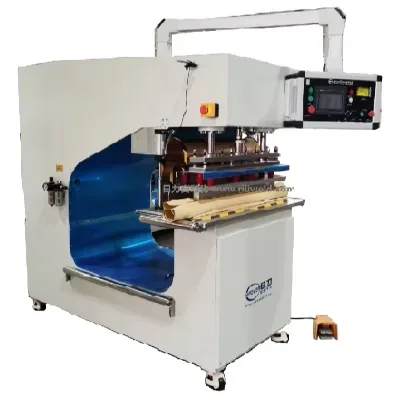


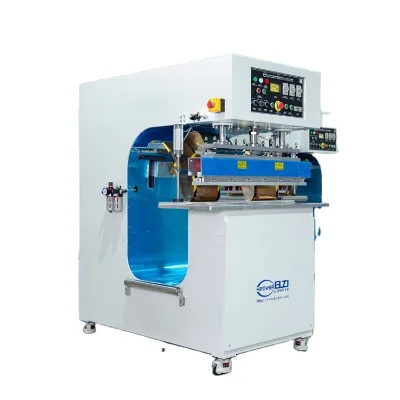
High Frequency Tents Welding Machine for Welding Tents, Canvas,Tarpaulin
$5891.36 - $8126.01
MOQ: 1 pieces

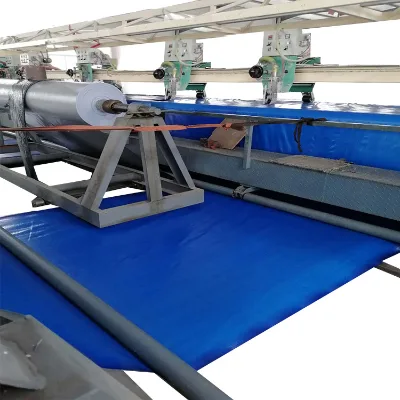
Comprehensive Sourcing Guide
Strategic Sourcing Guide for High Frequency Tarpaulin Welding Machines
Procuring industrial welding equipment requires a rigorous understanding of technical parameters, supply chain reliability, and compliance standards. For buyers seeking high-frequency tarpaulin welding machines, the market offers a diverse array of configurations ranging from semi-automatic to fully automatic systems. This guide synthesizes observed product attributes and industry standards to provide a structured framework for evaluation. The focus remains on objective analysis of specifications, operational capabilities, and risk mitigation strategies without referencing specific vendor names or unverified commercial claims.
Technical Specifications and Operational Modes
The core functionality of a high-frequency welding machine relies on the generation of electromagnetic fields to fuse thermoplastic materials. Based on observed market data, these machines typically operate with an electric current of AC type and utilize high-frequency power sources. A critical specification to verify is the operating frequency, which commonly appears in ranges such as 27.12 MHz or 40.68 MHz. The choice between these frequencies often depends on the specific dielectric properties of the material being welded and the required depth of the weld.
Power input is another fundamental parameter. Units observed in the market frequently list input power ratings between 8.5 kVA and 15 kVA, with standard voltage configurations of 380V or 220V. Some models support customizable source inputs, including 380V/50Hz, which is essential for international buyers whose local grid infrastructure differs from the manufacturer's origin standards. The oscillation tubes, such as the 7t69rb or 3069 models, are central to the machine's ability to generate the necessary high-frequency energy. These components are typically paired with silicon diode rectifiers to ensure stable power conversion.
Control systems vary significantly across the product spectrum. Buyers may encounter semi-automatic controls, which offer a balance between operator oversight and machine efficiency, or fully automatic systems designed for high-volume production lines. The working table dimensions are also a critical physical constraint; standard configurations often feature a working area of 450700mm, though larger industrial units may differ. Machine dimensions themselves can be substantial, with some models measuring approximately 8501270*2160mm, necessitating careful planning for factory floor layout and logistics.
Compliance and Certification Verification
In the industrial machinery sector, certification serves as a primary indicator of safety and quality assurance. The most frequently observed certification for these welding machines is the CE mark, indicating compliance with European health, safety, and environmental protection standards. While some listings mention ISO9001, this should be treated as a background standard rather than a guaranteed attribute for every specific unit without direct verification from the supplier.
Buyers must distinguish between the machine's electrical standards and its operational certifications. The CE certification typically covers electrical safety, electromagnetic compatibility, and machinery directives. When evaluating a supplier, request the specific certificate documents rather than relying on marketing claims. It is also important to note that while some product listings mention "CE Certification" as a standard, the actual validity of these documents depends on the issuing body and the specific model year.
For machines intended for export to regions outside the European Union, additional certifications may be required. The supply chain often involves origin points in China, specifically from manufacturing hubs like Shenzhen and Qingdao. While the origin location is a factual observation, it does not inherently dictate quality. Instead, the presence of a valid CE certificate and adherence to international safety protocols should be the primary verification metric. Buyers should ensure that the "Pneumatic drive mode" or other mechanical standards listed in the product description are backed by the relevant safety documentation.
Cost Drivers and Pricing Structures
The pricing of high-frequency welding machines is influenced by a complex matrix of factors, including power capacity, automation level, and customization options. Observed price ranges in the market are exceptionally broad, spanning from approximately $1 to $398,000 USD. This variance reflects the difference between small-scale benchtop units and large, fully automated industrial lines.
A primary cost driver is the power rating of the machine. Models with higher kilowatt ratings, such as 10KW or 15KW configurations, generally command higher prices due to the increased cost of oscillation tubes, transformers, and cooling systems. The "High Frequency" power type is standard, but the specific output capacity directly impacts the unit's ability to handle thicker materials or higher production speeds.
Customization is another significant factor. The availability of customization options allows buyers to tailor the machine to specific production needs, such as adjusting the working table size or integrating specific control interfaces. However, these bespoke features often incur additional costs and may extend lead times. The packaging method, whether a standard wooden case, polywooden case, or waterproof wrap, also contributes to the final price, particularly for international shipping where robust protection is mandatory.
Buyers should be wary of prices that seem abnormally low, as they may indicate compromised components or a lack of necessary safety certifications. Conversely, extremely high prices do not always guarantee superior performance; they may reflect brand premiums or unnecessary features. The Minimum Order Quantity (MOQ) for these machines is typically 1 unit, offering flexibility for small-scale procurement, but volume discounts may be available for larger orders.
Typical Applications and Material Compatibility
High-frequency welding machines are versatile tools designed for joining thermoplastic materials. The observed applications for these machines span several industries, including stationery, electronics, and automotive parts. However, their most prominent use case is in the welding of tarpaulins, tents, and air bubble films.
The suitability of the machine for a specific application depends heavily on the material composition. The machines are explicitly designed to handle materials such as PE (Polyethylene), PVC (Polyvinyl Chloride), tarpaulin, tent fabrics, air bubble film, and safety nets. The welding process relies on the dielectric loss of these materials when exposed to high-frequency electromagnetic fields, causing molecular friction and heat generation at the interface.
For buyers in the inflatable product sector, the welding speed is a critical performance metric. Observed data indicates welding speeds can range from 0 to 35 meters per minute, depending on the machine's power and the material thickness. The "Single Head Welding Machine" configuration is a common keyword for units designed for general-purpose welding tasks, while more specialized setups may be required for continuous roll-to-roll processing.
The application scope also extends to household appliances and electronic components, where precise, clean welds are necessary. The ability to weld these diverse materials without the need for adhesives or mechanical fasteners makes high-frequency welding a preferred method for manufacturers seeking to reduce assembly time and improve product durability.
Supplier Evaluation and Quality Control
Evaluating a supplier for industrial welding equipment requires a focus on technical competence and after-sales support. The "Operating" and "Function" attributes of the machine, often described as "Easy" and "Stable" in product listings, are subjective claims that must be validated through technical documentation or trial runs. A reliable supplier will provide detailed operation manuals and training materials to ensure the buyer's staff can utilize the machine effectively.
Quality control should be a central part of the procurement process. Buyers must verify the "Performance" claims of the machine, such as its reliability and consistency. This involves checking the quality of the oscillation tubes and the rectifier system, as these are the components most prone to wear and failure. The cooling method, typically air cooling, must be sufficient for the machine's duty cycle to prevent overheating during extended operation.
When assessing a supplier, consider their experience with the specific models listed, such as the ZJ-8K, HR-35KW, or HR-10KW-F1. While model numbers are useful identifiers, they do not guarantee the quality of the build. Buyers should request references from other clients in similar industries and ask for proof of the machine's performance under load. The "Delivery Time" is often cited as "Fast," but this should be clarified with a specific timeline in the contract to avoid production delays.
Long-Term Procurement Considerations
Sourcing a high-frequency welding machine is a long-term investment that requires consideration of maintenance, spare parts availability, and scalability. The machine's weight, ranging from 580kg to 650kg, impacts installation requirements and potential relocation costs. The "Wooden Case for Export" or "Plywooden Case" packaging ensures safe transport, but the buyer must also plan for the long-term storage of spare parts.
The "Air Pressure" requirement, typically 0.6-0.8MPa for pneumatic models, is a critical operational constraint. Buyers must ensure their facility has the necessary compressed air infrastructure to support the machine. If the machine is to be used in a location with variable power quality, the voltage stability and the ability to handle 380V/220V inputs become even more important.
Scalability is another consideration. As production needs grow, the buyer may need to upgrade from a semi-automatic to a fully automatic system or increase the power capacity of the machine. The supplier's ability to provide upgrades or compatible accessories is a key factor in the long-term viability of the partnership. Finally, the "Standard" of the machine, whether it is an 8KW/10KW model or a higher capacity unit, should align with the buyer's current and future production targets to avoid premature obsolescence.
Conclusion
The procurement of high-frequency tarpaulin welding machines involves a careful balance of technical specifications, compliance verification, and supplier reliability. By focusing on objective data such as frequency ranges, power inputs, and material compatibility, buyers can make informed decisions that align with their production goals. The broad range of available models, from 8.5 kVA to 15 kVA units, offers flexibility for various industrial applications, but the buyer must remain vigilant in verifying certifications and performance claims. Ultimately, a successful procurement strategy relies on thorough due diligence, clear communication with suppliers, and a commitment to quality control throughout the lifecycle of the equipment.
FAQs
What power frequencies are available for high frequency tarpaulin welding machines?
Available frequencies are 27.12 MHz or 40.68 MHz depending on the specific model configuration. These frequencies are selected based on the dielectric properties of the material being welded to ensure optimal fusion depth.
Which voltage inputs do these machines support for international operation?
Machines typically support 380V or 220V inputs to accommodate different regional power standards. Some models offer customizable source inputs like 380V/50Hz to ensure compatibility with local electrical infrastructure.
Can these machines weld materials like PE and PVC tarpaulin?
Yes, the machines are designed to weld PE, PVC, tarpaulin, tent fabrics, and air bubble film. The high-frequency electromagnetic field generates heat through molecular friction to fuse these thermoplastic materials effectively.
What is the standard working table size for these welding units?
The standard working table dimension is 450 by 700 mm for most configurations. Larger industrial units may have different dimensions, but this size is common for general-purpose welding tasks.
How is the machine typically packaged for export shipping?
Machines are packed in wooden cases, polywooden cases, or plywood boxes for export protection. Some units may also use waterproof wraps to ensure safety during transit and storage.
Which certifications are commonly associated with these welding machines?
The CE certification is the most frequently observed standard indicating compliance with European safety directives. Buyers should verify specific certificate documents rather than relying solely on marketing claims.
What is the typical air pressure requirement for pneumatic drive models?
Pneumatic drive models typically require an air pressure between 0.6 and 0.8 MPa to operate correctly. Facility infrastructure must support this pressure range to ensure stable machine performance.