Source Vertical Projection Resistance Welder for Auto, Electronics, Battery
Find and compare 30 Vertical Projection Resistance Welder options from verified Chinese manufacturers. Evaluate models like MD-20 and DTN series based on power, cooling, and material compatibility for your production needs; compare the available evidence and request quotations based on your requirements.
Key considerations
Products List


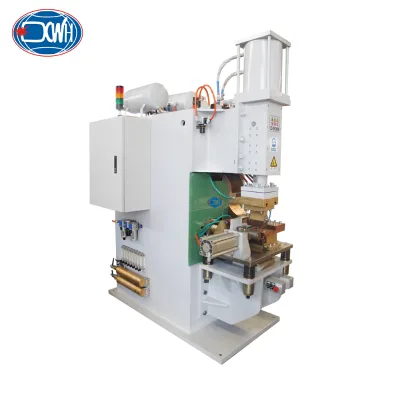


Vertical Multi-Heads Nut Stud Resistance Spot Projection Welder Welding Equipment
$14000.00 - $20000.00
MOQ: 1 Sets


Capacitive Discharge Spot Welding Machine & Projection Welding Machine
$2000.00 - $5000.00
MOQ: 1 Pieces


Medium Frequency Inverter Resistance Projection Spot Welding Machines Welder Machine
$3000.00 - $10000.00
MOQ: 1 Pieces
Comprehensive Sourcing Guide
Vertical Projection Resistance Welder Sourcing Guide
Procuring vertical projection resistance welders requires a nuanced understanding of both the machine’s mechanical architecture and the specific electrical parameters that drive consistent joint integrity. These machines are engineered to create precise, high-strength welds on metal components by concentrating current density at predefined projection points, ensuring minimal heat-affected zones and superior aesthetic finishes. Buyers must recognize that the vertical orientation of the electrode stroke allows for gravity-assisted part placement, which can enhance throughput in automated assembly lines while maintaining strict positional accuracy.
The selection process hinges on aligning the equipment’s technical capabilities with your production volume and material specifications. Whether you are processing stainless steel, copper, or aluminum alloys, the welder’s ability to deliver stable secondary rectification or intermediate frequency AC current is critical. Sourcing guides emphasize verifying the transmission method, such as pneumatic systems, and the cooling efficiency, which directly impacts the duty cycle and long-term reliability of the welding head under continuous industrial operation.
Product Scope and Observed Listing Signals
Market listings for vertical projection resistance welders reveal a diverse range of configurations, from single-spot fixed units to multi-electrode step seam welders designed for longitudinal welding applications. Observed product models indicate variations in rated capacity, typically spanning from 50kVA to 200kVA, which dictates the maximum current output available for thicker materials. Buyers should note that some listings specify AC inverter technology, offering precise control over welding parameters, while others may rely on traditional transformer-based systems, each presenting distinct advantages for different production environments.
Pricing signals in the current market are broad, reflecting the customization options available for color, voltage, and electrode pressure settings. The observed minimum order quantities are generally low, facilitating trial purchases for small-batch manufacturing or prototyping phases. However, the wide price range suggests that significant value differences exist between basic semi-automatic units and advanced, fully automated systems with integrated water cooling and digital control interfaces, necessitating careful evaluation of feature sets against budget constraints.
Technical Specifications to Verify
When evaluating technical specifications, the electrode stroke direction and conductive way are primary considerations for ensuring compatibility with your part geometry. Vertical stroke mechanisms are standard for projection welding, allowing for consistent pressure application, while the choice between both-sided and single-sided conduction affects the accessibility of the weld zone. Buyers must verify the maximum short-circuit current, which can range from 10kA to over 100kA depending on the model, to ensure the machine can handle the thermal demands of your specific alloy thicknesses without overheating.
Cooling system efficiency is another critical technical parameter that directly influences the rated duty cycle and operational stability. Water cooling is prevalent, with flow rates typically specified between 12L/min and 25L/min to maintain optimal electrode temperature. Additionally, the input power configuration, often three-phase 380V, must be confirmed against your facility’s electrical infrastructure. Verifying the electrode pressure range, which may span from 1200N to 4700N, ensures the machine can apply sufficient force to form consistent weld nuggets without damaging delicate components.
Compliance and Safety Documentation
Safety and regulatory compliance are non-negotiable aspects of sourcing industrial welding equipment, particularly when dealing with high-current electrical systems. Buyers should request documentation confirming adherence to international quality management standards, such as ISO 9001, which indicates a robust manufacturing process. Additionally, regional certification marks like CCC may be required for domestic sales or installation in specific markets, ensuring that the electrical components meet local safety codes for insulation, grounding, and emergency stop functionality.
Beyond certifications, comprehensive safety documentation should include detailed operational manuals and risk assessments for pneumatic and electrical hazards. The presence of protective guarding and interlocks on the welding head is essential to prevent operator injury during the high-pressure welding cycle. Procurement teams must verify that the supplier provides clear instructions for maintenance procedures, including water cooling system flushing and electrode replacement, to ensure ongoing compliance with occupational health and safety regulations.
Cost Drivers and Commercial Terms
The total cost of ownership for a Vertical Projection Resistance Welder is influenced by several key commercial factors, including customization levels and packaging requirements. Customized voltage configurations, specific color schemes, and tailored electrode pressures can increase the initial unit price but may reduce integration costs downstream. Buyers should also consider the packaging method, whether wooden boxes or standard export packing, as this affects shipping costs and the risk of transit damage, particularly for heavy machinery with sensitive electronic controls.
Lead times and payment terms are critical components of the commercial negotiation, especially when sourcing from international suppliers. While specific lead times are not universally fixed, they often depend on the complexity of the customization and the current production schedule of the manufacturer. Buyers should negotiate clear terms regarding warranty coverage, spare parts availability, and technical support response times to mitigate the risk of production downtime. Understanding these commercial dynamics helps in forecasting the true financial impact of the acquisition beyond the sticker price.
Supplier Qualification and Quality Control
Supplier qualification requires a rigorous assessment of their manufacturing capabilities and quality control protocols. Buyers should verify the supplier’s origin, with many reputable manufacturers based in industrial hubs like Ningbo, China, known for their expertise in welding equipment production. It is essential to request evidence of their production capacity, including the number of units produced monthly and their ability to handle large orders without compromising quality. Auditing their facility for standardized assembly lines and testing procedures can provide confidence in the consistency of the delivered units.
Quality control measures should extend to the incoming material inspection and final performance testing of each welder. Suppliers should demonstrate their ability to test critical components, such as transformers and inverters, under load conditions before shipment. Buyers should also inquire about the traceability of key parts, ensuring that components like electrodes and pneumatic valves are sourced from reputable sub-suppliers. Establishing a clear protocol for pre-shipment inspections and third-party verification can significantly reduce the risk of receiving defective or non-compliant equipment.
Long-Term Procurement Checks
Long-term procurement success depends on the supplier’s ability to provide sustained technical support and spare parts availability. Buyers should establish a clear channel for troubleshooting and maintenance assistance, ensuring that technical queries are resolved promptly to minimize production interruptions. The availability of consumables, such as electrodes and cooling water filters, should be guaranteed for the expected lifespan of the machine, preventing delays caused by part shortages. A reliable supplier will offer a comprehensive spare parts list with recommended stock levels for critical components.
Furthermore, buyers should monitor the supplier’s commitment to product evolution and regulatory updates. As welding technologies advance, suppliers may offer upgrades for control systems or energy-efficient inverters that can improve performance and reduce operating costs. Maintaining a strategic relationship with the supplier can provide access to these improvements and ensure that your welding equipment remains competitive and compliant with evolving industry standards. Regular reviews of performance data and supplier service quality can help identify opportunities for optimization and continuous improvement in your welding operations.
FAQs
What customization options are available for this welder?
Customization is available for the color and specific requirements of the machine. You can request a customized color according to your needs. The power output is also adjustable to suit different welding tasks. This flexibility allows buyers to tailor the equipment to their specific production lines.
How is the cooling system managed in this unit?
The unit utilizes water cooling with a flow rate between 12 and 25 liters per minute. This system ensures efficient heat dissipation during operation. The cooling water requirement varies slightly by model, but all versions maintain stable temperatures. This design supports continuous welding cycles without overheating issues.
Which materials can this welder process effectively?
This machine is designed to weld stainless steel, copper, aluminum, and other metal materials. It handles both single and multiple spot welding applications on these metals. The electrode pressure ranges from 1200 to 4700 Newtons to ensure firm joints. It is suitable for various industrial metal fabrication needs.
Can the machine operate with different voltage inputs?
Yes, the welder supports both 380V and 220V voltage inputs for versatile operation. Some models specifically require three-phase 380V power. This adaptability allows the equipment to function in different electrical environments. Buyers should verify the specific voltage requirement for their selected model before installation.
What is the rated capacity range for these welders?
The rated capacity ranges from 50kVA to 200kVA depending on the specific model. This range accommodates various industrial power requirements for spot welding tasks. Higher capacity units support larger production volumes and thicker materials. Selecting the right capacity ensures optimal performance for your specific welding application.
How is the product packed for international shipping?
Products are packed in wooden boxes or standard export packing cases. This robust packaging protects the machine during transit and handling. Some models use wooden cases specifically designed for heavy industrial equipment. The packing method ensures the welder arrives safely at the destination without damage.
What certifications does this welding equipment hold?
The equipment holds ISO 9001:2008 and CCC certifications for quality and safety. These standards verify the manufacturing process and product reliability. Buyers can trust the compliance of the machine with international safety regulations. Certification ensures the welder meets necessary industry requirements for operation.