Find Compare Source High Precision Oil Country Lathe for drilling pipes
Explore 30 listings of High Precision Oil Country Lathe machines with varying specifications like spindle bore, swing over bed, and controlling modes. Buyers can compare models from China for drilling pipe manufacturing applications.
Key considerations
Products List


3m Oil Industry Lathe Large Diameter Heavy Duty Horizontal Oil Country Lathe
$39000.00 - $41000.00
MOQ: 1 Sets

High-Precision Horizontal CNC Lathe for Oil Country Pipe Threading
$165700.00 - $166000.00
MOQ: 1 Pieces

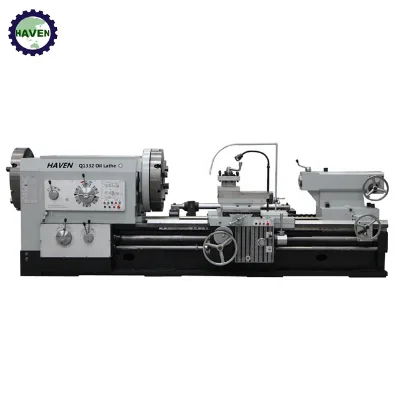

High Precision CNC Oil Country Lathe for Complex Oilfield Components CNC Pipe Thread Torno
$36689.00 - $58866.00
MOQ: 1 Pieces


Hot Precision CNC Oil Country Lathe Machine for Turning Oil Pipe Thread
$22233.00 - $35866.00
MOQ: 1 Pieces


Comprehensive Sourcing Guide
Strategic Sourcing Guide for High Precision Oil Country Lathes
The procurement of high-precision oil country lathes represents a critical decision point for manufacturers in the energy sector. These specialized machines are engineered to handle the rigorous demands of drilling equipment production, where dimensional accuracy and surface finish directly impact the safety and longevity of downhole tools. Sourcing such equipment requires a disciplined approach that balances technical specifications with compliance verification and long-term operational reliability. Buyers must navigate a complex landscape of machine configurations, ranging from manual to fully automated CNC systems, to ensure the selected unit aligns with specific production workflows. This guide outlines the essential factors for evaluating high-precision lathes, focusing on the observable attributes of available market inventory while adhering to strict evidence-based procurement principles.
Technical Specifications and Machine Configuration
When evaluating high-precision oil country lathes, the primary focus must be on the machine's geometric capabilities and control systems. The market inventory reveals a diverse array of configurations, each suited to different stages of production. A critical observation in the current supply landscape is the variation in "Automatic Grade," which ranges from manual to automatic and semiautomatic. For high-precision applications, the selection between a "Manual" grade and an "Automatic" grade dictates the level of operator intervention and the consistency of the final product. Machines labeled with "Automatic Grade: Automatic" typically offer the repeatability required for mass-producing oil country components, whereas "Manual" or "Semiautomatic" variants may be better suited for prototyping or low-volume, high-complexity jobs.
The physical dimensions of the machine are equally vital. The "Max Swing Over Bed" is a fundamental constraint that determines the maximum diameter of the workpiece the lathe can accommodate. Data from available listings indicates a wide spectrum of capacities, with observed values ranging from 360mm to 1600mm. For large-diameter oil country pipes, a machine with a "Max Swing Over Bed" of 1600mm, such as the CKL61160/3000 model, is necessary. Conversely, smaller components may be efficiently machined on units with a 360mm swing. Similarly, the "Spindle Bore Dia" defines the size of the bar stock that can be fed through the headstock. Listings show bore diameters ranging from 52mm to 630mm, a factor that directly influences the throughput and the type of raw material that can be processed.
The "Controlling Mode" is another decisive technical factor. While some units operate under "Artificial" control, the industry standard for high-precision work is increasingly shifting toward "CNC" (Computer Numerical Control). The presence of "CNC" in the controlling mode ensures programmable accuracy and reduces human error. Furthermore, the "Guide Rail" configuration, specifically the "Horizontal Guide Rail," provides the stability required for heavy cutting operations. The "Center distance" between the headstock and tailstock, observed in listings as 1000mm, determines the maximum length of the workpiece that can be supported between centers. Buyers must verify that the center distance aligns with the specific length requirements of their oil country components.
Compliance and Certification Verification
In the heavy machinery sector, compliance with international standards is not merely a formality but a prerequisite for operational safety and market access. The supplied product data highlights specific certifications that buyers should prioritize during the vetting process. A high-confidence observation is the presence of "ISO CE" certification on several listed units. This combination suggests adherence to European safety directives and international quality management systems. Additionally, some listings explicitly mention "ISO CE, GS" certification, indicating compliance with German safety standards (GS) alongside the broader ISO and CE requirements.
It is crucial for buyers to distinguish between observed certifications and general industry standards. While "ISO9001" is a widely recognized quality management standard, it appears in the background context rather than as a specific, verified attribute for every listed product. Therefore, procurement teams should not assume ISO9001 compliance based solely on the product category but must request specific documentation for each machine. The "Standard" field in product listings often references the model number itself (e.g., CD6240B/1000, QK1322/6000), which serves as the internal standard for that specific configuration. Buyers should verify that the machine's physical specifications match the stated standard model number to ensure the unit is built to the intended design tolerances.
Cost Drivers and Pricing Dynamics
The pricing of high-precision oil country lathes is influenced by a complex interplay of factors, including automation level, bed capacity, and control systems. The observed price range in the market is extensive, spanning from 1 USD to 166,000 USD. This vast disparity reflects the difference between basic manual lathes and fully automated, high-capacity CNC systems. The "Power Source" is a significant cost driver; units powered by "Electric" sources are generally more common and may offer different operational cost profiles compared to those utilizing "Hydraulic Pressure." Hydraulic systems often provide higher torque for heavy cutting but may incur higher maintenance costs.
The "Precision" rating is another critical determinant of cost. Listings distinguish between "Precision," "High Precision," and "Normal Precision." Machines categorized as "High Precision" typically command a premium due to the tighter tolerances required for oil country applications. The "Automatic Grade" also impacts the price; "Automatic" and "Semiautomatic" models are generally more expensive than "Manual" equivalents due to the added complexity of automation components. Buyers should be wary of prices that seem anomalously low, as they may indicate a lack of essential features or a lower grade of precision that is unsuitable for oil country manufacturing. The "Condition" of the machine, observed as "New" in the provided data, is a baseline assumption for new procurement, but buyers must verify the status of any used or refurbished units to avoid hidden costs.
Typical Applications and Operational Requirements
High-precision oil country lathes are designed to meet the exacting demands of the energy industry, where components must withstand extreme pressures and corrosive environments. The "Processing Accessory" field, which includes "Chuck CNC Lathe," indicates the machine's capability to handle various clamping and holding methods essential for machining pipes and fittings. The "Tool Holder" configuration, such as the "Single-tool Holder CNC Lathe," influences the machine's versatility. While single-tool holders are common, multi-tool configurations may be required for complex operations that involve multiple machining steps without repositioning the workpiece.
The "Setting Mode" is another operational consideration. Listings show both "Floor-type" and "Table" setting modes. Floor-type machines are typically larger, stationary units designed for heavy-duty production, while table-type units may be more compact. The "Max Workpiece Weight" is a critical specification for handling large oil country components. For instance, the CKL61160/3000 model lists a "Max Workpiece Weight" of 6000kgs, indicating its suitability for massive drilling equipment. The "swing over cross slide" dimension, observed at 610mm in some listings, defines the maximum diameter that can be machined while the tool is positioned on the cross slide, a crucial parameter for facing and turning operations.
Supplier Evaluation and Product Origin
Evaluating suppliers requires a focus on transparency and the verifiability of product attributes. The "prod_origin" field consistently lists "China" for the observed inventory. While this provides a geographical baseline, buyers must look beyond the country of origin to assess the supplier's reputation and capability. The "prod_packing" method, which varies from "Veneer Case" to "Iron Pallet" and "Container," offers insights into the supplier's attention to logistics and protection during transit. Proper packing is essential for preventing damage to high-precision machines during shipping.
Buyers should verify the "Customization" availability, as oil country components often require non-standard dimensions. The data confirms that "Customization: Available" is a feature in the market, allowing for tailored solutions. However, the extent of customization must be clearly defined in the contract. The "prod_model" and "prod_standard" fields serve as unique identifiers for the machine. When evaluating a supplier, buyers should cross-reference these model numbers with the technical specifications provided. For example, the "CNC630, CNC850, CNC1000" series suggests a range of sizes, and the buyer must ensure the specific model selected matches their production needs.
Quality Control and Long-Term Procurement
Ensuring the quality of high-precision oil country lathes involves rigorous inspection protocols. The "Precision" attribute, whether listed as "Precision," "High Precision," or "Normal Precision," must be validated through on-site testing or third-party certification. Buyers should request detailed test results that confirm the machine's ability to hold the specified tolerances. The "Condition" being "New" is a positive indicator, but it does not guarantee performance without verification.
Long-term procurement considerations include the availability of spare parts and technical support. The "Automatic Grade" and "Controlling Mode" determine the complexity of the maintenance required. CNC systems, while offering higher precision, may require specialized technicians for programming and repair. The "Power Source" type also affects maintenance; hydraulic systems require regular fluid checks and seal replacements. Buyers should establish a relationship with the supplier to ensure a steady supply of parts and timely service. The "Standard" and "Certification" documentation should be retained for future audits and compliance checks.
Comparative Analysis of Machine Capabilities
To facilitate decision-making, the following table summarizes the key specifications observed in the market inventory. This comparison highlights the diversity of options available for high-precision oil country lathe procurement.
| Model Series | Max Swing Over Bed | Spindle Bore | Controlling Mode | Automatic Grade | Precision Level | Power Source | Origin |
|---|---|---|---|---|---|---|---|
| CD6240B/1000 | 400mm | 52mm | Artificial | Manual | Precision | Electric | China |
| QK1322/6000 | 1600mm | N/A | N/A | N/A | N/A | Hydraulic Pressure | China |
| CKL61160/3000 | 1600mm | 630mm | N/A | N/A | Normal Precision | N/A | China |
| CJK6663X2000 | N/A | N/A | N/A | N/A | N/A | N/A | China |
| CW6636X3000 | N/A | N/A | N/A | N/A | N/A | N/A | China |
| CNC630/850/1000 | N/A | N/A | CNC | Semiautomatic | N/A | N/A | China |
| C6241D/V | 360mm | N/A | N/A | N/A | N/A | N/A | China |
Note: Data is derived from observed product listings. "N/A" indicates that specific attributes were not explicitly listed for that model in the provided context. Buyers must verify these details with the supplier.
Final Procurement Considerations
The acquisition of a high-precision oil country lathe is a strategic investment that demands careful analysis of technical, financial, and operational factors. Buyers must prioritize machines that offer the necessary "High Precision" capabilities and appropriate "Max Swing Over Bed" dimensions for their specific production needs. The presence of "ISO CE" and "GS" certifications provides a baseline for safety and quality, but verification is essential. The wide range of "Automatic Grade" options allows for flexibility, but the choice should align with the desired level of automation and workforce skill.
Ultimately, the success of the procurement process depends on the buyer's ability to match the machine's specifications with their production requirements. By focusing on the observable facts—such as "Center distance," "Spindle Bore," and "Precision" ratings—buyers can make informed decisions that ensure the long-term efficiency and reliability of their oil country manufacturing operations. The diversity of the market, from "Floor-type" to "Table" settings and "Electric" to "Hydraulic" power sources, offers numerous opportunities to find the ideal solution, provided that due diligence is maintained throughout the selection process.
FAQs
What certifications are available for high precision oil country lathes?
High precision oil country lathes often come with ISO CE certification, and some units include GS certification for German safety compliance. Buyers should verify specific documentation as ISO9001 is not universally listed for every machine in the current inventory.
Which automatic grade options exist for these lathes?
The market offers manual, semiautomatic, and automatic grades depending on the specific model. Automatic grades provide the repeatability needed for mass production, while manual or semiautomatic variants suit prototyping or low-volume complex jobs.
How large can the workpiece be for a High Precision Oil Country Lathe?
Maximum swing over bed dimensions range from 360mm to 1600mm across available listings. Larger models like the CKL61160/3000 support workpieces weighing up to 6000kg, accommodating massive drilling equipment components.
Can these lathes be customized for specific oil country requirements?
Yes, customization is available for many High Precision Oil Country Lathe models to meet non-standard dimensions. Buyers must clearly define the extent of customization in the contract to ensure the machine aligns with their specific production workflows.
What power sources are used for high precision oil country lathes?
Units typically utilize electric power sources, though some heavy-duty models operate on hydraulic pressure. Hydraulic systems offer higher torque for cutting but may require more maintenance compared to standard electric configurations.
Which controlling modes are offered for these machines?
Controlling modes range from artificial control to fully programmable CNC systems. CNC modes are preferred for high precision work as they reduce human error and ensure consistent dimensional accuracy for oil country components.