Source Liquid Cooling CNC Spindle Motor for Milling, Drilling, and Engraving
Compare 30 Liquid Cooling CNC Spindle Motor options ranging from 800W to 12kW. Evaluate variable speed models with water cooling and stainless steel casings for industrial applications. Review specifications including voltage, current, and collet sizes to find the right fit.
Key considerations
Products List


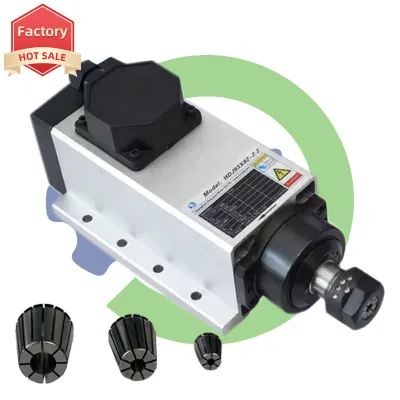


0.8kw Water Cooling Spindle Motor High Speed Spindle Milling Spindle Motor
$92.50 - $110.00
MOQ: 1 Pieces


Comprehensive Sourcing Guide
Liquid Cooling CNC Spindle Motor Sourcing Guide
Procuring liquid cooling CNC spindle motors requires a strategic approach that balances thermal management efficiency with precise mechanical performance. These motors are critical for high-speed machining operations where heat generation can compromise tool life and dimensional accuracy. Buyers must prioritize suppliers who demonstrate robust engineering capabilities in both electrical design and fluid dynamics integration. The selection process should begin with a clear definition of operational requirements, including maximum rotational speed, continuous power output, and the specific cooling medium compatibility. Understanding these parameters ensures that the chosen spindle can maintain stability under heavy loads without thermal degradation.
The market offers a variety of configurations, ranging from small, high-speed units to larger, heavy-duty models designed for industrial applications. Observations indicate that many listings feature variable frequency starting and closed-type casing protection, which are essential for maintaining consistent performance in demanding environments. Buyers should verify that the supplier provides customization options, such as logo printing or specific voltage configurations, to align with existing facility infrastructure. Additionally, the presence of international standard certifications suggests a baseline level of quality assurance, but due diligence is required to confirm that these certifications apply to the specific model being purchased.
Product Scope and Observed Listing Signals
The current market landscape for liquid cooling CNC spindle motors reveals a diverse range of products tailored to different machining needs. Listings frequently highlight variable speed capabilities and three-phase stator configurations, which are standard for industrial-grade equipment. Buyers will encounter models with varying power ratings, from compact 800W units to more powerful 12kW variants, each designed for specific torque and speed requirements. The observed gross weights and packaging dimensions suggest that these units are engineered for durability during transit, often utilizing plywood or carton packaging to protect sensitive internal components. This variation in scope allows buyers to select spindles that precisely match their machine tool’s spatial and power constraints.
Signal analysis of product attributes indicates a strong emphasis on customization and specific technical features. Many suppliers offer collet options such as ER11, ER20, and ER40, allowing for flexibility in tool holding systems. The presence of water cooling as a standard feature in several listings underscores the industry’s shift toward more efficient thermal management solutions. Buyers should note that while some products are described as "small" or "middle" size, the actual physical dimensions and weight can vary significantly. It is crucial to cross-reference the listed specifications with the actual product datasheets to ensure that the cooling system’s flow rate and pressure requirements are compatible with the buyer’s existing chiller units.
Technical Specifications to Verify
When evaluating technical specifications, buyers must focus on the electrical and mechanical parameters that directly impact performance. Key attributes to verify include the rated power, voltage, and current draw, as these determine the compatibility with the facility’s power supply. For instance, some models operate at 220V/380V with corresponding current ratings, while others may require specific voltage inputs. The rotational speed, often listed in revolutions per minute (r/min), is a critical factor for machining efficiency, with options ranging from 12,000 r/min to 24,000 r/min. Buyers should ensure that the spindle’s speed range aligns with the material being machined and the desired surface finish quality.
Thermal management is another vital aspect that requires careful verification. The cooling type, whether water cooling or air cooling, must be confirmed to match the buyer’s infrastructure. In the case of liquid cooling systems, the flow rate, pressure, and temperature control capabilities of the external chiller must be compatible with the spindle’s requirements. Additionally, the casing protection type, such as closed-type designs, helps prevent coolant leakage and contamination of internal components. Buyers should also check the frequency range, as some high-performance spindles operate at frequencies up to 400Hz, which can affect motor efficiency and noise levels.
Compliance and Safety Documentation
Compliance with international standards is essential for ensuring the safety and reliability of liquid cooling CNC spindle motors. Buyers should verify that the products carry recognized certifications such as CCC and CE, which indicate adherence to specific safety and electromagnetic compatibility regulations. These certifications provide assurance that the electrical components and cooling systems have undergone rigorous testing. However, buyers must confirm that the certifications are valid for the specific model and region of use, as regulatory requirements can vary between countries. Documentation should include detailed test reports and compliance certificates that can be audited during the procurement process.
In addition to certifications, buyers should request comprehensive safety documentation, including user manuals, installation guides, and maintenance schedules. These documents should provide clear instructions on how to properly install and operate the spindle, as well as how to perform routine maintenance to prevent failures. The presence of international standard markings on the product or packaging suggests that the manufacturer follows established quality control practices. Buyers should also inquire about the manufacturer’s warranty policy and after-sales support, as these factors can significantly impact the total cost of ownership and operational continuity.
Cost Drivers and Commercial Terms
The cost of liquid cooling CNC spindle motors is influenced by several factors, including power rating, speed, and customization options. Higher power and speed capabilities typically command a premium price due to the increased complexity of the design and manufacturing process. Buyers should also consider the cost of additional features, such as logo printing or specific voltage configurations, which may incur extra charges. The observed price range in the market varies widely, reflecting the diversity of product specifications and quality levels. It is important to obtain detailed quotes that break down the costs of the motor, cooling system, and any accessories to ensure transparency.
Commercial terms, such as minimum order quantity (MOQ) and lead times, also play a significant role in the procurement decision. Suppliers may offer different MOQs depending on the product model, with some allowing for single-unit purchases while others require bulk orders. Lead times can vary based on the level of customization and the supplier’s production capacity. Buyers should negotiate favorable payment terms and delivery schedules to mitigate risks associated with supply chain disruptions. Additionally, it is advisable to clarify the responsibilities for shipping and insurance, especially for international orders, to avoid unexpected costs.
Supplier Qualification and Quality Control
Selecting a qualified supplier is crucial for ensuring the long-term reliability of liquid cooling CNC spindle motors. Buyers should assess the supplier’s manufacturing capabilities, including their production facilities, quality control processes, and technical support resources. Suppliers with a strong track record in the industry are more likely to deliver products that meet specified performance standards. It is advisable to request references or case studies from previous clients to gauge the supplier’s reputation and reliability. Additionally, buyers should verify the supplier’s ability to provide customization services, as this can be a key differentiator in meeting specific operational needs.
Quality control measures should be a central part of the supplier evaluation process. Buyers should inquire about the testing procedures used to verify the spindle’s performance, including thermal stability, vibration levels, and electrical integrity. Suppliers that conduct rigorous pre-shipment inspections and provide detailed test reports demonstrate a commitment to quality. Buyers may also consider conducting third-party inspections or audits to ensure that the products meet their requirements. Establishing a clear quality assurance agreement with the supplier can help prevent disputes and ensure that any defects are addressed promptly.
Long-Term Procurement Checks
Long-term procurement success depends on establishing a robust relationship with the supplier and implementing continuous monitoring mechanisms. Buyers should regularly review the supplier’s performance metrics, including delivery times, product quality, and after-sales support. Maintaining open communication channels can help address any issues that arise during the operational life of the spindle. It is also advisable to stay informed about technological advancements in spindle motor design and cooling systems, as these developments may offer opportunities for improved efficiency and performance. Regularly updating procurement strategies based on market trends and technological changes can help maintain a competitive edge.
Additionally, buyers should implement a preventive maintenance program to extend the lifespan of the liquid cooling CNC spindle motors. This includes regular inspections of the cooling system, lubrication of moving parts, and monitoring of electrical components. Training maintenance staff on proper handling and troubleshooting techniques can reduce downtime and repair costs. Buyers should also keep a record of all maintenance activities and spare parts replacements to facilitate future procurement decisions. By proactively managing the lifecycle of the spindle motors, buyers can maximize their return on investment and ensure consistent machining performance.
FAQs
What certifications do these liquid cooling cnc spindle motors have?
These motors hold CCC and CE certifications to meet international safety standards. They are designed for industrial applications and comply with global requirements. The products originate from China and are built to international standards for reliable performance in various settings.
Which voltage options are available for the spindle motors?
Available voltage options include 380V, 220V, and 150V depending on the specific model. Some units support dual voltage configurations like 220V/380V or 220V/150V. This flexibility allows integration into different power systems while maintaining stable operation for industrial machinery.
Can I request custom logo printing on the motor casing?
Yes, custom logo printing is available for these spindle motors. The product attributes confirm that customization services are offered to meet specific branding needs. Buyers can request this feature alongside other customizations to ensure the equipment aligns with their corporate identity.
How does the variable frequency starting mode benefit operation?
Variable frequency starting allows for smooth acceleration and precise speed control during operation. This feature supports variable speed requirements and reduces mechanical stress on the system. It ensures efficient performance across different industrial applications requiring dynamic speed adjustments.
What is the maximum speed rating for the high-power models?
High-power models reach speeds up to 24000r per minute, while others operate at 12000r. The rated power varies from 800W to 12kw depending on the specific configuration. These speeds are suitable for demanding CNC tasks requiring high rotational velocity and precision.
Which cooling type is used for the water cooling spindle motors?
The specified models utilize water cooling to maintain optimal operating temperatures. This cooling type is essential for high-power applications to prevent overheating during continuous use. The design ensures efficient heat dissipation for sustained performance in industrial environments.
What packaging materials are used for shipping these motors?
Packaging options include plywood crates and cartons depending on the product size and weight. The standard international packaging ensures safe transport of the motors. This approach protects the equipment during shipping while adhering to standard logistics requirements for industrial goods.