Source High Pressure Rotary Union for Hydraulic, Cooling, and Power Press
Find 30 High Pressure Rotary Union options from Chinese manufacturers. Compare specifications including working pressure up to 15000psi, material types like alloy and stainless steel, and connection modes for hydraulic, cooling, and power press applications.
Key considerations
Products List


High Speed High Pressure Hydraulic Rotary Unions for Pneumatic Press Clutch
$67.90 - $89.90
MOQ: 1 Pieces


Multi-Channel Hydraulic Rotary Union for Industrial Hydraulic Applications
$139.00 - $168.00
MOQ: 1 Pieces


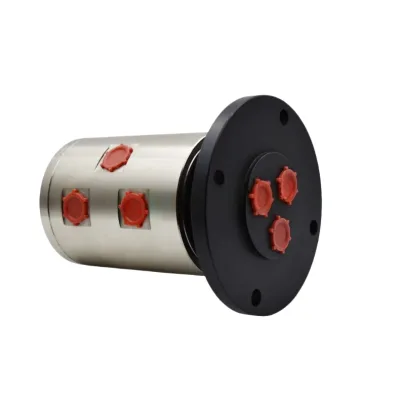

Heavy Duty Hydraulic Rotary Union for Forestry Machinery and Rotating Equipment
$120.00 - $260.00
MOQ: 5 Pieces

High Work Speed and Big Pressure of 1 Air Channel Rotary Joint Connector
$400.00 - $450.00
MOQ: 1 Pieces


Comprehensive Sourcing Guide
Strategic Sourcing Guide for High Pressure Rotary Unions
Understanding Technical Specifications and Operational Limits
When sourcing high-pressure rotary unions, the primary objective is to match the component's mechanical capabilities with the specific demands of the application. The core of this evaluation lies in understanding the working pressure ranges, temperature classes, and material compatibility. Based on available market data, high-pressure rotary unions are engineered to operate within a working pressure spectrum ranging from 2000 to 15000 psi. This wide range indicates that a single generic specification is insufficient; buyers must verify the exact pressure rating required for their specific hydraulic or pneumatic systems.
Material selection is equally critical for maintaining integrity under stress. The supply chain offers units constructed from various alloys, including brass, stainless steel, and general alloys. The choice of material often dictates the unit's resistance to corrosion and its ability to withstand extreme temperatures. For instance, products with a temperature class rating of L through U suggest a broad operational envelope, yet the specific thermal limits must be confirmed against the fluid media being transferred. The manufacturing process also plays a pivotal role in performance. While some units are produced via casting machines, others utilize forging processes. Forging generally offers superior grain structure and strength, which is often preferred for the highest pressure applications, whereas casting may be suitable for lower to medium-pressure requirements or complex geometries.
The physical connection and configuration are further technical differentiators. Buyers should expect to encounter units with male connections, round head codes, and equal shapes. The thread standards available often include NPT, BSP, and MPT, with the possibility of customization to meet specific regional or legacy system requirements. Connection modes can vary between threaded connections and flange connections, influencing the ease of installation and the seal integrity. Furthermore, the size specifications range significantly, from small diameters like 1/4 inch or 1/8 inch up to larger industrial sizes such as 2 inches or even DN150. The model numbers, such as BTF-RU-022 or BTF-RU-007, serve as identifiers for specific configurations, but the underlying technical parameters must always be validated rather than assumed based on the model number alone.
Compliance, Certification, and International Standards
Navigating the regulatory landscape is essential for ensuring that high-pressure rotary unions meet safety and quality benchmarks. In the global market, compliance is often signaled through certifications such as ISO and CE. These certifications indicate that the manufacturing facility adheres to specific quality management systems and safety directives. However, the presence of a certification on a product listing does not guarantee that every unit in a specific batch meets the standard without verification. Buyers must request current certification documents and verify their validity with the issuing body.
Beyond general certifications, specific industry standards govern the design and testing of these components. The product specifications often reference international standards, though the exact standard numbers (e.g., API, ASME) must be confirmed for the specific application. For high-pressure environments, adherence to standards like PSL1 through PSL4 (Pressure Safety Level) is a common requirement, indicating the level of testing and quality control the product has undergone. Additionally, thread standards such as NPT, BSP, and MPT are critical for ensuring compatibility with existing piping systems. The ability to customize thread standards is a valuable feature, but it introduces a variable that requires careful engineering review to prevent leaks or mechanical failure.
The origin of the product also influences the compliance framework. Many high-pressure rotary unions originate from manufacturing hubs in China, specifically regions like Jiangsu and Shandong. While these regions are known for robust manufacturing capabilities, the buyer must ensure that the specific supplier has a track record of exporting to the target market and adhering to local import regulations. The "International" standard designation suggests a broad compliance scope, but it is a general term that requires specific validation against the buyer's local safety codes.
Cost Drivers and Pricing Dynamics
The pricing of high-pressure rotary unions is influenced by a complex interplay of factors, including material costs, manufacturing complexity, and customization requirements. The observed price range in the market spans from 0.1 USD to 3000 USD, a vast disparity that reflects the difference between small, off-the-shelf components and large, custom-engineered industrial units. Several key drivers contribute to this variance.
First, the material composition is a primary cost factor. Units made from stainless steel or specialized alloys typically command a higher price than those made from brass or standard alloys due to the raw material cost and the additional processing required. Second, the manufacturing process impacts the final price. Forged components generally cost more than cast ones due to the higher energy and equipment costs associated with forging, but they offer superior durability for high-pressure applications. Third, the level of customization significantly affects pricing. While standard models are available at lower price points, units requiring custom thread standards, specific pressure ratings, or unique sealing arrangements will incur additional engineering and tooling costs.
The Minimum Order Quantity (MOQ) also plays a role in the effective unit cost. The market shows an MOQ range from 1 to 100 units. Buyers purchasing small quantities may face higher per-unit costs, whereas bulk orders often benefit from economies of scale. Additionally, packaging requirements, such as wooden cases versus standard export cardboard boxes, can influence the total landed cost, particularly for international shipping. Buyers should request detailed quotations that break down material, labor, and packaging costs to understand the true value proposition of a supplier.
Typical Applications and Industry Use Cases
High-pressure rotary unions are versatile components designed to transfer fluids, gases, or electrical signals between stationary and rotating parts. Their application is widespread across various industrial sectors. One of the most common use cases is in high-pressure water jetting systems, where the union must withstand extreme pressures while rotating the nozzle. In these applications, the temperature class and pressure rating are critical to prevent seal failure and ensure operator safety.
Another significant application area is in power press machines and heavy industrial machinery. High-speed rotary unions are specifically designed for these environments, where rapid rotation and high torque are present. The ability to handle high speeds without overheating or leaking is a key performance requirement. Similarly, in oil and gas processing, rotary unions are used to transfer hydraulic oil or lubricants to rotating equipment. The material selection here is vital, as the fluid media may be corrosive or require high-temperature resistance.
The versatility of these components extends to various connection types and sizes. Whether the application requires a small 1/8-inch connection for precision instrumentation or a large DN150 flange for heavy industrial piping, the rotary union must be matched to the specific system requirements. The "Equal" shape and "Round" head code mentioned in product specifications suggest a design optimized for balanced flow and structural integrity, suitable for a wide range of rotational speeds and pressures.
Supplier Evaluation and Sourcing Strategy
Evaluating suppliers for high-pressure rotary unions requires a rigorous approach that goes beyond simple price comparison. Buyers should prioritize suppliers who demonstrate a clear understanding of the technical specifications and can provide evidence of their manufacturing capabilities. The presence of "Customization: Available" and "Customized Support: OEM, ODM" indicates that a supplier has the flexibility to tailor products to specific needs, which is a significant advantage for complex applications.
When assessing a supplier, buyers should verify their quality control processes. A statement of "100% Inspection Before Packing" is a strong indicator of a commitment to quality, but it should be supported by documented procedures and test reports. The manufacturing location, such as Jiangsu or Shandong in China, can provide insights into the supplier's supply chain efficiency and logistics capabilities. However, the physical location should not be the sole determinant; the supplier's reputation, years in business, and client references are equally important.
Buyers should also evaluate the supplier's ability to handle the full lifecycle of the product, from initial design to after-sales support. The availability of different packing options, such as wooden cases or export cartons, suggests that the supplier is experienced in handling international logistics. Additionally, the supplier's willingness to provide samples or conduct factory audits can provide valuable insights into their operational standards. It is crucial to avoid suppliers who make unverifiable claims about performance or certifications without providing supporting documentation.
Quality Control and Long-Term Procurement Considerations
Ensuring the long-term reliability of high-pressure rotary unions requires a focus on quality control and maintenance planning. The manufacturing process, whether casting or forging, must be consistent to ensure that every unit meets the specified pressure and temperature ratings. The "Surface" treatment options, including coating, painting, plating, and polishing, are not merely aesthetic; they are critical for protecting the component from corrosion and wear, especially in harsh environments.
Buyers should implement a robust quality control protocol that includes incoming inspection of components and periodic testing of installed units. The "Performance Requirement: Pr1" suggests a baseline for operational efficiency, but the actual performance should be monitored over time to detect any degradation. The "Product Specification Level: Psl1~Psl4" indicates that different levels of testing and certification are available, and buyers should select the level that matches the risk profile of their application.
Long-term procurement considerations also involve managing the supply chain for replacement parts and maintenance. The availability of spare parts and the lead time for reordering are critical factors. Suppliers who offer standard export packaging and have a history of reliable delivery can help minimize downtime. Additionally, buyers should consider the total cost of ownership, which includes not only the purchase price but also maintenance, replacement, and potential downtime costs. By selecting high-quality units from reputable suppliers, buyers can reduce the frequency of failures and extend the service life of their equipment.
Comparative Analysis of Product Attributes
To facilitate a clearer understanding of the market offerings, the following table summarizes key attributes observed in high-pressure rotary union products. This comparison highlights the diversity in specifications and helps buyers identify the features most relevant to their needs.
| Attribute | Observation Range / Options | Relevance to Buyer |
|---|---|---|
| Working Pressure | 2000 ~ 15000 psi | Critical for safety and system compatibility |
| Material | Alloy, Brass, Stainless Steel | Determines corrosion resistance and strength |
| Manufacturing Process | Forging, Casting Machine | Affects durability and cost |
| Connection Type | Male, Threaded, Flange | Must match existing piping systems |
| Thread Standard | NPT, BSP, MPT (Customizable) | Ensures mechanical fit and seal integrity |
| Temperature Class | L ~ U | Defines operational thermal limits |
| Certification | ISO, CE | Indicates compliance with safety standards |
| Origin | Jiangsu, Shandong, China | Influences logistics and lead time |
| Packing | Wooden Case, Export Cartons | Affects shipping protection and cost |
| Customization | Available (OEM/ODM) | Allows for tailored solutions |
This table serves as a reference point for buyers to compare different product listings. It emphasizes that while many products share common attributes, the specific values for pressure, material, and connection must be verified for each purchase. By systematically evaluating these attributes, buyers can make informed decisions that balance performance, cost, and reliability.
In conclusion, sourcing high-pressure rotary unions requires a meticulous approach that balances technical specifications, compliance requirements, and supplier capabilities. By understanding the nuances of manufacturing processes, material properties, and application-specific needs, buyers can secure components that ensure the safety and efficiency of their industrial operations. The market offers a wide range of options, but the key to success lies in rigorous evaluation and verification of all product claims against actual performance data.
FAQs
What is the working pressure range for these units?
The working pressure ranges from 2000 to 15000 psi. This wide spectrum allows selection for specific hydraulic or pneumatic systems requiring extreme pressure resistance.
Which materials are used in manufacturing?
Available materials include alloy, brass, and stainless steel. Material choice dictates corrosion resistance and ability to withstand extreme temperatures in various industrial environments.
Can I request custom thread standards?
Yes, customization is available for thread standards like NPT, BSP, and MPT. Buyers must verify compatibility with existing piping systems to prevent leaks or mechanical failure.
What certifications do the manufacturers hold?
Products often carry ISO and CE certifications indicating adherence to quality and safety standards. Buyers should request current documents to verify validity for their specific import regulations.
How are the products packaged for shipping?
Packaging options include wooden cases, export cartons, and durable cardboard boxes. The choice depends on the size and specific export requirements to ensure durability during transit.
What is the minimum order quantity?
The minimum order quantity ranges from 1 to 100 units. Smaller quantities may incur higher per-unit costs, while bulk orders often benefit from economies of scale.