Source High Pressure Suspension Grinding Mill for Mine Cement Brick
Compare 30 high pressure suspension grinding mill units from Chinese manufacturers. These machines support dry grinding for marble, granite, and coal with capacities up to 650 tons per hour and feature automatic control systems.
Key considerations
Products List


High Pressure Grinding Roll (Grinding Limestone) High Pressure Roller Mill
$1000.00 - $30000.00
MOQ: 1 Sets


High Pressure Grinding Roller Mill Using for The Mining, Chemical, Metallurgy, etc.
$1000.00 - $30000.00
MOQ: 1 Sets


High Pressure Suspension Grinding Mill Raymond Vertical Roller Mill
$6500.00 - $23000.00
MOQ: 1 Pieces

High Pressure Suspension Grinding Mill - Major Upgrade From Raymond Mill
$16700.00 - $19200.00
MOQ: 1 Pieces


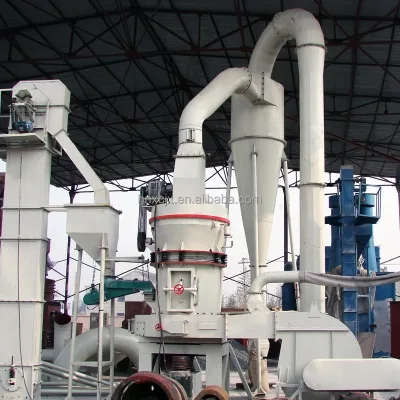
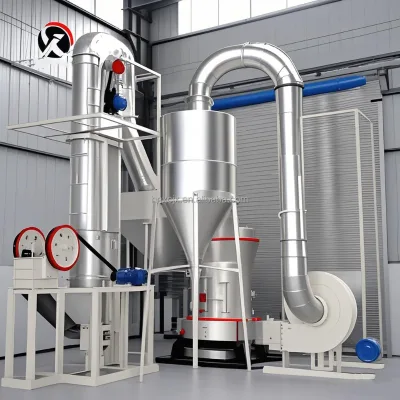
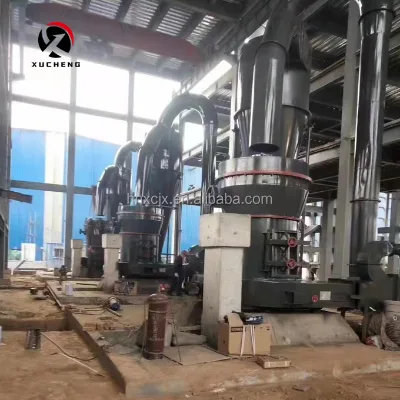
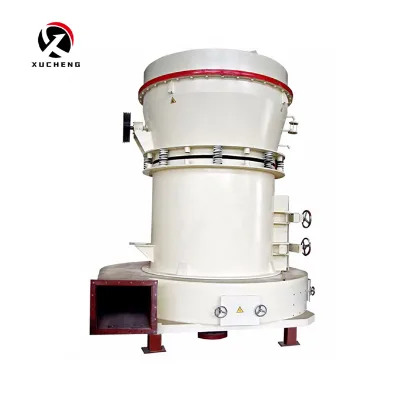
Best price high pressure grinding mill coal grinding milling for sale
$13600.00 - $13750.00
MOQ: 1 sets


Competitive Dolomite Grinding Mill/High-Pressure Suspension Grinding Mill
$8000.00 - $40000.00
MOQ: 1 Sets


Comprehensive Sourcing Guide
Strategic Sourcing Guide for High Pressure Suspension Grinding Mills with PLC Integration
Understanding the Technical Architecture and Core Specifications
When sourcing a high pressure suspension grinding mill equipped with a Programmable Logic Controller (PLC), buyers must first distinguish between the mechanical grinding assembly and the automated control systems that govern its operation. The core functionality of these mills relies on a suspension mechanism that applies high pressure to grinding rollers, ensuring consistent particle size reduction. Based on observed market data, these units are frequently designed with a single-driven configuration, utilizing AC motors as the primary power source. The voltage requirements for such industrial machinery are typically standardized at 380V, which is a critical parameter for facility electrical planning and integration.
The grinding process itself is often characterized as a dry grind method, suitable for a variety of hard and abrasive materials. The precision of the final output is a primary concern for procurement teams, with observed specifications indicating a fineness range for the final product between 0.613 mm (30 mesh) and 0.033 mm (425 mesh). This range suggests the machine's capability to handle fine grinding applications effectively. The input size for the raw material is generally constrained to a maximum of 20 mm, a specification that dictates the necessary pre-crushing or feeding infrastructure required upstream of the mill.
Capacity varies significantly across different models, with observed data showing a broad spectrum from 0.4 to 16 tons per hour for certain configurations, while other heavy-duty industrial models may reach capacities between 30 and 650 tons per hour. This variance underscores the importance of matching the specific production volume requirements to the correct model series. The physical dimensions of the equipment are not uniform; they vary depending on the specific model and capacity requirements, often listed as "Varies" in technical catalogs. Buyers should expect the driven part to be a single drive system, which simplifies the mechanical transmission but requires careful alignment during installation.
Compliance, Certification, and Regulatory Standards
Navigating the compliance landscape is a non-negotiable aspect of sourcing industrial grinding mills. The market data indicates a strong presence of international certifications, with CE marking and ISO 9001 standards appearing frequently in product specifications. Some listings specifically reference ISO 9001:2000, while others cite broader ISO, CE, and SGS certifications. These documents serve as evidence that the manufacturing process adheres to quality management systems and safety directives, particularly for equipment intended for export to European or other regulated markets.
However, buyers must exercise caution when interpreting these certifications. The presence of a certification label on a product page does not automatically guarantee that every unit in a specific order meets the exact same standard without verification. The "prod_standard" field in many listings indicates that standards are "Depend on the model," suggesting that compliance is tied to the specific configuration purchased. For instance, specific series like the TYM series or models designated as 3R2715, 3R3016, 4R3216, 5R4121, and 6R4427 may have distinct compliance profiles.
Furthermore, the material composition of the mill is a critical compliance factor. The observed material feature is "Heat Resistant," and the primary construction material is listed as Stainless Steel. This material choice is essential for applications involving corrosive materials or high-temperature environments, ensuring the longevity and safety of the equipment. Buyers should verify that the stainless steel grade matches the specific chemical environment of their intended application, as "Stainless Steel" is a broad category. Additionally, the condition of the equipment is consistently listed as "New," which implies that buyers should receive factory-fresh units rather than refurbished or used machinery, provided the contract explicitly states this condition.
Cost Drivers and Financial Considerations
The financial landscape for high pressure suspension grinding mills is characterized by a wide variance in pricing, which is directly correlated with capacity, automation levels, and customization. Observed price ranges in the market span from approximately $1,000 to over $160,000 USD. This significant spread reflects the difference between smaller, less automated units and large-scale, fully integrated systems with advanced PLC controls. The minimum order quantity (MOQ) is frequently observed as 1 unit, offering flexibility for buyers who may be starting a pilot project or require a single unit for a specific production line.
Several factors drive the cost of these mills. First, the level of automation is a major cost component. Units described as "Automatic" and equipped with "CNC" control systems command higher prices than manual or semi-automatic counterparts. The integration of a PLC system adds substantial value by enabling precise control over the grinding process, reducing human error, and optimizing energy consumption. The "Energy Saving" and "Low Energy Consumption" features observed in product attributes are not merely marketing terms; they represent engineering optimizations that can reduce long-term operational costs, though they may increase the initial capital expenditure.
Customization is another significant cost driver. The market data confirms that "Customization" and "Customized" options are available. Buyers requiring specific dimensions, custom colors, or tailored packing requirements (such as "Customers' Requirements" or "International Packing Standard") will incur additional costs. The weight of the machinery, with some models reaching 2 tons, also impacts shipping and logistics costs. Furthermore, the warranty terms, typically observed as 1 year and sometimes including wearing parts, can influence the overall value proposition. A longer warranty or more comprehensive coverage often correlates with a higher initial price but reduces long-term risk.
Typical Applications and Operational Versatility
High pressure suspension grinding mills with PLC integration are designed for a diverse range of industrial applications. The primary application areas identified in the market data include mining operations, specifically for coal machinery, and the processing of construction materials. The "Mining Object" is explicitly listed as coal, indicating the mill's suitability for processing coal into fine powders for fuel or other industrial uses. Beyond mining, these machines are widely used for processing marble, granite, cement bricks, and ceramics. This versatility makes them a valuable asset for companies involved in the construction, mining, and building materials sectors.
The operational versatility is further enhanced by the ability to handle various materials with different hardness levels. The "Grinding Method" is specified as "Dry Grind," which is suitable for materials that do not require wet processing. The "Type for Grinding Machine" is identified as a "Centrifugal Grinding Machine," which utilizes centrifugal force to achieve the desired particle size. This mechanism is particularly effective for achieving high precision in the final product, as noted by the "High Precision" attribute.
The capacity of the mill determines its suitability for different production scales. Smaller units with capacities between 0.4 and 16 tons per hour are ideal for specialized or smaller-scale production lines, while larger units capable of 30 to 650 tons per hour are designed for heavy industrial applications. The "Application" field also notes that these machines are used in the production of cement bricks and ceramics, highlighting their role in the building materials industry. The ability to customize the color and packing of the machine allows suppliers to meet the specific branding and logistical needs of different clients, further expanding the range of potential applications.
Supplier Evaluation and Geographic Considerations
When evaluating potential suppliers for high pressure suspension grinding mills, geographic location plays a pivotal role in logistics, lead times, and after-sales support. The majority of observed suppliers are located in China, with specific hubs identified in Shandong Province and Zhengzhou City, Henan Province. The "Factory Address" for some suppliers is explicitly listed as Zhangzhai Industrial Garden No.6, Zhengzhou City, providing a concrete reference point for site visits or logistics planning. The "prod_origin" is consistently listed as "China Mainland," "Shandong, China," or "Zhengzhou City, Henan Province, China," indicating a concentration of manufacturing capabilities in these regions.
Supplier evaluation should extend beyond location to include their supply ability and service offerings. The "Supply Ability" is observed to be around 30 sets per month, which provides a benchmark for production capacity. Buyers should verify if this capacity can be scaled to meet their specific order volumes. The "After-Sale Service" is a critical differentiator, with suppliers offering training, technical support, and installation guidance. The "Installation" attribute notes that installation should be "Under The Guidance of Engineer," emphasizing the need for technical expertise during the setup phase.
Buyers should also consider the "Visit" policy, with some suppliers explicitly stating "You Are Most Welcome!" This indicates an openness to factory visits, which is a valuable opportunity to inspect the manufacturing process, verify quality control measures, and build a direct relationship with the supplier. The "Delivery Detail" suggests a lead time of 7 days after the down payment, which is a relatively short turnaround time compared to heavy industrial machinery. However, buyers must confirm if this lead time applies to all models or if larger, customized units require longer production periods.
Quality Control and Long-Term Procurement Strategy
Ensuring quality and planning for the long-term lifecycle of the grinding mill are essential for a successful procurement strategy. The "Condition" of the equipment is consistently listed as "New," but buyers must implement rigorous quality control measures to verify this claim. This includes inspecting the "Material Feature" for heat resistance and confirming the "Material" is indeed Stainless Steel. The "Warranty" period of 1 year, which may include wearing parts, is a standard offering, but buyers should negotiate terms that extend coverage for critical components or include specific performance guarantees.
Quality control should also focus on the "Control" system. Since the machine is described as having "CNC" and "Automatic" features, the PLC integration must be tested for reliability and ease of use. Buyers should request detailed documentation on the control logic, safety interlocks, and maintenance procedures for the PLC system. The "Precision" of the machine, noted as "High Precision," should be validated through sample testing before final acceptance.
Long-term procurement considerations involve planning for maintenance and spare parts. The "Warranty" often includes wearing parts, but buyers should establish a supply chain for additional components to minimize downtime. The "After-Sale Service" offerings, such as training and technical support, are crucial for ensuring that the plant's operators can effectively manage the mill. Buyers should also consider the "prod_packing" requirements, ensuring that the "International Packing Standard" or "Customers' Requirements" are met to prevent damage during transit.
| Feature Category | Observed Specification | Verification Requirement |
|---|---|---|
| Certification | CE, ISO9001, SGS | Verify current validity and scope for specific model |
| Material | Stainless Steel, Heat Resistant | Confirm grade and thickness for application |
| Voltage | 380V | Match with facility power supply |
| Capacity | 0.4-16 T/H or 30-650 T/H | Confirm based on production needs |
| Fineness | 0.613-0.033 mm | Test with actual raw material |
| Warranty | 1 Year (Include Wearing Parts) | Clarify specific parts covered |
| Origin | China (Shandong, Zhengzhou) | Verify factory address and visit policy |
Strategic Recommendations for Procurement Success
To maximize the value of the investment in a High Pressure Suspension Grinding Mill with PLC integration, buyers should adopt a structured approach to the procurement process. First, clearly define the technical requirements, including the desired capacity, input material size, and target fineness. This will help narrow down the model selection and ensure the chosen unit meets the specific production needs. Second, conduct a thorough due diligence on the supplier, verifying their certifications, supply ability, and after-sales service capabilities. Requesting a factory visit can provide valuable insights into the manufacturing process and quality control measures.
Third, negotiate the terms of the contract, including the warranty, delivery lead time, and payment terms. While the observed lead time is 7 days after the down payment, buyers should confirm if this applies to their specific order. Fourth, plan for the installation and commissioning phase, ensuring that the supplier provides the necessary engineering guidance and training. Finally, establish a long-term maintenance plan, including the procurement of spare parts and regular service checks, to ensure the mill operates efficiently over its lifespan. By following these strategic recommendations, buyers can successfully navigate the complexities of sourcing high pressure suspension grinding mills and achieve their production goals.
FAQs
What certifications do high pressure suspension grinding mills with plc have?
These mills typically hold CE and ISO 9001 certifications, with some listings also citing SGS. Buyers should verify that the specific model matches the required standard, as compliance depends on the configuration purchased.
How much does a High Pressure Suspension Grinding Mill with PLC cost?
Prices range from 1000 to 160005 USD depending on capacity and automation. The final cost is influenced by customization options, material features like heat resistance, and whether the unit includes a PLC control system.
Which materials can be processed by this grinding mill?
The machine handles mining objects like coal and construction materials such as marble and granite. It is also suitable for cement bricks and ceramics using a dry grind method with a maximum input size of 20 mm.
Can the mill be customized for specific production needs?
Yes, customization is available for dimensions, colors, and packing requirements. Buyers can request specific configurations to match their facility's electrical voltage of 380V or unique capacity needs between 0.4 and 650 tons per hour.
What is the lead time for delivery after payment?
Delivery typically occurs 7 days after the down payment is received. This timeline applies to standard orders, though larger or highly customized units may require additional production time based on the supplier's monthly capacity.
Where are the factories for these grinding mills located?
Manufacturers are primarily located in China, specifically in Shandong Province and Zhengzhou City, Henan Province. Buyers can expect origins listed as China Mainland with specific factory addresses available in industrial gardens.
What warranty is provided for the grinding mill equipment?
A standard 1-year warranty is offered, which may include wearing parts for certain models. This coverage ensures protection against manufacturing defects, though specific terms should be confirmed in the purchase agreement.