Source High Speed Organic Fertilizer Mixer for granules, mulch, and coating
Compare 30 listings for the High Speed Organic Fertilizer Mixer to find models with 380V power, ISO and CE certifications, and customizable options. These units support granule re-shaping and building coating applications with high precision and low maintenance costs.
Key considerations
Products List


$10200.00 - $39520.00
MOQ: 1 Pieces
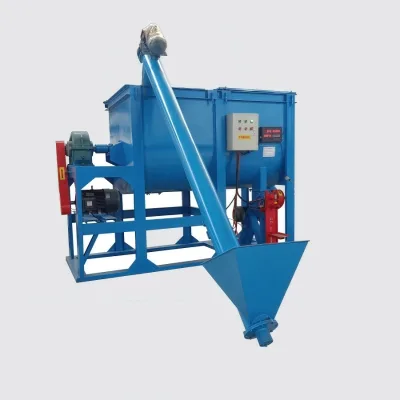

Premium Small Organic Fertilizer Horizontal Mixer for Efficient Blending
$3000.00 - $10000.00
MOQ: 1 Pieces

High-Efficiency Single Shaft Mixer for Organic Fertilizer Production
$15000.00 - $20000.00
MOQ: 1 Pieces

Industrial Horizontal Double Shaft Paddle Mixer Organic Fertilizer Mixer
$30000.00 - $60000.00
MOQ: 1 Pieces


High-Efficiency Drum Mixer for Agricultural Chemicals and Fertilizers
$2000.00 - $2500.00
MOQ: 1 Pieces


New Type Bio Waste Groove Compost Mixer for Organic Fertilizer Composting
$4500.00 - $6000.00
MOQ: 1 Sets


Industrial Powder Compost Organic Fertilizer Horizontal Double Ribbon Mixer
$2488.00 - $38000.00
MOQ: 1 Pieces


Fertilizer Production Machinery Manure Compost Turner Organic Fertilizer Compost Machine
$3700.00 - $9000.00
MOQ: 1 Sets


Comprehensive Sourcing Guide
Strategic Sourcing Guide for High Speed Organic Fertilizer Mixers
Understanding the Technical Landscape of Organic Fertilizer Mixing Equipment
When sourcing high-speed organic fertilizer mixers, buyers must first distinguish between general mixing capabilities and the specific mechanical requirements for organic materials. The core keyword "high speed" implies a need for rapid homogenization, which is critical when dealing with organic manure that often contains varying particle sizes and moisture levels. Based on available product data, the industry offers distinct categories of machinery, ranging from standard horizontal mixers to specialized granule re-shaping machines. The observed product attributes indicate that a typical high-speed unit operates at a voltage of 380V, which is standard for industrial machinery in many regions but requires verification of local power compatibility.
The power consumption for these units is a significant technical parameter. Data indicates that high-performance mixers often utilize motors rated at 37kw. This power rating suggests a machine capable of handling substantial throughput, essential for commercial fertilizer production lines. The raw material specification for these machines is explicitly listed as "Organic Manure," confirming their suitability for the organic fertilizer sector. However, buyers should note that the same equipment catalog also lists "Building Coating" and "Industrial" applications, indicating that some units are multi-purpose. A high-speed mixer designed for organic fertilizer must possess a stirring type capable of handling the density and abrasiveness of manure, with "Gravity" stirring types observed in specific horizontal dry powder models.
The physical specifications of the mixer are equally vital. The maximum loading capacity observed in the market data reaches up to 8000L, a figure that defines the scale of production possible per batch. This capacity range allows for flexibility, from small-scale experimental setups to large industrial operations. The finished dosage form for these machines is often listed as "Granules," suggesting that the mixing process is an integral part of a granulation line. The precision of the mixing is described as "High Precision," which is a crucial attribute for ensuring uniform nutrient distribution in the final fertilizer product. Buyers should verify that the specific model they select, such as those identified by model numbers like TDSJ-1050 or TDSJ-0830, aligns with their required batch size and mixing speed.
Compliance, Certification, and Safety Standards
In the global B2B market, compliance is not merely a formality but a prerequisite for market access and operational safety. The supplied product facts highlight that certifications such as ISO and CE are present in the market offerings. Specifically, the standard ISO 9001 is mentioned in the context of product standards, alongside CE certification. These certifications indicate that the manufacturing processes adhere to international quality management systems and that the machinery meets European safety, health, and environmental protection requirements.
However, buyers must exercise caution when interpreting these certifications. While the data confirms that "ISO" and "CE" are observed attributes, it does not guarantee that every listed product possesses these certifications. The standard is listed as "Can be customized" or "CE, ISO 9001," suggesting that certification status may vary by specific order or manufacturer configuration. Therefore, the procurement strategy must include a direct verification step where the buyer requests current, valid certification documents for the specific unit being purchased. Relying on the general presence of these certifications in the product catalog without individual verification can lead to compliance gaps, especially when exporting to regions with strict regulatory frameworks.
The safety of the equipment is further reinforced by the condition of the products, which are listed as "New." This implies that the machinery has not been previously used, reducing the risk of hidden wear and tear that could compromise safety mechanisms. Additionally, the core components of these mixers include motors, gears, gearboxes, and bearings. The quality of these components is fundamental to the machine's ability to meet safety standards under high-speed operation. Buyers should ensure that the supplier provides a bill of materials that details the origin and specifications of these core components, as substandard bearings or gearboxes can lead to catastrophic failure during high-speed mixing.
Cost Drivers and Pricing Structures in the Fertilizer Mixer Market
The financial aspect of sourcing high-speed organic fertilizer mixers is influenced by several dynamic factors. The observed price range in the market spans from 1,000 to 300,000 USD. This wide variance reflects differences in capacity, power rating, automation level, and customization options. A unit priced at the lower end of this spectrum likely represents a smaller capacity mixer with standard features, while the higher end corresponds to large-scale, computerized systems with advanced control interfaces.
One of the primary cost drivers is the power rating. As noted, a 37kw motor is a standard specification for high-performance units. The cost of the motor, along with the associated gearbox and bearing assemblies, constitutes a significant portion of the total machine cost. Furthermore, the "High Precision" attribute and "Computerized" features add to the expense. These features require sophisticated control systems and sensors, which increase the manufacturing complexity and, consequently, the price. Buyers should also consider the "Low Maintenance Cost" as a unique selling point. While a machine with low maintenance costs might have a higher upfront price, the total cost of ownership (TCO) over the machine's lifespan could be lower compared to a cheaper, high-maintenance alternative.
Customization is another major factor influencing price. The product attributes indicate that customization is "Available" and that the product standard "Can be customized." This includes customizing the packing, which can range from "Standard Export Packing" to "wooden case or as required." Customizing the machine to specific voltage requirements, color schemes, or capacity needs will inevitably increase the unit price. Additionally, the "Selling Units" are listed as "Single item," which implies that the pricing is per unit rather than per batch, but bulk orders might negotiate better rates. Buyers must balance their budget constraints against the need for specific technical capabilities, ensuring that the chosen price point aligns with the required production volume and quality standards.
Typical Applications and Operational Versatility
High-speed organic fertilizer mixers are designed for a variety of applications beyond just mixing raw manure. The data indicates that these machines are used in "Industrial" and "Experimental" settings, highlighting their versatility. The primary application is the production of organic fertilizer, where the mixer ensures that organic manure is thoroughly blended with other additives to create a uniform product. The "Finished Dosage Form" is specified as "Granules," suggesting that the mixer is often part of a larger production line that includes granulation and drying processes.
The versatility of these machines is further evidenced by their application in "Building Coating" and general "Building" sectors. This multi-purpose capability means that a single high-speed mixer can potentially serve different production lines, maximizing the utility of the investment. For instance, the "Mulit-purpose" function allows the machine to handle various dry powders, not just organic fertilizer. This flexibility is particularly valuable for suppliers who may need to pivot their production based on market demand.
However, the specific application dictates the required specifications. For organic fertilizer production, the machine must handle the abrasive nature of manure and the potential for clumping. The "High Productivity" keyword suggests that these mixers are optimized for continuous or high-volume batch processing. In experimental settings, the "High Precision" attribute becomes more critical, ensuring that small batches are mixed accurately for testing new formulations. Buyers should evaluate their specific operational needs to determine if a standard industrial model or a specialized experimental unit is more appropriate. The "Easy to Operate" and "Easy Operate Low Investment" attributes suggest that these machines are designed to be user-friendly, reducing the training time required for operators in various applications.
Supplier Evaluation and After-Sales Support
Selecting the right supplier is as critical as selecting the right machine. The market data reveals that suppliers often provide "Online Technical Support" and offer warranties ranging from "One Year" to "1.5 years." This variation in warranty periods is a key indicator of supplier confidence in their product quality. A supplier offering a 1.5-year warranty, as seen in some listings, demonstrates a higher level of assurance compared to those offering only one year. Buyers should prioritize suppliers who provide comprehensive after-sales service, including video outgoing-inspection, which allows the buyer to verify the machine's condition before shipment.
The brand name "Yunchi" is mentioned in the product data, indicating that established brands exist in this sector. However, buyers should not rely solely on brand recognition. Instead, they should evaluate the supplier's ability to provide "Customized" solutions and their responsiveness to specific requirements. The "Place of Origin" is listed as "Henan, China," which is a known hub for agricultural machinery. While this location offers access to a robust supply chain, buyers must verify the supplier's specific capabilities and reputation within this region.
Quality control is another essential aspect of supplier evaluation. The "High-Quality" attribute is a common claim, but it must be substantiated by the supplier's quality assurance processes. Buyers should request documentation regarding the testing of core components like motors and gearboxes. The "Video outgoing-inspection" feature is a valuable tool for remote quality verification, allowing buyers to see the machine in operation before it leaves the factory. Additionally, the "After-sales Service Provided" of 1.5 years suggests a commitment to long-term support, which is crucial for maintaining operational continuity. Buyers should ensure that the supplier has a clear protocol for handling warranty claims and providing spare parts.
Long-Term Procurement Considerations and Maintenance Strategy
Long-term procurement success depends on more than just the initial purchase; it requires a strategic approach to maintenance and lifecycle management. The "Low Maintenance Cost" is a significant selling point, but it must be understood in the context of the machine's operational intensity. High-speed mixers operating at 37kw and handling abrasive organic manure will experience wear on their core components, specifically the bearings, gears, and gearboxes. Buyers should plan for regular maintenance schedules to prevent unexpected downtime.
The "Customization" aspect of the product extends to the "prod_packing," which can be tailored to "Customer Requirements." This flexibility allows buyers to optimize the shipping and storage of the machine, potentially reducing logistics costs and damage risks during transit. Furthermore, the "Color: Customer Required" option allows for branding consistency, which can be important for companies with strict visual identity standards.
When considering the long-term value, buyers should look at the "Weight (KG)" of the machine, which is listed as 1000kg for some models. This weight indicates the robustness of the construction, which is essential for stability during high-speed operation. However, it also impacts the installation requirements, such as foundation strength and floor load capacity. Buyers must ensure their facility is prepared to support the machine's weight and operational vibrations.
Finally, the "Condition: New" status ensures that the machine starts with a full lifecycle ahead of it. However, buyers should consider the availability of spare parts and the technical expertise required for repairs. A supplier that offers "Online Technical Support" and a "One Year" or "1.5 year" warranty provides a safety net, but the long-term viability of the machine depends on the availability of replacement parts and the supplier's ability to provide ongoing technical assistance. By planning for these long-term considerations, buyers can ensure that their investment in a high-speed organic fertilizer mixer delivers sustained value and productivity.
FAQs
What certifications do high speed organic fertilizer mixers typically have?
Many units carry ISO and CE certifications, though some may only meet customizable standards. Buyers must verify specific documents for each order since certification status varies by configuration and manufacturer.
How much power does a typical High Speed Organic Fertilizer Mixer require?
High-performance units often utilize motors rated at 37kw to handle substantial throughput. This power rating supports commercial production lines processing organic manure with varying particle sizes and moisture levels.
Can I customize the specifications of a High Speed Organic Fertilizer Mixer?
Yes, customization is available for product standards, packing, and capacity requirements. Buyers can request specific voltage, color, or loading capacities up to 8000L to match their unique production needs.
What is the warranty period for high speed organic fertilizer mixers?
Warranty periods range from one year to 1.5 years depending on the supplier. Some vendors provide extended support including online technical assistance and video outgoing-inspection before shipment.
Where are high speed organic fertilizer mixers typically manufactured?
Most units originate from Henan, China, a known hub for agricultural machinery. Buyers should verify the specific place of origin to ensure the supplier meets their logistical and quality expectations.
What is the maximum loading capacity for a High Speed Organic Fertilizer Mixer?
The maximum loading capacity observed in the market reaches up to 8000L per batch. This capacity allows for flexibility ranging from small experimental setups to large industrial operations.