Find Horizontal Automatic Cement Mixer for construction, road, and mining
Source 30 verified Horizontal Automatic Cement Mixer units from Chinese manufacturers. Buyers can compare specifications like productivity, drum capacity, and engine power to select the right equipment for large-scale concrete mixing projects.
Key considerations
Products List


High Capacity Mixer with Efficient Mixing for Commercial Applications
$36200.00 - $37200.00
MOQ: 1 Pieces


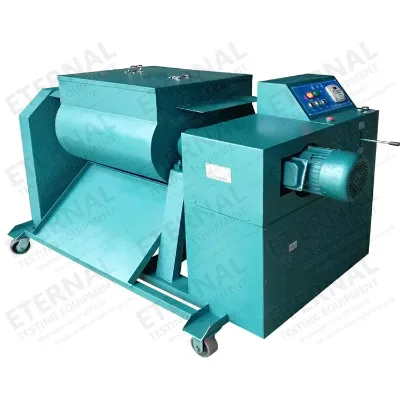
Double Shaft Horizontal Cement Concrete Mixer Concrete Twin Shaft Mixer
$1535.06 - $2046.75
MOQ: 1 sets


Automatic Concrete Mixer Flat-Mouth Cement Self Loading Concrete Mixer
$15000.00 - $20000.00
MOQ: 1 Pieces


Mobile Self Loading Concrete Mixer Machine Automatic Cement Mixing Truck
$22500.00 - $23000.00
MOQ: 1 unit


Comprehensive Sourcing Guide
Strategic Sourcing Guide for Horizontal Automatic Cement Mixers
Understanding Core Technical Specifications and Variants
When sourcing a Horizontal Automatic Cement Mixer, buyers must first distinguish between the specific mechanical architectures available in the current market. The supplied product data reveals a distinct divergence in structural design, primarily categorized into cylinder types and rotor types. The cylinder type configuration, often associated with models like the LM5500, operates with a feeding height of 1400mm and utilizes a hydraulic machining process. This design is typically optimized for specific semi-dry shotcrete applications, delivering a productivity rate of 25 cubic meters per hour. In contrast, the rotor type structure presents a different operational profile, featuring a feeding height of 1380mm and a significantly higher productivity capacity of 90 cubic meters per hour.
The horizontal mixer category also encompasses mobile and stationary units with varying drum geometries. For instance, the Fjs1500 model utilizes a double horizontal shaft configuration, which is a critical differentiator for mixing efficiency. This specific design supports a drum capacity of 400 liters and a mixing capacity of 320 liters, with a drum thickness specified as 3/4mm for both the upper and bottom sections. The physical dimensions of such units, such as the CM350 model, are compact, measuring 1960mm in length, 960mm in width, and 1200mm in depth. Conversely, larger stationary units may adhere to standards like 7000mm by 2500mm by 3250mm. Buyers must verify the shaft type and drum rotation speed, which ranges from 25 to 30 rpm in certain configurations, to ensure the equipment matches the required throughput for their specific construction projects.
Compliance and Certification Verification Protocols
Certification status is a non-negotiable element in the procurement of industrial mixing equipment. The observed market data indicates that CE and ISO9001 certifications are prevalent among the listed products, serving as baseline indicators of manufacturing quality and safety compliance. For example, specific units are explicitly noted to carry both CE and ISO9001 marks, while others may list only CE certification. It is imperative for buyers to treat these certifications as verified attributes of the specific unit being purchased rather than as universal guarantees for all inventory.
Beyond the basic certification labels, buyers should scrutinize the origin of the manufacturing facility. The provided facts identify Shandong and Zhejiang provinces in China as primary production hubs. While these regions are known for industrial output, the procurement strategy must involve direct verification of the specific factory's quality management systems against the ISO9001 standard claims. Additionally, the presence of a "New" condition status across the observed listings suggests that buyers should prioritize suppliers who can provide evidence of recent manufacturing dates and factory audits. The absence of other specific international safety standards in the provided data means buyers must explicitly request documentation for any additional regional compliance requirements, such as UL or OSHA standards, if the equipment is intended for markets outside of China.
Cost Drivers and Pricing Structure Analysis
The pricing landscape for horizontal automatic cement mixers exhibits a wide variance, with observed listed prices ranging from 150 USD to 46,000 USD. This broad spectrum is driven by several critical factors, including the machine's structural complexity, productivity output, and capacity. The lower end of the price range likely corresponds to smaller, mobile units with lower mixing capacities, such as those with a 320-liter mixing volume or a 1.5 cubic meter capacity. These units often feature simpler mechanical drives and may be designed for smaller-scale residential or light commercial applications.
Conversely, the higher price points are associated with high-productivity industrial models. For instance, a unit boasting a productivity of 90 cubic meters per hour or a large drum geometric volume of 3200 liters will command a significantly higher price. The cost is also influenced by the engine specifications; models with a maximum engine power of 76 kW and a torque of 340 Nm represent a higher investment tier compared to units with smaller power outputs. Furthermore, the packing and shipping logistics play a substantial role in the final cost. Units packed in bubble wrap or designed to fit specific container loading plans, such as 12 sets in a 20GP container or 26 sets in a 40HQ container, may have different pricing structures based on volume efficiency. Buyers should request a detailed breakdown of the unit price versus the shipping and packing costs to understand the true total cost of ownership.
Typical Applications and Operational Context
The versatility of horizontal automatic cement mixers allows them to serve a diverse range of construction sectors. The data highlights applications in semi-dry shotcrete processes, where the hydraulic machining process and specific feeding heights are critical for material consistency. These units are particularly suited for tunneling, slope stabilization, and underground construction projects where precise material application is required. The high productivity models, capable of 90 cubic meters per hour, are ideal for large-scale infrastructure projects such as highway construction, dam building, and major commercial developments.
Smaller units, such as those with a double horizontal shaft and a 320-liter mixing capacity, are frequently utilized in ready-mix truck operations or small-scale batch plants. The Fjs1500 model, for example, is designed to handle one bag of cement per batch, making it suitable for localized construction tasks or precast concrete manufacturing. The color variations observed, including white, yellow, and orange, often indicate specific functional roles or safety requirements on a job site, though the primary driver for selection remains the technical specification. Buyers must align the mixer's structure, whether cylinder or rotor type, with the specific material flow requirements of their project to ensure optimal performance and minimize downtime.
Supplier Evaluation and Origin Verification
Evaluating suppliers requires a rigorous assessment of their location and manufacturing capabilities. The supply chain data points to two primary regions: Shandong Province and Zhejiang Province. While both are established industrial centers, buyers should not assume uniform quality across all suppliers in these regions. The verification process should include a request for the specific factory address and a review of the supplier's history in producing the exact model numbers listed, such as the LM5500 or CM350.
Customization availability is another key metric for supplier evaluation. The data confirms that customization is available, which is a significant advantage for buyers with unique project requirements. However, buyers must clarify the scope of these customizations, including whether they extend to engine specifications, drum dimensions, or control systems. Additionally, the condition of the equipment, listed as "New," should be verified through factory photos or video inspections to ensure that the units are indeed brand new and not refurbished stock. The presence of specific packing details, such as bubble wrap or container loading plans, also serves as an indicator of the supplier's attention to detail and logistics capability.
Quality Control and Long-Term Procurement Considerations
Ensuring long-term reliability involves a comprehensive quality control strategy that extends beyond the initial purchase. Buyers should prioritize suppliers who can provide detailed technical drawings and maintenance manuals for the specific models they are purchasing. The observed specifications, such as the drum thickness of 3/4mm and the tire size of 4*(4.00-12), are critical for maintenance planning and parts replacement. A robust quality control plan should include pre-shipment inspections to verify that the vibrating amplitude, which ranges from 0.8mm to 1.6mm in different models, meets the required operational standards.
Long-term procurement considerations also involve the availability of spare parts and the supplier's after-sales support. Given the wide range of productivity and engine power, the wear and tear on components will vary significantly. Buyers should negotiate service level agreements that cover the supply of critical spare parts, such as mixing blades, seals, and engine components. The standard dimensions and packing sizes provided in the data can assist in planning the installation and maintenance logistics at the destination site. By focusing on these technical and logistical details, buyers can mitigate risks associated with equipment failure and ensure a sustainable supply chain for their construction operations.
Comparative Analysis of Key Model Attributes
To facilitate a clearer decision-making process, the following table summarizes the key attributes of the distinct mixer types identified in the market data. This comparison highlights the differences in structure, productivity, and capacity that buyers should consider when selecting the appropriate equipment.
| Attribute | Cylinder Type (e.g., LM5500) | Rotor Type (e.g., B-2-3200L) | Double Horizontal Shaft (e.g., Fjs1500) |
|---|---|---|---|
| Structure | Cylinder Type | Rotor Type | Double Horizontal Shaft |
| Productivity | 25 m³/h | 90 m³/h | Variable (Batch based) |
| Feeding Height | 1400mm | 1380mm | Not Specified |
| Mixing Capacity | Not Specified | 3200 L (Geometric) | 320 L (Mixing) |
| Machining Process | Hydraulic | Not Specified | Welded Molding Machine |
| Certification | CE, ISO9001 | CE, ISO9001 | CE |
| Origin | Shandong, China | Shandong Province | Zhejiang, China |
| Color | White | Yellow | Yellow |
| Condition | New | New | New |
This table underscores the importance of matching the mixer's structural type and productivity to the specific demands of the project. The Cylinder Type offers a moderate output suitable for semi-dry applications, while the Rotor Type provides high-volume output for large-scale operations. The Double Horizontal Shaft model offers a compact solution for batch mixing with specific capacity constraints. Buyers must weigh these factors against their budget and project timeline to make an informed procurement decision.
FAQs
What certifications do horizontal automatic cement mixers typically have?
Most listed units carry CE and ISO9001 certifications to ensure safety and quality compliance. Some models may only display CE marks, so buyers must verify the specific certification status of each unit before purchase.
Which structure types are available for horizontal automatic cement mixers?
The market offers cylinder type and rotor type structures for different operational needs. Cylinder types often suit semi-dry shotcrete applications, while rotor types provide higher productivity rates for large-scale projects.
Can buyers customize Horizontal Automatic Cement Mixer specifications?
Yes, customization is available for many models to meet unique project requirements. Buyers should clarify the scope of customization with suppliers to ensure engine specs or drum dimensions can be adjusted.
How does the productivity vary across different mixer models?
Productivity ranges from 25 cubic meters per hour for cylinder types to 90 cubic meters per hour for rotor types. Selecting the right model depends on the specific throughput required for the construction project.
What are the typical origins for these mixing machines?
Primary manufacturing hubs are located in Shandong and Zhejiang provinces in China. Buyers should verify the specific factory location to ensure it matches their sourcing strategy and quality expectations.
What is the price range for horizontal automatic cement mixers?
Listed prices vary widely from 150 USD to 46,000 USD based on capacity and complexity. Lower prices usually correspond to smaller mobile units, while higher costs reflect high-productivity industrial models.