Source Industrial Humidity Sensor for HVAC, Manufacturing, and Warehousing
Find and compare 30 Industrial Humidity Sensor options featuring thermocouple and resistive sensing types. Buyers can evaluate digital and analog output signals, various IP ratings, and customizable probe designs for diverse industrial applications.
Key considerations
Products List


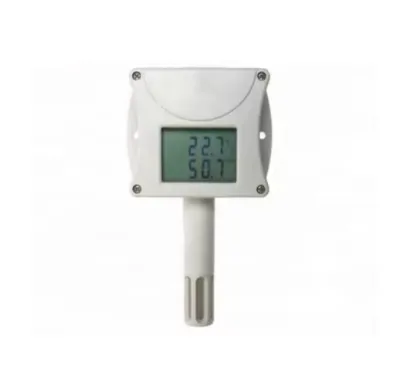
High Accuracy Temperature and Humidity Sensor Transmitter for Industrial Use
$318.00 - $381.00
MOQ: 1 Pieces


Temperature Humidity Sensor CO2 0-3V, Reliable and Precise for HVAC Systems
$2.50 - $7.90
MOQ: 10 piece


Comprehensive Sourcing Guide
Strategic Sourcing Guide for Industrial Humidity Sensors
Selecting the right Industrial Humidity Sensor requires a disciplined approach that balances technical precision with supply chain reliability. In the B2B procurement landscape, the term "Industrial Humidity Sensor" encompasses a diverse array of devices designed for specific environments, ranging from manufacturing plants to complex HVAC systems. Buyers must navigate a market where product attributes vary significantly, from the sensing mechanism to the output signal type. This guide outlines the critical factors for evaluating these components, ensuring that procurement decisions are grounded in verified data and logical assessment rather than marketing assertions.
Technical Architecture and Sensing Mechanisms
The foundational decision in sourcing humidity sensors lies in understanding the underlying sensing technology. The market presents distinct categories based on how the device interacts with the environment. One prevalent category utilizes a Resistive sensing type, where the electrical resistance of the sensing element changes in response to moisture levels. These devices often rely on Carbon Humidity materials, which offer a cost-effective solution for general monitoring tasks. In contrast, other industrial applications may require Thermocouple based systems, particularly when the sensor must simultaneously monitor temperature and humidity. These dual-function units are often labeled as Temperature and Humidity Monitor Sensors, providing a consolidated data stream for process control.
The physical interaction between the sensor and the medium is equally critical. Procurement specifications must distinguish between Contact and Contactless installation types. Contact sensors are designed to be inserted directly into the medium, offering high accuracy for liquid or gas streams where direct exposure is feasible. Conversely, contactless options are essential for sterile environments or where physical intrusion could compromise the process integrity. Furthermore, the Installation Type dictates the physical deployment strategy. Options include Wall-Mounted Type for fixed environmental monitoring and Duct Type for integration into ventilation systems. The IP Rating and physical dimensions, such as the 252530 standard profile observed in some units, must align with the enclosure requirements of the target facility.
Performance Specifications and Signal Output
Accuracy and signal compatibility are the primary determinants of a sensor's utility in an automated control loop. High-performance industrial units often boast a Temperature Accuracy of ±0.5°C and a Humidity Accuracy of ±3%Rh, with a Humidity Range spanning 0~100%Rh. However, buyers must verify these figures against the specific operating conditions of their facility. The Working Temperature Range is another vital parameter; while some sensors operate effectively between -20~80°C, others are engineered for extreme conditions, with ranges extending up to 400°C or -40~260°C.
The output signal type determines how the sensor integrates with existing control systems. The market offers both Analog Type and Digital Type outputs. Analog sensors typically provide signals such as 4~20mA, 0~10V, or 0~5V, which are standard for legacy PLCs and industrial controllers. Digital sensors, often featuring RS485 communication, facilitate easier integration into modern IoT networks and require less wiring complexity. The Power Supply Voltage is another constraint; units may require 3.0V to 5.5V for low-power applications or 24V DC for robust industrial environments. Additionally, the Load Resistance requirements, such as ≤ 500ω or ≥ 10kΩ, must be matched to the input impedance of the receiving device to ensure signal integrity.
Compliance, Certification, and Standards
Navigating the regulatory landscape is essential for ensuring that purchased sensors meet international safety and quality benchmarks. While specific certification statuses vary by manufacturer, the presence of CE certification is a common indicator of compliance with European safety, health, and environmental protection standards. Buyers should explicitly request proof of this certification for all units intended for use in regulated markets. Beyond specific certifications, the Production Process is a key quality indicator. Processes described as Normal Wirewound or Integration suggest different manufacturing methodologies that can impact long-term reliability and consistency.
Standards also play a crucial role in defining product quality. Some products are marketed with High molecule standards, referring to the material composition of the sensing element, while others adhere to specific dimensional standards like 252530. It is important to note that while background knowledge may reference standards like ISO 17025 for testing laboratories, buyers should not assume a specific product meets this standard unless explicitly verified by the supplier. Instead, procurement teams should request test reports and calibration certificates that demonstrate the sensor's adherence to relevant industry norms. The Material composition, such as Carbon Humidity, should be evaluated for durability and resistance to chemical degradation in the specific application environment.
Cost Drivers and Procurement Parameters
The total cost of ownership for industrial humidity sensors is influenced by several variables beyond the unit price. The observed price range in the market spans from 0.24 to 699 USD, reflecting the vast difference between basic components and sophisticated, multi-parameter monitoring systems. Several factors drive these costs. Customization is a primary driver; while Customization is Available for many models, allowing for Can Be Customized probes or specific Timing settings like Automatic Temperature Control Setting, custom orders typically incur higher unit costs and longer lead times. Conversely, Non-Customized or standard models offer lower prices and faster availability.
The MOQ (Minimum Order Quantity) is another critical financial consideration. The market exhibits an MOQ range of 1 to 1000 units. Small-scale projects or prototyping phases may benefit from suppliers with low MOQs, whereas large-scale industrial deployments can leverage economies of scale with higher volume orders. Packaging also impacts logistics costs; options range from 1PCS/Box to PP Bag or Export Carton configurations. The Weight of the unit, such as 1 Kg for certain models, influences shipping expenses, particularly for international procurement. Buyers should calculate the total landed cost, including duties and freight, rather than focusing solely on the listed unit price.
Supplier Evaluation and Quality Assurance
Evaluating potential suppliers requires a rigorous assessment of their capabilities and track record. The Production Process and Material sourcing are key indicators of quality. Suppliers utilizing Integration processes may offer more robust and compact designs, while those relying on Normal Wirewound techniques might provide easier repairability or specific performance characteristics. The Origin of the product, often listed as China, should be verified against the buyer's sourcing strategy regarding supply chain resilience and geopolitical risk.
Quality control measures should be a prerequisite for selection. Buyers must verify the Accuracy claims through third-party testing or on-site calibration checks. The Function of the sensor, such as Cold and Hot Season Setting or Air Outlet Angle Setting, should be validated to ensure it meets the specific operational needs of the facility. The Key Selling Points, such as being Easy to Operate, should be assessed through user trials rather than marketing literature. Furthermore, the Collection of parameters, including All Parameters gathering capabilities, should be tested to ensure data integrity across the full range of environmental conditions.
Application Scenarios and Long-Term Considerations
The Usage of industrial humidity sensors is predominantly in Manufacturing Plant environments, but the specific application dictates the required specifications. In Duct Type installations, sensors must withstand airflow dynamics and potential condensation, requiring robust IP Ratings and durable materials. For Wall-Mounted Type applications, the focus shifts to environmental monitoring accuracy and ease of maintenance. The Display type, whether Digital or otherwise, affects the user interface and the ability of on-site personnel to monitor conditions in real-time.
Long-term procurement considerations involve the lifecycle management of the sensors. The Operating Temperature range and Working Temperature Range must be sufficient to handle seasonal variations and potential process upsets. The Timing features, such as Automatic Temperature Control Setting, can reduce manual intervention and improve energy efficiency over time. Buyers should also consider the Load Resistance and Power Supply Voltage compatibility with existing infrastructure to avoid costly retrofitting. Finally, the Probe customization options allow for tailored solutions that can extend the sensor's lifespan in harsh environments. By aligning these technical and operational factors with the specific needs of the application, buyers can ensure a reliable and cost-effective procurement strategy for industrial humidity sensors.
Comparative Analysis of Sensor Specifications
To facilitate a clearer understanding of the diverse options available, the following table summarizes key technical attributes observed in the current market. This comparison highlights the variance in capabilities that buyers must evaluate against their specific project requirements.
| Attribute Category | Option A: Resistive/Carbon | Option B: Thermocouple/Digital | Option C: High-Precision Monitor |
|---|---|---|---|
| Sensing Type | Resistive | Thermocouple | Mixed (Temp & Humidity) |
| Measuring Medium | Humidity | Temperature | Temperature and Humidity |
| Output Signal | Analog Type | Digital Type | 4 |
| Accuracy | Variable | Variable | Temp: ±0.5°C, Hum: ±3%Rh |
| Temperature Range | -20~80°C | 0-400°C | -40~260°C |
| Humidity Range | 0~100%Rh | N/A | 0~100%Rh |
| Power Supply | 3.0V to 5.5V | Variable | 24V DC |
| Installation | Wall-Mounted | Contact | Duct Type |
| Customization | Available | Available | Probe Customized |
| Material | Carbon Humidity | N/A | High molecule |
| Certification | CE | CE | CE |
This table illustrates that no single sensor fits all scenarios. The Resistive option is suitable for general humidity monitoring where cost is a primary concern. The Thermocouple option is essential for high-temperature industrial processes. The High-Precision Monitor offers the most comprehensive data for complex control loops but requires a higher power supply and more complex integration. Buyers must carefully map these specifications to their operational constraints to avoid procurement errors.
Final Procurement Recommendations
In conclusion, sourcing industrial humidity sensors demands a methodical approach that prioritizes technical fit over marketing claims. Buyers should verify all Certification status, Accuracy figures, and Range specifications against the actual product data sheets. The Customization options provide flexibility but must be weighed against the MOQ and lead time implications. By focusing on the Production Process, Material quality, and Output Signal compatibility, procurement teams can secure sensors that deliver reliable performance in Manufacturing Plant and other critical industrial settings. Always validate the IP Rating and Installation Type to ensure the sensor can withstand the physical demands of the environment. Through rigorous evaluation and adherence to the verified facts provided, buyers can build a resilient supply chain for their critical monitoring needs.
FAQs
What sensing types are available for industrial humidity sensors?
Available sensing types include Resistive and Thermocouple options. Resistive sensors often use Carbon Humidity materials, while Thermocouple units function as Temperature and Humidity Monitor Sensors for dual-parameter monitoring in industrial settings.
Can I find sensors with specific output signal types?
Yes, sensors offer both Analog Type and Digital Type outputs. Analog models provide signals like 4~20mA or 0~10V, while Digital Type units may support RS485 communication for modern control system integration.
Which installation types are supported for these sensors?
Supported installation types include Wall-Mounted Type and Duct Type configurations. Buyers can also choose between Contact and Contactless options depending on whether direct medium exposure is required for the specific application.
What accuracy levels do these industrial sensors provide?
High-performance units typically offer a Temperature Accuracy of ±0.5°C and a Humidity Accuracy of ±3%Rh. These figures ensure reliable monitoring within the specified operating ranges for various manufacturing plant environments.
How does customization affect the sensor specifications?
Customization is available for many models, allowing for customized probes and specific settings. However, some standard units are Non-Customized, which may offer faster availability and lower costs compared to tailored industrial solutions.
What certifications are commonly associated with these products?
CE certification is a common indicator of compliance with safety standards for these devices. Buyers should verify this certification status to ensure the sensors meet regulatory requirements for their intended markets and applications.