Source Efficient Filtration Pleated Filter Element for Medicine, Food, Industry
Compare 30 Efficient Filtration Pleated Filter Element options from verified suppliers. These polypropylene and stainless steel units support applications in medicine, food and beverage, and industrial processing with customizable dimensions and ratings; compare the available evidence and request quotations based on your requirements.
Key considerations
Products List


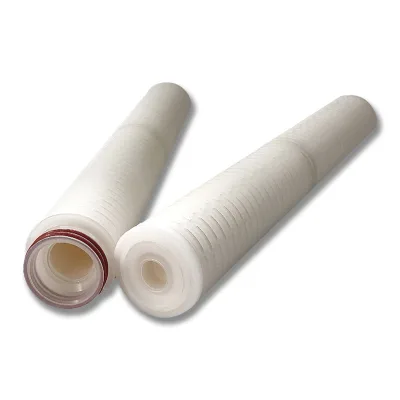


Excellent Performance Pes 0.22micron 10 Inches DOE Pleated Filter Element
$21.99 - $31.99
MOQ: 25 Pieces


Industrial Filter PP 40 Inch High Flow Pleated Industrial Filter Element
$27.99 - $45.89
MOQ: 25 Pieces


Comprehensive Sourcing Guide
Efficient Filtration Pleated Filter Element Sourcing Guide
Procuring efficient filtration pleated filter elements requires a strategic approach that balances technical performance with supply chain reliability. Buyers must move beyond basic price comparisons to evaluate the specific filtration mechanisms and material compatibility relevant to their industrial processes. The pleated design significantly increases the surface area for filtration, allowing for higher flow rates and longer service life compared to standard wound or spun media. This structural advantage is critical for applications in medicine, food and beverage, and general industry where consistent flow is essential. Understanding these fundamental benefits helps stakeholders define their precise requirements before engaging with potential vendors.
The sourcing process should begin with a clear definition of the operational environment, including fluid type, temperature, and pressure conditions. Since these elements are often used for liquid filtration, verifying chemical compatibility is paramount to prevent media degradation or contamination. Buyers should identify whether they need pre-filtration or medium filtration grades, as this distinction impacts the initial cost and the lifespan of downstream equipment. By establishing these baseline parameters early, procurement teams can filter out unsuitable suppliers and focus on partners who offer products aligned with their specific technical needs. This initial clarity prevents costly mismatches and ensures that the selected elements perform as expected in the production line.
Product Scope and Observed Listing Signals
The market for pleated filter elements presents a diverse range of configurations, primarily distinguished by their filtration grade and material composition. Listings frequently highlight polypropylene as the primary filter media, which is valued for its excellent chemical compatibility and non-woven structure. This material choice is particularly suitable for applications in food and beverage, metallurgy, and textile industries. Buyers should note that while polypropylene is common, some listings may specify metal materials, such as stainless steel, for the housing or support structures. Understanding these material variations is crucial for selecting the right element for high-pressure or corrosive environments.
Observed listing signals indicate a wide spectrum of product models, including specific designations like SF, SF-10, and SF-20. These model numbers often correspond to different lengths, such as 10 inches, 20 inches, or up to 40 inches, allowing for customization based on housing size. The filtration grade is typically categorized as either pre-filter or medium filter, which dictates the removal rating. For instance, pre-filters might target larger particles, while medium filters handle finer impurities. Buyers should scrutinize these signals to ensure the product scope matches their application. Ignoring these distinctions can lead to purchasing elements that are either over-specified, increasing costs, or under-specified, risking equipment damage.
Technical Specifications to Verify
Verifying technical specifications is the cornerstone of successful procurement for pleated filter elements. The filtration accuracy, or removal rating, is a critical parameter that must align with the process requirements. Listings indicate a range of ratings from 0.05 micrometers to 5.0 micrometers, with specific options including 0.20, 0.45, 0.50, and 1.00 micrometers. Buyers must confirm that the selected rating effectively captures the target impurities without causing excessive pressure drop. Additionally, the maximum operating temperature is a vital constraint, with many polypropylene elements rated up to 80°C. Exceeding this limit can compromise the integrity of the filter media, leading to leaks or reduced filtration efficiency.
Dimensional specifications must also be rigorously checked to ensure compatibility with existing filter housings. Standard lengths often include 5, 10, 20, 30, and 40 inches, but custom dimensions are available based on customer requirements. The outer diameter is frequently specified as 68 mm, while the inside diameter is typically 28 mm. These dimensions are standardized to fit common industrial housings, but deviations can occur with custom orders. Buyers should verify the connector type, such as flat connectors or 222 connectors, to ensure a secure and leak-free installation. Mismatched dimensions or connectors can result in operational failures, making precise verification of these physical attributes essential before finalizing any purchase order.
Compliance and Safety Documentation
Compliance documentation serves as a critical trust signal in the procurement of filtration products, particularly for industries with strict regulatory standards. Suppliers often provide certifications such as SGS and ISO 9001, which attest to the quality management systems and product safety. While these certifications are positive indicators, buyers should request the actual certificates to verify their validity and scope. For applications in the pharmaceutical or food and beverage sectors, additional documentation regarding material safety and bioburden may be required. Ensuring that the supplier can provide comprehensive compliance files helps mitigate regulatory risks and ensures that the filter elements meet the necessary safety standards for the intended application.
Beyond standard certifications, buyers should inquire about specific test reports that validate the performance claims of the filter elements. This includes data on bubble point, which indicates the integrity of the membrane, and flow rate under specific conditions. High flux and high bubble point are often cited as advantages, but these claims should be supported by independent test data. Requesting sample test reports allows procurement teams to verify that the product performs as advertised. This due diligence is essential for maintaining product quality and ensuring that the filtration system operates within safe parameters. By prioritizing suppliers who offer transparent and detailed compliance documentation, buyers can reduce the risk of non-conformance and ensure a reliable supply chain.
Cost Drivers and Commercial Terms
Understanding the cost drivers for pleated filter elements is essential for effective budget management and negotiation. The primary cost factors include the filtration rating, material quality, and custom dimensions. Finer filtration ratings, such as 0.22 micrometers, typically command a higher price due to the precision required in manufacturing the membrane. Similarly, custom lengths or non-standard diameters may incur additional costs compared to standard off-the-shelf products. Buyers should analyze their specific requirements to determine the optimal balance between performance and cost. Over-specifying the filter can lead to unnecessary expenditure, while under-specifying may result in frequent replacements and higher long-term costs.
Commercial terms, including minimum order quantities (MOQ) and payment structures, also play a significant role in the total cost of ownership. Observed MOQ ranges from 1 to 200 units, providing flexibility for both small-scale trials and large-scale production runs. Buyers should negotiate terms that align with their inventory management strategies, considering factors such as storage space and shelf life. Payment terms, such as advance payment or credit periods, should be evaluated in the context of the supplier's financial stability and the buyer's cash flow. By carefully assessing these commercial aspects, procurement teams can optimize their spending and establish favorable relationships with suppliers. Clear communication of these terms helps prevent disputes and ensures a smooth transaction process.
Supplier Qualification and Quality Control
Qualifying suppliers for pleated filter elements involves a thorough assessment of their manufacturing capabilities and quality control processes. Buyers should evaluate the supplier's production facilities, including their equipment and workforce, to ensure they can consistently produce high-quality products. Visiting the facility, if possible, or requesting detailed information about their production lines can provide valuable insights into their operational capabilities. Additionally, reviewing the supplier's track record in the industry, including client testimonials and case studies, can help gauge their reliability and expertise. A supplier with a strong reputation for quality and service is more likely to deliver products that meet or exceed expectations.
Quality control measures are another critical aspect of supplier qualification. Buyers should inquire about the supplier's inspection processes, including incoming material checks, in-process inspections, and final product testing. Implementing robust quality control systems helps detect and prevent defects before the products reach the customer. Requesting samples for independent testing can further validate the supplier's quality claims. By partnering with suppliers who prioritize quality control, buyers can reduce the risk of receiving defective products and minimize the impact of potential failures on their operations. This proactive approach to supplier qualification ensures a stable and reliable supply of high-performance filtration elements.
Long-Term Procurement Checks
Establishing long-term procurement relationships requires ongoing monitoring and evaluation of supplier performance. Buyers should implement key performance indicators (KPIs) to track metrics such as on-time delivery, product quality, and responsiveness to issues. Regular reviews of these KPIs help identify areas for improvement and ensure that the supplier continues to meet the buyer's expectations. Building a collaborative relationship with the supplier, characterized by open communication and mutual trust, can lead to better terms and more innovative solutions. By treating the supplier as a partner rather than just a vendor, buyers can foster a more resilient and efficient supply chain.
Sustainability and environmental considerations are increasingly important in long-term procurement strategies. Buyers should assess the supplier's commitment to sustainable practices, including waste reduction, energy efficiency, and responsible sourcing of materials. Choosing suppliers who prioritize sustainability can enhance the buyer's corporate social responsibility profile and contribute to a more environmentally friendly supply chain. Additionally, considering the end-of-life disposal of the filter elements is crucial, as proper disposal methods can minimize environmental impact. By integrating sustainability into their procurement criteria, buyers can make informed decisions that align with their broader business goals and contribute to a more sustainable future.
FAQs
What materials are used in efficient filtration pleated filter elements?
The elements primarily use polypropylene for the filter media and support structure. Some variants incorporate stainless steel 304 or 316 for metal components. This combination ensures excellent chemical compatibility and durability. The non-woven polypropylene membrane provides effective particulate removal across various industrial applications.
Which filtration ratings are available for these pleated filter cartridges?
Available removal ratings include 0.05, 0.20, 0.45, 0.50, 0.60, 0.80, 1.00, 5.0, 10, 20, 30, and 50 micrometers. These options cover both PRE Filter and Medium Filter grades. Buyers can select specific micron ratings based on their precise liquid filtration requirements and desired purity levels.
Can these filters be customized for specific industrial applications?
Yes, customization is available for dimensions, packaging, and connector types. Standard lengths include 10, 20, 30, and 40 inches, with custom dimensions also supported. Connectors like 222 or flat types can be selected. This flexibility allows the filters to meet specific requirements in medicine, food, beverage, and metallurgy sectors.
What certifications do these efficient filtration pleated filter elements hold?
The products hold SGS and ISO9001 certifications. These credentials verify quality management and product safety standards. Such certifications are essential for buyers in regulated industries like pharmaceuticals and food processing. They ensure the manufacturing process meets international quality benchmarks for reliable performance.
How does the design improve filtration efficiency and flux?
The pleated design offers high flux and a high bubble point. This structure maximizes surface area within a compact form factor. It allows for rapid liquid flow while maintaining effective impurity removal. The result is extended service life and reduced downtime for industrial filtration systems requiring consistent performance.
What are the operating temperature limits for these filter cartridges?
The maximum operating temperature is 80°C. This limit applies to the polypropylene media and seal materials. Buyers must ensure their process fluids do not exceed this temperature to maintain structural integrity. Adhering to this limit ensures optimal performance and prevents damage to the filter element during continuous operation.