Source ISO Standard CNC Turning Holder for Metal Processing
Find 30 verified options for ISO Standard CNC Turning Holder to compare specifications like hardness, tolerance, and coating. Buyers can evaluate suppliers in China for metal casting, machining, and hardware tool applications with customizable sizes and packaging.
Key considerations
Products List


Lathe Turning Toolholder CNC Cooling Cutting Milling Turning Tool Holder
$158.00 - $166.00
MOQ: 2 Pieces


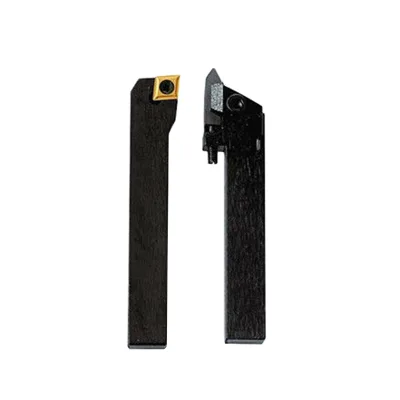
Comprehensive Sourcing Guide
Strategic Sourcing Guide for ISO Standard CNC Turning Holders
Navigating the global market for ISO standard CNC turning holders requires a disciplined approach that balances technical precision with rigorous supplier verification. For procurement professionals, the core keyword "ISO Standard CNC Turning Holder" represents a critical interface between the machine tool and the cutting insert. The reliability of this interface directly dictates machining accuracy, tool life, and overall production efficiency. This guide synthesizes available market data and technical observations to provide a structured framework for evaluating potential suppliers and products without relying on unverified claims or speculative market figures.
Technical Specifications and Geometric Standards
The foundation of selecting a suitable CNC turning holder lies in understanding its geometric specifications and adherence to established standards. In the current market, holders are frequently categorized by their model designations, which often correspond to specific ISO standards for tooling interfaces. Observed product data indicates that models such as MGEHR1616-2 and PCLNR/L are available, alongside generic designations like TNMG. These codes typically denote the holder's clamping mechanism and the specific insert geometry it accommodates.
A critical technical attribute to verify is the tolerance class. Precision in CNC turning is non-negotiable, and the radial and axial tolerances of the holder must align with the machine's capabilities. Market observations highlight specific tolerance values, such as an axial tolerance of G6 and a radial tolerance of +/- 0.05mm. These figures serve as benchmarks for high-precision applications, particularly in environments requiring tight dimensional control. Buyers should also examine the hardness specifications of the holder body itself. Data points suggest hardness ranges between HRC40-45 and HRC43-47. This hardness level is essential to prevent deformation under the high cutting forces generated during metal processing operations.
Furthermore, the coating process is a vital technical differentiator. The longevity of the holder, particularly the interface where the insert is seated, depends on the surface treatment. Commonly observed coating options include Black or Ni (Nickel) Coating. These coatings provide corrosion resistance and reduce friction, which is crucial for maintaining the integrity of the clamping mechanism over extended periods. When evaluating a product, procurement teams must confirm that the specified coating matches the intended application environment, whether it involves dry machining or the use of coolants.
Compliance and Certification Verification
In the B2B procurement landscape, certification serves as a proxy for quality management systems and product reliability. While specific product listings may vary, a robust sourcing strategy must prioritize suppliers who can demonstrate adherence to international quality standards. The most frequently cited certification in the observed data is ISO 9001. This standard indicates that the manufacturer has a documented quality management system in place, ensuring consistency in production processes.
Beyond general quality management, specific product certifications are often required depending on the end-use industry. Observed listings mention certifications such as GS, RoHS, and CE. The GS mark (Geprüfte Sicherheit) is particularly relevant for products sold in European markets, indicating safety compliance. RoHS (Restriction of Hazardous Substances) is critical for electronics and machinery components to ensure environmental safety. CE marking confirms conformity with health, safety, and environmental protection standards for products sold within the European Economic Area.
It is imperative to note that certification status can be "Customized" or specific to a batch. Buyers must verify that the certification applies to the specific model being purchased and is not merely a generic claim for the brand. The presence of multiple standards, such as BS, ANSI, JIS, GB, GOST, ASTM, and DIN, in product descriptions suggests a supplier's capability to meet diverse regional requirements. However, the buyer must confirm which specific standard applies to the actual unit delivered, as a supplier may claim compliance with a broad range of standards while only certifying specific SKUs.
Cost Drivers and Pricing Dynamics
Understanding the cost structure of ISO standard CNC turning holders is essential for budgeting and negotiation. The observed price range in the market spans from $0.10 to $300.00 USD. This wide variance is not arbitrary but is driven by several distinct factors, including material composition, manufacturing complexity, and customization levels.
The primary cost driver is the material used for the holder body. Listings indicate the use of both Steel and Stainless Steel. Stainless steel variants typically command a higher price due to the raw material cost and the more difficult machining processes required to achieve the necessary hardness and finish. Additionally, the production type plays a significant role. "Single Production" or custom-manufactured holders will inherently cost more than mass-produced standard items.
Customization is another major factor influencing price. While many suppliers offer "Customized Size" and "Customized Packing," these services add to the overall cost. The Minimum Order Quantity (MOQ) also interacts with pricing. The observed MOQ range is 0 to 1000 units. Suppliers may offer lower prices for bulk orders within the higher end of this range, while single-unit purchases or samples (where Sample Offering is Yes) will carry a premium per unit. Buyers should be aware that "According to Customers Requestment" for packing can also introduce variable costs, especially if specialized packaging like Plywood or specific Plastic Boxes is required for export or storage.
Typical Applications and Operational Context
ISO standard CNC turning holders are versatile components designed for a wide array of metal processing applications. The observed data lists numerous specific use cases, ranging from Metal Casting Machinery and Metal Coating Machinery to Metal Drawing, Engraving, and Forging Machinery. This breadth of application underscores the importance of selecting a holder that matches the specific operational demands of the user's facility.
The "Using" attribute often identifies the holder as a "Milling Cutter" interface, though in the context of turning, it serves as the primary mounting point for turning inserts. The "Application" field frequently cites "Hardware Tool," "Machinery Accessory," and "Fastener" production, as well as "Auto and Motorcycle Accessory" manufacturing. These sectors demand high precision and reliability, making the selection of a holder with verified tolerances and hardness critical.
Furthermore, the "Type" of holder, such as "Precision translational head," suggests specialized applications where linear motion or precise positioning is required. The "Feeler Gauge for Testing" value of 0.01mm indicates the level of precision achievable in quality checks for these components. Buyers should match the holder's specifications to the specific machinery they are using, such as Lathe machines, to ensure compatibility and optimal performance. The "Condition" of the product is typically listed as "New," which is a standard expectation for industrial tooling, but verification of this status upon delivery is necessary.
Supplier Evaluation and Origin Analysis
Evaluating the supplier is as critical as evaluating the product itself. The origin of the product is a key data point, with observed locations including Zhuzhou, Hunan, China, Dongguan China, and generic "China" designations. Zhuzhou is historically known for its tungsten and cemented carbide industry, which is relevant for tooling components. Dongguan is a major manufacturing hub for precision machinery and hardware.
When assessing a supplier, procurement teams should look for evidence of "Spare Parts Manufacturer" status and "Made in China" declarations. However, the "Brand Name" listed, such as "Sant," should be verified for its market reputation and history. A supplier claiming to be a "Spare Parts Manufacturer" implies a capability to support after-sales needs, which is vital for maintenance and downtime reduction.
The "Production Type" being "Single Production" or "Standard/customization" indicates the supplier's flexibility. A supplier that offers "Custommized" (customized) packing, standard, and origin details demonstrates a high level of adaptability. However, buyers must be cautious of generic claims. For instance, while a supplier may claim to meet "Standard/customization," the actual delivery must align with the specific ISO standards required for the buyer's machinery. The presence of a "Logo Printing" option, either "With Logo Printing" or "Without Logo Printing," allows for branding customization, which can be a factor in supply chain management and inventory control.
Quality Control and Long-Term Procurement
Quality control in the procurement of CNC turning holders involves a multi-layered verification process. The "Sample Offering: Yes" attribute is a significant advantage, allowing buyers to test the physical properties of the holder before committing to a larger order. This sample testing should include checks for the specified hardness (HRC40-45 or HRC43-47), tolerance verification (G6 axial, +/- 0.05mm radial), and coating integrity.
Long-term procurement considerations extend beyond the initial purchase. The "prod_packing" method, whether "Plastic Box," "Plywood," "Box," or "Original Packing," affects the longevity of the tool during storage and transit. Proper packing is essential to prevent damage to the precision surfaces of the holder. Additionally, the "Standard" compliance, such as ASME, JIS Code, EN, GB, or DIN 69871 (noted in background context), must be maintained throughout the product lifecycle.
Buyers should also consider the "Matching Inserts" attribute, which is often listed as "ISO." Ensuring that the holder is compatible with standard ISO inserts simplifies the supply chain, as it reduces the need for proprietary tooling. The "Condition: New" status must be confirmed upon receipt to avoid issues with refurbished or used parts being sold as new. Finally, the "Axial Tolerance" and "Radial Tolerance" should be re-verified periodically if the supplier changes production locations or processes, as these values are critical for maintaining the quality of the final machined parts.
Conclusion
Sourcing ISO standard CNC turning holders requires a meticulous approach that integrates technical verification, compliance checks, and supplier evaluation. By focusing on the specific attributes observed in the market—such as hardness ranges, tolerance classes, coating types, and certification status—buyers can make informed decisions that minimize risk and maximize operational efficiency. The wide range of prices and customization options available necessitates a clear understanding of the specific needs of the application, ensuring that the selected holder meets the rigorous demands of modern metal processing machinery.
FAQs
What certifications do iso standard cnc turning holders typically have?
Many holders carry ISO 9001, GS, RoHS, and CE certifications. Buyers should verify if these apply to specific batches since some listings mark certification as customized rather than standard for all units.
Which hardness range is standard for these turning holder bodies?
Observed hardness ranges from HRC40-45 to HRC43-47. This level prevents deformation under high cutting forces during metal processing operations on lathe machines.
Can I request custom sizes for iso standard cnc turning holders?
Yes, customized size options are available for many models. Buyers must confirm that the specific model supports this feature, as some listings explicitly state customized size availability while others do not.
How are these holders typically packed for international shipping?
Packing options include plastic boxes, plywood cases, or original packaging. Some suppliers offer customized packing according to customer requests, which may affect the final shipping cost.
What is the typical radial tolerance for precision turning holders?
A common radial tolerance observed is plus or minus 0.05mm. This precision is critical for maintaining dimensional control in high-accuracy metal processing applications.
Are samples available for testing iso standard cnc turning holders?
Yes, sample offerings are available for many suppliers. This allows buyers to verify physical properties like hardness and coating before committing to larger bulk orders.
Which coating types are commonly applied to these metal holders?
Black or Nickel (Ni) coatings are frequently observed on these products. These treatments provide corrosion resistance and reduce friction during extended machining cycles.