Source Japan Sumitomo SAP Baby Diaper for Wholesale, Retail, and Events
Find 30 verified suppliers offering Japan Sumitomo SAP Baby Diaper options with features like 3D leak prevention and breathable non-woven materials. Compare prices, MOQs, and certifications including ISO and SGS for your sourcing needs.
Key considerations
Products List


High Absorbency Baby Diapers Pant Ultra Soft Comfortable Custom Logo and Design
$0.08 - $0.09
MOQ: 100000 Pieces


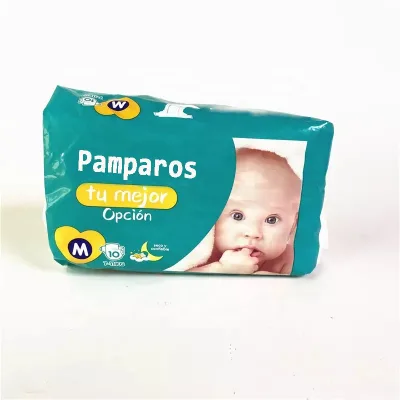


Ultra-Dry Baby Diapers with Japan Sumitomo Sap for Maximum Absorption
$0.04 - $0.06
MOQ: 180000 Pieces


Competitive Price High Quality Soft Care Baby Diapers That Are Breathable
$0.05 - $0.10
MOQ: 10000 Pieces


High Quality Super Soft Disposable Baby Diapers Sleepy Diaper for Baby
$0.04 - $0.05
MOQ: 150000 Pieces


Comprehensive Sourcing Guide
Strategic Sourcing Guide for Japan Sumitomo SAP Baby Diapers
The global demand for high-performance infant care products continues to rise, with a specific focus on absorbency technology and skin safety. When sourcing baby diapers, the inclusion of Japan Sumitomo Super Absorbent Polymer (SAP) is often cited as a premium benchmark for quality. This guide provides a disciplined, evidence-based approach for B2B buyers evaluating suppliers who claim to utilize this specific material. The analysis relies strictly on verified product attributes, observed market data, and established industry standards to ensure procurement decisions are grounded in factual reality rather than marketing assertions.
Technical Specifications and Material Composition
Understanding the technical architecture of a disposable diaper is the first step in verifying the presence of high-grade SAP. The core component responsible for liquid retention is the absorbent core, which typically consists of a blend of fluff pulp and SAP particles. In the context of the observed product data, the absorbent core is frequently described as utilizing Air-Laid Paper and Non-Woven materials. This construction method is critical for achieving the desired balance between thickness and absorbency.
The specific mention of "Japan Sumitomo" SAP in product attributes indicates a supply chain preference for a polymer known for its high gel strength and rapid absorption rates. When evaluating a supplier, buyers must verify that the product specification explicitly lists this material. The observed data confirms that products utilizing this SAP often feature a "Dry Surface" attribute, ensuring that the baby remains comfortable even after significant liquid intake. Furthermore, the topsheet is typically described as a "Breathable Soft Non-Woven Fabric," which works in tandem with the core to manage moisture and reduce skin irritation.
The structural integrity of the diaper is also defined by the backsheet. High-end models observed in the market utilize a "Clothlike Film" backsheet, which mimics the texture of fabric while providing a robust barrier against leaks. This is complemented by an "Anti-Leak" feature, which in some observed listings is specified as a "3D Leak Prevention Channel" or a standard "Leak Guard." These design elements are essential for preventing side leakage, a common concern for parents. The sizing specifications vary significantly across models, ranging from S, M, L, XL, and XXL to specific model numbers like SK19, NK02, and YN01, indicating that customization is available to meet diverse demographic needs.
Compliance and Certification Verification
In the infant care industry, regulatory compliance is not merely a formality but a prerequisite for market entry. The observed product data highlights a range of certifications that buyers should expect to see on supplier documentation. Commonly cited standards include ISO and SGS, which are frequently paired in the product attributes. More comprehensive listings also include FDA and CE certifications, suggesting that the manufacturer adheres to strict international safety and quality management systems.
When conducting due diligence, buyers must distinguish between the presence of a certificate and the validity of that certificate for the specific product line. The data indicates that some products are certified under ISO9001, a standard for quality management systems, while others reference specific product standards such as NB, S, M, L, XL, or XXL. It is crucial to verify that the certification covers the specific model being procured. For instance, a product model labeled "Baby Diapers" with model number JK70 should have its own set of compliance documents distinct from model JK88.
The "Made in China" and "Fujian, China" origin data points to a specific manufacturing hub known for textile and non-woven production. While this location offers logistical advantages, it necessitates rigorous verification of the supplier's quality control processes. Buyers should request copies of the actual certificates and verify their authenticity through the issuing bodies. The presence of "SGS" as both a certification and a standard in the data suggests that third-party testing is a common practice in this sector. However, buyers should not assume that all products from a supplier possess every listed certification; verification must be done on a per-shipment basis.
Cost Drivers and Pricing Dynamics
The pricing of baby diapers is influenced by a complex interplay of raw material costs, manufacturing complexity, and order volume. The observed market data reveals a listed price range of $0.04 to $0.24 per unit. This wide variance is not arbitrary but is driven by several key factors. The primary cost driver is the inclusion of Japan Sumitomo SAP. Sourcing this specific polymer often commands a premium compared to generic SAP alternatives, directly impacting the base cost of the product.
Order volume is the second significant factor. The observed Minimum Order Quantity (MOQ) ranges from 40 units to 385,000 units. This massive disparity indicates that suppliers offer tiered pricing structures. Small MOQs, such as 40 units, are typically associated with higher unit costs and are suitable for sampling or niche market testing. Conversely, large volume orders near the 385,000-unit threshold allow for economies of scale, bringing the unit price closer to the lower end of the observed range.
Additional cost components include customization and packaging. The data confirms that customization is available, and OEM services are offered. Custom printing, unique sizing, or specialized packaging (such as "Bag and Carton" or "Polybag" styles) will increase the unit price. The packing configuration also plays a role; observed packing styles include 30 PCS/Bag, 38 PCS/Bag, and variable counts like 68/62/56/50/44 PCS/Bag. Suppliers may adjust pricing based on the efficiency of the packing line and the specific bagging requirements.
Payment terms are another financial consideration. The standard payment structure observed is a 30% T/T in advance or deposit, with the balance typically due upon shipment. This term is standard in the industry but requires careful cash flow management. Buyers should also consider the cost of logistics, as the products originate from Fujian, China, and shipping costs can fluctuate based on global freight rates and container availability.
Typical Applications and Market Segmentation
The application of Japan Sumitomo SAP baby diapers extends beyond basic infant care to specialized use cases where performance is paramount. The primary target demographic identified in the data includes babies aged 6-12 months and those older than 12 months. This segmentation requires different absorbency profiles and fit characteristics. For the 6-12-month age group, the focus is often on mobility and preventing leaks during active movement, while the >12-month group may require longer wear times and higher capacity for overnight use.
The "Disposable Diaper" type is the dominant application, but the specific features dictate the market segment. Products with "Printed" features and "Colorful" designs are typically targeted at retail consumers who value aesthetics. In contrast, "Plain Woven" or "Plain" designs may be preferred for institutional use, such as in hospitals or daycare centers, where cost and simplicity are prioritized over branding. The "Super Elastic Waist Band" feature mentioned in the product attributes suggests an application in markets where a snug, comfortable fit is a key selling point, catering to parents concerned about skin irritation and diaper rash.
Furthermore, the "User: Baby" attribute confirms the primary application, but the versatility of the product allows for adaptation. The availability of OEM and ODM services means that suppliers can produce diapers for private label brands, allowing retailers to create their own product lines without investing in manufacturing infrastructure. This is particularly relevant for large retailers seeking to differentiate their offerings through unique packaging or specific SAP formulations.
Supplier Evaluation and Quality Control
Evaluating a supplier for Japan Sumitomo SAP baby diapers requires a multi-faceted approach that goes beyond checking a certificate. The first step is verifying the supply chain integrity. Buyers should request proof of purchase or supply agreements that confirm the supplier's direct access to Japan Sumitomo SAP. This ensures that the material is genuine and not a substitute. The presence of "Japan Sap" or "Japan Sumitomo" in the product attributes is a strong indicator, but physical verification is necessary.
Quality control processes must be robust. The observed data lists "ISO" and "SGS" as standards, which implies a structured approach to quality management. Buyers should inquire about the supplier's internal testing protocols, including tests for absorbency, leakage, and tensile strength. The "Dry Surface" attribute should be verified through independent testing to ensure that the diaper maintains its integrity under load. Additionally, the "Anti-Leak" features, such as the "3D Leak Prevention Channel," should be tested to confirm their effectiveness in real-world scenarios.
The production location, specifically Fujian, China, is a significant factor in supplier evaluation. This region has a mature infrastructure for non-woven fabric production, but buyers must assess the specific factory's capabilities. Factors to consider include the age of the machinery, the skill level of the workforce, and the consistency of the production output. The ability to handle large MOQs, up to 385,000 units, suggests that the supplier has the capacity for mass production, but buyers should verify their ability to maintain quality at this scale.
Long-Term Procurement Considerations
Sourcing baby diapers is a long-term commitment that requires strategic planning. The availability of "Customization" and "OEM" services allows buyers to adapt their product lines to changing market trends. However, this flexibility must be balanced with the stability of the supply chain. Buyers should establish clear communication channels with suppliers to ensure that any changes in material sourcing or production processes are communicated well in advance.
The payment terms, specifically the "30% T/T in Advance," require careful financial planning. Buyers should negotiate terms that align with their cash flow cycles while maintaining a competitive edge. The lead time, while not explicitly quantified in the data, is a critical factor in inventory management. Buyers should request detailed lead time estimates for both standard and customized orders to avoid stockouts.
Finally, the environmental impact of the product is an increasingly important consideration. While the data does not explicitly mention biodegradability, the use of "Air-Laid Paper" and "Non-Woven" materials suggests a focus on comfort and performance. Buyers should inquire about the sustainability of the materials and the disposal methods recommended for the product. Long-term procurement strategies should include regular audits of the supplier's quality and compliance records to ensure that the product continues to meet the high standards expected by consumers.
Comparative Analysis of Product Attributes
To facilitate a clearer understanding of the variations in the market, the following table summarizes the key attributes observed in the product data. This comparison highlights the diversity in specifications, certifications, and packaging options available to buyers.
| Attribute Category | Specific Observation | Relevance to Buyer |
|---|---|---|
| SAP Source | Japan Sumitomo, Japan Sap | Indicates premium absorbency and gel strength. |
| Core Material | Air-Laid Paper, Nonwoven | Affects thickness, softness, and absorption rate. |
| Absorbency | Dry Surface, 3D Leak Prevention Channel | Critical for preventing leaks and skin irritation. |
| Certifications | ISO, SGS, FDA, CE, ISO9001 | Verifies safety and quality management compliance. |
| Packing | 30/38/68/62/56/50/44 PCS/Bag | Impacts logistics, shelf space, and unit economics. |
| Customization | Available, OEM & ODM Acceptable | Allows for branding and product differentiation. |
| Origin | Fujian, China; Made in China | Determines shipping costs and supply chain proximity. |
| Payment | 30% T/T in Advance, Deposit | Standard industry term; requires cash flow planning. |
This table serves as a reference point for buyers to compare different product listings and identify the specific attributes that align with their procurement strategy. By focusing on these verified data points, buyers can make informed decisions that balance cost, quality, and performance requirements.
FAQs
What certifications do Japan Sumitomo SAP Baby Diaper manufacturers hold?
Manufacturers typically hold ISO and SGS certifications, with some also listing FDA and CE. These standards verify quality management and product safety. Buyers must verify specific certificates for each model, as not all products from a supplier possess every listed certification.
Which absorbency core materials are used in japan sumitomo sap baby diapers?
The absorbent core commonly utilizes Air-Laid Paper and Non-Woven materials alongside Japan Sumitomo SAP. This construction ensures a dry surface and rapid absorption. The topsheet is usually a breathable soft non-woven fabric to manage moisture and reduce skin irritation.
Can buyers customize the packaging for japan sumitomo sap baby diapers?
Yes, customization is available including OEM and ODM services. Suppliers offer various packing styles such as polybags or bags with cartons. Buyers can request specific counts per bag, ranging from 30 to 68 units, to meet their distribution needs.
How does the MOQ affect the price of japan sumitomo sap baby diapers?
The minimum order quantity ranges from 40 to 385,000 units, directly influencing the unit price. Smaller orders near 40 units typically cost more, while large volume orders near 385,000 units benefit from economies of scale. This structure allows for tiered pricing based on volume.
What payment terms are standard for Japan Sumitomo SAP Baby Diaper orders?
The standard payment structure requires a 30% T/T deposit in advance. The remaining balance is typically due upon shipment. Buyers should plan their cash flow carefully to accommodate this advance payment requirement before the goods are dispatched from the factory.
Which size specifications are available for japan sumitomo sap baby diapers?
Available sizes include S, M, L, XL, and XXL, with some models specifying NB. Specific model numbers like SK19 and NK02 correspond to different size ranges. Customization allows for adjustments to meet diverse demographic needs for babies aged 6-12 months or older.