Source Led Linear Track Light for Warehouse and Retail
Source led linear track light options for warehouse, retail, and commercial spaces. Compare 30 products featuring COB LED chips, 4100K neutral white, and 90 CRI. Find surface-mounted fixtures with Tridonic drivers and 3-year warranties for reliable illumination; compare the available evidence and request quotations based on your requirements.
Key considerations
Products List
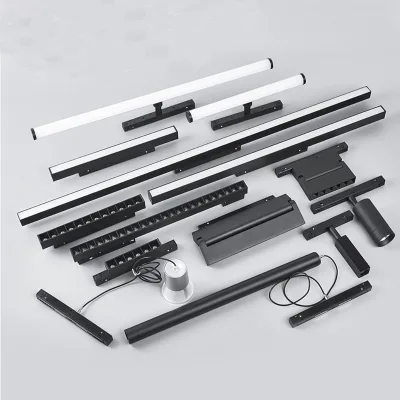


Comprehensive Sourcing Guide
LED Linear Track Light Sourcing Guide
Procuring LED linear track lights requires careful attention to the specific electrical and mechanical attributes observed in current market listings. Buyers must verify that the input voltage matches their facility's infrastructure, as observed data indicates a prevalence of 48V DC systems alongside standard AC options. The product weight of 0.5 kg suggests a lightweight profile suitable for surface-mounted installations in commercial warehouses, yet this low mass necessitates robust mounting hardware to ensure long-term stability under vibration or thermal expansion.
The observed product range includes diverse configurations such as 7W to 30W track lights and various floodlight lengths, indicating that a single supplier may offer a broad portfolio. Sourcing strategies should prioritize suppliers who can provide consistent color rendering indices above 80, with specific units achieving Ra 90 for high-fidelity environments. Buyers should also confirm whether the driver technology, such as Tridonic or Osram components, is integrated directly into the track or supplied as a separate unit, as this impacts both initial cost and future maintenance logistics.
Product Scope and Observed Listing Signals
Market listings reveal a wide spectrum of physical dimensions, with standard lengths ranging from 600mm to 3600mm and custom requests available upon negotiation. This variability allows for flexible integration into different ceiling grid systems, but it also introduces complexity in inventory management. Procurement teams must clearly define the required length and beam angle early in the process to avoid receiving mismatched components that cannot be easily returned or exchanged due to the custom nature of the aluminum body fabrication.
The observed color temperature options span from warm white to neutral white, with specific listings noting 4100K as a common neutral setting. Buyers should verify if the emitting color is fixed or changeable, as some units support dynamic adjustments while others are static. Additionally, the availability of customization services for lighting and circuitry design suggests that suppliers can tailor the optical distribution to specific warehouse layouts, though this often requires a higher minimum order quantity and a longer lead time for engineering validation.
Technical Specifications to Verify
Critical technical verification begins with the light source type, where COB (Chip on Board) technology is frequently observed for its high luminous flux and uniform light distribution. A typical output of 600 lumens per unit must be evaluated against the required illuminance levels for the specific application area, such as high-bay warehouse aisles or low-bay storage zones. Buyers should request photometric data sheets to confirm that the claimed 50,000-hour lifespan is maintained under the actual operating conditions of their facility, particularly regarding ambient temperature and duty cycles.
The driver selection is another pivotal specification, with listings citing both Tridonic and Osram brands as preferred components. These drivers must support dimming capabilities if the facility requires adjustable lighting levels for energy savings or task-specific illumination. Verification should also include the IP rating, which is often linked to the aluminum alloy body material, ensuring that the fixture can withstand the dust and potential moisture conditions found in industrial environments without compromising electrical safety or light output over time.
Compliance and Safety Documentation
Safety compliance is non-negotiable for industrial lighting, and buyers must ensure that all units carry valid CE and CCC certifications before finalizing any purchase. These certifications indicate that the product meets specific regional safety standards for electrical equipment, covering aspects such as fire resistance and electrical shock protection. It is essential to request the original test reports from the supplier to confirm that the certifications are current and applicable to the specific model number, such as the FD-FG003 or GM021, rather than generic claims.
Beyond basic safety marks, documentation should include EMC (Electromagnetic Compatibility) and LVD (Low Voltage Directive) compliance where applicable, especially for exports to European markets. The presence of GOST certification suggests suitability for specific Eurasian markets, but buyers must verify the scope of these approvals to ensure they cover the specific voltage and power ratings of the ordered units. Proper packaging, described as export standard or foam plus carton, must also be verified to prevent damage during transit, which could otherwise void warranty claims or compromise the structural integrity of the aluminum housing.
Cost Drivers and Commercial Terms
The final cost of LED linear track lights is heavily influenced by the choice of driver brand and the complexity of the optical design. Units featuring premium drivers like Tridonic or Osram typically command a higher price point compared to generic alternatives, but they offer superior reliability and longer operational lifespans. Buyers should analyze the total cost of ownership rather than just the unit price, considering that a higher initial investment in quality components can significantly reduce maintenance costs and replacement frequency over the 3 to 5-year warranty period.
Commercial terms such as Minimum Order Quantity (MOQ) and lead times vary significantly based on the customization level and standard length selected. Observed MOQs range from single items to nearly 1,000 units, meaning that small-scale projects may face higher per-unit costs or limited supplier options. Buyers should negotiate clear terms regarding payment schedules and shipping responsibilities, as the export standard packaging and specific dimensions of the aluminum bodies can impact freight costs and storage requirements at the destination warehouse.
Supplier Qualification and Quality Control
Supplier qualification should focus on their manufacturing location and their ability to provide consistent quality control across large batches. Most observed listings originate from Guangdong, China, a region known for its extensive lighting manufacturing ecosystem, but buyers must verify the specific factory's capacity to maintain the 50,000-hour lifespan claims. Requesting samples for independent testing is a prudent step to validate the actual color temperature, CRI, and dimming performance before committing to a large-scale order.
Quality control processes must extend beyond the factory floor to include rigorous inspection of the final packaging and labeling. The observed use of boxs or foam plus carton packaging indicates a focus on protection, but buyers should confirm that the labeling includes all necessary safety marks and model numbers to facilitate easy identification during installation. Establishing a clear communication channel for post-delivery support is also vital, as the availability of spare parts and the responsiveness of the supplier to warranty claims will directly impact the long-term success of the lighting project.
Long-Term Procurement Checks
Long-term procurement success depends on verifying the warranty terms and the supplier's commitment to after-sales support. While some listings offer a 3-year warranty and others extend to 5 years, buyers must clarify what specific failures are covered, such as driver malfunctions or LED degradation, and whether the warranty is transferable if the facility changes ownership. Understanding the claim process and the expected turnaround time for replacements is crucial for maintaining operational continuity in critical warehouse environments.
Finally, buyers should monitor the supplier's ability to adapt to future technology updates and regulatory changes. As lighting standards evolve, the supplier must be capable of providing updated models that maintain compatibility with existing track systems while incorporating new efficiency standards. Regular reviews of the supplier's performance, including delivery times and product consistency, will help ensure that the procurement relationship remains robust and that the lighting infrastructure continues to meet the evolving needs of the facility over its entire lifecycle.
FAQs
What is the input voltage for the Fredlighting track light?
The input voltage is 48 V DC. This specific requirement ensures compatibility with compatible drivers and power supplies. Buyers must verify their electrical infrastructure supports this low-voltage DC input before installation to ensure safe and efficient operation of the LED linear track light system.
Can the led linear track light be customized?
Yes, customization is available for this product. Buyers can request specific lengths and configurations to suit their unique project needs. The manufacturer supports tailored solutions, allowing for precise adjustments in dimensions and design elements to meet specific architectural or industrial lighting requirements effectively.
Which certifications does the led linear track light have?
The product holds CE and CCC certifications. These standards confirm compliance with safety and quality regulations in relevant markets. Buyers should verify that these specific certifications meet the regulatory requirements of their destination country before placing orders to ensure smooth customs clearance and legal compliance.
What is the expected lifespan of the LED chip?
The expected lifespan is 50,000 hours. This duration indicates long-term reliability for continuous use in commercial environments. Buyers can expect reduced maintenance costs and replacement frequency, making it a cost-effective solution for warehouses and other large-scale applications requiring sustained illumination over many years.
How is the led linear track light installed?
The installation method is surface mounted. This approach allows for straightforward attachment to ceilings or walls without complex recessed modifications. Buyers benefit from easier deployment and potential cost savings on structural alterations, making it suitable for various indoor settings where quick and secure mounting is prioritized.
What is the color temperature range available?
Available color temperatures include 3000K, 4000K, and 6000K. The 4000K neutral white option is highlighted for balanced illumination. Buyers can select the specific tone that best matches their aesthetic preferences or functional requirements, ensuring the lighting enhances the visual appeal and usability of the intended space effectively.