Source Low Noise Garbage Removal Vehicle for Urban Sanitation, Industrial Areas, Public Facilities
Compare 30 Low Noise Garbage Removal Vehicle options from Chinese manufacturers featuring diesel engines, hydraulic compression, and customizable capacities. These units support urban sanitation, industrial areas, and public facilities with efficient and environmentally friendly designs.
Key considerations
Products List


Low Speed Electric Garbage Truck Residential Waste Collection Vehicle
$3000.00 - $3200.00
MOQ: 1 Pieces


Hydraulic Lifting Waste Transport Vehicle for Community Street Sanitation
$3000.00 - $3200.00
MOQ: 1 Pieces


Low Operating Cost Leak-Proof 4×2 Drive Garbage Collection Vehicle
$28000.00 - $32000.00
MOQ: 1 Pieces

Factory Direct Supply Automatic Compression Mechanism Low Operating Cost Garbage Collection Vehicle
$28000.00 - $32000.00
MOQ: 1 Pieces

4×2 Drive High Compression Ratio Free Training Low Maintenance Waste Collection Vehicle
$28000.00 - $32000.00
MOQ: 1 Pieces

Fuel-Efficient Low Maintenance Competitive Price Easy-to-Operate Garbage Collection Vehicle
$28000.00 - $32000.00
MOQ: 1 Pieces


High Efficiency Higher Capacity Pure Electric Garbage Transfer Vehicle
$62500.00 - $63000.00
MOQ: 1 pcs


Liuqi L2 High-Performance Garbage Collection Vehicle for Urban Cleanup
$34000.00 - $48000.00
MOQ: 1 Pieces
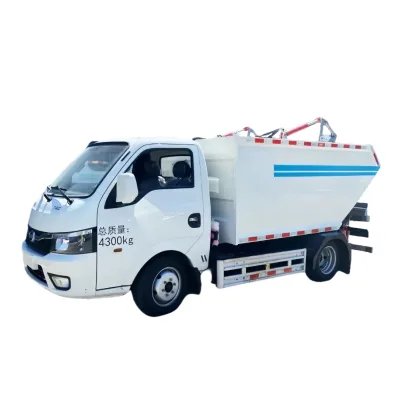


Roll off Waste Collection Vehicle with High Efficiency Hydraulic System
$8500.00 - $9500.00
MOQ: 1 Pieces

Roll off Waste Collection Vehicle with High Efficiency Hydraulic Loading System
$8500.00 - $9500.00
MOQ: 1 Pieces

Comprehensive Sourcing Guide
Low Noise Garbage Removal Vehicle Sourcing Guide
Procuring low noise garbage removal vehicles requires a strategic approach that balances operational efficiency with environmental compliance. Modern urban sanitation fleets are increasingly evaluated not just on their hauling capacity, but on their acoustic footprint and operational intelligence. Buyers must navigate a market where "low noise" is often a byproduct of advanced hydraulic systems, optimized engine tuning, and sealed operational designs rather than a standalone feature. This guide provides a structured framework for evaluating suppliers, verifying technical claims, and ensuring that the selected fleet meets both municipal regulations and long-term maintenance requirements.
The following sections detail the critical verification steps for sourcing these specialized vehicles. By focusing on observed listing signals, technical specifications, and commercial terms, procurement teams can mitigate risks associated with mismatched equipment. The goal is to move beyond superficial marketing claims and establish a clear, evidence-based understanding of what each vehicle model offers in terms of performance, durability, and total cost of ownership.
Product Scope and Observed Listing Signals
The current market for garbage removal vehicles presents a diverse range of models, from compact three-wheeled units to large-scale multifunctional trucks. Observed listings indicate a price range spanning from approximately $35.88 to $305,000 USD, reflecting significant variations in capacity, automation level, and chassis specifications. Minimum Order Quantities (MOQ) typically range from 1 to 100 units, allowing for both single-unit pilot purchases and large-scale fleet deployments. Buyers should note that these figures represent observed market signals and may vary based on customization requests, shipping terms, and specific supplier configurations.
Product attributes observed in listings include a mix of diesel-powered engines, with some models specifying engine power outputs such as 160HP. The vehicles are generally described as "New" and come with customization options for color, including white, blue, and green, as well as capacity adjustments. Packing methods vary significantly, ranging from wooden boxes for smaller components to bubble foam protection and full shipping containers for larger units. These logistical details are crucial for calculating landed costs and ensuring that the vehicles arrive without damage, particularly given the sensitive nature of hydraulic and electronic components.
Technical Specifications to Verify
Technical verification is paramount when sourcing low noise vehicles, as acoustic performance is often linked to specific mechanical designs. Key specifications to verify include the drive wheel configuration, with many models offering 4x2 or 4x4 setups, and wheelbase dimensions that typically hover around 4500mm for standard trucks. The compression ratio is a critical factor in noise reduction, with some models achieving a 1:2.5 ratio through hydraulic compression systems. Buyers should request detailed schematics of the loading and unloading mechanisms, as the efficiency of the hydraulic system directly impacts operational noise levels and cycle times.
Capacity and dimensional specifications also play a vital role in determining suitability for specific routes. Observed data includes garbage bin capacities ranging from 4 cubic meters to 8.5 cubic meters, with some models offering customizable volumes between 4m³ and 8m³. Purge widths of 12 meters or more and clean widths of 3.5 meters suggest advanced sweeping or cleaning capabilities integrated into the garbage removal function. It is essential to verify the exact dimensions of the vehicle, including length, width, and height, to ensure compatibility with local infrastructure, such as narrow streets, loading docks, and waste transfer stations.
Compliance and Safety Documentation
Compliance with emission and safety standards is a non-negotiable aspect of modern fleet procurement. Many observed listings reference Euro emission standards, indicating a commitment to reducing environmental impact. While specific certification statuses like ISO9001 or CE are mentioned in background data, buyers must verify the current validity and scope of these certifications for the specific supplier and model. Documentation should clearly outline how the vehicle meets local noise regulations, which often vary by municipality and time of day.
Safety features should be thoroughly documented, including the integrity of the sealed usage design, which prevents leakage and odor dispersion. The use of high-strength lightweight steel in construction contributes to both durability and safety, but buyers should request material certificates to verify the grade and treatment of the steel. Additionally, the intelligent features mentioned in some listings, such as automated monitoring systems, should be accompanied by user manuals and safety protocols to ensure that operators can utilize these features without compromising safety.
Cost Drivers and Commercial Terms
Understanding the cost drivers behind garbage removal vehicles helps buyers negotiate better terms and avoid hidden expenses. The primary cost drivers include the engine power, hydraulic system complexity, and the level of automation or intelligence integrated into the vehicle. Models with higher compression ratios and larger capacities naturally command higher prices due to the increased material and engineering requirements. Buyers should also consider the cost of customization, such as specific color schemes or capacity adjustments, which may incur additional fees and extend lead times.
Commercial terms, including payment structures and warranty provisions, should be clearly defined in the contract. The observed MOQ range suggests flexibility, but buyers should negotiate volume discounts for larger orders. Shipping and packaging costs are significant, especially for vehicles packed in shipping containers or requiring specialized wooden box construction. It is advisable to clarify who bears the risk of loss during transit and to ensure that the supplier provides comprehensive after-sales support, including spare parts availability and technical assistance.
Supplier Qualification and Quality Control
Supplier qualification is critical to ensuring that the low noise claims are substantiated by rigorous quality control processes. Buyers should verify the supplier’s manufacturing capabilities, including their experience with hydraulic systems and diesel engine integration. Requesting references from previous clients, particularly those in urban sanitation or industrial areas, can provide insights into the supplier’s reliability and product performance. It is also important to assess the supplier’s ability to provide customization, as this indicates flexibility and a customer-centric approach.
Quality control measures should be explicitly outlined, including pre-shipment inspections and testing protocols. Buyers should insist on witnessing or receiving reports from functional tests, particularly those related to noise levels and hydraulic efficiency. The use of trusted category knowledge suggests that suppliers with ISO certifications are more likely to adhere to consistent quality standards, but this should be verified on a case-by-case basis. Establishing a clear quality assurance framework in the contract ensures that any deviations from agreed specifications can be addressed promptly.
Long-Term Procurement Checks
Long-term procurement success depends on the vehicle’s durability and the supplier’s ability to provide ongoing support. Buyers should evaluate the warranty terms, focusing on coverage for critical components such as the engine, hydraulic pump, and electronic control units. The material composition, specifically the high-strength lightweight steel, should be assessed for corrosion resistance and wear tolerance, as these factors significantly impact the vehicle’s lifespan. Regular maintenance schedules and cost estimates should be requested to help plan for operational expenses over the vehicle’s lifecycle.
Furthermore, buyers should consider the scalability of the procurement strategy. As urban sanitation needs evolve, the ability to upgrade or expand the fleet with compatible models is essential. Suppliers that offer modular designs or upgrade paths for their vehicles can provide greater long-term value. Establishing a strong relationship with the supplier, including regular performance reviews and feedback loops, ensures that any issues are addressed proactively and that the fleet continues to meet the evolving demands of low noise and efficient garbage removal operations.
FAQs
What capacities are available for the multifunctional intelligent garbage removal truck?
Listed product specifications cover 4m³, 5m³, 6m³, and 8m³ tanks, with customization available. Bin capacity on some models reaches 8.5m³ with a 4m³ water tank. Buyers should confirm the exact tank and bin combination they need, since dimensions and purge width vary by configuration and larger capacities may affect the overall vehicle standard size.
Can the garbage removal vehicle be customized in color and specifications?
Yes, customization is available. Color options listed include white, blue, and green, and tank capacities are described as customizable. When requesting customization, buyers should confirm how changes affect the vehicle standard dimensions, packing method, and delivery schedule, and should document agreed specifications in the order before production begins.
Which drive and transmission configuration do these low noise garbage removal vehicles use?
The vehicles use a 4×2 drive type with manual transmission on listed models. Wheelbase is 4500mm on the L3000 model, and maximum operating speed is 60 km/h. Buyers operating in congested urban sanitation routes should verify that this configuration matches local road and duty-cycle requirements before ordering.
How are the vehicles packed and shipped from China?
Packing methods listed include wooden box, bubble foam, and shipping container, and the origin is China. The packing method typically depends on the model and shipping route. Buyers should confirm the packing option at order time, since wooden box packing may add volume and container shipping requires the vehicle dimensions to fit standard container constraints.
What cleaning and suction widths does the truck achieve?
Listed performance figures include a clean width of 3.5m, purge width of at least 12m, and magnetic suction width options of 2.3m or 3.5m. These values describe the road-sweeping capability of the multifunctional model. Actual performance depends on operating speed, so buyers should plan routes around the 60 km/h maximum operating speed.
What material is used for the garbage bin and body construction?
The body uses high-strength lightweight steel, which reduces vehicle weight while maintaining structural durability. Some models also use hydraulic compression with a compression ratio of 1:2.5 and a loading system that is fully hydraulic. Buyers should confirm material thickness and compression system details for the specific model quoted.
Which models are suitable for small versus medium sanitation operations?
Small models include the CMTS18 with dimensions around 8860(9970)*2550*3200mm and volumes of 3001-6000L, while medium models include the BHTWDGT-307DWZ and BHFWST-4004EG2 at 3700*1450*2050mm. Three-wheeled options offer 4m³ to 8m³ capacities. Buyers should match capacity and dimensions to route density and depot constraints.
Can hydraulic compression models handle larger waste volumes?
Yes, hydraulic compression models list a garbage container capacity of 8-12 cbm with a 160HP diesel engine. The hydraulic compression system and 1:2.5 compression ratio allow more waste per trip. Buyers should verify chassis compatibility and local emission requirements, as listed emission standard information specifies diesel fuel.