Source Low Sulfur Graphitized Petroleum Coke for Steel, Electrodes, Fuel
Compare 30 listings of Low Sulfur Graphitized Petroleum Coke from verified Chinese manufacturers. Buyers can evaluate specifications including ash, sulfur, and carbon content for steel production, graphite electrode manufacturing, and fuel applications.
Key considerations
Products List


Low Sulfur Low Nitrogen Graphitized Petroleum Coke for Casting and Steel-Making
$400.00 - $610.00
MOQ: 20 Tons


Premium Low Sulfur Graphitized Petroleum Coke for Wholesale Distribution
$800.00 - $900.00
MOQ: 20 Tons




Comprehensive Sourcing Guide
Strategic Sourcing Guide for Low Sulfur Graphitized Petroleum Coke
Understanding the Material and Core Specifications
Procuring Low Sulfur Graphitized Petroleum Coke requires a precise understanding of the material's distinct chemical and physical profile. This product is derived from petroleum feedstocks and undergoes a graphitization process to enhance its structural integrity and electrical conductivity. The core identity of this material is defined by its high carbon content and specific impurity limits. Based on observed market data, the fixed carbon (F.C) content is a critical metric, with specifications often requiring a minimum of 98.5%. This high carbon purity is essential for applications demanding superior electrical performance and thermal stability.
The sulfur content is the primary differentiator for the "low sulfur" designation. While general petroleum coke grades may exhibit sulfur levels ranging from 0.3% up to 2.5% or higher, the specific grade targeted in this guide must adhere to strict upper limits. Observed specifications indicate sulfur content can be as low as 0.05% maximum, with other available grades listing maximums of 0.3%, 0.5%, 0.7%, 0.8%, 1.0%, 1.5%, and 2.5%. For applications requiring the lowest impurity profile, buyers must specifically verify that the supplier offers the 0.05% or 0.3% maximum tiers. The ash content is another vital chemical property, typically observed at a maximum of 0.5%, ensuring minimal inorganic residue that could interfere with downstream processes.
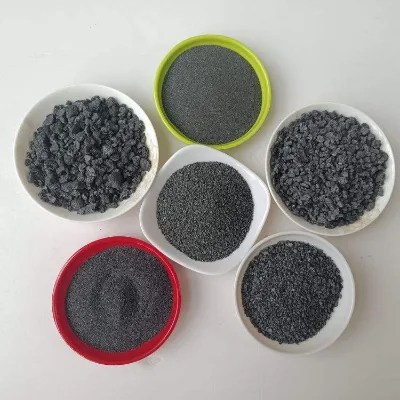
Physically, the material presents as black, granular, or block-shaped depending on the specific processing stage. The particle size is a crucial specification for logistics and application compatibility. Available size ranges include 1-5mm, 3-8mm, and 5-10mm, with pore diameters often falling within the 1-5mm range. The relative density of the graphitized product is generally observed between 0.9 and 1.1, and the form can vary from granular to block. The manufacturing method typically involves a physical-chemical approach, resulting in a product with low volatility (often 3%-6%) and a high calorific value. The hydrocarbon ratio is another chemical characteristic to note, typically ranging between 18 and 24. Understanding these baseline attributes allows buyers to distinguish between standard calcined coke and the higher-value graphitized variant.
Technical Applications and Performance Requirements
The utility of Low Sulfur Graphitized Petroleum Coke is extensive, driven by its unique combination of high conductivity, thermal resistance, and chemical purity. The primary application sectors identified include steel production and the manufacturing of graphite electrodes. In the steel industry, this material serves as a critical additive or component in the production of high-quality electrodes used in electric arc furnaces. The low sulfur content is particularly vital here, as sulfur impurities can compromise the mechanical properties of the final steel product and cause defects during the electrode sintering process.
Beyond steel and electrode production, the material finds significant use in the anode material sector. The high carbon content and specific pore structure make it suitable for advanced battery technologies and other electrochemical applications. The low volatility and high calorific value also position this material as a viable fuel source in specific industrial contexts, though its primary value lies in its structural and conductive properties rather than simple combustion. Additionally, the product is utilized in the formulation of industrial lubricants, where its granular nature and chemical stability contribute to performance under high-stress conditions.
The specific application dictates the required grade. For instance, graphite electrode production demands the strictest sulfur limits, often requiring the 0.05% maximum tier to ensure the longevity and efficiency of the electrodes. In contrast, applications involving general fuel or less sensitive industrial lubricants might tolerate higher sulfur levels, such as 0.5% or 0.7%. Buyers must align their procurement specifications with the exact tolerance limits of their end-use manufacturing processes. The "Non-Standard Products" designation for artificial graphite types suggests that custom formulations are available, allowing for tailored solutions that meet unique industrial requirements. The ability to customize the product, including packing and specific chemical compositions, is a key feature for buyers with specialized needs.
Compliance, Certification, and Regulatory Standards
Navigating the compliance landscape is essential for international procurement of graphitized petroleum coke. While the market offers various certifications, buyers must verify the specific status of their potential suppliers. Observed data indicates that products may carry certifications such as RoHS, ISO, and CE. These certifications suggest adherence to environmental, safety, and quality management standards, but they are not universally guaranteed for every listed product. The presence of a "Low-confidence background" regarding CE certification in the source data implies that buyers should not assume this status without explicit verification from the supplier.
The product origin is a significant factor in compliance, with the majority of observed supply originating from China. This geographic concentration means that buyers must be aware of the specific regulatory frameworks applicable to Chinese exports and the import regulations of their own country. Standards for the product itself are often defined by particle size and chemical composition rather than a single universal international standard. Observed standards reference specific sulfur grades (0.1, 0.3, 0.5, 0.7, 0.8, 1.3-1.5, 2) and size specifications (1-5mm, 1-10mm, 5-10mm).
Buyers should request a Certificate of Analysis (CoA) for every shipment to confirm that the actual product matches the agreed-upon specifications. The CoA should explicitly state the sulfur, ash, and moisture content, as well as the particle size distribution. While the source data mentions "Low Ash" and "Low Moisture" as general attributes, the specific numerical limits (e.g., Ash Max 0.5%, Low Moisture) must be confirmed on a per-shipment basis. Furthermore, the manufacturing method, described as a "Physical-Chemical Method," should be verified to ensure it aligns with the buyer's sustainability or quality requirements. The absence of a specific, universally mandated standard number in the provided data means that the commercial agreement and the supplier's internal quality control protocols become the de facto standards.
Cost Drivers and Pricing Dynamics
The pricing of Low Sulfur Graphitized Petroleum Coke is influenced by a complex interplay of raw material costs, processing intensity, and market demand. The graphitization process itself is energy-intensive, requiring high temperatures (observed calcination temperatures around 1300°C) to transform the carbon structure. This thermal treatment significantly increases the cost compared to standard calcined petroleum coke. The sulfur removal process, which is necessary to achieve the "low sulfur" designation, adds another layer of processing cost. Consequently, grades with sulfur limits of 0.05% or 0.3% will command a premium over those with limits of 1.0% or higher.
Observed price ranges in the market for these products span from 100 to 900 USD, though this wide range likely reflects differences in grade, quantity, and packaging. The minimum order quantity (MOQ) is another critical cost driver, with observed ranges between 1 and 25 units. Smaller orders may incur higher per-unit costs due to logistics and handling inefficiencies. The packaging method also impacts the final cost; options include packing by PP bags in big bags, ton bags, or plastic bags. Customized packing solutions, while convenient for specific logistics needs, may carry additional fees.
Lead times and production schedules further influence the total cost of ownership. The production time is observed to be 5-10 days after prepayment. This relatively short lead time suggests a responsive supply chain, but buyers must account for shipping durations and potential customs delays. The volatility of the raw petroleum feedstock market can also cause fluctuations in the final price. Buyers should monitor global energy prices and the availability of high-quality petroleum coke feedstocks, as these factors directly impact the supplier's ability to maintain consistent pricing.
Supplier Evaluation and Quality Assurance
Selecting the right supplier requires a rigorous evaluation process that goes beyond price comparison. Buyers should prioritize suppliers who demonstrate transparency in their manufacturing processes and quality control measures. The availability of customization is a strong indicator of a flexible and capable supplier. The source data confirms that customization is available for product attributes, allowing buyers to tailor specifications to their exact needs. Suppliers should be able to provide detailed technical data sheets that align with the observed specifications, such as the 98.5% minimum fixed carbon and the specific sulfur limits.
Quality assurance should be a central component of the supplier evaluation. Buyers must verify the supplier's ability to consistently produce low sulfur, low ash, and low moisture products. The "Low Sulfur" claim must be backed by verifiable test results. It is advisable to request third-party laboratory reports for initial orders to validate the supplier's claims. The supplier's origin, identified as China, should be considered in the context of their export experience and familiarity with international trade regulations.
The production capacity and reliability are also critical factors. With a production time of 5-10 days, suppliers should have the capacity to scale up if demand increases. Buyers should inquire about the supplier's inventory levels and their ability to handle rush orders. The packaging standards, such as the use of PP bags or ton bags, should be evaluated to ensure they meet the buyer's storage and handling requirements. A supplier who offers "Packing by PP Bags in Big Bags" or "Ton Bags" demonstrates a capability to handle bulk logistics efficiently.
Long-Term Procurement and Supply Chain Resilience
Establishing a long-term procurement strategy for Low Sulfur Graphitized Petroleum Coke involves more than just securing a single transaction. Buyers should focus on building a resilient supply chain that can withstand market fluctuations and logistical disruptions. The observed production time of 5-10 days suggests that the supply chain is relatively agile, but buyers should still plan for potential delays. Establishing a prepayment and payment structure that aligns with the supplier's production cycle is essential for maintaining a smooth flow of goods.
Sustainability and environmental compliance are increasingly important in long-term procurement. The use of physical-chemical methods and the potential for high energy consumption in the graphitization process mean that buyers should inquire about the supplier's environmental policies. Certifications like RoHS and ISO can serve as indicators of a supplier's commitment to environmental and quality standards, though their validity must be confirmed. Buyers should also consider the end-of-life implications of the product, particularly if it is used in applications where recycling or disposal is a concern.
Finally, buyers should maintain open communication with their suppliers to stay informed about market trends and technological advancements. The availability of non-standard products and the ability to customize specifications suggest that the market is evolving. By staying engaged with suppliers, buyers can access new grades and formulations that may offer better performance or cost efficiency. The goal is to create a partnership that supports continuous improvement and reliability, ensuring a steady supply of high-quality Low Sulfur Graphitized Petroleum Coke for critical industrial applications.
Comparative Analysis of Product Grades
To assist buyers in making informed decisions, the following table summarizes the key differentiating factors observed in the market for Low Sulfur Graphitized Petroleum Coke. This comparison highlights the variations in sulfur content, physical form, and application suitability.
| Feature | Grade A (Ultra-Low Sulfur) | Grade B (Low Sulfur) | Grade C (Standard Industrial) |
|---|---|---|---|
| Sulfur Content | 0.05% Max | 0.3% - 0.5% Max | 0.7% - 2.5% Max |
| Ash Content | 0.5% Max | 0.5% Max | Variable (Typically Low) |
| Fixed Carbon | 98.5% Min | 98.5% Min | Variable |
| Particle Size | 1-5mm, 3-8mm | 1-5mm, 5-10mm | 1-10mm, 5-10mm |
| Primary Application | Graphite Electrodes, Anode Material | Steel Production, Lubricants | Fuel, General Industrial |
| Form | Granular / Block | Granular | Block / Granular |
| Price Range | Higher End (Closer to 900 USD) | Mid-Range | Lower End (Closer to 100 USD) |
This table illustrates that while the base material remains consistent, the specific grade selected depends heavily on the required sulfur limit and the intended application. Buyers must carefully match their technical requirements with the appropriate grade to optimize both performance and cost.
FAQs
What is the minimum fixed carbon content for this product?
The minimum fixed carbon content is 98.5%. This high purity ensures superior electrical performance and thermal stability required for steel production and graphite electrode manufacturing applications.
Can I find low sulfur grades with a maximum of 0.05%?
Yes, low sulfur grades are available with a maximum sulfur content of 0.05%. This specific tier is critical for applications demanding the strictest impurity limits, such as high-quality graphite electrode production.
What particle sizes are available for this graphitized coke?
Available particle sizes include 1-5mm, 3-8mm, and 5-10mm. These specific dimensions are designed to meet various logistical and application compatibility requirements for industrial users.
How long does production take after prepayment?
Production typically takes 5 to 10 days after prepayment is received. This relatively short lead time indicates a responsive supply chain capable of meeting urgent industrial demands.
Which certifications are associated with these petroleum coke products?
Products may carry RoHS, ISO, and CE certifications. Buyers should verify the specific status of these certifications with the supplier to ensure compliance with environmental and safety standards.
What packaging options are available for bulk orders?
Packaging options include PP bags in big bags, ton bags, or plastic bags. Customized packing solutions are also available to meet specific logistics and storage requirements for different industrial clients.
Is customization available for artificial graphite types?
Yes, customization is available for non-standard artificial graphite products. Buyers can tailor specifications and packing to meet unique industrial requirements beyond standard grade offerings.