Source Medical Use Hair Transplant Pin for Clinic, Surgery, and Hospital
Compare 30 Medical Use Hair Transplant Pin options from Chinese manufacturers. These manual FUE pens, available in stainless steel or plastic, support customization and sterile packaging for clinic and surgical room applications; compare the available evidence and request quotations based on your requirements.
Key considerations
Products List


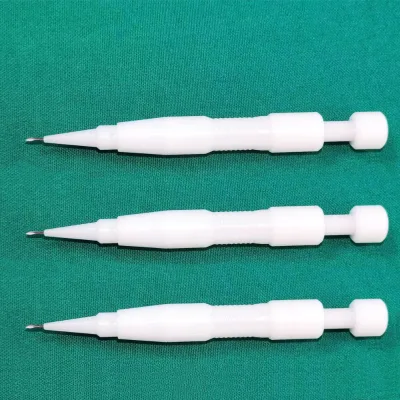


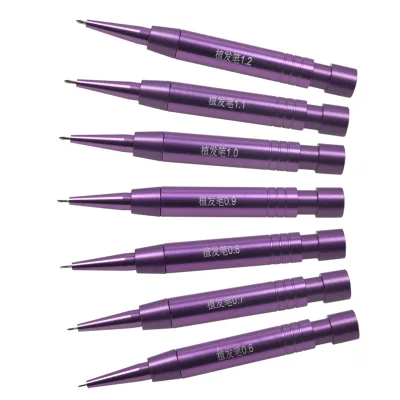

OEM Stainless Steel Puncture Needle Hair Transplant Needle Hair Transplant
$0.30 - $0.80
MOQ: 500 pieces


Comprehensive Sourcing Guide
Medical Use Hair Transplant Pin Sourcing Guide
Procurement professionals must first distinguish between the mechanical components and the consumable needles within the hair transplant pen ecosystem. The observed market data indicates a clear bifurcation where some units are constructed from medical-grade stainless steel while others utilize plastic housings, directly impacting durability and sterilization protocols. Buyers should verify the specific material composition of the pen body against their surgical requirements, as the choice between stainless steel and plastic dictates the instrument's classification and reusability potential in a clinical setting.
The functional scope extends beyond the pen itself to include the hollow needle and surgical needle core, which are critical for the one-step follicle implantation process. Listings confirm that these instruments are designed for use in hair transplant clinics and surgical rooms, often categorized as Class I or Class II medical devices depending on the specific configuration. Sourcing strategies must account for the fact that some models are sterile and individually packed, while others may require separate sterilization, necessitating a clear definition of the intended application environment before placing any order.
Product Scope and Observed Listing Signals
Buyers should analyze the observed listing signals to understand the variability in product attributes, particularly regarding color and size specifications. The market data reveals that available units come in red, blue, and white, with size specifications ranging from 0.8mm to 1.2mm, which corresponds to different follicle sizes. Procurement teams must ensure that the selected model number aligns with the specific surgical needs of their facility, as the available models include fixed sizes like 0.8mm and 1.0mm as well as customizable options based on specific drawings.
Commercial signals also highlight significant variations in packaging and unit configuration that affect logistics and inventory management. Some suppliers offer bulk packaging of 100 pieces per box or 2000 pieces per carton, while others provide individually packed units suitable for single-use protocols. The observed selling units range from single items to large bulk orders, and the single package dimensions vary between 15x5x5 cm and 15x10x8 cm. Buyers must calculate their storage capacity and shipping costs based on these specific packing configurations to avoid unexpected logistical bottlenecks.
Technical Specifications to Verify
Technical verification must begin with the instrument classification and the specific mechanical design of the implantation tool. The data indicates that products are classified as either Class I or Class II, which determines the regulatory pathway and the level of scrutiny required for clinical use. Procurement teams should explicitly request the instrument classification certificate for each batch, as the distinction between these classes affects the legal compliance and safety protocols required within the operating room.
The physical specifications of the pen, including the hub material and the needle core, require rigorous validation against surgical standards. While some listings specify a plastic hub, others describe a hollow needle and surgical needle core assembly that facilitates the one-step implantation process. Buyers must confirm the exact model number, such as FHTP-5 or the 0.6-1.2mm range, and verify that the power source is manual as indicated in the product attributes. Ensuring the correct model matches the surgical technique is essential for maintaining procedural consistency and patient safety.
Compliance and Safety Documentation
Safety documentation is paramount when sourcing medical instruments, and buyers must verify the presence of valid quality certifications such as CE. The observed data confirms that some products carry CE certification, which is a critical baseline for market entry in many regions. Procurement teams should demand current certification documents for every supplier, ensuring that the listed safety standards are not merely marketing claims but are backed by valid, up-to-date regulatory approvals for the specific model being purchased.
Sterility and shelf life are additional critical compliance factors that directly impact patient safety and inventory planning. The product attributes indicate that some units are supplied as sterile with a shelf life of six months, while others may have different storage requirements. Buyers must verify the expiration dates on the packaging and confirm that the sterilization method, whether Eo or another process, meets the specific infection control protocols of their medical facility. Failure to validate these safety parameters can lead to significant liability issues and compromised surgical outcomes.
Cost Drivers and Commercial Terms
Cost drivers in this category are heavily influenced by the material composition and the level of customization required for the instrument. Units made from medical-grade stainless steel often command different pricing structures compared to those with plastic hubs, and the ability to customize the model according to specific drawings can introduce variable costs. Procurement teams should analyze the total cost of ownership, including the price per unit and the impact of customization fees, to determine the most economical solution for their specific surgical volume.
Commercial terms such as Minimum Order Quantity (MOQ) and lead times vary significantly across the observed market data. The MOQ range spans from a single piece to 300,000 units, offering flexibility for both small clinics and large distributors. Buyers must negotiate terms that align with their cash flow and inventory turnover rates, ensuring that the supplier can meet the required delivery schedule without compromising on quality. Understanding the relationship between order volume and unit price is essential for optimizing the procurement budget.
Supplier Qualification and Quality Control
Supplier qualification requires a thorough assessment of the manufacturer's origin and their adherence to quality standards. The data shows origins in Shanghai, Zhejiang, and Sichuan, China, indicating a concentrated manufacturing base in the region. Buyers should verify the specific production location and assess the supplier's track record in producing surgical instruments, ensuring that their facilities meet the necessary hygiene and manufacturing standards for medical device production.
Quality control processes must be validated through the supplier's ability to provide consistent product attributes and reliable after-sales support. The observed listings mention online technical support and a high-quality standard, which are positive indicators of supplier reliability. Procurement teams should establish clear communication channels for technical support and request detailed quality control reports to ensure that every batch of hair transplant pens meets the specified dimensions and material requirements before shipment.
Long-Term Procurement Checks
Long-term procurement success depends on establishing a robust framework for ongoing quality assurance and supplier performance monitoring. Buyers should implement regular audits of the supplier's production processes to ensure that the instrument classification and material specifications remain consistent over time. This proactive approach helps mitigate the risk of supply chain disruptions and ensures that the medical devices continue to meet the evolving safety standards of the healthcare industry.
Sustainability and the availability of replacement parts are also critical considerations for long-term procurement strategies. The product attributes indicate that some units are designed for single use, while others may be reusable, affecting the long-term cost and waste management profile. Procurement teams should evaluate the supplier's commitment to providing consistent after-sales service and technical support, ensuring that the supply chain remains resilient and capable of meeting future surgical demands without interruption.
FAQs
What is the material composition of the Medical Use Hair Transplant Pin?
The Medical Use Hair Transplant Pin is constructed from medical grade stainless steel for the needle components and plastic for the hub. This combination ensures durability and precision during the one-step hair follicle implantation process. The hollow needle and surgical needle core are designed for accurate tissue penetration, while the plastic hub provides a secure grip for the operator during clinical procedures.
Can the Medical Use Hair Transplant Pin be customized for specific needs?
Yes, customization is available for the Medical Use Hair Transplant Pin. Buyers can request specific models such as 0.8mm or 1.0mm sizes based on their surgical requirements. The product supports OEM branding and allows for drawing-based customization. This flexibility ensures that clinics and hospitals can tailor the instrument to their preferred surgical protocols and branding standards.
What are the available specifications for the Medical Use Hair Transplant Pin?
The Medical Use Hair Transplant Pin is available in standard specifications of 0.8mm and 1.0mm. These sizes correspond to the needle diameter used for hair follicle extraction and implantation. The product model numbers often reflect these dimensions, ensuring that surgeons can select the appropriate tool for their specific procedure. Custom sizes may also be arranged through OEM channels.
How is the Medical Use Hair Transplant Pin sterilized and packaged?
The Medical Use Hair Transplant Pin is sterilized using Ethylene Oxide (EO) to ensure it is sterile for immediate clinical use. It is individually packed to maintain sterility until opening. Bulk packaging options include 100 pieces per box or 2000 pieces per carton, with additional polybag, carton, or wooden case options available for larger shipments to protect the instruments during transit.
What is the minimum order quantity for the Medical Use Hair Transplant Pin?
The minimum order quantity for the Medical Use Hair Transplant Pin starts at 1 piece, allowing for small trial orders. However, bulk pricing and standard shipping terms often apply to larger orders, with observed MOQs ranging up to 300,000 pieces depending on the supplier and customization level. Buyers should confirm specific MOQ requirements with the manufacturer for their desired quantity and specifications.
Where are the medical use hair transplant pins manufactured?
The medical use hair transplant pins are manufactured in China, with specific origins listed in Shanghai, Zhejiang, and Sichuan provinces. These regions are known for their medical instrument production capabilities. Buyers can source these products from various suppliers located in these areas, ensuring access to a robust supply chain for high-quality surgical instruments used in hair transplant procedures.