Source Modern Acrylic Storage Unit for Retail, Home, and Office
Find 30 Modern Acrylic Storage Unit options tailored for retail displays, home organization, and office use. Compare customizable sizes, glossy finishes, and durable materials to select the right solution for your business needs.
Key considerations
Products List




Comprehensive Sourcing Guide
Modern Acrylic Storage Unit Sourcing Guide
Sourcing modern acrylic storage units requires a disciplined approach to balancing aesthetic clarity with functional durability. These products are frequently utilized in retail environments, exhibition spaces, and high-end home organization systems where visual appeal and material integrity are paramount. Buyers must navigate a market characterized by significant variation in manufacturing quality, particularly regarding the raw material source and the precision of edge finishing. The following guide outlines the critical verification steps necessary to secure reliable supply chains for these specialized storage solutions.
The procurement process begins with a clear definition of the end-use environment, as this dictates the required physical properties of the acrylic. Whether intended for indoor display in specialty stores or for residential use, the unit must withstand specific handling conditions and lighting environments. Acrylic’s high light transmittance makes it ideal for showcasing products, but it also means that surface imperfections, scratches, or internal stresses are more visible than in opaque materials. Consequently, buyers must prioritize suppliers who demonstrate rigorous quality control during the fabrication and polishing stages to ensure a flawless final appearance.
Product Scope and Observed Listing Signals
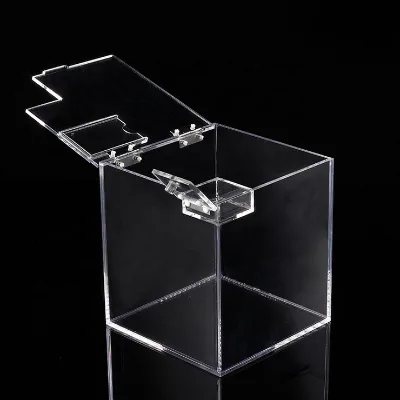
The current market for modern acrylic storage units presents a diverse range of configurations, primarily categorized by shape, layering, and customization options. Observed listings indicate a strong preference for rectangular, single-layer designs that emphasize clean lines and minimalist aesthetics. These units are often marketed under specific model numbers, such as 8001, 8003, 8006, and BOX-20260706, suggesting a standardized production framework that allows for modular scaling. The "modern" style is consistently associated with glossy finishes and unfolded, rigid structures that provide stable storage without the need for complex assembly mechanisms.
Customization is a dominant feature in this category, with suppliers frequently offering tailored dimensions, colors, and branding options. Buyers should note that while many listings advertise "customized" thickness and color, the base material remains consistent as brand-new acrylic, ensuring high light transmittance and structural integrity. The availability of OEM/ODM services indicates that manufacturers are equipped to handle bespoke orders, including silk-screening, UV printing, or engraving for logos. However, the extent of this customization often correlates with minimum order quantities, which can range from small trial batches to larger industrial orders, requiring careful alignment with inventory forecasts.
Technical Specifications to Verify
Dimensional accuracy is a critical technical parameter when sourcing acrylic storage units, as even minor deviations can affect fit and stability in retail or home settings. Buyers must verify the dimensional tolerance, which in observed listings is specified as less than ±1cm. This tolerance level is acceptable for general storage applications but may require tighter controls for precision display cases. Additionally, the standard dimensions observed, such as 4016cm, 5016cm, and 70*16cm, provide a baseline for comparison, but buyers should confirm whether these are fixed stock sizes or starting points for custom fabrication.
The physical properties of the acrylic itself must be scrutinized to ensure long-term performance. Key attributes include high light transmittance, which enhances product visibility, and the use of brand-new raw materials to prevent yellowing or brittleness over time. The thickness of the material is often customizable, but buyers should request specific millimeter measurements to ensure adequate rigidity for the intended load. Furthermore, the edge finishing technique, often described as glossy, should be inspected for smoothness and clarity, as poor edge polishing can lead to stress cracks or an unprofessional appearance.
Compliance and Safety Documentation
While specific certification statuses are not universally disclosed in all listings, buyers must ensure that the acrylic material complies with relevant safety and environmental standards for the target market. The observed feature of being "eco-friendly" suggests that some manufacturers may utilize recyclable materials or non-toxic production processes, but this claim requires verification through official documentation. Buyers should request Material Safety Data Sheets (MSDS) to confirm that the acrylic does not release harmful volatile organic compounds (VOCs) and meets local regulations for indoor use.
Safety considerations also extend to the structural integrity of the storage units, particularly if they are intended for heavy items or high-traffic areas. Buyers should inquire about impact resistance and load-bearing capacity, especially since the units are described as "not antitheft," implying they are designed for display rather than secure storage. Ensuring that the units are stable and unlikely to tip over is crucial for preventing accidents in retail or home environments. Documentation regarding fire retardancy may also be necessary, depending on local building codes and insurance requirements for commercial spaces.
Cost Drivers and Commercial Terms
The cost of modern acrylic storage units is influenced by several factors, including material quality, customization complexity, and order volume. Observed price ranges vary significantly, reflecting differences in thickness, size, and finishing quality. Buyers should be aware that lower prices may correlate with thinner materials or less precise edge finishing, which can compromise durability and aesthetics. The minimum order quantity (MOQ) is another critical cost driver, with some suppliers accepting small quantities for sampling while others require larger orders to achieve competitive pricing.
Commercial terms such as production lead time and shipping methods also impact the total cost of ownership. Typical production lead times range from 3-15 days for samples to 25-40 days for bulk production, which must be factored into inventory planning. Shipping options, including ocean, air, and express delivery, offer flexibility but come with varying costs and transit times. Buyers should negotiate clear terms regarding packaging, which often includes plastic film, foam, and cartons to prevent damage during transit, as acrylic is susceptible to scratching and cracking if not protected adequately.
Supplier Qualification and Quality Control
Selecting a reliable supplier requires a thorough evaluation of their manufacturing capabilities and quality control processes. Buyers should prioritize suppliers located in established manufacturing hubs, such as Zhejiang and Guangdong in China, where there is a concentration of expertise in acrylic fabrication. Verification of the supplier’s ability to handle OEM/ODM requests and their track record with similar products can provide insight into their flexibility and reliability. Requesting samples is a crucial step to assess the quality of the material, edge finishing, and overall construction before committing to a larger order.
Quality control measures should be explicitly defined in the purchase agreement, including inspection points for dimensional accuracy, surface finish, and structural integrity. Buyers should inquire about the supplier’s internal testing procedures, such as checking for internal stresses or surface defects, and request evidence of their quality management systems. While ISO 9001 is mentioned in background information, buyers should verify if the supplier holds this certification or equivalent standards to ensure consistent quality across production batches. Establishing a clear communication channel for addressing defects or discrepancies is essential for maintaining a productive supplier relationship.
Long-Term Procurement Checks
Sourcing modern acrylic storage units is not a one-time transaction but an ongoing process that requires continuous monitoring of supplier performance and market trends. Buyers should regularly review product quality, delivery times, and customer feedback to identify any emerging issues or areas for improvement. Maintaining a diversified supplier base can mitigate risks associated with supply chain disruptions, while fostering strong relationships with key suppliers can lead to better pricing and priority service. Staying informed about new materials, finishes, and design trends can also help buyers remain competitive in their respective markets.
Long-term success in this category depends on the ability to adapt to changing customer preferences and regulatory requirements. Buyers should periodically reassess the environmental impact of their sourcing decisions, exploring options for more sustainable materials or packaging solutions. Additionally, monitoring the performance of existing inventory in the field can provide valuable insights into durability and customer satisfaction, informing future purchasing decisions. By maintaining a proactive approach to supplier management and quality assurance, buyers can ensure a steady supply of high-quality modern acrylic storage units that meet their business objectives.
FAQs
What customization options are available for the acrylic storage unit?
Customization is available for color, logo, and size. Buyers can request silk-screening, UV printing, or engraving for logos. The product supports mixed bulk orders and allows for customized dimensions to fit specific needs.
How is the Modern Acrylic Storage Unit packed for shipping?
The unit is packed using plastic film, foam, and cartons for safety. Some options include standard export cartons or packaging as the customer requests. Foam liners are also used for shock absorption during transit.
Can I order a small quantity of the acrylic storage unit?
Small quantity orders are accepted for this product. While some listings show an MOQ of 100, the general attribute indicates that small quantities are permissible. Buyers should verify specific model requirements before placing an order.
What is the production lead time for the acrylic storage unit?
Production lead time is 25 to 40 days for bulk orders. Samples can be produced within 3 to 15 days. This timeline applies to the manufacturing process before the product is ready for ocean, air, or express shipment.
Which locations supply the Modern Acrylic Storage Unit?
Suppliers are located in Zhejiang and Guangdong, China. The product origin is listed as China generally. Buyers can source from these regions where manufacturers produce the acrylic storage units with modern styling.
What material is used to make the acrylic storage unit?
The unit is made from brand-new acrylic material. It features high light transmittance and a glossy finish. The material is durable and eco-friendly, suitable for indoor display and storage applications.