Source Modern Black Lacquer Kitchen Cabinets for Apartments, Hotels, and Residential Houses
Compare 30 listings of Modern Black Lacquer Kitchen Cabinets featuring customizable layouts, quartz or marble countertops, and hardware from brands like Blum or DTC. Buyers can evaluate options for apartments, residential houses, and hotels with production cycles around 30 days.
Key considerations
Products List


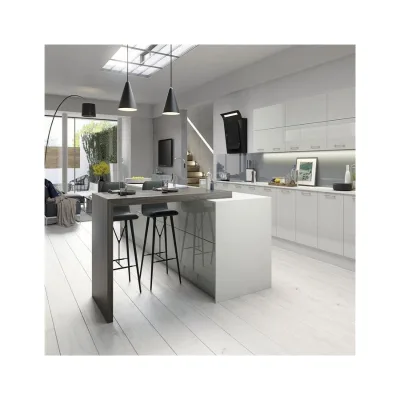


Contemporary Kitchen Cabinets Building Cabinets Dark Grey Kitchen Cabinets
$178.00 - $220.00
MOQ: 5 Meters


Kitchen Cabinets Design Lacquer Kitchen Cabinet Wood Modern Designs
$110.00 - $188.00
MOQ: 49 Square Meters


Complete Black Color Kitchen Design Modern Cupboards Kitchen Cabinet
$48.00 - $149.00
MOQ: 5 Square Meters


High End Custom Kitchen Cabinet Black Wooden Modern Kitchen Cabinet
$48.00 - $149.00
MOQ: 5 Square Meters


Comprehensive Sourcing Guide
Strategic Sourcing Guide for Modern Black Lacquer Kitchen Cabinets
The global B2B market for modern kitchen cabinetry has seen a significant shift toward high-gloss finishes and minimalist aesthetics, with black lacquer emerging as a dominant style for contemporary residential and hospitality projects. For procurement professionals, sourcing these units requires a nuanced understanding of material science, surface treatment protocols, and supply chain logistics. The specific request for "Modern Black Lacquer Kitchen Cabinets" aligns with observed market trends where customization and sleek visual profiles are paramount. This guide synthesizes available product attributes and industry standards to provide a structured framework for evaluating suppliers and ensuring product quality without relying on unverified claims.
Technical Specifications and Material Composition
The foundation of a high-quality kitchen cabinet lies in its material composition and dimensional accuracy. In the context of modern black lacquer finishes, the substrate material is critical for achieving a smooth, defect-free surface. Available data indicates that suppliers frequently utilize Particleboard and MDF (Medium Density Fiberboard) as primary door materials. These substrates are preferred for their density and ability to hold a precise shape, which is essential for the "L Style" and other geometric configurations often requested in modern designs. For the carcase, observations suggest a mix of Solid Wood and Plywood options. While Solid Wood offers structural integrity, Plywood provides superior resistance to moisture and warping, a crucial factor for kitchen environments.
The countertop material is another defining specification. The market data points to Quartz Stone, Marble, and Granite as standard options. Quartz is particularly relevant for modern kitchens due to its non-porous nature and consistency in color, which complements the high-gloss black finish of the cabinet doors. The dimensions of these units are generally customizable, with specific base cabinet sizes noted as D550mm by H680mm, though buyers must verify if these measurements align with local building codes or specific architectural drawings. The "prod_standard" field indicates that while some units adhere to specific dimensions like 400cm500cm600cm, the prevailing trend is toward "Customized Specification" based on CAD renderings. This flexibility allows for tailored solutions for One Line, L-Shaped, U-Shaped, and Island layouts, ensuring the cabinetry fits the unique geometry of the application scenario, whether it be an apartment, residential house, or hotel.
Surface Treatment and Finish Quality
Achieving the "Modern" and "Classic" features associated with black lacquer cabinets depends heavily on the surface treatment process. The observed production data lists Melamine, Molding, PET, and Solid Paint Finish as the primary methods. For a true lacquer look, the Solid Paint Finish is often the most critical, as it allows for the deep, reflective gloss characteristic of black lacquer. The "Door Panel Surface Treatment" attribute suggests that the finish is applied to the door panels, which are often the visual focal point of the kitchen.
The edge treatment is equally important for durability and aesthetics. The data specifies "Edge Eased Edge Radius Beveled Edge" as a common attribute. This technique softens the sharp corners of the countertop and cabinet edges, preventing chipping and providing a more refined tactile experience. The color specification explicitly mentions "Black" and "White," confirming that black is a standard offering. However, buyers must verify the specific shade of black, as lacquer finishes can vary from matte-black to high-gloss mirror finishes. The "Fixed" and "Unfixed" attributes indicate that some units may be designed as permanent installations while others might be modular. This distinction is vital for the installation phase, particularly in renovation projects where fixed units offer a seamless look, while unfixed units provide flexibility for future layout changes.
Compliance, Certification, and Safety Standards
In the B2B procurement of kitchen furniture, compliance with international safety and environmental standards is non-negotiable. The observed product attributes list CE, ISO, RoHS, and CCC certifications. These certifications serve as indicators that the manufacturer adheres to specific regulatory frameworks regarding electrical safety (CE), management systems (ISO), restriction of hazardous substances (RoHS), and Chinese Compulsory Certification (CCC). The presence of these certifications suggests that the supplier operates with a level of quality assurance that meets export requirements.
However, buyers should treat these certifications as observations rather than absolute guarantees for every single SKU. The "prod_standard" field notes "Customized Specification," implying that while the factory may hold general certifications, specific custom orders might require additional verification. For instance, the "ISOColor:Black" attribute suggests a specific color standard, but buyers must confirm if this aligns with international color codes like RAL or Pantone for large-scale projects where color consistency across multiple batches is required. Furthermore, the "Hardware" attribute lists brands such as Higold, DTC, and Blum. These are recognized industry names, but procurement teams must verify that the specific hardware components in the delivered units match the ordered specifications, as counterfeit or sub-standard fittings can compromise the longevity of the cabinetry.
Cost Drivers and Pricing Dynamics
The pricing structure for Modern Black Lacquer Kitchen Cabinets is influenced by several variables, including material selection, customization level, and hardware specifications. The observed price range in the market spans from 34 to 3800 USD, a wide variance that reflects the difference between basic modular units and fully customized, high-end installations. The lower end of the spectrum likely corresponds to standard sizes with basic hardware and simpler finishes, while the upper end encompasses custom dimensions, premium materials like solid wood carcases, and high-end hardware from brands like Blum.
The "MOQ" (Minimum Order Quantity) range of 1 to 100 units indicates flexibility in ordering. Suppliers offering an MOQ of 1 are likely catering to small-scale renovations or sample orders, whereas those requiring 100 units are targeting bulk commercial projects. The "Production Cycle Time" is noted as 30 days, which is a standard lead time for custom cabinetry. However, this timeline can be extended if the order involves complex surface treatments like solid paint finishes or if the hardware is sourced from specialized suppliers. Buyers should also consider the "prod_packing" options, which include Paper Shell, Wooden Box, Plywood Package, and Wood Crate. The choice of packaging directly impacts shipping costs and the risk of damage during transit, particularly for fragile high-gloss surfaces.
Supplier Evaluation and Application Scenarios
Evaluating a supplier for modern black lacquer cabinets requires a focus on their capability to handle customization and their track record in specific application scenarios. The data indicates that these cabinets are suitable for Apartments, Residential Houses, and Hotels. This versatility suggests that the suppliers have experience with both high-volume residential projects and the rigorous demands of the hospitality industry. The "Service" attribute highlights "Online Measurement Guidance, Consultation, and Inspection," which is a critical differentiator. For custom projects, the ability to provide accurate CAD renderings and online measurement support reduces the risk of installation errors.
When evaluating potential suppliers, buyers should prioritize those who demonstrate a clear understanding of the "Layout Type" requirements, such as Island or Two Line configurations. The "Composition Module" list, including Hanging Cabinets, Floor Cabinets, and High Cabinets, shows that suppliers offer a complete system rather than just individual units. This modular approach ensures that the black lacquer finish is consistent across all components. Additionally, the "Storage System Selectable" attribute, which includes Pot Racks, Baskets, and specialized organizers, indicates that the supplier considers the functional aspect of the kitchen. A supplier that offers integrated storage solutions adds value beyond the aesthetic appeal of the black lacquer finish.
Quality Control and Long-Term Procurement Considerations
Quality control in the production of black lacquer cabinets must address the specific challenges of high-gloss finishes, such as fingerprint visibility and surface scratching. The "Drawer Guide Rail Kind" is listed as "Path Rail" or "Hidden Drawer," which are mechanisms that ensure smooth operation and prevent dust accumulation. The "Kickboard" specification, described as "Aluminum Panel with Water-Proof Strips/Customized," highlights the importance of moisture resistance, a common failure point in kitchen environments. Buyers should verify that the water-proof strips are securely attached and that the aluminum panels are corrosion-resistant.
Long-term procurement considerations include the availability of replacement parts and the durability of the finish. The "Hardware Fittings" attribute mentions "Chinese Brand/Customized," which suggests that while some suppliers use domestic brands, others offer customization. For long-term projects, it is advisable to specify well-known hardware brands to ensure availability of spare parts. The "Advantage" attributes, such as "Customizable" and "Trendy," suggest that the products are designed to meet evolving design trends. However, buyers must balance trendiness with timelessness to ensure the kitchen remains functional and aesthetically pleasing for years. The "Condition" is listed as "New," which is standard, but buyers should request samples to verify the actual condition and finish quality before placing large orders.
Conclusion
Sourcing Modern Black Lacquer Kitchen Cabinets involves a careful balance of aesthetic requirements, technical specifications, and supply chain reliability. The available data confirms that the market offers a wide range of options, from standard modular units to fully customized solutions with premium hardware and finishes. By focusing on material composition, surface treatment quality, and supplier capabilities, buyers can secure high-quality cabinetry that meets the demands of modern residential and commercial projects. The key to successful procurement lies in verifying certifications, understanding cost drivers, and ensuring that the supplier can deliver on the promise of customization and quality control.
FAQs
What certifications do Modern Black Lacquer Kitchen Cabinets have?
These cabinets typically hold CE, ISO, RoHS, and CCC certifications. Buyers should verify that specific custom orders align with these standards, as the factory may hold general certifications while individual SKUs require separate confirmation for export compliance.
Can I customize the dimensions and layout of these cabinets?
Yes, dimensions are customizable based on CAD renderings and specific drawings. The units support various layout types including One Line, L-Shaped, U-Shaped, and Island configurations to fit apartments, residential houses, or hotel requirements precisely.
Which materials are used for the door panels and countertops?
Door panels are commonly made from Particleboard or MDF to ensure a smooth finish. Countertops are available in Quartz Stone, Marble, or Granite, offering durability and a modern aesthetic that complements the black lacquer surface treatment.
How long is the production cycle time for custom orders?
The standard production cycle time is 30 days for custom specifications. This timeline may vary depending on the complexity of the surface treatment, such as solid paint finishes, and the specific hardware components selected for the order.
What hardware brands are available for these kitchen cabinets?
Hardware options include recognized brands like Higold, DTC, and Blum. Buyers must verify that the delivered units match the ordered specifications, as some suppliers may offer Chinese brands or customized fittings alongside these premium names.
How are the cabinets packaged for shipping to protect the finish?
Packaging options include Paper Shell, Wooden Box, Plywood Package, and Wood Crate. The choice of packaging impacts shipping costs and protects the high-gloss black lacquer surface from damage during transit, especially for fragile custom units.