Source Modern Dark Gray Fabric Chair for Hotel, Home, Office
Explore 30 listings of the Modern Dark Gray Fabric Chair suitable for hotel, home, and office environments. Buyers can compare models like DC-3 and DC6315, noting variations in armrests, colors, and customization options to find the right commercial furniture solution.
Key considerations
Products List



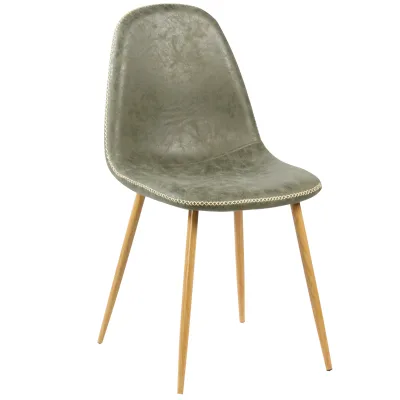
Comprehensive Sourcing Guide
Strategic Sourcing Guide for Modern Dark Gray Fabric Chairs
The global market for commercial and residential seating has seen a significant shift toward modern aesthetics that prioritize both ergonomic functionality and visual neutrality. The specific target of a Modern Dark Gray Fabric Chair represents a high-demand category within the office furniture and hospitality sectors. Dark gray, often referred to as charcoal or slate, offers a versatile color profile that complements contemporary design styles while masking minor wear and tear better than lighter hues. When sourcing these items, buyers must navigate a complex landscape of material specifications, customization options, and logistical constraints. This guide provides a structured approach to evaluating suppliers and products, ensuring that procurement decisions are grounded in verified data and industry best practices rather than marketing assertions.
Technical Specifications and Material Verification
The foundation of any successful procurement strategy lies in the precise definition of technical specifications. For a Modern Dark Gray Fabric Chair, the material composition is the primary differentiator. While the core keyword implies a fabric construction, the specific type of fabric—whether it is a woven polyester, a durable blend, or a specialized commercial-grade textile—must be explicitly defined in the purchase order. Buyers should verify that the fabric meets the intended usage environment, such as high-traffic hotel lobbies or long-hour office workspaces.
In the context of the observed market data, specific attributes such as "Fabric" and "Can Choose" indicate that material selection is often a customizable variable. This flexibility allows buyers to tailor the product to specific budget or durability requirements. However, the presence of varying model numbers, such as DC-3, DC6315, and DC-6020, suggests that the "modern" designation can apply to a wide range of structural designs. Buyers must scrutinize the dimensions provided in the product data, such as the repeated listing of l66w66h85cm, to ensure the chair fits the intended spatial constraints. Furthermore, the distinction between "With Armrest" and "Without Armrest" configurations is critical for ergonomic planning. A chair intended for a meeting room may require armrests for comfort during long discussions, whereas a task chair in a dense open-plan office might benefit from a backless or armless design to maximize space efficiency.
The structural integrity of the chair is equally important. The "Weight Capacity" of 150kgs observed in some listings serves as a benchmark for durability, but buyers should not assume this standard applies universally across all suppliers. It is essential to request load-bearing test results or structural engineering certifications for each specific model. The "Shape" of the chair, whether round, square, or rectangular, impacts both the aesthetic flow of a room and the stacking or storage capabilities. For instance, a square base may offer better stability for a high-back chair, while a round base might be preferred for a lounge setting.
Compliance, Certification, and Safety Standards
When sourcing furniture for commercial applications, compliance with safety and quality standards is non-negotiable. The "Warranty" period of 5 years mentioned in some product data is a strong indicator of a supplier's confidence in their product's longevity, but it does not replace the need for independent certification. Buyers must verify that the chairs meet relevant regional safety standards, such as BIFMA (Business and Institutional Furniture Manufacturers Association) in North America or EN 1335 in Europe. These standards cover stability, durability, and flammability requirements that are critical for liability protection.
The "Standard" attribute listed as "Packing: 2pcs/ctn" provides insight into the packaging protocol, which is often a proxy for the supplier's attention to detail. Proper packaging ensures that the chairs arrive without damage, which is vital for maintaining the "New" condition observed in the market. However, buyers should also inquire about the specific flammability ratings of the fabric and the fire resistance of the foam padding. In many jurisdictions, commercial furniture must pass specific fire codes, and a lack of documentation in this area can lead to significant legal and insurance complications.
Additionally, the "Customized" status of the product suggests that suppliers may offer bespoke solutions. While customization is a valuable feature, it introduces complexity into the compliance process. Custom colors or materials may require re-testing to ensure they still meet the original safety certifications. Buyers should ensure that any custom modifications are documented and that the final product retains its compliance status. The "Brand Name" and "Brand name" variations in the data, such as "hbcx" and "greenfieldworkplace," highlight the importance of verifying the manufacturer's reputation and track record in maintaining these standards over time.
Cost Drivers and Pricing Structure Analysis
Understanding the cost drivers for modern dark gray fabric chairs is essential for budgeting and negotiation. The observed price range of 6.6 to 900 USD indicates a vast disparity in product quality, material grade, and brand positioning. The lower end of this spectrum likely represents basic, mass-produced units with standard fabric and minimal structural reinforcement, while the higher end may include premium materials, advanced ergonomic features, or specialized branding.
Several factors influence the final cost. The "Material" choice is a primary driver; high-performance fabrics with stain resistance or antimicrobial properties will command a higher price than standard polyester blends. The "Shape" and "Design Style," such as "Contemporary" or "Modern," also affect pricing, as complex designs often require more intricate manufacturing processes. The "Volume" of the product, listed as 0.21cbm in some cases, impacts shipping costs, which are a significant component of the total landed cost for international buyers.
The "MOQ" (Minimum Order Quantity) is another critical cost factor. The observed range of 1 to 200 units suggests that some suppliers cater to small businesses or individual buyers, while others focus on large-scale commercial projects. A higher MOQ often results in a lower unit price due to economies of scale, but it requires a larger upfront capital investment. Buyers must balance the need for cost efficiency with their inventory management capabilities. The "Small Orders: Accepted" attribute indicates flexibility, but buyers should be aware that smaller orders may incur higher per-unit costs or additional handling fees.
Typical Applications and Usage Scenarios
The versatility of modern dark gray fabric chairs makes them suitable for a wide array of applications. The "Usage" categories of "Hotel" and "Home" highlight the dual nature of this product category. In the hospitality sector, these chairs are often used in lobbies, conference rooms, and guest suites, where durability and aesthetic appeal are paramount. The "General Use" classification of "Commercial Furniture" further reinforces their suitability for high-traffic environments.
In the office setting, the "Application" of "Home Office" and "Office Furniture" suggests that these chairs are designed to bridge the gap between residential comfort and professional functionality. The "Design Style" of "Contemporary" aligns well with modern office trends that favor clean lines and neutral colors. The "Folded" status of "Unfolded" or "No" indicates that these are likely fixed-frame chairs, which are generally more stable and durable than folding alternatives. This makes them ideal for permanent installations in meeting rooms or executive offices.
The "Rotary" attribute of "Fixed" suggests that some models may not have swivel capabilities, which could be a limiting factor for certain office tasks. Buyers should carefully evaluate whether a swivel mechanism is required for their specific use case. The "Armrest" configuration also plays a role in application suitability; armrests are essential for tasks requiring prolonged sitting, while armless designs are better for collaborative spaces where chairs need to be moved frequently.
Supplier Evaluation and Sourcing Strategy
Selecting the right supplier is a critical step in the sourcing process. The "Place of Origin" and "Prod Origin" data, such as "China" and "Guangdong, China," provide a geographical context for the supply chain. Guangdong is a major manufacturing hub for furniture, offering a wide range of suppliers with varying levels of expertise. However, buyers should not rely solely on location; they must conduct a thorough due diligence process to assess the supplier's capabilities.
Key evaluation criteria include the supplier's production capacity, quality control processes, and ability to meet lead times. The "Delivery Time" of 25-35 days observed in the data is a benchmark that buyers should verify for their specific order. Delays in production can disrupt project timelines, so it is essential to have clear communication channels and contingency plans in place. The "Small Orders: Accepted" attribute suggests that some suppliers are flexible, but buyers should confirm their ability to handle larger orders if the business scales.
The "Customization" availability is another key factor. Suppliers that offer customization can provide tailored solutions that meet specific brand or functional requirements. However, this requires a higher level of collaboration and communication. Buyers should establish a clear specification sheet and ensure that the supplier has the technical expertise to execute the custom design. The "Brand Name" and "Brand name" variations in the data indicate that some suppliers may operate under different brand identities, so buyers should verify the actual manufacturer behind the brand.
Quality Control and Long-Term Procurement Considerations
Ensuring consistent quality is paramount for long-term procurement success. The "Warranty" of 5 years is a strong indicator of quality, but it should be backed by a robust quality control (QC) process. Buyers should request detailed QC reports that cover material testing, structural integrity checks, and finish inspections. The "Packing" standard of "Carton" or "Carton Packing" is a basic requirement, but buyers should also inquire about the specific packaging materials used to protect the chairs during transit.
Long-term procurement considerations include the availability of replacement parts and the supplier's ability to provide ongoing support. The "Model Number" variations, such as DC-3 and DC-6020, suggest that suppliers may have multiple product lines, and buyers should ensure that the specific model they choose has a long-term availability plan. The "Color" options, including "Yellow," "White," and "Grey," highlight the importance of color consistency across batches. Buyers should request color swatches and ensure that the dark gray shade matches the desired aesthetic.
Finally, buyers should consider the environmental impact of their procurement decisions. The "Material" and "Fabric" choices should align with sustainability goals, such as the use of recycled materials or low-VOC finishes. The "Standard" and "Certification" requirements should include environmental compliance where applicable. By prioritizing quality, sustainability, and supplier reliability, buyers can build a resilient supply chain that supports their long-term business objectives.
Comparative Analysis of Key Product Attributes
To facilitate decision-making, the following table summarizes the key attributes observed in the market data, highlighting the variations that buyers must consider during the sourcing process.
| Attribute | Observed Values | Procurement Implication |
|---|---|---|
| Material | Fabric, Can Choose | Verify specific fabric grade and durability for intended use. |
| Shape | Round, Rectangle, Square | Ensure shape matches spatial requirements and aesthetic goals. |
| Color | Yellow, White, Grey | Confirm color consistency and availability of dark gray options. |
| Armrest | With, Without | Select based on ergonomic needs and space constraints. |
| MOQ | 1, 100, 200 | Balance unit cost against inventory requirements and cash flow. |
| Lead Time | 25-35 Days | Plan production schedules and account for potential delays. |
| Warranty | 5 Years | Verify terms and conditions for long-term coverage. |
| Origin | China, Guangdong, Tianjin | Assess logistics costs and supplier reliability by region. |
| Customization | Customized, Non-Customized, Available | Determine if bespoke features are required for the project. |
| Packing | Carton, 2pcs/ctn | Evaluate packaging efficiency and protection during transit. |
This comparative analysis underscores the need for a meticulous approach to sourcing. By carefully evaluating each attribute against specific project requirements, buyers can identify the optimal supplier and product configuration for their Modern Dark Gray Fabric Chair needs. The diversity in the market data reflects the complexity of the industry, but it also offers opportunities for strategic sourcing that balances cost, quality, and functionality.
FAQs
What customization options are available for modern dark gray fabric chairs?
Customization is available for specific models, allowing buyers to select fabric types and colors. Some listings indicate fabric can be chosen, while others offer non-customized options. Buyers must verify if the specific model supports the desired modifications before ordering.
How much is the minimum order quantity for these chairs?
The minimum order quantity ranges from 1 to 200 units depending on the supplier. Some vendors accept small orders, while others require a minimum of 100 pieces per color. This variation affects pricing and inventory planning for different business sizes.
Can these chairs support heavy loads in commercial settings?
Some models feature a weight capacity of 150kgs, suitable for commercial use. This capacity ensures durability in high-traffic environments like hotels and offices. Buyers should confirm the specific weight limit for the selected model to ensure safety compliance.
What is the typical delivery time for these products?
The delivery time is typically between 25 to 35 days from the order date. This lead time applies to standard orders from suppliers in China. Buyers should account for this duration when planning project timelines and inventory replenishment schedules.
Which packing standards are used for shipping these chairs?
Chairs are packed in cartons, with some standards specifying two pieces per carton. This packaging protects the furniture during transit to maintain new condition. Buyers should verify packing details to estimate shipping volume and handling requirements accurately.
Are these chairs suitable for both home and hotel use?
Yes, the chairs are designed for general use in hotels, homes, and offices. Their modern style and durable fabric make them versatile for various environments. This dual suitability allows buyers to source a single product line for multiple locations.