Source modern eco friendly melamine dinnerware for Home Hotel Restaurant
Compare 30 listings of modern eco friendly melamine dinnerware sets available for home, hotel, and restaurant use. Buyers can review customization options, packaging details, and material specifications to find suitable suppliers; compare the available evidence and request quotations based on your requirements.
Key considerations
Products List






Comprehensive Sourcing Guide
Modern Eco Friendly Melamine Dinnerware Sourcing Guide
Buyers evaluating modern eco-friendly melamine dinnerware must first distinguish between products marketed as sustainable and those with verified material composition. The observed market data indicates a split between items labeled as 100% melamine and others containing a blend of 30% melamine, which significantly impacts durability and thermal resistance. Procurement teams should prioritize suppliers who explicitly state the raw material ratio, as this distinction determines whether the product is suitable for high-heat environments or strictly for cold and warm food service.
The term "eco-friendly" in this category often refers to the reusability of the product compared to single-use plastics rather than biodegradability. Listings confirm that these items are non-disposable and designed for long-term use in homes, hotels, and restaurants. However, buyers must verify if the "eco" claim extends to the packaging, as observed options range from Kraft paper boxes to bulk packaging, with some suppliers offering customizable gift packaging that may introduce unnecessary waste if not carefully selected for the specific supply chain needs.
Product Scope and Observed Listing Signals
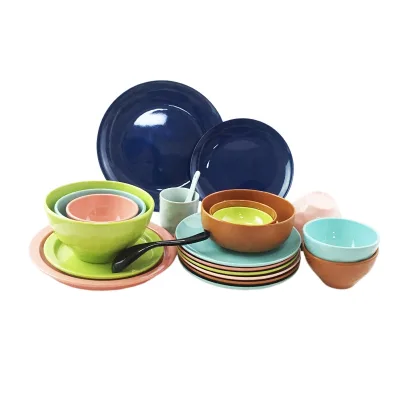
The product scope for melamine dinnerware spans from individual tableware pieces to comprehensive sets designed for specific group sizes. Observed listings reveal a wide variety of configurations, including sets for two people, six people, and larger groups exceeding thirty pieces. This variability requires buyers to clearly define their target usage scenario, whether it is for intimate dining, large-scale hotel banquets, or outdoor events, as the piece count and set composition directly influence the unit cost and logistical handling requirements.
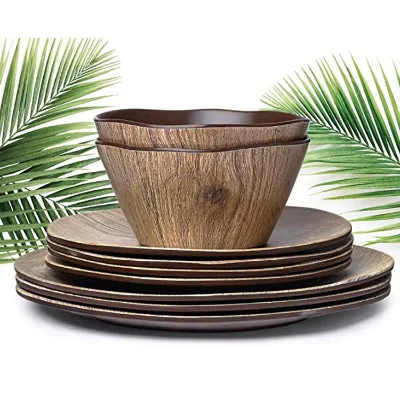
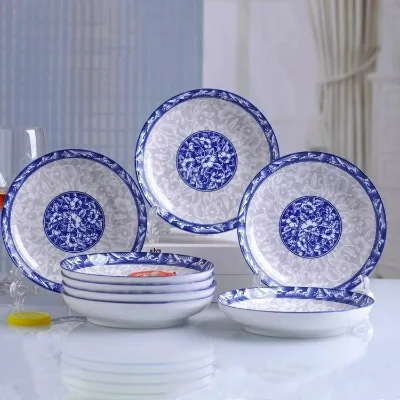
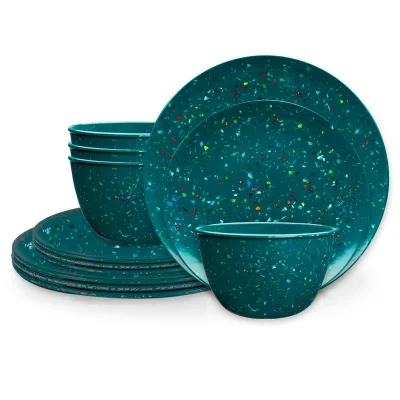
Visual and stylistic signals in the market show a strong preference for contemporary designs with multicolor or unicolor finishes, often featuring wood grain textures to mimic natural materials. The production technique is frequently noted as pigmented, allowing for durable color integration throughout the material rather than just on the surface. Buyers should scrutinize the "customized" attribute, as many suppliers offer pattern customization via CMYK decal processes, but this often comes with higher minimum order quantities and longer lead times compared to standard stock designs.
Technical Specifications to Verify
Technical verification must begin with the model number and standard designation, as observed listings cite specific codes like CSA-114, 4130/4131, and PR Q6 SET alongside generic descriptions. These identifiers are crucial for ensuring that the ordered item matches the exact physical dimensions and weight specifications, such as the observed single package size of 30x30x15 cm and a gross weight of 2.0 kg. Without matching these specific model numbers, buyers risk receiving products with incompatible dimensions that do not fit standard shelving or storage units in their facilities.
Material composition and structural integrity are the next critical technical parameters to validate against the supplier's data sheet. While some products claim to be 100% melamine, others list a blend of 30% melamine, which affects the product's resistance to cracking and thermal shock. Buyers should request detailed specifications on the "A5 melamine" standard or equivalent to ensure the material meets the necessary hardness and impact resistance for the intended application, whether it is for heavy-duty restaurant service or lighter home use.
Compliance and Safety Documentation
Safety compliance is non-negotiable for food-contact products, and the observed market data highlights FDA and CE/EU certifications as key indicators of regulatory adherence. Buyers must request current, valid certificates for these specific standards to ensure the melamine dinnerware is safe for food contact and meets the import requirements of their target markets. Relying on a supplier's general claim of compliance without seeing the actual documentation can lead to customs delays or product recalls if the materials do not meet the specific migration limits for formaldehyde and melamine.
Beyond basic food safety, the documentation should also address the environmental claims associated with the "eco-friendly" label. While the products are non-disposable, buyers should verify if the manufacturing process adheres to any specific environmental management standards or if the "sustainable" claim is supported by third-party audits. The presence of a "100% melamine" standard does not automatically guarantee low environmental impact in production, so procurement teams should ask for transparency regarding the sourcing of raw materials and the waste management practices of the manufacturing facility.
Cost Drivers and Commercial Terms
Cost structures in the melamine dinnerware market are heavily influenced by the minimum order quantity (MOQ) and the level of customization required. Observed data shows MOQs ranging from a single piece for samples to 3000 pieces per design for full dinner sets, with some suppliers requiring 5000 pieces for specific configurations. Buyers must align their order volume with these thresholds to avoid prohibitive unit costs, as smaller orders often incur higher per-piece pricing due to the setup costs for molding and printing processes.
Pricing is also driven by the complexity of the packaging and the inclusion of additional accessories like cutlery kits. Listings indicate various packaging options from simple bulk boxes to elaborate gift packaging, each adding a distinct cost layer to the final unit price. Furthermore, the inclusion of specific features such as custom designs or specific color patterns can increase the price, so buyers should clearly define their packaging and design requirements early to obtain accurate quotes that reflect the true total cost of ownership.
Supplier Qualification and Quality Control
Supplier qualification should focus on verifying their production capacity and consistency, as observed supply abilities range from 1,000,000 pieces per month to more limited outputs. Buyers need to assess whether the supplier can consistently meet their volume requirements without compromising on quality, especially when dealing with custom designs that require precise color matching and decal application. A supplier with a high supply ability but a lack of quality control measures may deliver inconsistent batches, leading to high rejection rates and operational disruptions.
Quality control protocols must be established to verify the physical attributes of the product before shipment. Buyers should implement a sampling strategy that checks for defects in the pigmentation, the integrity of the "wood grain" texture, and the accuracy of the piece count in each set. Given that the sample time is typically 7-10 days, this period should be utilized to rigorously test the product for durability and safety, ensuring that the final production run matches the approved sample in terms of weight, dimensions, and material composition.
Long-Term Procurement Checks
Long-term procurement success depends on maintaining a stable relationship with suppliers who can adapt to changing market demands and regulatory updates. Buyers should establish a schedule for periodic re-verification of certifications, particularly FDA and CE/EU standards, as these can expire or change over time. Regular audits of the supplier's production line can also help ensure that the "100% melamine" or blended material claims remain consistent, preventing any drift in product quality that could affect the brand reputation of the buyer.
Finally, buyers must monitor the supply chain for potential disruptions in raw material availability, which can impact the consistency of the melamine resin used. Since the product origin is listed as Shandong or Fujian, China, geopolitical factors or logistics issues in these regions could affect lead times and costs. Establishing a diversified supplier base or maintaining a strategic inventory buffer can mitigate these risks, ensuring a continuous supply of high-quality, eco-friendly melamine dinnerware for the buyer's operations.
FAQs
What certifications do these melamine dinnerware sets hold?
These products hold FDA and CE/EU certifications for safety compliance. The material is confirmed as 100% melamine or a blend, ensuring durability for home, hotel, and restaurant usage without compromising on food safety standards required for international trade.
Can I request custom designs for these dinnerware sets?
Yes, customization is available for patterns, colors, and packaging details. Buyers can specify CMYK decals, choose from multicolor or unicolor options, and select packaging like Kraft paper boxes or gift packaging to match their specific brand requirements and market needs.
What is the minimum order quantity for dinnerware sets?
The minimum order quantity varies by design, typically starting at 3000 pieces for dinner sets. Some specific models may have lower thresholds, but bulk orders generally require meeting the 3000-piece threshold per design to ensure cost-effective production and shipping logistics.
How long does it take to receive samples?
Sample preparation typically requires 7 to 10 days for completion. This timeframe allows for the creation of customized designs or standard models, ensuring that buyers can verify quality, material composition, and packaging details before committing to larger production runs.
Which locations manufacture these melamine tableware products?
Manufacturing originates from regions including Shandong and Fujian in China. These locations provide the necessary industrial capacity to produce high volumes, with a supply ability reaching up to one million pieces per month to meet diverse global demand requirements.
What packaging options are available for these dinnerware sets?
Packaging includes Kraft paper boxes, inner boxes with master boxes, and gift packaging. Options also range from bulk boxes to window boxes and PP bags, allowing buyers to select solutions that protect the product while aligning with their retail presentation strategies.