Source Modular Cleanroom for Research, Pharma, and Food
Find 30 Modular Cleanroom units designed for research facilities, pharmaceutical production, and food processing. Buyers can compare specifications including ISO grades, HVAC scopes, and customization options from verified Chinese manufacturers.
Key considerations
Products List


Advanced Modular Cleanroom System for Superior Contamination Management
$10.00 - $50.00
MOQ: 1 Square Meters

Reliable Cleanroom Solutions with Innovative Modular Design Features
$10.00 - $50.00
MOQ: 1 Square Meters

Mobile and Relocatable Modular Cleanrooms for Temporary Project Needs
$20.00 - $50.00
MOQ: 1 Square Meters

Premium Modular Cleanroom System for Superior Contamination Control
$10.00 - $50.00
MOQ: 1 Square Meters

Advanced Modular Cleanroom Solutions for Optimal Production Efficiency
$10.00 - $50.00
MOQ: 1 Square Meters



Comprehensive Sourcing Guide
Strategic Sourcing Guide for Modular Cleanroom Systems
Understanding Modular Cleanroom Architecture and Core Specifications
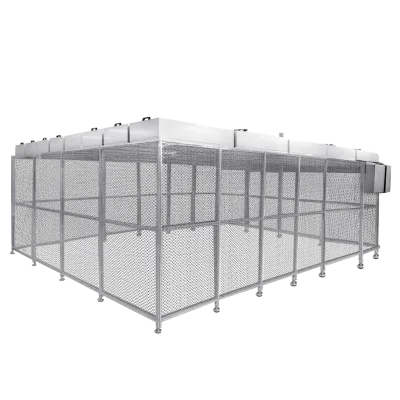
When evaluating Modular Cleanroom systems, buyers must first distinguish between the structural philosophy and the specific technical attributes required for their operational environment. The core keyword "Modular Cleanroom" implies a prefabricated system designed for rapid deployment and scalability, often utilizing a frame-and-panel construction method. Based on observed market data, these systems frequently feature multi-layer construction, which is critical for maintaining structural integrity and thermal efficiency. The physical dimensions of these units can vary significantly, with some configurations observed at standard export sizes of 140x300x250 cm, while others are custom-engineered to fit specific facility footprints, such as 10,000 by 22,000 mm.
A fundamental aspect of the modular design is the integration of essential building services. The supply scope typically encompasses a comprehensive range of HVAC components, including Air Handling Units (AHU), chillers, dehumidifiers, and extensive ducting networks. Electrical supply is equally critical, covering lighting, switches, cables, and wiring infrastructure. The control systems often rely on Programmable Logic Controllers (PLC) paired with sensors for precise monitoring of humidity and temperature. In terms of environmental control, the design humidity range is frequently specified between 30% and 60%, a standard requirement for many industrial and research applications. The power supply requirements are versatile, accommodating 110V, 220V, and 380V inputs to suit different regional electrical standards.
The operational principle of these systems often centers on electronic cleaning mechanisms and air filtration, designed to isolate a cleaner area from the surrounding environment. While some units are automated with touch control interfaces, others may operate on manual principles depending on the specific application needs. The noise levels generated by these systems are typically observed in the range of 60 to 70 decibels, a factor that must be considered for worker comfort in adjacent areas. The weight of these units varies considerably based on the scale and materials used, with single items ranging from 400 kg to 4,000 kg, necessitating careful logistical planning for transport and installation.
Compliance, Certification, and Cleanliness Standards
Navigating the regulatory landscape is a primary concern for procurement teams. While specific certification statuses can vary by manufacturer, the market commonly references ISO standards as a benchmark for cleanliness. Observed data indicates that cleanliness classes can range from ISO 5 to ISO 8, allowing buyers to select systems that match their specific contamination control requirements. It is important to note that while ISO 14644 is a widely recognized standard for cleanroom classification, buyers should verify the exact certification status of any supplier, as not all listed products may carry formal ISO 14644 certification or specific regional marks like CE or UR.
Certification checks should extend beyond cleanliness to include broader safety and quality management systems. Some suppliers may hold ISOCE certifications, which indicate adherence to specific international quality standards. However, buyers must treat these as observations rather than universal guarantees. The standard for the product itself is often described as "customized," meaning that compliance is tailored to the specific project requirements rather than a one-size-fits-all approach. When evaluating a supplier, procurement teams should request valid, up-to-date documentation for any claimed certifications, ensuring they align with the regulatory environment of the destination country.
The distinction between "New" condition and refurbished units is also a compliance factor. Most modular cleanrooms in the current market are supplied as new equipment, ensuring that all components meet the latest safety and performance criteria. The warranty period is another critical compliance metric, with a standard offering of one year being common. This warranty typically covers spare parts and may include provisions for engineers to service machinery overseas, which is a vital consideration for international buyers. Buyers should verify the specific terms of the warranty, including what constitutes a valid claim and the response time for service personnel.
Cost Drivers and Procurement Economics
The pricing structure for modular cleanrooms is highly variable, reflecting the complexity of the system and the level of customization required. Observed price ranges in the market span from $10 to $30,000 USD, a wide disparity that underscores the importance of defining precise requirements before soliciting quotes. The lower end of this spectrum likely corresponds to small, standalone units or basic clean booths, while the higher end reflects large-scale, fully integrated facilities with advanced HVAC and automation systems.
Several factors drive the final cost. First, the scale of the project, measured in square meters or specific dimensions, is a primary determinant. Second, the level of customization significantly impacts pricing. While customization is available and often necessary for specific facility layouts, it introduces additional engineering and manufacturing costs. Third, the inclusion of ancillary equipment such as air showers, pass boxes, weighing booths, and isolators adds to the overall expense. The supply ability of the manufacturer also plays a role; a supplier with a capacity of 50 sets per month may offer different pricing dynamics compared to smaller workshops with limited throughput.
Minimum Order Quantity (MOQ) is another economic factor to consider. The observed MOQ range is between 1 and 1,000 units, offering flexibility for both pilot projects and large-scale deployments. Buyers should be aware that ordering a single item may incur higher per-unit costs compared to bulk orders, but the flexibility allows for phased implementation. Additionally, the packaging requirements, often specified as export wooden packages or standard export packing, contribute to the logistics cost. The single gross weight of 400 kg for certain units highlights the need for specialized freight handling, which can add to the total landed cost.
Typical Applications and Operational Environments
Modular cleanrooms are versatile systems deployed across a diverse array of industries, each with unique contamination control needs. The primary usage sectors identified include research facilities, the food and chemical industry, electrostatic workshops, and dust-proof workshops. In research facilities, the cleanroom provides a controlled environment for sensitive experiments, while in the food and chemical industry, it ensures product purity and safety. Electrostatic workshops require cleanrooms to prevent static discharge that could damage sensitive electronic components, and dust-proof workshops utilize these systems to maintain a particle-free environment for precision manufacturing.
Specific applications often dictate the choice of equipment and design. For instance, pharmaceutical and food industry applications may require stricter hygiene protocols and specific airflow patterns. The function of the cleanroom is to isolate a cleaner area, which is essential for processes where contamination could lead to product failure or safety hazards. The equipment supply scope often includes specialized items like air showers for personnel decontamination and pass boxes for material transfer, which are critical in high-contamination-risk environments.
The application also influences the choice of lighting and control systems. LED lighting is commonly used due to its energy efficiency and low heat output, which helps maintain stable environmental conditions. The control mode, whether touch or PLC-based, allows operators to monitor and adjust environmental parameters in real-time. For applications requiring high precision, the automation features ensure consistent performance without manual intervention. The versatility of these systems allows them to be adapted for industrial applications ranging from small-scale prototyping to large-scale production lines.
Supplier Evaluation and Quality Assurance Protocols
Selecting the right supplier is a critical step in the procurement process. Buyers should evaluate suppliers based on their ability to provide customized solutions, as the standard for many modular cleanrooms is tailored to specific project needs. The origin of the products, often from regions like Guangdong, China, should be considered in the context of the supplier's reputation and track record. Buyers must verify the supplier's supply ability, ensuring they can meet project timelines without compromising quality.
Quality assurance protocols should be rigorous. Buyers should inspect the condition of the equipment, ensuring it is new and free from defects. The packaging, whether standard export packing or wooden cases, must be robust enough to protect the unit during transit. The single package size and weight must be accurately documented to facilitate logistics planning. Additionally, buyers should assess the supplier's after-sales service capabilities, including the availability of engineers for overseas service and the provision of free spare parts.
A key aspect of supplier evaluation is the verification of their technical capabilities. The supplier should demonstrate expertise in integrating HVAC, electrical, and control systems into a cohesive unit. They should also be able to provide detailed documentation on the cleanliness class, power requirements, and noise levels. Buyers should request case studies or references from previous projects in similar industries to validate the supplier's experience. The warranty period, typically one year, should be clearly defined, and the terms for spare parts replacement should be understood.
Long-Term Procurement and Lifecycle Management
Procuring a Modular Cleanroom is not a one-time transaction but the beginning of a long-term relationship with the supplier. Buyers should consider the lifecycle management of the system, including maintenance, upgrades, and potential expansion. The availability of spare parts is crucial for minimizing downtime. Suppliers that offer free spare parts as part of their service package provide a significant advantage in long-term cost management.
The customization aspect of the cleanroom allows for future modifications as operational needs evolve. Buyers should ensure that the system design allows for easy expansion or reconfiguration. The automation and control systems should be scalable, enabling the integration of new sensors or control logic as technology advances. The warranty period, while typically one year, should be supplemented by a long-term maintenance agreement to ensure continued performance.
Logistics and installation are also long-term considerations. The heavy weight of the units, ranging from 400 kg to 4,000 kg, requires specialized handling equipment and skilled installation teams. Buyers should plan for these requirements in their initial project timeline. The export packaging must be designed to withstand international shipping, and the supplier should provide clear instructions for unpacking and assembly. By focusing on these long-term factors, buyers can ensure that their investment in a Modular Cleanroom system delivers value over its entire lifecycle.
Comparative Analysis of System Features
To aid in decision-making, buyers can utilize the following comparison table to evaluate key features of Modular Cleanroom systems based on observed market data. This table highlights the variability in specifications and helps identify the most suitable options for specific project requirements.
| Feature Category | Observation Range / Common Specification | Procurement Consideration |
|---|---|---|
| Cleanliness Class | ISO 5 to ISO 8 | Verify specific class required for application; confirm certification status. |
| Power Supply | 110V, 220V, 380V | Match local electrical infrastructure; confirm voltage compatibility. |
| Humidity Control | 30% - 60% | Ensure system can maintain target range for specific process needs. |
| Noise Level | 60 - 70 dB | Assess impact on worker comfort and adjacent operations. |
| Weight (Single Item) | 400 kg to 4,000 kg | Plan for logistics, flooring load capacity, and installation equipment. |
| Customization | Available / Customized | Define specific layout and equipment needs early to avoid delays. |
| Warranty | 1 Year | Review terms for spare parts and overseas service availability. |
| Packaging | Export Wooden Package / Standard Export | Verify robustness for international shipping and storage conditions. |
| Control Mode | Touch / PLC / Automatic | Select based on operator skill level and automation requirements. |
| HVAC Scope | AHU, Chiller, Dehumidifier, Ducting | Confirm inclusion of all necessary components in the supply scope. |
This comparative analysis underscores the importance of a detailed requirements document. By aligning specific project needs with the observed capabilities of the market, buyers can make informed decisions that balance cost, performance, and long-term reliability. The modular nature of these systems offers significant flexibility, but it requires careful planning to ensure that the final installation meets all operational and regulatory standards.
FAQs
What is the standard cleanliness class for modular cleanrooms?
The standard cleanliness class ranges from ISO 5 to ISO 8 depending on the specific project requirements. Buyers can select systems tailored to their contamination control needs, with options available for pharmaceutical, food, and research facility applications.
Can I customize the dimensions of the cleanroom unit?
Yes, customization is available for dimensions such as 10,000 by 22,000 mm or standard export sizes like 140x300x250 cm. The product standard is described as customized to fit specific facility footprints and operational layouts.
Which certifications are typically associated with these systems?
Certifications may include ISOCE, CE, and UR marks, though the standard is often customized per project. Buyers should verify valid documentation for any claimed certifications to ensure alignment with destination country regulations.
How is humidity controlled within the Modular Cleanroom environment?
The design humidity range is typically specified between 30% and 60% using integrated sensors. The auto-control supply scope includes PLC controllers and humidity sensors to maintain precise environmental conditions for sensitive applications.
What is the warranty period for new Modular Cleanroom equipment?
The standard warranty period is one year for new equipment. This warranty typically covers spare parts and may include provisions for engineers to service machinery overseas for international buyers.
Which industries commonly use these Modular Cleanroom systems?
Common usage sectors include research facilities, the food and chemical industry, electrostatic workshops, and dust-proof workshops. They are also widely used in pharmaceutical applications to isolate cleaner areas from the surrounding environment.
What is the typical noise level generated by the system?
Noise levels are typically observed in the range of 60 to 70 decibels. This factor must be considered for worker comfort in adjacent areas when selecting the specific equipment configuration.