Source Multifunctional Woven Wicker Basket for Storage, Gifts, and Picnics
Explore 30 listings of multifunctional woven wicker baskets designed for storage, gifts, and picnics. Buyers can compare features like eco-friendly materials, hand-made processing, and various shapes including square and rectangular options from Chinese manufacturers.
Key considerations
Products List


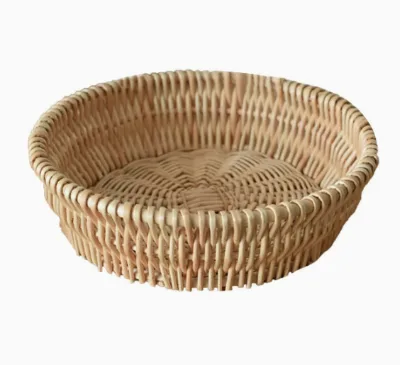
Portable Design Brown Color Woven Household Large Storage Basket for Laundry
$6.00 - $12.00
MOQ: 300 Pieces






Comprehensive Sourcing Guide
Sourcing Strategy for Multifunctional Woven Wicker Baskets
Understanding Product Specifications and Material Composition
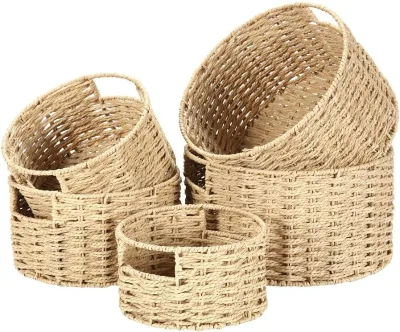
When sourcing multifunctional woven wicker baskets, the primary focus must be on the material composition and structural integrity, as these factors dictate the product's durability and aesthetic appeal. Based on current market observations, the core material for these items is frequently identified as willow. This natural fiber is processed through hand-weaving techniques, often incorporating a metal frame to ensure structural rigidity. The surface treatment typically involves polishing, which enhances the smoothness of the weave and protects the natural texture. Buyers should verify that the "Willow" designation refers to genuine natural fibers rather than synthetic imitations, as this distinction significantly impacts the product's eco-friendly profile and biodegradability.
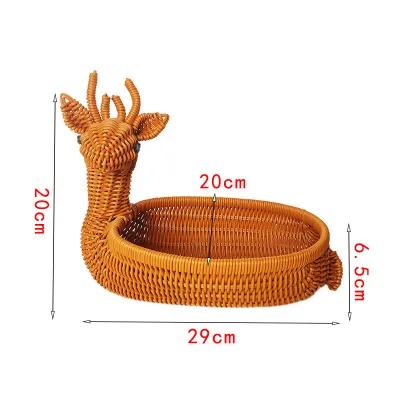
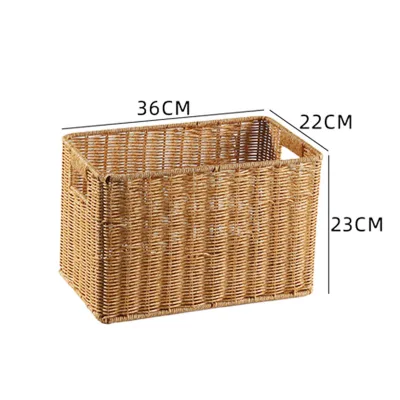
The physical dimensions of these baskets vary widely depending on the specific model and intended application. Observed specifications include standard sizes such as 313425cm for larger storage units and more compact dimensions like 251510cm or 20266.5cm for smaller utility items. Capacity ranges are also critical, with observed volumes spanning from 500-1000ml for personal or office use to 1000-2000ml for household storage needs. The shape is generally observed as either square or rectangular, with some models offering foldable features for space efficiency. When evaluating a potential supplier, procurement teams must request a detailed specification sheet that confirms the exact dimensions, capacity, and material composition for the specific model number, such as BS-WB075 or rainbow-231228-14, to ensure alignment with internal storage requirements.
Technical Attributes and Functional Versatility
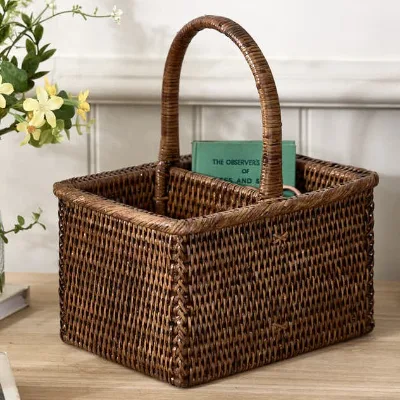
The multifunctional nature of these woven baskets is defined by a broad spectrum of usage scenarios. The observed application range extends from domestic storage and home decoration to specialized uses in hospitality, healthcare, and commercial settings. Specific use cases identified include storage for apparel, food, books, magazines, bedding, tableware, and tools. In the context of events and gifting, these baskets are utilized for weddings, wine presentation, fruit display, and as general gift packaging. The versatility is further enhanced by design attributes such as the inclusion of handles and wheels, which facilitate mobility in environments like hotels, nursing homes, and hospitals.
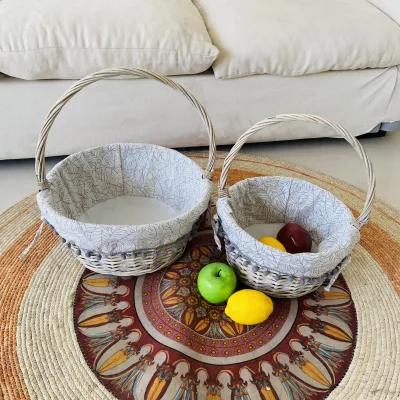
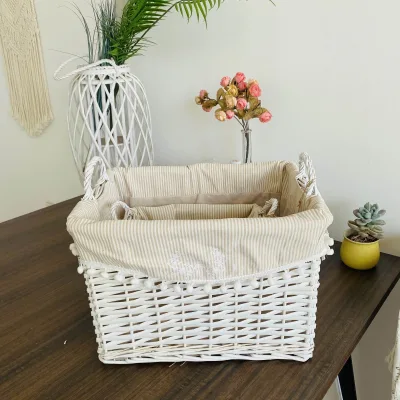
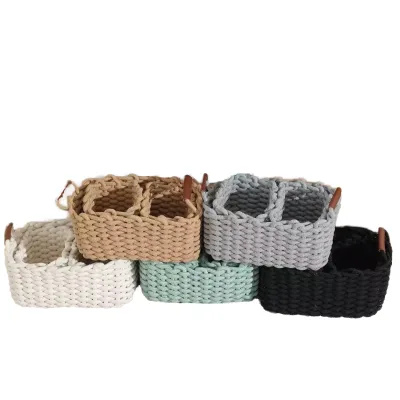
Color and style are significant technical considerations that influence the final selection. While the natural color of the willow is a standard offering, market data indicates availability in a variety of hues including beige, gray, pink, black, green, and pure white. The style is predominantly classified as "Classic" or "European Style," which appeals to buyers seeking a timeless aesthetic. The presence of a lining is another critical technical attribute; some models are supplied with an internal lining, which is essential for containing loose items like food or small tools, while others remain unlined for decorative purposes. Buyers must explicitly confirm whether the specific model requires a lining for their intended use case, as this affects the internal capacity and the type of items that can be safely stored.
Cost Drivers and Pricing Dynamics
The pricing structure for multifunctional woven wicker baskets is influenced by several variable factors, including material quality, labor intensity, and order volume. The observed price range in the market spans from 1 to 39 USD, reflecting the diversity in product complexity and size. A significant driver of cost is the "Hand-Made" or "Hand Weaving" process. Unlike machine-woven alternatives, hand-crafted baskets require skilled labor, which increases the unit cost but often results in higher quality and unique aesthetic variations. The inclusion of a metal frame and the polishing process also contribute to the final price point.
Minimum Order Quantity (MOQ) is another critical cost driver. While some suppliers may offer low MOQs starting at 1 piece for sample evaluation, the standard bulk MOQ observed is 200 pieces. However, ranges can extend up to 1000 pieces depending on the supplier's capacity and the customization level required. Buyers should be aware that the "1 Free" sample policy is a common industry practice, allowing for quality verification before committing to a bulk order. When negotiating, procurement teams should consider the total landed cost, which includes the unit price, packaging costs (often carton shipping), and potential shipping fees. The packaging standard, typically described as "1 Piece/Bag, 10 PCS/Carton" or "Carton Shipping," must be factored into the logistics budget to prevent damage during transit.
Compliance, Certification, and Market Standards
In the realm of woven wicker products, compliance and certification are paramount, particularly for buyers targeting markets with strict environmental and safety regulations. While specific certification statuses such as FSC (Forest Stewardship Council) or BSCI (Business Social Compliance Initiative) are often discussed in the broader industry, buyers must treat these as verification points rather than guaranteed attributes of every listed product. The presence of an "Eco-Friendly" feature is a common claim, but it requires substantiation through valid documentation. Buyers should request proof of material sourcing to ensure the willow is harvested sustainably.
The production origin is a key factor in compliance, with the majority of these products originating from China. This geographic concentration implies a specific supply chain structure that buyers must navigate. When evaluating suppliers, it is essential to verify that the production process adheres to relevant international standards for safety and quality. The "prod_standard" field often lists specific dimensions, but buyers must also ensure that the finished product meets the safety standards of the destination market, such as fire resistance for home goods or food safety for items used in culinary applications. The "Main Market" data indicates a strong presence in Europe, the US, South Africa, and Asia, suggesting that suppliers are generally familiar with the regulatory requirements of these regions, but due diligence remains the buyer's responsibility.
Supplier Evaluation and Quality Control Protocols
Selecting the right supplier requires a rigorous evaluation process that goes beyond the initial product listing. The lead time is a critical metric for supply chain planning, with observed ranges of 7-15 days for sample production and 60-65 days for bulk orders. These timelines can vary based on the complexity of the customization and the current production load of the factory. Buyers should establish clear communication channels to monitor production progress and ensure that the lead times are realistic for their project schedules.
Quality control (QC) is essential to maintain consistency, especially given the hand-made nature of the product. Variations in weaving tightness, color consistency, and frame stability are common risks in handcrafted items. A robust QC protocol should include pre-production sample approval, in-process inspections, and final random inspections before shipment. The "Sample: 1 Free" attribute provides an excellent opportunity for buyers to assess the quality firsthand. During the sample phase, buyers should test the structural integrity of the metal frame, the durability of the polishing, and the accuracy of the dimensions against the stated standards. Additionally, verifying the "Sets" attribute, which may range from 1-3 pieces, is important for inventory management and retail packaging strategies.
Long-Term Procurement and Application Strategy
For long-term procurement, buyers should consider the scalability and adaptability of the product line. The availability of customization options, such as specific colors, sizes, and packing configurations, allows suppliers to tailor products to evolving market trends. The "Customization: Available" attribute suggests that buyers can request modifications to meet specific branding or functional needs. However, customization often impacts the lead time and MOQ, so these factors must be weighed carefully.
The diverse application range of these baskets—from office gifts and personal decoration to laundry and hospital use—offers significant opportunities for market expansion. Buyers should analyze the specific needs of their target segments to determine the optimal product mix. For instance, a supplier offering "Foldable" and "Wheeled" models may be ideal for the healthcare sector, while "Classic" and "European Style" models might be better suited for home decor retailers. By aligning the product attributes with the specific demands of the end-user, buyers can maximize the utility and marketability of the sourced items.
Comparative Analysis of Product Models
To facilitate decision-making, the following table compares key attributes of observed product models. This comparison highlights the diversity in specifications and helps buyers identify the most suitable options for their specific needs.
| Attribute | Model BS-WB075 | Model BS-WB122 | Model BS-112 | Model rainbow-231228-14 | Model rainbow-240228-5 |
|---|---|---|---|---|---|
| Material | Willow | Willow | Willow | Willow | Willow |
| Dimensions | 313425cm | 251510cm | 20266.5cm | Customized | Customized |
| Shape | Not Specified | Not Specified | Square | Rectangular | Not Specified |
| Capacity | Not Specified | Not Specified | 500-1000ml | 1000-2000ml | Not Specified |
| Color | Natural Color | Pure | Beige, Gray, Pink, Black | Green | Natural |
| Style | Classic | Not Specified | European Style | Foldable, Handles, Wheeled | Not Specified |
| Usage | Storage, Wedding, Wine | Office Gifts, Home Decor | Apparel, Food, Tools | Apparel, Books, Shoes | Food, Books, Bedding |
| Lining | Yes | Not Specified | Not Specified | Not Specified | Not Specified |
| Folded | Not Specified | Not Specified | Folded | Unfolded | Not Specified |
| MOQ | 200 PCS | Not Specified | Not Specified | Not Specified | Not Specified |
This table illustrates that while the core material remains consistent, the functional attributes vary significantly. Buyers must match these specific attributes to their operational requirements. For example, the "Foldable" and "Wheeled" features of model rainbow-240228-5 make it distinct from the static storage solutions of other models. Understanding these nuances ensures that the procurement strategy is aligned with the intended use case, whether it be for retail, corporate gifting, or institutional supply.
Conclusion
Sourcing multifunctional woven wicker baskets requires a balanced approach that considers material quality, technical specifications, cost dynamics, and supplier reliability. By leveraging the observed data on willow construction, hand-weaving processes, and diverse application scenarios, buyers can make informed decisions that meet their specific business needs. The variability in dimensions, colors, and features necessitates a thorough vetting process, including sample evaluation and detailed specification verification. With a clear understanding of the market standards and a focus on long-term supply chain stability, procurement teams can effectively integrate these versatile products into their inventory, ensuring value and quality for their end customers.
FAQs
What material is used for these baskets?
The baskets are made from natural willow fiber. This material is processed through hand-weaving with a metal frame to ensure structural rigidity and durability for various storage needs.
Can I get a free sample before ordering?
Yes, a single free sample is available for quality verification. This allows buyers to inspect the hand-made weaving, polishing finish, and metal frame stability before committing to a bulk order.
What is the minimum order quantity required?
The standard minimum order quantity is 200 pieces. While samples can be ordered individually, bulk production typically requires meeting this 200-piece threshold to proceed with manufacturing.
How long does it take to produce bulk orders?
Bulk orders generally require 60 to 65 days for production. Sample production is faster, taking approximately 7 to 15 days, but large volumes extend the timeline significantly.
Are these baskets available in different colors?
Yes, options include natural color, pure white, beige, gray, pink, black, and green. Buyers can select from these hues depending on the specific model and customization requirements.
Do the baskets come with an internal lining?
Some models include a lining while others do not. It is essential to confirm the lining status for specific models like BS-WB075 if you need to store loose items like food or tools.
What is the capacity range for these storage units?
Capacity ranges from 500 to 1000 ml for smaller units up to 1000 to 2000 ml for larger storage needs. The exact volume depends on the specific dimensions and model selected.
Is customization available for these products?
Customization is available for specifications such as size, color, and packing. Buyers can request tailored dimensions or features, though this may impact the lead time and minimum order quantity.