Source N Female 4 Way Power Splitter for TV, WiFi, and RF
Find and compare 25 n f 4 way power splitter options for broadband and cellular applications. Review specifications like insertion loss, isolation, and frequency ranges to select the right component for your RF distribution needs; compare the available evidence and request quotations based on your requirements.
Key considerations
Products List




Comprehensive Sourcing Guide
N Female 4 Way Power Splitter Sourcing Guide
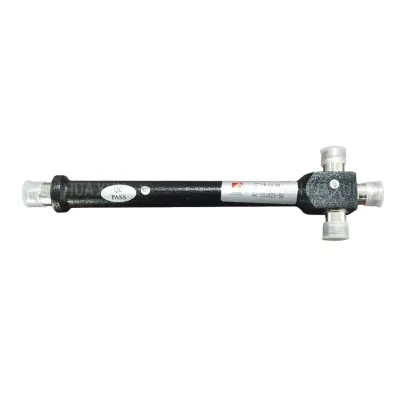
Procuring an N Female 4 Way Power Splitter requires a precise understanding of signal distribution requirements in microwave and RF infrastructure. These components are essential for dividing a single input signal into four equal output paths, maintaining impedance matching and signal integrity across the designated frequency band. Buyers must distinguish between standard 50-ohm and 75-ohm systems, as the internal architecture and connector specifications vary significantly between these two standards. The N Female connector provides a robust, threaded interface suitable for environments where vibration or frequent connection changes are expected, ensuring a secure mechanical link that minimizes signal reflection.
The market offers a variety of configurations, including models designed for specific frequency ranges such as 400-700MHz, 174-240MHz, and broader bands up to 6000MHz. Each model exhibits distinct performance characteristics, including split loss, insertion loss, and isolation levels, which directly impact system efficiency. For instance, a 4-way split inherently introduces a theoretical loss of approximately 6.0dB, but actual insertion loss may vary based on the component's quality and frequency response. Sourcing decisions should be driven by the specific application’s frequency requirements and the acceptable tolerance for signal degradation, ensuring that the selected splitter aligns with the overall network design and performance goals.
Product Scope and Observed Listing Signals
The observed product landscape includes a diverse array of N Female power splitters, ranging from 2-way to 4-way configurations, with frequencies spanning from 80MHz to 6000MHz. Listings indicate that customization is available, allowing buyers to specify cable lengths and types to suit particular installation constraints. The presence of models like the TPW-4WPS-5096-NF highlights the availability of 4-way splitters in the 50-960MHz range, while other models cater to higher frequency applications up to 6GHz. This variety suggests that buyers can find components tailored to specific bandwidth needs, whether for low-frequency broadcasting or high-frequency microwave communications.
Pricing and minimum order quantities (MOQ) vary across suppliers, with observed price ranges starting from low single digits to higher values for specialized models. MOQs typically range from 1 to 1000 units, offering flexibility for both prototyping and large-scale deployment. The standard packaging often includes PE bags and cartons, ensuring protection during transit. Buyers should note that while some listings provide detailed technical specifications, others may require direct inquiry for precise data. Understanding these listing signals helps in filtering suppliers and identifying those who can meet specific technical and commercial requirements efficiently.
Technical Specifications to Verify
When evaluating N Female 4 Way Power Splitters, verifying key technical parameters is crucial for ensuring compatibility and performance. Buyers must confirm the impedance, which is typically 50 ohms for most RF applications, though 75-ohm variants exist for video distribution. The frequency range is a critical specification, with models available for bands such as 400-700MHz, 174-240MHz, and 550-6000MHz. Each frequency band has associated performance metrics, including split loss, insertion loss, and isolation, which must be checked against the application’s requirements. For example, a 4-way splitter in the 50-960MHz range may have an insertion loss of ≤3.5dB and isolation of ≥16dB, while higher frequency models may have different tolerances.
Additionally, the VSWR (Voltage Standing Wave Ratio) and power rating are important considerations. A VSWR of ≤1.30 indicates good impedance matching, minimizing signal reflection and maximizing power transfer. The power rating, often specified as average power per port, determines the component’s ability to handle signal strength without degradation or damage. Buyers should also verify the connector type, ensuring it is indeed N Female, and check for any customization options for cable lengths or types. These specifications collectively determine the splitter’s suitability for the intended application, and thorough verification prevents costly mismatches in the final system.
Compliance and Safety Documentation
Compliance with international standards is essential for N Female 4 Way Power Splitters, particularly in regulated industries such as telecommunications and broadcasting. Buyers should request documentation confirming adherence to relevant safety and electromagnetic compatibility (EMC) standards. While specific certifications may vary by supplier, components intended for global markets often comply with RoHS (Restriction of Hazardous Substances) and REACH regulations, ensuring they are free from certain hazardous materials. Additionally, compliance with industry-specific standards, such as those set by the FCC or CE, may be required depending on the target market.
Documentation should also include test reports or certificates of conformity that verify the component’s performance against specified technical parameters. These documents provide assurance that the splitter meets the claimed specifications for insertion loss, isolation, and VSWR. Buyers should ensure that the supplier can provide up-to-date compliance documentation, as standards may evolve over time. Furthermore, understanding the origin of the product, often China for these components, can help in assessing the reliability of the supply chain and the consistency of quality control processes. Proper documentation mitigates legal and operational risks associated with non-compliant equipment.
Cost Drivers and Commercial Terms
The cost of N Female 4 Way Power Splitters is influenced by several factors, including the frequency range, power rating, and customization options. Models with wider frequency bands or higher power ratings typically command higher prices due to the increased complexity of design and manufacturing. Customization, such as specific cable lengths or types, can also add to the cost, as it requires additional processing and materials. Buyers should consider the total cost of ownership, including shipping, tariffs, and potential rework costs, rather than just the unit price.
Commercial terms, such as MOQ and lead time, play a significant role in procurement planning. MOQs ranging from 1 to 1000 units allow for flexibility, but larger orders may offer better unit pricing. Lead times, often estimated at 10-15 days for standard items, can vary based on customization and supplier capacity. Buyers should negotiate clear terms regarding payment, shipping, and warranty to avoid unexpected expenses. Understanding these cost drivers and commercial terms helps in budgeting accurately and selecting suppliers who offer the best value for the specific project requirements.
Supplier Qualification and Quality Control
Selecting a reliable supplier for N Female 4 Way Power Splitters involves assessing their qualification and quality control processes. Buyers should verify the supplier’s manufacturing capabilities, including their experience in RF component production and their ability to maintain consistent quality. Certifications such as ISO 9001 can indicate a robust quality management system, ensuring that products meet specified standards consistently. Additionally, suppliers should have clear procedures for incoming material inspection, in-process testing, and final product verification.
Quality control measures should include testing for key performance indicators such as insertion loss, isolation, and VSWR. Buyers may request sample testing or third-party verification to ensure that the components meet the required specifications. It is also important to assess the supplier’s ability to handle customization requests and their responsiveness to technical inquiries. A supplier with a strong track record in quality control and customer support is more likely to deliver products that meet the buyer’s expectations, reducing the risk of defects and ensuring long-term reliability of the procurement.
Long-Term Procurement Checks
Long-term procurement of N Female 4 Way Power Splitters requires ongoing monitoring of supplier performance and product reliability. Buyers should establish key performance indicators (KPIs) such as defect rates, delivery times, and responsiveness to issues. Regular audits or reviews of the supplier’s quality control processes can help identify potential problems early and ensure continuous improvement. Additionally, staying informed about changes in technology and standards is crucial, as newer models may offer improved performance or compliance with updated regulations.
Building a strong relationship with the supplier can facilitate better communication and collaboration, leading to more favorable terms and support. Buyers should also consider diversifying their supplier base to mitigate risks associated with supply chain disruptions. Regularly reviewing the total cost of ownership and comparing it with market benchmarks can help in identifying opportunities for cost savings. By maintaining a proactive approach to procurement, buyers can ensure a steady supply of high-quality N Female 4 Way Power Splitters that meet their evolving needs and support the long-term success of their projects.
FAQs
What is the frequency range for the 550-6000MHz 4 Way N Female Power Splitter?
The 550-6000MHz 4 Way N Female Power Splitter operates within a broad frequency range of 550 to 6000 MHz. This wide bandwidth supports diverse microwave applications requiring versatile signal distribution. The unit features N female connectors for reliable connectivity. It is designed for robust performance across various communication systems. Custom cable lengths and types are available to suit specific installation needs.
Can I customize the cable length and type for this power splitter?
Yes, customization is available for both cable length and cable types. Buyers can specify exact requirements to match their system architecture. The product supports customized configurations to ensure optimal signal integrity. Standard export packing cartons are used for secure shipping. This flexibility allows for tailored solutions in complex microwave network deployments.
What are the key specifications for the TPW-4WPS-8050-NF model?
The TPW-4WPS-8050-NF model operates in the 80-500MHz frequency range with a 4-way split. It features a split loss of 6.0dB and insertion loss of ≤1.3dB. Isolation is rated at ≥14dB, ensuring minimal signal interference. This model is suitable for applications requiring wideband signal distribution. The N female connector provides standard interface compatibility for various setups.
How does the TPW-4WPS-5096-NF differ in power rating?
The TPW-4WPS-5096-NF model has a power rating of 0.5W average per port. It operates in the 50-960MHz frequency range with a 4-way split. The split loss is 6.0dB, and insertion loss is ≤3.5dB. Isolation is ≥16dB, providing good signal separation. This impedance is 50ohm, making it suitable for standard RF applications requiring moderate power handling.
What is the typical lead time for ordering these power splitters?
The typical lead time for these power splitters is 10-15 days. This duration applies to standard orders and customized configurations. Buyers should account for this timeframe when planning procurement schedules. The product originates from China, which may influence logistics. Early ordering ensures timely delivery for project milestones and installation requirements.
Which models offer 3-way splitting in the N female connector series?
Several models offer 3-way splitting with N female connectors. These include the 550-6000MHz 3 Way N Female Power Splitter and the 698-2700MHz 3 Way N Female Power Splitter. The TPW-3WPS-1724-NF operates in the 174-240MHz range. The TPW-3WPS-627-NF covers 600-2700MHz. Each model provides specific frequency coverage for diverse microwave applications.