Source Neutral Multi-Metal Cleaning Agent for Degreasing, Polishing, and Surface Disposal
Find and compare 30 verified listings for neutral multi-metal cleaning agent suitable for degreasing, polishing, and surface disposal applications. Buyers can review specifications, packaging options, and supplier details to identify the best fit for industrial cleaning needs.
Key considerations
Products List


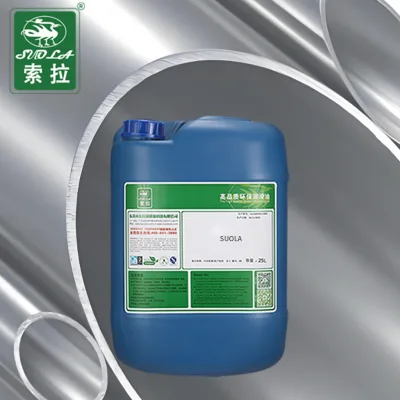


Water Based Cleaning Chemicals Coating Compatible Mineral Oil Antifoam Agent
$1800.00 - $2200.00
MOQ: 1 Tons
Comprehensive Sourcing Guide
Strategic Sourcing Guide for Neutral Multi-Metal Cleaning Agents
Understanding Product Attributes and Chemical Profiles
When sourcing a neutral multi-metal cleaning agent, the primary objective is to identify a formulation that effectively removes contaminants without damaging the substrate. The term "neutral" in this context refers to the acid-base property of the solution, which is critical for preventing corrosion on sensitive metal surfaces. Based on available market data, a neutral surface disposal agent is characterized by a pH level that does not lean heavily toward acidity or alkalinity in its working solution. For instance, specific product observations indicate a pH of 7 for concentrates, which aligns with the definition of a neutral cleaning agent. This contrasts sharply with acidic surface disposal agents, which may exhibit a pH range of 1.50 to 2.50 in a 1% water solution, or highly alkaline formulations that can etch aluminum or other soft metals.
The physical appearance of the product is another fundamental attribute to verify. While some industrial cleaning agents are supplied as powders or granules, many modern multi-metal solutions are formulated as liquids to ensure rapid dissolution and uniform application. Market observations show products listed as clear liquids, which often indicates a homogenous mixture free of suspended particulates that could cause scratching during the cleaning process. However, buyers must remain aware that the supply chain includes diverse forms, including powders and mixtures, depending on the specific manufacturer's formulation strategy. The density or proportion of these liquid agents is also a technical specification that affects dosing calculations. Observed data suggests a specific gravity or proportion range of 1.25 to 1.35 for certain liquid agents, a figure that procurement teams should use as a benchmark for verifying product consistency during incoming quality inspections.
Furthermore, the chemical composition often includes specific functional groups or additives designed to enhance performance. For example, some formulations may contain methoxy groups at concentrations between 25% and 30%, which can influence solvency and surface tension. It is imperative for buyers to request the full Material Safety Data Sheet (MSDS) or Safety Data Sheet (SDS) to understand the exact chemical makeup, rather than relying solely on the generic "neutral" label. The presence of specific CAS numbers, such as 9004-65-3 found in some listings, helps in cross-referencing ingredients for regulatory compliance and potential allergen or hazard identification.
Technical Specifications and Performance Parameters
Defining the technical specifications of a neutral multi-metal cleaning agent requires a granular approach to performance metrics. The efficacy of the cleaner is often measured by its operating time and effective time. In the context of industrial cleaning, a typical effective time for a metal cleaning agent might range from 5 to 10 minutes, with specific operating windows of 3 to 8 minutes for certain high-efficiency formulations. These timeframes are critical for production line scheduling; a cleaner that requires excessive dwell time can become a bottleneck, while one that acts too quickly may not fully emulsify heavy soils.
The application method is another technical consideration. While some agents are designed for immersion, others are optimized for spray or wipe-down applications. The "Usage" attribute for these products often includes terms like "Degreasing" or "Polishing," indicating the specific type of soil the agent targets. A multi-metal agent intended for degreasing must have surfactant properties capable of breaking down hydrocarbon-based oils without leaving a residue that interferes with subsequent processes like painting or plating. The "Kind" of the agent, such as a "Metal Surface Disposal Agent," further clarifies its intended role in the manufacturing workflow.
Packaging and storage stability are also part of the technical specification. The product may be supplied in various formats, including IBC tanks, barrels, bags, or wooden boxes, depending on the volume required. For large-scale operations, IBC tanks or drums with a standard weight of 25kg or 1000kg are common. Smaller batches or specific formulations might be packaged in bags or single items. The shelf life of the product is a crucial technical parameter; observed data indicates a shelf life of up to 2 years for certain liquid agents. Buyers must verify that the packaging integrity is maintained to prevent evaporation or contamination, which could alter the pH or concentration of the active ingredients over time.
| Parameter | Observed Range/Value | Verification Requirement |
|---|---|---|
| pH (Concentrate) | 7 (Neutral) | Confirm via pH meter testing of undiluted sample. |
| Proportion (Density) | 1.25 - 1.35 | Verify specific gravity against batch certificate. |
| Effective Time | 5 ~ 10 min | Conduct time-and-motion study on target soil. |
| Operating Time | 3 ~ 8 Mins | Validate against production cycle constraints. |
| Shelf Life | 2 Years | Check expiration dates on all incoming shipments. |
| Appearance | Clear Liquid / Powder | Visual inspection for clarity or homogeneity. |
| Odor | Mild Odor | Sensory evaluation to ensure no harsh chemical smells. |
Compliance, Certification, and Environmental Standards
In the global supply chain, compliance with environmental and safety standards is non-negotiable, particularly for products used in metal processing. A key attribute observed in the market is "Environmental Protection: Yes," which suggests that certain formulations are designed to minimize ecological impact. However, buyers must not assume that all neutral multi-metal cleaning agents meet this criterion without verification. The presence of environmental protection claims should be backed by specific certifications or compliance with local and international regulations, such as REACH in Europe or TSCA in the United States.
The "Standard" attribute for these products often references packaging weights, such as 25kg/barrel or 50 Kg/barrel, but it can also imply adherence to manufacturing standards. Buyers should inquire whether the product meets specific industry standards for metal cleaning, such as those related to residue-free performance or biodegradability. While some listings mention specific model numbers like "Jc-Q11" or "JC-Q16," these are internal identifiers and do not necessarily equate to external regulatory certifications. It is the responsibility of the procurement team to request third-party test reports that validate the product's compliance with safety and environmental regulations.
Furthermore, the origin of the product plays a role in compliance. Many suppliers are located in China, with specific manufacturing hubs in regions like Zhejiang or Dongguan. While these regions have robust manufacturing capabilities, buyers must ensure that the specific facility adheres to the environmental standards claimed. The "Customization" attribute indicates that suppliers may offer tailored formulations, but this customization must still align with the buyer's regulatory requirements. For instance, if a buyer operates in a region with strict VOC (Volatile Organic Compound) limits, the supplier must provide data confirming that the neutral cleaning agent falls within those limits.
Cost Drivers and Procurement Economics
The cost of sourcing a neutral multi-metal cleaning agent is influenced by several factors, including the concentration of active ingredients, the complexity of the formulation, and the packaging requirements. The observed price range in the market is vast, spanning from $0.88 to $4335 per unit. This wide disparity often reflects differences in product type, volume, and packaging. A low-cost item might be a small sample or a single-item unit, while the higher end of the range likely represents bulk industrial quantities or specialized formulations.
The Minimum Order Quantity (MOQ) is another significant cost driver. The observed MOQ range is between 1 and 10,000 units. For small businesses or pilot programs, an MOQ of 1 allows for low-risk testing, whereas large-scale manufacturers may benefit from economies of scale by ordering in bulk, potentially lowering the unit cost. However, bulk orders require careful inventory management to ensure the product does not exceed its shelf life before use. The "Selling Units" attribute, often listed as "Single Item," suggests that suppliers may offer flexible purchasing options, but buyers should negotiate volume discounts for recurring orders.
Packaging costs also contribute to the overall price. Products packaged in IBC tanks or wooden boxes may incur higher shipping and handling costs compared to those in standard bags or drums. The "Product Weight" being customizable is a factor that can influence logistics costs; heavier shipments may require different freight arrangements. Additionally, the "Customization" availability can impact pricing, as bespoke formulations often carry a premium over standard off-the-shelf products. Buyers should conduct a total cost of ownership analysis, factoring in not just the purchase price but also shipping, storage, and potential waste from product degradation.
Supplier Evaluation and Geographic Considerations
Evaluating suppliers for neutral multi-metal cleaning agents requires a thorough assessment of their capabilities, location, and reliability. The market data indicates that many suppliers are based in China, with specific origins in Zhejiang and Dongguan. These regions are known for their chemical manufacturing infrastructure, but buyers must verify the specific capabilities of the supplier. The "Customized" attribute, which can be either "Available" or "Non-Customized," is a key differentiator. Suppliers offering customization can tailor the pH, viscosity, or additive profile to meet specific metal cleaning needs, whereas those with non-customized options offer standard products that may require more compromise.
The "Brand" attribute, such as "Jichuan," provides a point of reference for reputation, but buyers should not rely solely on brand recognition. Instead, they should request references, case studies, and evidence of consistent quality control. The "Product Name" and "Model" (e.g., "High Voltage Live Cleaning Agent" or "Metal Cleaning Agent") help in identifying the specific product line, but buyers must ensure that the model number corresponds to the neutral formulation they require, as some models may be acidic or alkaline.
Logistics and lead times are critical components of supplier evaluation. While specific lead times are not provided in the general data, the "Location" and "Origin" suggest that international shipping may be involved. Buyers should assess the supplier's ability to meet delivery schedules, especially for time-sensitive production runs. The "Selling Units" and "Product Packing" options also affect logistics; for example, a supplier offering IBC tanks may have different shipping constraints compared to one offering bagged products.
Quality Control and Long-Term Procurement Strategy
Implementing a robust quality control (QC) strategy is essential for maintaining the performance of neutral multi-metal cleaning agents. The first step is to verify the physical and chemical properties against the supplier's specifications. This includes checking the pH, proportion, and appearance of the product upon receipt. For liquid agents, the clarity and color (e.g., "Clear Liquid" or "White") should be consistent with previous batches. Any deviation in appearance or odor (e.g., "Mild Odor") could indicate contamination or degradation.
Long-term procurement considerations involve building a relationship with a supplier that can provide consistent quality over time. The "Shelf Life" of 2 years offers a window for inventory management, but buyers should implement a first-in, first-out (FIFO) system to ensure older stock is used first. Regular testing of the product's effectiveness on target metals is necessary to confirm that the cleaning agent continues to perform as expected. This includes monitoring for any signs of corrosion or residue buildup, which could indicate a shift in the product's chemical balance.
Furthermore, buyers should consider the scalability of the supplier. As production volumes increase, the supplier must be able to maintain quality while meeting higher demand. The "Customization" capability is particularly valuable here, as it allows for adjustments to the formulation based on feedback from the production floor. Finally, establishing clear communication channels for reporting issues and requesting technical support ensures that any problems can be addressed promptly, minimizing downtime and maintaining the integrity of the cleaning process.
FAQs
What is the pH level of the neutral metal cleaning agent concentrate?
The concentrate pH is 7, which defines it as a neutral surface disposal agent suitable for sensitive metals. This contrasts with acidic agents that have a pH of 1.50 to 2.50. Buyers should verify this via pH meter testing of undiluted samples to ensure corrosion prevention.
How long does the cleaning agent take to operate effectively on metal?
The effective operating time ranges from 3 to 8 minutes for high-efficiency formulations. Some products list an effective time of 5 to 10 minutes for full soil removal. Production lines must validate these windows against cycle constraints to avoid bottlenecks.
Which packaging formats are available for bulk industrial orders?
Products are available in IBC tanks, barrels, bags, and wooden boxes depending on volume. Standard packaging includes 25kg or 1000kg drums and 50kg barrels. Large-scale operations often prefer IBC tanks or drums for efficient logistics and storage stability.
Can suppliers customize the formulation for specific metal cleaning needs?
Customization is available for tailored formulations, though some options are non-customized. Buyers must ensure any bespoke pH or additive profile aligns with regulatory requirements like VOC limits. Suppliers can adjust viscosity or solvency but require validation of safety data sheets.
What is the shelf life of the liquid cleaning agent product?
The observed shelf life for certain liquid agents is up to 2 years. Buyers must verify packaging integrity to prevent evaporation or contamination that could alter the pH. Expiration dates on incoming shipments should be checked to ensure product stability before use.
How does the product density affect dosing calculations for cleaning?
The proportion or specific gravity ranges from 1.25 to 1.35 for certain liquid agents. Procurement teams should use this figure as a benchmark for verifying product consistency during quality inspections. Accurate density data is essential for precise dosing in industrial applications.
Where are the manufacturing facilities for these cleaning agents located?
Manufacturing origins include China, with specific hubs in Zhejiang and Dongguan. Buyers should verify that specific facilities adhere to claimed environmental standards despite the regional concentration. Origin data helps assess logistics and potential compliance with local regulations.