Source Non GMO Soy Lecithin Powder for Food, Health, and Medicine
Compare 30 listings for Non GMO Soy Lecithin Powder from verified Chinese suppliers. Buyers can evaluate purity levels, packaging options, and MOQs for food additives, health care products, and pharmaceutical applications.
Key considerations
Products List
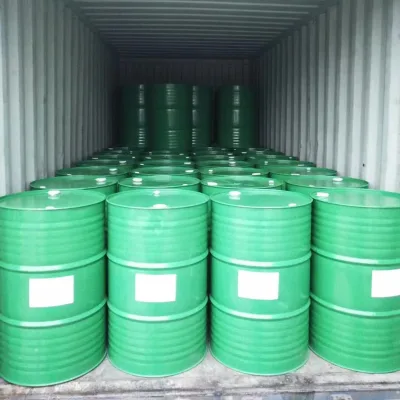


Hot Sale Soy Lecithin Emulsifier Soya Lecithin Liquid Soy Lecithin Powder
$1500.00 - $2600.00
MOQ: 1 Tons

Factory Direct Supply Food Grade Non-GMO Soy Bean Lecithin Liquid for Food Additives
$1500.00 - $2600.00
MOQ: 25 Tons


Comprehensive Sourcing Guide
Strategic Sourcing Guide for Non-GMO Soy Lecithin Powder
Procuring non-GMO soy lecithin powder requires a disciplined approach that balances technical specifications, regulatory compliance, and supply chain reliability. This guide synthesizes observed market data and product attributes to provide a framework for B2B buyers evaluating potential suppliers. The focus remains on evidence-based criteria, ensuring that procurement decisions are grounded in verifiable facts rather than unverified marketing claims. The complexity of the global soy lecithin market necessitates a clear understanding of the distinctions between liquid and powder forms, varying purity levels, and the specific regulatory landscapes governing food and pharmaceutical applications.
Technical Specifications and Physical Properties
The foundation of any successful procurement begins with a precise definition of technical specifications. In the current market, soy lecithin is available in multiple physical states, including yellow liquids, light yellow powders, and yellow-to-brown semisolids. Buyers must distinguish between these forms based on their end-application requirements. For instance, the product data indicates a "yellow liquid" variant with a specific molecular formula of C42H80NO8P and a CAS number of 6381-92-6. However, for applications requiring ease of handling or specific dissolution rates, the powder form is often preferred.
The powder variants observed in the market exhibit distinct characteristics. One category is described as a "yellow fine powder" with a purity level of 99%, while another is noted as a "light yellow powder" or "yellow to brown semisolid." A critical technical differentiator is the active ingredient content. Some listings specify "Phosphatidylserine 20%, 50%, or 70%" as the active component, whereas others focus on general lecithin purity ranging from 20% to 90%. This variance highlights the necessity for buyers to verify the exact assay method, such as HPLC or UV, to confirm the concentration of phospholipids. The molecular formula and EINECS number (232-307-2) serve as essential identifiers to ensure the chemical identity matches the requested non-GMO specification.
Furthermore, the physical form impacts packaging and logistics. While liquid forms may be packed in drums, powder forms are frequently found in aluminum foil bags (1kg) or drums (25kg). The single package size for some liquid variants is recorded as 20x20x20 cm, with a gross weight of 1.500 kg, suggesting specific logistical constraints that must be accounted for in freight planning. Buyers should not assume that all "non-GMO soy lecithin" products share identical physical properties; the state of matter, color, and particle size are critical variables that must be explicitly defined in the purchase order.
Compliance, Certification, and Regulatory Verification
Navigating the regulatory landscape is paramount when sourcing food-grade and pharmaceutical-grade ingredients. The market data confirms that suppliers may hold certifications such as HACCP, ISO, and BRC. These certifications are not merely marketing labels but indicate adherence to specific quality management systems. For a buyer targeting the "Food Grade" or "Medicine" sectors, verifying the validity of these certifications is a non-negotiable step. The presence of a "Natural" resource designation and "Non-GMO" labeling adds another layer of compliance that must be substantiated through documentation.
When evaluating compliance, buyers must look beyond the product name. The term "Non-GMO" implies a specific agricultural origin and processing history that requires rigorous verification. While the product name "NON-GMO Liquid Soya Lecithin" appears in the data, the powder variants are also marketed under similar branding. It is essential to confirm that the "Non-GMO" status applies to the specific batch and formulation being purchased. Additionally, the usage category, listed as "food additive" or for "Health Care Products," dictates the regulatory framework the product must meet. In the pharmaceutical sector, where the product is used in "Capsule" or "Tablet" forms, the purity and impurity profiles become even more critical.
Buyers should verify the "Test Method" and "Assay Method" listed by the supplier. The data references HPLC, UV, and HPLC-MS as potential analytical techniques. These methods are standard for quantifying phospholipid content and detecting contaminants. A supplier claiming high purity (e.g., 99% or Above 98%) must provide test reports generated using these validated methods. The absence of specific test data or the use of non-standardized methods should be treated as a red flag. Furthermore, the "Shelf Life" of the product, observed as greater than 12 months, is a key compliance metric that affects inventory management and product stability guarantees.
Cost Drivers and Pricing Dynamics
Understanding the cost structure of soy lecithin powder involves analyzing several variables, including purity, form, and packaging. The observed price range in the market spans from $0.10 to $6,000 USD, a wide spectrum that reflects the diversity of product grades and order volumes. This variation is driven primarily by the active ingredient concentration. Products with higher phosphatidylserine content (e.g., 70%) or higher overall purity (99%) command a premium compared to standard food-grade lecithin with lower purity levels (20%-90%).
Packaging and logistics also significantly influence the final cost. The data indicates diverse packaging options, ranging from small 1kg aluminum foil bags to large 200kg drums. The "Single gross weight" of 1.500 kg for certain packages suggests that smaller, specialized packaging incurs higher per-unit costs due to material and handling expenses. Conversely, bulk drum packing is generally more cost-effective for large-scale industrial applications. The "Supply Ability" of 100 tonnes per month is a critical factor in cost stability; suppliers with higher capacity can often offer more competitive pricing for large orders, whereas those with limited capacity may charge a premium for scarcity.
Minimum Order Quantities (MOQ) are another major cost driver. The observed MOQ ranges from 1kg to 20,000 units. A buyer requiring a small sample (10g-20g free sample) may face different pricing structures than a bulk purchaser. The "Customization" availability allows for tailored packaging and formulations, which can increase costs but may be necessary for specific client requirements. Buyers must balance the unit price against the MOQ to determine the total cost of ownership. For instance, a lower unit price might be offset by a high MOQ that ties up capital in inventory.
Typical Applications and End-Use Scenarios
Soy lecithin powder serves a broad spectrum of industries, with the primary applications falling into food additives, health care products, and pharmaceuticals. In the food industry, it functions as an emulsifier, stabilizer, and texture modifier. The "Food Grade" designation ensures it is safe for consumption in various processed foods. The versatility of the product is evident in its use as a "food additive" and its presence in "Health Care Products."
In the pharmaceutical sector, the application is more specialized. The product is utilized in the formulation of "Capsule" and "Tablet" forms, where its emulsifying properties aid in the dissolution and bioavailability of active ingredients. The "Active Ingredients" such as Phosphatidylserine are specifically sought after for their potential cognitive and neurological benefits, making them valuable in nutraceutical formulations. The "State" of the product, whether powder or semisolid, influences its suitability for different manufacturing processes. Powder forms are generally preferred for dry mixing and tablet compression, while semisolids or liquids might be used in liquid formulations or specific encapsulation processes.
The "Resource" classification as "Natural" is a significant selling point for consumers and manufacturers seeking clean-label products. This attribute aligns with current market trends favoring natural ingredients over synthetic alternatives. However, buyers must ensure that the "Non-GMO" claim is consistent with the natural resource designation and that the sourcing of the soybeans meets the required agricultural standards. The specific "Applications" listed, such as "Medicine" and "Health Care Products," indicate that the product must meet stringent quality standards to be suitable for human consumption in therapeutic or supplemental contexts.
Supplier Evaluation and Operational Capabilities
Evaluating a supplier requires a holistic assessment of their operational capabilities, geographic location, and logistical infrastructure. The product data indicates origins in "Liaoning, China" and "Shaanxi China," suggesting that the supply chain is concentrated in specific regions of China. Buyers should verify the "Port of dispatch," which is listed as "any port in China," indicating flexibility in shipping but also requiring careful coordination of freight terms. The "Place of Origin" is a critical piece of information for compliance with trade regulations and country-of-origin labeling requirements.
The "Supply Ability" of 100 tonnes per month provides a benchmark for the supplier's capacity to meet demand. Buyers should assess whether this capacity is consistent and reliable, especially during peak seasons. The availability of "Samples" and "Free Sample" options (10g-20g) is a positive indicator of a supplier's confidence in their product quality and their willingness to engage in the evaluation process. However, the "MOQ" of 1kg or 100kg for different product lines suggests that suppliers may have tiered pricing and minimums based on the specific product variant.
Customization capabilities are another key evaluation criterion. The data notes that "Customization" is available, which implies that suppliers can tailor packaging, purity levels, or formulations to meet specific buyer needs. This flexibility is valuable for companies with unique product requirements. However, buyers must verify the lead times associated with custom orders, as these can vary significantly from standard production runs. The "Model Number" and "Product Name" variations (e.g., "Soy Lecithin Powder" vs. "NON-GMO Liquid Soya Lecithin") highlight the need for clear communication to ensure the correct product is supplied.
Quality Control and Long-Term Procurement Strategy
Establishing a robust quality control (QC) protocol is essential for mitigating risks in the procurement of soy lecithin powder. The "Test Method" and "Assay Method" data points, including HPLC and UV, provide a basis for establishing QC standards. Buyers should require Certificate of Analysis (CoA) documents for every shipment, verifying that the product meets the specified purity (e.g., 99% or 20%-90%) and active ingredient content. The "Shelf Life" of over 12 months should be clearly stated on the CoA to ensure the product remains viable throughout the supply chain.
Long-term procurement strategies should focus on building relationships with suppliers who demonstrate consistency in quality and reliability. The "Certification" status (HACCP, ISO, BRC) serves as a baseline for quality management, but ongoing audits and performance reviews are necessary to maintain high standards. Buyers should also consider the "Packing" details, such as "200kg/Drum" or "25kg/Drum," to ensure that the packaging protects the product from moisture and contamination during transit. The "Single package size" and "Single gross weight" data should be used to optimize logistics and reduce damage risks.
Finally, buyers must remain vigilant about the "Other Names" and "MF" (Molecular Formula) to ensure that the product received matches the technical specifications. The "EINECS No." (232-307-2) is a crucial identifier for regulatory compliance in the European Union and other regions. By maintaining a rigorous approach to specification verification, certification validation, and quality testing, buyers can secure a reliable supply of non-GMO soy lecithin powder that meets their operational and regulatory requirements.
Comparative Analysis of Product Variants
To facilitate decision-making, the following table summarizes the key differences between the observed product variants based on the supplied data. This comparison highlights the critical distinctions in form, purity, and packaging that influence procurement choices.
| Feature | Variant A (Liquid) | Variant B (Powder - Standard) | Variant C (Powder - High Purity) |
|---|---|---|---|
| Appearance | Yellow Liquid | Light Yellow Powder / Semisolid | Yellow Fine Powder |
| Purity Range | 60% min | 20% ~ 90% | 99% / Above 98% |
| Active Ingredient | General Lecithin | General Lecithin | Phosphatidylserine (20-70%) |
| Packaging | 200kg/Drum | 1kg/Alu Foil Bag, 25kg/Drum | 20kg/Box, 25kg/Drum |
| MOQ | 1 unit (Single item) | 100kg | 1kg |
| Primary Use | Food Additive | Health Care Products | Medicine, Health Care |
| Origin | Liaoning, China | Shaanxi, China | China |
| Certification | Not specified | HACCP, ISO, BRC | Not specified |
This table underscores the importance of aligning product selection with specific application needs. The high-purity variant (Variant C) is suitable for pharmaceutical applications requiring precise dosing, while the standard powder (Variant B) offers flexibility for general health care products. The liquid form (Variant A) may be preferred for specific industrial processes where liquid handling is more efficient. Buyers must carefully match these attributes to their production requirements to ensure optimal performance and cost-efficiency.
FAQs
What is the purity range for Non GMO Soy Lecithin Powder?
The purity ranges from 20% to 90% for standard grades and reaches 99% for high-grade variants. Some products specifically list active ingredients like Phosphatidylserine at 20%, 50%, or 70% depending on the formulation.
Can I get a free sample of Non GMO Soy Lecithin Powder?
Yes, free samples are available with quantities typically ranging from 10g to 20g. This allows buyers to verify the physical state and quality before committing to a larger purchase order.
Which certifications do suppliers of Non GMO Soy Lecithin Powder hold?
Suppliers often hold HACCP, ISO, and BRC certifications to ensure quality management. These standards verify that the production processes meet international requirements for food and health care product safety.
How is Non GMO Soy Lecithin Powder packaged for shipment?
Packaging options include 1kg aluminum foil bags, 20kg boxes, and 25kg drums. Some liquid variants use 200kg drums, while custom packaging is available upon request to suit specific logistics needs.
What is the minimum order quantity for Non GMO Soy Lecithin Powder?
Minimum order quantities vary from 1kg for samples to 100kg for standard bulk orders. Some listings indicate a maximum MOQ of 20,000 units, allowing flexibility for different business scales.
Where is Non GMO Soy Lecithin Powder manufactured?
Products originate from regions in China, specifically Liaoning and Shaanxi provinces. The port of dispatch is listed as any port in China, offering logistical flexibility for international buyers.