Source Nylon Cable Carrier for CNC Machines, Cutting Tools, and Automation
Explore 30 listings for Nylon Cable Carrier solutions designed to protect moving wires in industrial settings. Buyers can compare specifications like temperature range, bending radius, and customization options from verified manufacturers in China.
Key considerations
Products List




Comprehensive Sourcing Guide
Strategic Sourcing Guide for Nylon Cable Carriers
Understanding Technical Specifications and Design Variations
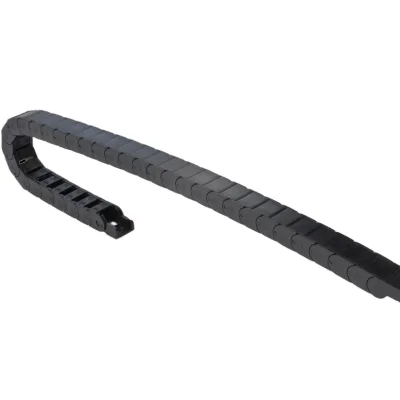
When sourcing nylon cable carriers, often referred to as drag chains, buyers must first navigate a complex landscape of technical specifications that directly impact machine performance and longevity. The core product is designed to protect moving cables and hoses in automated machinery, preventing wear, tangling, and premature failure. Based on observed market data, the physical dimensions of these carriers vary significantly to accommodate different cable bundles. The inside height is a critical dimension, with observed ranges including 25mm, 35mm, 45mm, and 56mm, while the inside width typically spans from 50mm to 300mm. These dimensions dictate the maximum cable capacity and the physical footprint required within a machine's gantry or arm.
The structural design of the carrier is another primary consideration. Buyers will encounter two main configurations: the bridge type and the totally enclosed type. The bridge structure offers an open design that allows for easy inspection and cable replacement, whereas the enclosed structure provides superior protection against debris, chips, and coolant, making it ideal for harsh environments like CNC machining centers. The bending radius is equally vital for ensuring smooth operation without kinking the internal cables. Observed specifications list bending radii ranging from R75mm to R250mm, with specific increments such as R100, R125, and R150 available. Selecting the correct radius is essential to maintain the integrity of the cables during high-speed reciprocating motion.
Material composition is the defining characteristic of a "nylon" cable carrier. The primary material identified in the market is plastic, specifically engineered for high durability and low friction. These carriers are designed to operate within a specific temperature range, with observed data indicating a functional span from -20°C up to 130°C. Some variations may list a slightly different lower limit of 40°C, suggesting that buyers must verify the specific thermal rating of the product intended for their specific application environment. The maximum speed capability for these carriers is observed at 5m/s, a figure that must be matched against the operational velocity of the host machinery to prevent dynamic instability or excessive wear.
Compliance and Certification Verification
In the industrial automation sector, compliance with international standards is not merely a formality but a prerequisite for safety and liability protection. When evaluating potential suppliers for nylon cable carriers, buyers should rigorously verify the certification status of the products. The most frequently observed certifications in the market include CE and RoHS, which indicate compliance with European health, safety, and environmental protection standards. Additionally, ISO 9001 is a standard quality management certification that appears frequently in supplier profiles, often listed in conjunction with CE.
The presence of these certifications should be treated as a verification point rather than a guarantee of universal compliance. Buyers must confirm that the specific batch or model they intend to purchase holds the valid certification status. Some supplier listings indicate a "Customized" certification status, which implies that the quality management system or product compliance may be tailored to specific client requirements. It is crucial to request current, valid certificates from the supplier rather than relying solely on marketing claims. The certification "CE ISO9001" is a common combination found in listings, suggesting a dual adherence to product safety and quality management processes.
Furthermore, the origin of the product plays a role in compliance verification. Many suppliers list their place of origin as Hebei, China (Mainland), or simply China. While this is a common manufacturing hub, buyers should ensure that the export documentation aligns with the destination country's import regulations. The "Certificate" field often lists specific standards like "CE/RoHS" or "CE ISO9001," but the buyer must cross-reference these with the actual product documentation to ensure the specific model meets the required regulatory framework for the target market.
Cost Drivers and Pricing Dynamics
The pricing of nylon cable carriers is influenced by a variety of factors, including material costs, customization levels, and order volume. Observed market data indicates a wide price range, with listed prices spanning from $0.05 to $20.00 USD per unit. This broad spectrum suggests that the cost is highly dependent on the specific configuration of the carrier. A basic, standard-sized bridge chain with minimal customization will likely fall at the lower end of this range, while a fully enclosed, custom-sized chain with specialized features will command a higher price.
Minimum Order Quantity (MOQ) is another significant cost driver. The observed MOQ range in the market is between 1 and 50 units. For buyers requiring small quantities for prototyping or maintenance, suppliers with an MOQ of 1 offer flexibility, though the unit price may be higher. Conversely, buyers placing large orders for new machine production lines can leverage the lower end of the price spectrum by meeting higher MOQ thresholds. The flexibility in MOQ allows for a tiered purchasing strategy, where initial orders can be small and subsequent replenishment orders can be larger to optimize costs.
Customization is a primary factor that elevates the cost. The market data confirms that customization is available for these products, including options for logo printing (with or without), specific dimensions, and tailored packaging. When a buyer requests a "Customized" model, the production process shifts from standard manufacturing to a bespoke operation, which inevitably increases the unit cost. Additionally, the packaging method, whether it is a standard carton box, a pallet, or a wooden box, can influence the final price, particularly for international shipping where wooden crates are often required for heavy or large shipments.
Typical Applications and Operational Environments
Nylon cable carriers are integral to the operation of various industrial machines, with their primary function being the protection of moving cables and wires. The most common application identified is in CNC machine tools, where the carrier protects the electrical and hydraulic lines that connect the moving spindle or tool changer to the stationary control cabinet. In these environments, the carrier must withstand the constant back-and-forth motion, exposure to metal chips, and potential coolant splashes. The "Bridge Plastic Cable Chain" and "Totally Enclosed" structures are specifically noted for their suitability in these high-precision manufacturing settings.
Beyond CNC machine tools, these carriers are also utilized in CNC cutting machines and other automated equipment where wire protection is critical. The "Function" of the product is explicitly stated as protecting moving cables, and the "Purpose" is often described as plastic cable carrier protection. The versatility of the product allows it to be used in various configurations, including "Combined Carrier Chain" structures, which can support multiple types of lines simultaneously. The "Appearance" of the carrier, typically black, is not just aesthetic but often indicates the use of UV-stabilized or carbon-black-filled nylon, which enhances resistance to environmental degradation.
The operational environment dictates the choice of carrier. For instance, in environments with high temperatures, the temperature range of -20°C to 130°C becomes a critical selection criterion. If the application involves extreme cold or heat beyond these limits, the buyer must verify if the supplier can provide specialized materials. The "Usage" of the carrier is consistently described as protecting wires in CNC machines, highlighting its role in maintaining the reliability of the machine's electrical systems. The "Type" of the product is generally classified as a "Track," emphasizing its role in guiding the cable along a predetermined path.
Supplier Evaluation and Sourcing Strategy
Evaluating suppliers for nylon cable carriers requires a systematic approach that goes beyond price comparison. Buyers should prioritize suppliers who demonstrate transparency in their product specifications and certification status. The "Place of Origin" is a key piece of information, with Hebei, China (Mainland) being a prominent manufacturing region. While this location is common, buyers should verify the supplier's actual manufacturing capabilities and quality control processes rather than relying solely on the origin label.
The "Product Model" field in supplier listings often contains specific identifiers such as "BT. 300301" or generic terms like "plastic drag chain" and "cable chain." Buyers should look for suppliers who provide clear model numbers and detailed specification sheets that match the technical requirements of their machinery. The availability of "Customized" models is a strong indicator of a supplier's flexibility and engineering capability. A supplier that can accommodate custom dimensions, bending radii, and structural designs is better positioned to meet the unique needs of complex automation projects.
Packaging standards are another aspect of supplier evaluation. The market shows a variety of packaging options, including "Cartons," "Pallets," "Wooden Boxes," and "Carton Box." The choice of packaging can affect the safety of the product during transit and the efficiency of the receiving process. Suppliers who offer robust packaging solutions, such as wooden boxes for heavy loads or pallets for bulk shipments, demonstrate a commitment to product integrity. Additionally, the "Standard" field in product listings, which may include dimensions like "110110130cm" or "504030," should be cross-referenced with the supplier's actual shipping and storage capabilities.
Quality Control and Long-Term Procurement Considerations
Ensuring the long-term reliability of nylon cable carriers requires a robust quality control strategy. Buyers should establish clear acceptance criteria based on the observed specifications, such as the inside height, width, and bending radius. The "Structure" of the carrier, whether it is a bridge or enclosed type, must be verified upon delivery to ensure it matches the order. The "Color" of the product, typically black, should also be consistent, as variations can indicate different material batches or quality issues.
Long-term procurement considerations include the availability of replacement parts and the consistency of the supply chain. Suppliers who offer "Customized" models may have longer lead times or higher MOQs for reorders, so buyers should plan their inventory accordingly. The "Temperature Range" and "Max Speed" capabilities should be re-evaluated periodically to ensure they still meet the machine's operational requirements, especially if the machinery is upgraded or the operating conditions change.
The "Function" of the carrier, which is to protect moving cables, is a critical performance metric. Buyers should monitor the wear and tear on the carriers over time and establish a replacement schedule based on observed performance rather than a fixed calendar. The "Purpose" of cable protection is paramount, and any failure in this function can lead to costly machine downtime. Therefore, sourcing from suppliers with a proven track record of quality and certification, such as those holding ISO 9001 and CE marks, is essential for maintaining operational continuity.
Comparative Analysis of Carrier Configurations
To assist buyers in making informed decisions, the following table summarizes the key differences between common cable carrier configurations observed in the market. This comparison highlights the trade-offs between protection levels, visibility, and application suitability.
| Feature | Bridge Structure | Totally Enclosed Structure |
|---|---|---|
| Visibility | High; allows easy cable inspection | Low; cables are fully covered |
| Debris Protection | Moderate; chips may enter | High; excellent barrier against chips and coolant |
| Installation | Easier; cables can be added/removed easily | More complex; requires disassembly for changes |
| Typical Application | General automation, clean environments | CNC machining, harsh environments |
| Material | Plastic (Nylon) | Plastic (Nylon) |
| Color | Typically Black | Typically Black |
| Customization | Available | Available |
This comparison underscores that the choice between bridge and enclosed structures depends heavily on the specific environmental conditions of the application. While the bridge type offers convenience for maintenance, the enclosed type provides superior protection in the demanding environment of a CNC machine tool. Buyers must weigh these factors against their specific operational needs and maintenance capabilities.
Final Procurement Recommendations
In conclusion, sourcing nylon cable carriers requires a balanced approach that considers technical specifications, compliance, cost, and supplier reliability. Buyers should start by defining their exact requirements for inside height, width, and bending radius, ensuring these match the observed ranges of 25-56mm and 50-300mm respectively. Verification of certifications like CE and ISO 9001 is non-negotiable for ensuring safety and quality. The wide price range of $0.05 to $20.00 reflects the diversity of options available, and buyers should align their budget with the necessary level of customization and protection.
By focusing on suppliers who offer transparent specifications and flexible customization options, buyers can secure a reliable supply of cable carriers that enhance the performance and longevity of their machinery. The long-term success of the procurement strategy depends on maintaining a clear understanding of the product's functional limits, such as the temperature range and maximum speed, and ensuring that the chosen carrier meets these demands consistently. With careful evaluation and adherence to the guidelines outlined above, buyers can effectively navigate the market and secure high-quality nylon cable carriers for their industrial applications.
FAQs
What certifications do nylon cable carriers typically have?
These products commonly hold CE, RoHS, and ISO 9001 certifications. Buyers should verify that specific batches possess valid certificates rather than relying solely on general marketing claims found in supplier listings.
How do bridge and enclosed structures differ in function?
Bridge structures allow easy cable inspection while enclosed types offer superior protection against debris and coolant. The enclosed design is ideal for harsh CNC machining environments where chip resistance is critical.
What is the standard temperature range for these carriers?
Most units operate between -20°C and 130°C, though some variations list a lower limit of 40°C. Verify the specific thermal rating of the intended model before selecting for extreme environments.
Can buyers customize dimensions and branding for these chains?
Yes, customization is available for dimensions, bending radii, and logo printing. Customized models may involve higher costs and longer lead times compared to standard bridge or enclosed configurations.
What is the maximum speed capability for these products?
The observed maximum speed capability is 5 meters per second. This figure must be matched against the operational velocity of the host machinery to prevent dynamic instability or excessive wear.
Where are these nylon cable carriers typically manufactured?
Many suppliers list their place of origin as Hebei, China (Mainland). Buyers should verify the supplier's actual manufacturing capabilities and quality control processes rather than relying solely on the origin label.
What packaging options are available for shipping these items?
Common packaging includes cartons, pallets, and wooden boxes depending on order size. Robust packaging solutions like wooden crates are often required for heavy or large international shipments.