Source Og Glass Tube Cigarette Ashtray for shops, gifts, and parties
Find 30 options for the Og Glass Tube Cigarette Ashtray designed for hookah shops, headshops, and smokeshops. Buyers can compare customization, sizes, and shipping methods from suppliers in China.
Key considerations
Products List








Comprehensive Sourcing Guide
Strategic Sourcing Guide for Og Glass Tube Cigarette Ashtrays
Understanding Product Definitions and Core Attributes
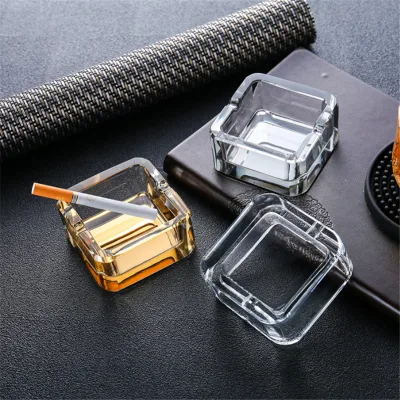
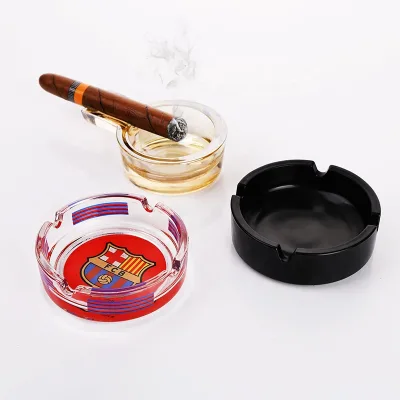
When sourcing an "Og Glass Tube Cigarette Ashtray," buyers must first distinguish between the specific product form factor and the broader category of glass smoking accessories. The term "Og" in this context often refers to a specific design lineage or style of glass tubing, characterized by its cylindrical or tubular geometry, which is frequently adapted into ashtray designs or used as a component within larger smoking apparatuses. The primary material observed in the current market supply is glass, a choice driven by its non-porous nature, ease of cleaning, and aesthetic transparency. The product attributes indicate that these items are specifically targeted at the owners of hookah shops, headshops, and smokeshops, suggesting a B2B focus on retail inventory rather than general consumer goods.
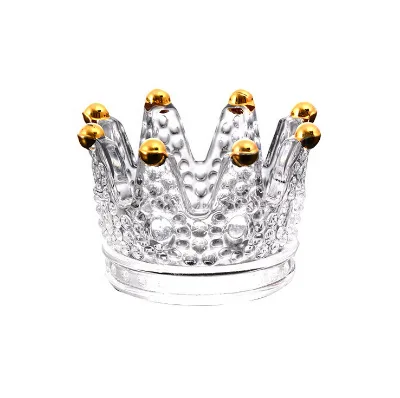
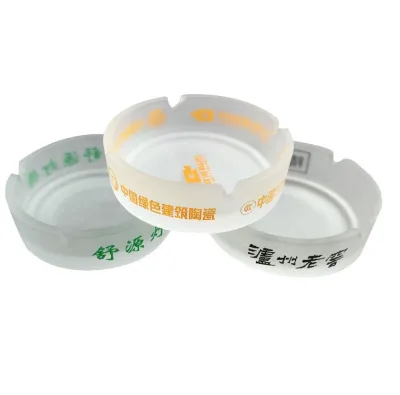
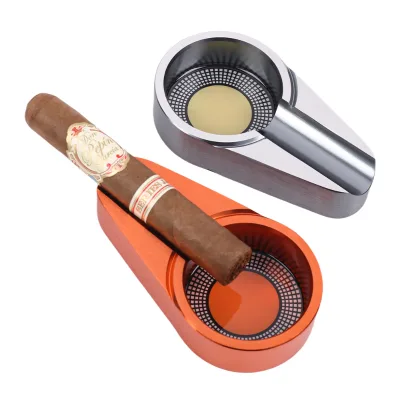
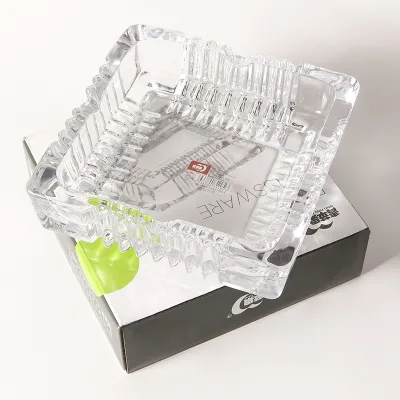
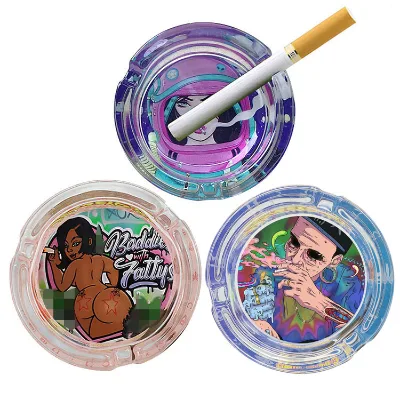
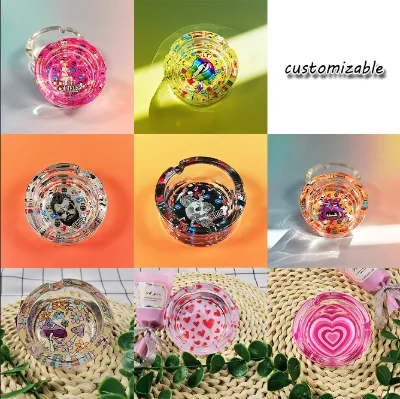
The design landscape for these products is diverse. Observations show that while some units feature a "Classic" design style, others adopt a "Cartoon" shape or a "Round" form factor. The color palette is equally varied, with listings indicating "Colorful" options, "All colors available," and specific mentions of "Other" colors or "Like The Picture for Five Colors." This variability implies that buyers should not assume a uniform aesthetic across all suppliers. Instead, the procurement strategy must account for a wide range of visual specifications, from simple, functional glass tubes to more elaborate, stylized ashtrays that may include features like "Cover" styles for condiments containers or specific "Smokeless" claims, though the latter requires careful verification of the underlying mechanism.
Technical Specifications and Dimensional Standards
Technical precision is paramount when ordering glass ashtrays, as dimensions directly impact the product's utility and compatibility with existing inventory. The supplied data reveals a fragmented but specific set of dimensional standards. For instance, one model (092512) is listed with a standard size of 4273mm, while another (092513) measures 3566mm. A third variant (092510) presents dimensions of 39*88mm. These variations highlight that "Og glass tube" is not a single standardized unit but a category containing multiple sub-models with distinct footprints and heights.
Furthermore, specific model numbers such as 092514 indicate a significantly larger footprint, with a standard of 909020mm, suggesting a flat, wide ashtray design rather than a deep tube. Other specifications mention a diameter of 85mm or 95mm for "Crystal Ashtray" models, and a specific size of 10.8 x 3.5cm for other variants. Buyers must treat these numerical values as observations of specific SKUs rather than universal standards for the entire category. The weight of these items is also a critical logistical factor, with observed ranges spanning from 2g to 100g per unit. This wide variance in weight affects shipping costs and packaging requirements, necessitating that buyers request the exact weight of the specific model they intend to order before finalizing logistics contracts.
Cost Drivers and Minimum Order Quantity Structures
The economics of sourcing glass ashtrays are influenced by several variables, including customization, material volume, and order volume. The observed price range in the market spans from $0.10 to $20.00 USD. This broad spectrum reflects the difference between simple, mass-produced glass tubes and more complex, custom-designed units with specialized features like cartoon shapes or crystal finishes. The lower end of the price range likely corresponds to basic, unbranded items with standard dimensions, while the higher end may include premium designs, custom branding, or specialized packaging.
Minimum Order Quantity (MOQ) is another significant cost driver. The data indicates a wide MOQ range from 1 to 1000 units. Specific listings show an MOQ of 50 pieces for standard items and 72 pieces for others. However, for customized orders, the MOQ can jump significantly to 1000 pieces per six patterns. This structure suggests that buyers seeking unique designs or specific branding must be prepared for higher volume commitments. The "Customization" attribute is marked as available, and OEM/ODM services are acceptable, which allows for branding but inherently increases the entry threshold. Buyers should verify if the supplier offers a tiered pricing model where the unit cost decreases as the order volume approaches the higher MOQ thresholds, as this is a common practice in glass manufacturing.
Compliance, Certification, and Supplier Verification
In the B2B procurement of glass products, compliance and supplier reliability are critical risk mitigation factors. While the supplied context mentions "ISO 27001" as a low-confidence background fact, buyers should not assume this certification applies to the specific glass ashtray models without direct verification. ISO 27001 relates to information security management and is generally not a product-specific standard for glassware. Instead, buyers should focus on verifying product safety standards relevant to glass, such as thermal shock resistance and lead content limits, particularly if the ashtrays are intended for food-adjacent or high-heat environments.
The origin of the products is consistently listed as China, with specific mentions of Jiangxi as a place of origin and Ningbo or Shanghai as ports of dispatch. This geographic concentration suggests a mature supply chain in the region, but it also means that buyers must conduct rigorous due diligence on the specific factory's capabilities. The "Supply Ability" is noted as 5000 pieces per day, which indicates a high-volume production capacity. However, buyers must confirm if this capacity is dedicated to their specific order or if it is a general aggregate figure. Verification of the supplier's ability to meet quality standards, such as the "4273mm" or "3566mm" specifications without deviation, is essential. Buyers should request third-party test reports or quality assurance documentation that specifically addresses the dimensional accuracy and material integrity of the glass used.
Typical Applications and Commercial Use Cases
The intended use cases for "Og glass tube cigarette ashtrays" are clearly defined by the target audience and product features. The primary commercial buyers include restaurants, specialty stores, art rooms, and owners of hookah or headshops. The product is marketed as a "Sustainable" option, which may appeal to eco-conscious retailers, though the specific sustainability claims (e.g., recycled glass content) require confirmation. The "Smokeless" feature mentioned in some listings suggests a design that may contain ash or reduce smoke dispersion, a valuable feature for indoor venues like bars or lounges.
The occasion-based marketing further clarifies the application scope. These ashtrays are positioned for "Business Gifts, Travel, Party, and Wedding" events. This versatility allows them to serve dual purposes: functional utility in commercial settings and aesthetic appeal in gift-giving scenarios. The "Selling Units" are listed as "Single item," indicating that they are often sold individually or in small sets, but the "Carton Qty" of 50PCS/CTN suggests that bulk shipping is the standard logistics model. The "Paper Box" or "OPP Bag" packaging options provide flexibility for retailers who need to choose between protective packaging for shipping and branded packaging for retail display.
Supplier Evaluation and Quality Control Protocols
Evaluating a supplier for glass ashtrays requires a multi-faceted approach focusing on their customization capabilities, packaging standards, and logistical reliability. The acceptance of OEM/ODM services is a strong indicator of a supplier's flexibility, but buyers must ensure that the supplier has the technical expertise to maintain the "Classic" or "Cartoon" design styles without compromising structural integrity. The "Color" attribute, which includes "All colors available," implies a robust dyeing or coating process, but buyers should verify the colorfastness and consistency of these finishes.
Quality control should begin with the sampling phase. Given the wide range of models (092510, 092512, 092513, etc.), buyers should request samples of each specific model to verify the dimensions against the stated standards (e.g., 4273mm vs. 3566mm). The weight variance (2~100g) also necessitates a check to ensure the glass thickness is consistent with the product's intended durability. The "Carton Weight" of 20kg for 50 pieces provides a baseline for logistics planning, but buyers should confirm if this weight includes the packaging material or just the product. Furthermore, the shipping methods (DHL, UPS, FedEx) are standard, but buyers must assess the supplier's experience with fragile goods to ensure that the "OPP Bag" or "Paper Box" packaging is sufficient to prevent breakage during transit.
Long-Term Procurement Considerations and Supply Chain Resilience
For long-term procurement, buyers must consider the scalability and consistency of the supply chain. The "Supply Ability" of 5000 pieces per day is a significant asset, but it must be balanced against the potential for lead time fluctuations. While specific lead times are not provided in the data, the high volume capacity suggests that suppliers can handle large orders, provided they have adequate raw material stock. The "MOQ Custom" of 1000 pieces per six patterns indicates that customization is a long-term commitment, and buyers should plan their inventory cycles accordingly to avoid overstocking unique designs.
Sustainability is another long-term consideration. The "Sustainable" feature is a key selling point, but buyers should inquire about the specific sustainability practices of the manufacturer, such as energy efficiency in the glass melting process or the use of recycled materials. This information can be crucial for retailers who market their products as eco-friendly. Additionally, the "Brand Name" options, ranging from "Jinlin" to "OEM," allow buyers to build their own brand identity. However, maintaining brand consistency requires strict quality control over the entire production run. Buyers should establish a clear communication channel with the supplier to ensure that any changes in design or material are communicated well in advance, preventing disruptions in the supply chain.
Summary of Key Procurement Parameters
To facilitate a streamlined procurement process, the following table summarizes the critical parameters observed in the market for "Og glass tube cigarette ashtrays." This summary serves as a checklist for buyers to verify against supplier proposals.
| Parameter | Observed Range / Options | Verification Requirement |
|---|---|---|
| Material | Glass | Confirm glass type (e.g., borosilicate, soda-lime) and thickness. |
| Dimensions | 3566mm to 9090*20mm | Request CAD drawings or physical samples for exact model. |
| Weight | 2g to 100g per unit | Verify weight per unit for accurate shipping cost calculation. |
| MOQ | 1 to 1000 pcs | Confirm MOQ for custom vs. standard orders. |
| Price Range | $0.10 - $20.00 USD | Request detailed quote based on volume and customization. |
| Packaging | OPP Bag, Paper Box | Specify carton quantity (e.g., 50PCS/CTN) and carton weight. |
| Origin | China (Jiangxi) | Verify port of dispatch (Ningbo or Shanghai). |
| Customization | Available (OEM/ODM) | Confirm design capabilities and color matching accuracy. |
| Target Audience | Hookah/Headshop Owners | Ensure product aligns with retail end-user expectations. |
By adhering to these guidelines and verifying the specific data points against supplier claims, buyers can navigate the complex landscape of glass ashtray sourcing with confidence, ensuring they secure high-quality products that meet their commercial and operational needs.
FAQs
What customization options are available for og glass tube cigarette ashtrays?
Customization is available for these glass ashtrays, allowing buyers to request specific designs or branding. OEM and ODM services are acceptable, enabling tailored solutions for hookah shops and headshops. However, customized orders typically require a higher minimum order quantity of 1000 pieces per six patterns.
Which dimensions are standard for Og Glass Tube Cigarette Ashtray models?
Standard dimensions vary by model, with options like 42*73mm, 35*66mm, and 39*88mm. Some larger variants measure 90*90*20mm, while crystal models offer diameters of 85mm or 95mm. Buyers must verify the exact size for their specific model number before ordering to ensure compatibility.
Can buyers source these ashtrays with a low minimum order quantity?
Yes, standard items can be sourced with a minimum order quantity as low as 50 pieces or 72 pieces depending on the supplier. However, fully customized orders with specific patterns require a minimum of 1000 pieces. The general market range for MOQ spans from 1 to 1000 units.
How are og glass tube cigarette ashtrays typically packaged for shipping?
These products are commonly packaged in OPP bags or paper boxes for individual protection. Bulk shipments usually contain 50 pieces per carton, with a total carton weight of approximately 20kg. This packaging ensures safety during transit via DHL, UPS, or FedEx.
What is the production capacity for Og Glass Tube Cigarette Ashtray suppliers?
Suppliers demonstrate a supply ability of 5000 pieces per day, indicating high-volume manufacturing capacity. This capacity supports large orders but requires verification of lead times and raw material availability. The origin is consistently China, specifically from regions like Jiangxi.
Which target markets are suitable for og glass tube cigarette ashtrays?
These ashtrays are designed for owners of hookah shops, headshops, and smokeshops, as well as restaurants and specialty stores. They are also marketed for business gifts, travel, parties, and weddings. The product features include smokeless designs and sustainable attributes.