Source Sharp Stainless Steel Cigar Cutter for Bars, Hotels, and Clubs
Compare 30 listings for a Sharp Stainless Steel Cigar Cutter from verified Chinese suppliers. Buyers can evaluate materials, customization options, and pricing to find the right tool for bars, hotels, and private clubs; compare the available evidence and request quotations based on your requirements.
Key considerations
Products List
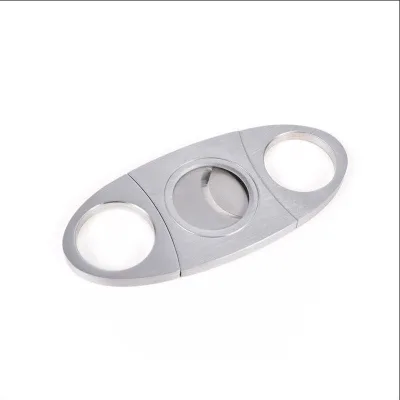
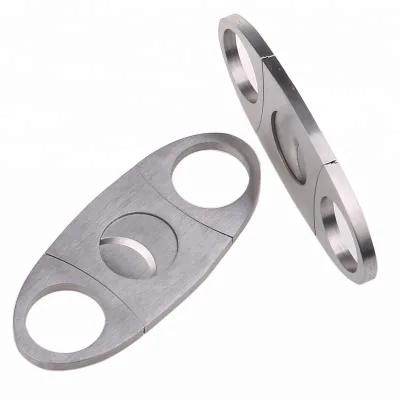


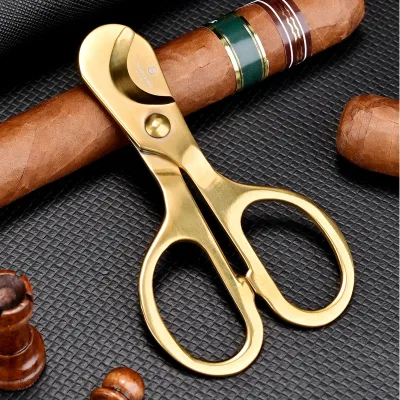
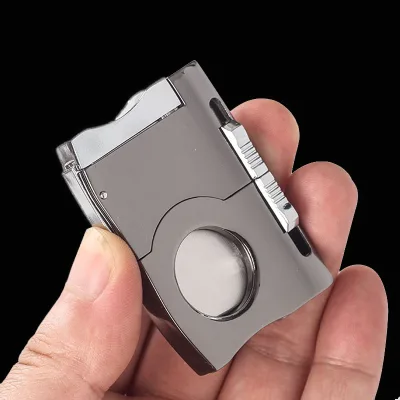
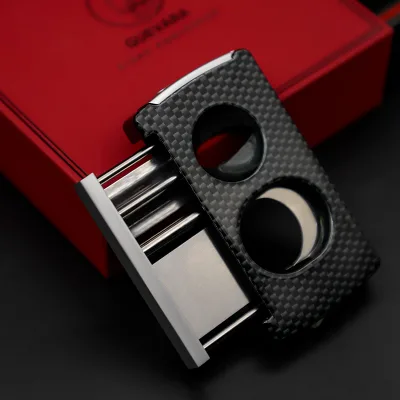
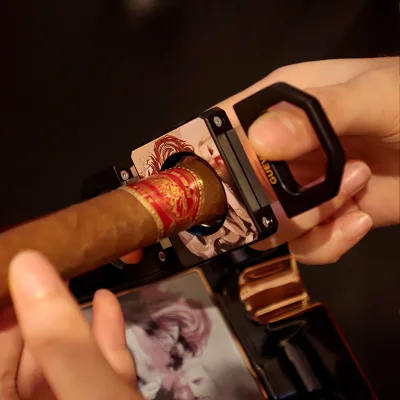

Cigar Cutter with Cigar Punch Stainless Steel Blade Cigar Guillotine for Cigars
$7.50 - $7.80
MOQ: 100 Pieces


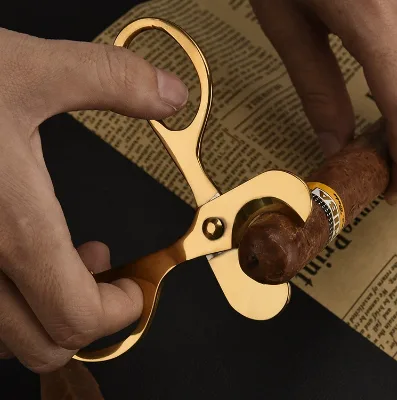
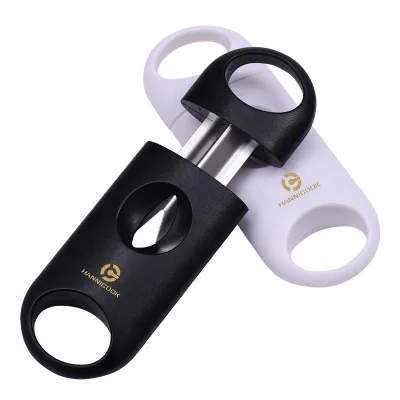
Comprehensive Sourcing Guide
Sharp Stainless Steel Cigar Cutter Sourcing Guide
A Sharp Stainless Steel Cigar Cutter is a compact accessory whose performance depends almost entirely on blade geometry and edge retention, which makes pre-shipment verification more important than for many other gift-category items. Buyers sourcing this product from Chinese suppliers typically encounter listings built around stainless steel construction, classic styling, and portable features, with model codes such as CC-01, DS-CC, and CC-012 appearing in observed product pages. Because cutting quality cannot be judged from photographs alone, procurement teams should structure the sourcing process around physical samples, defined specification sheets, and clear packaging agreements before committing to production volumes.
This guide walks through the full procurement cycle for a Sharp Stainless Steel Cigar Cutter: interpreting listing signals, verifying technical details, confirming documentation, understanding cost structure, qualifying suppliers, and planning long-term supply. Observed product pages describe customization as available, with sample times quoted between 3–7 days and 7–10 days depending on the supplier, and production times of 15–20 days. MOQs in observed listings range from 48 to 500 pieces, so even smaller buyers can enter the category at modest commitment levels while retaining room to scale.
Product Scope and Observed Listing Signals
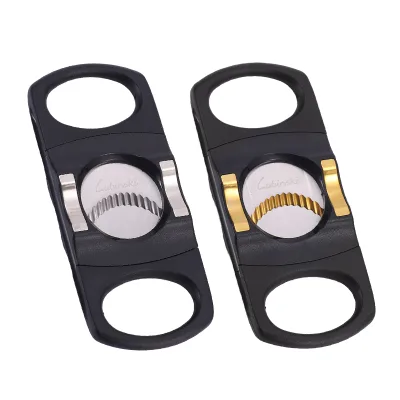
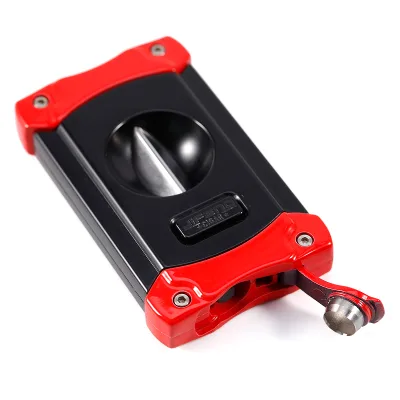
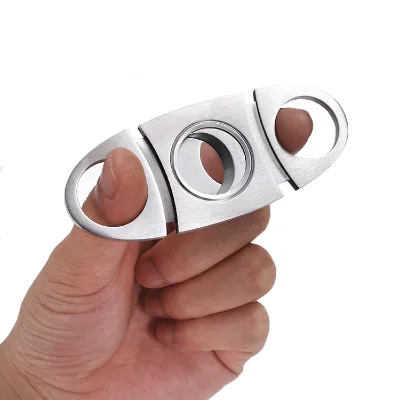
Observed listings for the Sharp Stainless Steel Cigar Cutter cluster around a consistent product profile: stainless steel or metal construction, classic style, portable feature set, and silver color, with application stated specifically for cigars. Some observed pages extend into adjacent accessory categories, including whiskey stones, lighters, and lighter buckles, which tells buyers something useful: many suppliers in this space are accessory generalists rather than dedicated cigar-product factories. That breadth can be an advantage for consolidated orders, but it also means cutting-edge expertise varies and should be tested through samples rather than assumed from product photography.
Listing details also reveal how suppliers package commercial terms. Observed MOQs of 48, 50, and 500 pieces define the entry thresholds, while quoted prices in the range of roughly $0.38 to $40 suggest wide variation in blade construction, finish, and packaging. Packing configurations observed include each piece in an OPP bag, velvet box options, plastic boxes, and gift boxes, with some listings stating 48PCS/Box and 24boxes/Carton. Buyers should treat these as observations of individual listings, not guarantees, and confirm which combination of price, MOQ, and packaging applies to their own specification.
Technical Specifications to Verify
Start the specification sheet with the blade itself. A Sharp Stainless Steel Cigar Cutter performs only as well as its edge, so request the stainless steel grade, blade thickness, and cutting-hole diameter from the supplier, and confirm whether blades are ground and honed on both faces. Observed listings cite product standards such as 50g weight and 50x50 dimensions for some models, and one lists a 272727mm gauge, but these apply to specific products, not the category broadly. Ask each supplier to state exact dimensions, tolerance, and weight for the model you intend to order, using model codes like CC-01 or DS-CC as the reference.
Next, verify finish and assembly details that affect durability and feel. Confirm plating or polishing treatment, spring or lever mechanism strength, whether parts are riveted or screwed, and how the cutter behaves after repeated cuts. Observed process descriptions mention molding, die casting, cutting, polishing, and plating, which gives buyers a vocabulary for discussing manufacturing steps. Request a dimensional drawing or physical sample matched to the agreed specification, and check the single package size listed on the page you source from, since observed listings show very different package dimensions (for example, 10X3X1 cm versus 30X35X32.5 cm) that materially affect shipping calculations.
Compliance and Safety Documentation
Because a Sharp Stainless Steel Cigar Cutter contacts nothing ingestible but does involve a exposed blade, documentation requirements center on material declarations and safe-handling design rather than food-contact certification for the cutter itself. However, buyers should still request a material composition declaration for the stainless steel and any plastic components, since some observed listings cite FDA and LFGB certification and others list plastic as a material in the same product family. Knowing which parts are metal and which are polymer lets you specify what must be documented versus what is purely structural.
For retail distribution in regulated markets, confirm what labeling the supplier can provide: country-of-origin marking (observed origins are China and Guangdong, China), any warnings required for bladed accessories in your destination market, and barcode or compliance label placement on the OPP bag, velvet box, or gift box you select. Request test reports or declarations from third-party laboratories if your retail channel requires them, and verify the report references the exact model and material you are buying. Do not accept generic certificate copies without checking that the product name, model number, and material match your purchase order.
Cost Drivers and Commercial Terms
Price variation in the observed range — from under a dollar to $40 — is driven mostly by construction and packaging. A basic stainless steel cutter in an OPP bag sits at the low end, while velvet boxes, gift boxes, and laser or painted logos push unit cost upward. Observed logo options include laser, spray, decal, and painted finishes, and customization is listed as available, so branding requests should be quoted separately from the base unit. Confirm whether the quoted price includes packaging choice, logo application, and export carton, or whether each is a line item.
Commercial terms to nail down in writing include MOQ, sample cost and refundability, production lead time against the observed 15–20 day production window, and shipping method. Observed listings mention shipping by sea, air, and train, so freight terms (EXW, FOB, or DDP) should be agreed before deposit. Payment structure is likewise negotiable, and buyers should record deposit percentage and balance terms in the contract. Because single gross weights observed range from 0.060 kg to 1.000 kg per unit across listings, obtain the accurate per-unit weight and carton count from your chosen supplier to calculate landed cost correctly.
Supplier Qualification and Quality Control
Qualify suppliers by testing how they handle specification questions, not just how their listings look. A reliable factory for a Sharp Stainless Steel Cigar Cutter should answer material-grade questions, provide dimensioned drawings, and supply free or low-cost samples — several observed listings state a free sample is provided with sample times of 3–7 days or 7–10 days. Order samples from two or three candidates and cut-test them identically: check whether the edge slices cleanly without tearing the wrapper, whether the mechanism reopens smoothly, and whether any flash or rough edges remain on the metal.
Before mass production, agree on an inspection standard in writing. Define AQL levels for visual defects, edge sharpness, mechanism function, and plating quality, and decide whether you will conduct a third-party pre-shipment inspection or rely on factory QC with photo evidence. Confirm packing counts — observed examples include 48PCS/Box with 24boxes/Carton, or 1PC/Poly Bag with 100PCS/Big Bag — and require carton drop-test or at minimum photo confirmation of inner and outer packing. Keep a golden sample from the approved batch as the reference for all future reorders.
Long-Term Procurement Checks
Treat the first order as a qualification run and build continuity into subsequent ones. Reorder the identical model code (for example, CC-01 or the supplier's X-series internal number), reference the golden sample, and require written confirmation that material, dimensions, finish, and packaging have not changed. Suppliers who also list adjacent products such as whiskey stones or lighter buckles may shift capacity seasonally, so confirm production slots early, especially before peak gifting periods, and re-confirm the 15–20 day production lead time each cycle rather than assuming it carries over.
Finally, manage the relationship for consistency and improvement. Track defect rates from customer returns or QC reports across batches and share findings with the supplier so corrective actions are documented. Revisit pricing annually against material and plating cost movements, and consolidate logo, packaging, and freight arrangements as volumes grow to improve terms. Maintain your own file of drawings, specification sheets, test reports, and approved-sample photos so that switching suppliers — or expanding the range with complementary cigar accessories — can be done from documented baselines rather than from memory.
FAQs
What materials are used in the Sharp Stainless Steel Cigar Cutter?
The cutter is made from stainless steel, with some models using plastic or metal components for handles and accents. Stainless steel provides a durable, corrosion-resistant cutting edge suitable for repeated use. Listings may specify exact material combinations per model, so review each product's specifications before ordering to confirm the material mix that matches your requirements.
What is the minimum order quantity for the cigar cutter?
Minimum order quantities vary by listing, ranging from 2 to 500 pieces, with some listings specifying 48 or 50 pieces per order. MOQ often depends on customization level and packaging choice. Confirm the exact MOQ with the supplier before placing an order, since customized logos or gift-box packaging may require higher minimums than standard stock models.
Can the cigar cutter be customized with a logo?
Yes, customization is available on listed models. Logo options include laser, spray, decal, and painted finishes, with ODM and OEM logo services offered. Sample time is typically 7 to 10 days and production time 15 to 20 days after approval. Discuss artwork requirements with the supplier early so sample production and mass production schedules align with your delivery dates.
How is the cigar cutter packaged for shipping?
Packaging options include an OPP bag per piece, velvet box per piece, poly bag, plastic box, or gift box, with carton box packing for bulk shipments. Some listings note 48 pieces per box and 24 boxes per carton. Each unit has a single gross weight around 0.060 to 1.000 kg depending on the model. Confirm the chosen packing format before production begins.
How long does production and sample preparation take?
Sample time is typically 7 to 10 days, and production time is 15 to 20 days after sample approval and order confirmation. Lead times may shift with order volume, customization complexity, and packaging requirements. Shipping can be arranged by sea, air, or train. Plan your procurement timeline with buffer time to accommodate sample revisions and possible production delays.
What certifications do the listed products have?
Some listings carry FDA and LFGB certification, which relates to food-contact material safety standards. Not every listed product necessarily holds the same certification, so treat certification as a per-listing attribute to verify. When certification matters for your market, request documentation directly from the supplier and confirm it covers the specific model and material you intend to purchase.
Where are these cigar cutters produced and shipped from?
Listings indicate place of origin in China, with some products specifically noted as originating from Guangdong, China. Suppliers typically arrange shipping by sea, air, or train depending on order size and urgency. Note that origin and shipping options are per-listing observations, so verify production location, export experience, and logistics arrangements with each supplier during sourcing discussions.
Which sizes and specifications are available for the cigar cutter?
Observed specifications include model numbers such as CC-01, CC-012, and DS-CC, with package sizes around 10x3x1 cm and 30x35x32.5 cm, and a dimension noted as 27x27x27 mm. Colors include silver, green, red, blue, and black. Specifications vary per listing, so compare model details and request samples to confirm cutting diameter and build quality before bulk ordering.