Source Outdoor Multifunctional Girls Backpack for Sports, Camping, and Travel
Find 30 options for the Outdoor Multifunctional Girls Backpack suitable for sports, camping, and traveling. Buyers can compare features like adjustable straps, capacity, and style across various models from Chinese manufacturers.
Key considerations
Products List


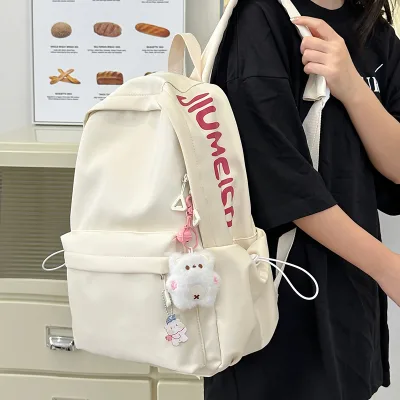
High Quality Large Capacity Three Compartments Cute Daily Backpack for Girls
$8.50 - $9.80
MOQ: 500 Pieces


Large Capacity Durable Lightweight Comfort Breathable Mesh Back Outdoor Backpack for Girl Trip
$10.70 - $11.70
MOQ: 500 Pieces


Trendy Mini Backpack for Kids - Ideal for School and Outdoor Adventures
$5.86 - $6.06
MOQ: 1000 Pieces



Comprehensive Sourcing Guide
Strategic Sourcing Guide for Outdoor Multifunctional Girls Backpacks
Understanding Product Specifications and Material Composition
When sourcing outdoor multifunctional backpacks specifically designed for girls, the primary focus must be on the intersection of durability, capacity, and aesthetic appeal. The market data indicates a diverse range of specifications, with material composition being a foundational element. Polyester is the predominant material observed in current listings, offering a balance of cost-efficiency and resilience suitable for outdoor environments. This material choice is critical for buyers seeking products that can withstand the rigors of camping, traveling, and sports activities while maintaining a soft hardness profile that ensures comfort during extended wear.
Capacity is another variable that requires precise definition based on the intended use case. The observed market data reveals a wide spectrum of volume options, ranging from under 20 liters to super capacity configurations exceeding 35 liters. For a "multifunctional" product targeting students and outdoor enthusiasts, a capacity between 20 and 34 liters often represents the optimal sweet spot, providing sufficient room for gear without becoming cumbersome. However, buyers must verify the specific volume of each supplier's offering, as some models are explicitly categorized as "Medium" or "Super Capacity," which may alter the logistical requirements for shipping and storage.
The construction details further define the product's utility. A plastic zipper is a standard feature noted in the supply chain, serving as the primary closure mechanism. While this is cost-effective, it is essential to distinguish between standard plastic zippers and high-performance alternatives, especially for "High Waterproof" models. The presence of adjustable straps is a non-negotiable feature for a multifunctional design, allowing the backpack to fit various body types and ensuring stability during active use. Furthermore, the inclusion of fashion elements such as contrast colors and stitching bags suggests that the target demographic places a high value on visual design alongside functional performance.
Compliance, Certification, and Standard Verification
In the B2B procurement of backpacks, verifying compliance with industry standards is a critical step that often gets overlooked in favor of price and design. The supplied data points to specific production standards, such as "polyester" as a standard classification and specific dimensional standards like 311848CM or 30x44x18cm. These dimensions are not merely aesthetic choices but indicate the structural footprint of the product, which directly impacts packaging efficiency and shipping costs. Buyers must treat these dimensions as fixed constraints for their logistics planning.
Regarding certifications, the data does not explicitly list third-party safety or environmental certifications. Instead, it references internal production standards like "customized" or specific model numbers such as QJKSS25033 and SB112604. This implies that compliance is often managed through the supplier's internal quality control systems rather than external, universally recognized badges. Consequently, buyers must implement their own verification protocols. It is advisable to request detailed test reports regarding seam strength, zipper durability, and fabric tensile strength, particularly for models claiming "High Waterproof" capabilities. Without explicit certification data in the public listing, the buyer assumes the responsibility of validating that the product meets the safety and quality expectations of their specific market, whether that involves chemical safety for children's products or fire retardancy for sports gear.
The origin of the products is consistently identified as China, specifically with price terms often listed as FOB Xiamen. This geographical concentration offers significant advantages in terms of supply chain consolidation but requires careful vetting of the specific factory's adherence to international labor and environmental standards. Buyers should not assume that all products from this region automatically meet Western safety standards; instead, they must mandate specific compliance documentation as a condition of the purchase order.
Cost Drivers and Pricing Structure Analysis
The pricing landscape for outdoor multifunctional girls backpacks is characterized by a wide range, with observed listed prices falling between 2 and 15 USD. This variance is driven by several key factors, including the complexity of the design, the quality of the polyester fabric, and the level of customization required. Models featuring advanced features like high waterproofing, complex stitching, or unique fashion elements like contrast colors will naturally command prices at the higher end of this spectrum. Conversely, basic models with standard plastic zippers and minimal branding will align with the lower price points.
Minimum Order Quantity (MOQ) is a significant cost driver in this sector. The observed MOQ range spans from 10 to 3000 units, with a specific data point highlighting an MOQ of 500 pieces for certain models. This variability allows for flexibility in procurement strategies. Small order acceptance is noted as a feature, which is beneficial for buyers testing the market or those with limited capital. However, buyers must be aware that lower MOQs often come with a higher unit cost due to the inefficiencies of small-batch production. Conversely, ordering at the higher end of the MOQ spectrum can yield significant economies of scale, reducing the per-unit cost but increasing the initial capital outlay and inventory risk.
Payment terms also influence the total cost of ownership. The standard payment method identified is T/T (Telegraphic Transfer), which is a common practice in international trade. Buyers should negotiate payment schedules that align with production milestones, such as a deposit upon order confirmation and the balance upon completion of production or before shipment. This approach mitigates financial risk and ensures that the supplier has the necessary cash flow to meet the production lead times, which are observed to range from 45 to 60 days for full production runs.
Typical Applications and Usage Scenarios
The versatility of the Outdoor Multifunctional Girls Backpack is evident in its diverse application scenarios. The data explicitly categorizes usage for sports, camping and traveling, and student activities. This triad of applications suggests that the product is designed to transition seamlessly between different environments. For the student demographic, the backpack serves as a functional school bag, often featuring a "Campus" suitability tag. In this context, the capacity and organizational features are paramount, ensuring that books, laptops, and personal items are securely stored and easily accessible.
For outdoor enthusiasts, the backpack's role shifts to that of a camping and travel companion. The "High Waterproof" attribute is particularly relevant here, protecting contents from the elements during hiking or camping trips. The "Multifunctional" and "Adjustable Straps" features are essential for this use case, providing comfort and stability during physical exertion. The "Leisure" and "Trend" style attributes indicate that these backpacks are also suitable for casual outings, where fashion and personal expression are as important as utility.
The "Unisex" and "Girls" gender classifications highlight a unique market positioning. While some models are specifically tailored for girls with distinct color palettes like "Mixed Color" or "Black," the underlying functionality remains robust enough for unisex use. This duality allows buyers to target a broader audience or to create gender-specific product lines within the same supply chain. The "Soft Handle" and "Soft" hardness attributes further enhance the user experience, making the backpack suitable for long-duration wear in various settings, from a school commute to a weekend camping trip.
Supplier Evaluation and Selection Criteria
Selecting the right supplier is a critical determinant of procurement success. The data indicates that many suppliers offer "Small Orders" and "Customization" services, which are valuable assets for buyers looking to differentiate their product offerings. However, the presence of these services does not guarantee quality. Buyers must evaluate suppliers based on their ability to meet specific technical requirements, such as the "311848CM" or "30x44x18cm" standards, and their capacity to maintain consistency across large production runs.
The lead time is a crucial metric for supplier evaluation. With production lead times ranging from 45 to 60 days and sample lead times of 7-10 days, buyers must factor these timelines into their overall supply chain planning. Suppliers who can consistently meet these deadlines are preferable, as delays can disrupt inventory levels and sales cycles. Additionally, the "FOB Xiamen" price term suggests that buyers should be prepared to manage freight and logistics from this specific port, which may influence the selection of freight forwarders and the overall cost structure.
Quality control is another essential criterion. Suppliers should demonstrate a robust quality assurance process, particularly for features like waterproofing and zipper durability. The "Advantage" of "Fashion Design" and "High Quality" noted in the data suggests that some suppliers prioritize these aspects, but buyers must verify these claims through physical samples and third-party inspections. The ability to provide detailed product specifications, including model numbers like QJKSA034-2 or JSB2104, is a sign of a professional supplier who understands the importance of traceability and consistency.
Quality Control Protocols and Long-Term Procurement
Implementing a rigorous quality control protocol is essential for mitigating risks associated with sourcing backpacks from overseas. Given the variability in observed specifications, such as different capacity ranges and waterproofing levels, buyers should establish clear acceptance criteria before production begins. This includes verifying the material composition, ensuring the plastic zippers function smoothly, and confirming that the dimensions match the agreed-upon standards. Regular in-process inspections and pre-shipment inspections are recommended to catch any deviations early in the production cycle.
Long-term procurement considerations involve building a sustainable relationship with suppliers who can scale with the buyer's growth. The "Customization" attribute offers an opportunity for buyers to develop exclusive designs, but this requires a supplier with the technical capability to execute complex modifications without compromising quality. Buyers should also consider the environmental impact of their sourcing decisions, particularly regarding the polyester material used. While the data does not specify recycled content, buyers may wish to explore suppliers who can provide eco-friendly alternatives to meet growing consumer demand for sustainable products.
Finally, the "Polybag+Carton" and "1 PC Flat Into a Polybag" packing standards highlight the importance of packaging efficiency. Proper packaging is crucial for protecting the product during transit and ensuring that it arrives in pristine condition. Buyers should verify that the packaging meets their specific requirements, including branding and labeling needs, to ensure a seamless unboxing experience for the end consumer. By focusing on these technical and logistical details, buyers can secure a reliable supply of high-quality outdoor multifunctional girls backpacks that meet the demands of their target market.
FAQs
What material is used for outdoor multifunctional girls backpacks?
Polyester is the predominant material used for these backpacks, offering a balance of cost-efficiency and resilience. This fabric ensures durability for sports and camping while maintaining a soft profile for comfort during extended wear.
Which capacity options are available for these backpacks?
Capacity ranges from under 20 liters to super capacity configurations exceeding 35 liters. Buyers should verify specific volumes, as options include 20-34 liters, medium sizes, and larger models suitable for travel and student use.
Can suppliers accept small orders for these backpacks?
Yes, small orders are accepted by many suppliers, though Minimum Order Quantities vary from 10 to 3000 units. Some models require a specific MOQ of 500 pieces, while others allow lower quantities for market testing.
How long does production take for these backpacks?
Production lead times typically range from 45 to 60 days for full manufacturing runs. Sample lead times are shorter, usually taking 7 to 10 days to prepare initial prototypes for buyer review.
What is the waterproofing status of these backpacks?
Waterproofing varies by model, with some explicitly marked as not waterproof and others featuring high waterproof levels. Buyers must verify the specific waterproofing claim for each model to ensure suitability for outdoor conditions.
Which customization options are available for these backpacks?
Customization is available for design elements like color, capacity, and specific model numbers. Suppliers can adjust features such as stitching, contrast colors, and dimensions to meet specific buyer requirements.
What are the standard packaging methods for these backpacks?
Standard packaging includes placing one piece flat into a polybag, often combined with a carton for bulk shipping. Specific packing standards ensure protection during transit while maintaining efficiency for logistics planning.