Source Outdoor P5 LED Display Screen for billboards, stadiums, and events
Compare 30 verified listings for Outdoor P5 LED Display Screen featuring IP65 ratings, high brightness options, and aluminum cabinets. Buyers can evaluate pixel pitch, scanning modes, and power consumption to select units for advertising, stadiums, or public events.
Key considerations
Products List


P4.44 P5.33 P6.67 P10 Outdoor Front Service LED Advertising Display Screen
$700.00 - $2660.00
MOQ: 1 Square Meters

High Brightness P5 Outdoor LED Street Light Box Advertising Display Screen
$400.00 - $900.00
MOQ: 1 Square Meters


Outdoor P6 Message Board Advertising Digital Display LED Screen
$410.00 - $589.00
MOQ: 1 Square Meters


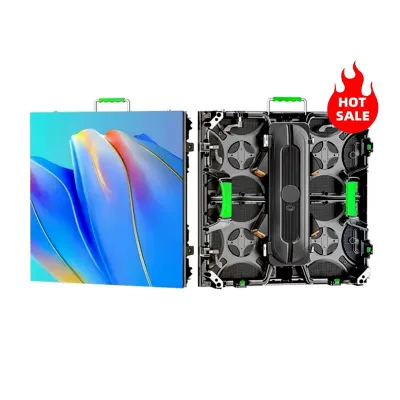


High Brightness Outdoor P2.976 LED Display Screen with IP65 Waterproof
$350.00 - $360.00
MOQ: 10 Pieces


High-Quality P5 LED Display Screens for Indoor and Outdoor Advertising
$769.00 - $1399.00
MOQ: 1 Pieces

Comprehensive Sourcing Guide
Strategic Sourcing Guide for Outdoor P5 LED Display Screens
Procuring an Outdoor P5 LED Display Screen requires a disciplined approach that balances technical precision with supply chain reliability. The "P5" designation refers to a specific pixel pitch, indicating the distance between the centers of adjacent pixels is approximately 5 millimeters. This specification places the product in a category suitable for medium-to-long viewing distances, typically ranging from 4 to 10 meters, making it a versatile choice for various commercial and public applications. Unlike indoor displays, outdoor units must withstand environmental stressors, necessitating rigorous verification of ingress protection ratings and brightness capabilities. This guide outlines the critical factors buyers must evaluate to ensure the selected hardware meets operational requirements without compromising on quality or compliance.
Technical Specifications and Performance Metrics
The core of any LED display procurement lies in the technical specifications that define visual performance and operational efficiency. For outdoor applications, the pixel pitch is a primary determinant of image clarity. A P5 module offers a high pixel density, often cited around 10,000 dots per square meter, which ensures sharp imagery even when viewed from a moderate distance. The brightness of the display is equally critical; outdoor screens must compete with ambient sunlight. High-performance units typically boast brightness levels exceeding 6,500 nits, with some premium configurations reaching over 7,000 nits to maintain visibility under direct sun.
The choice of LED lamp technology significantly impacts color consistency and longevity. Buyers should verify whether the unit utilizes DIP (Dual In-line Package) or SMD (Surface Mount Device) lamps. While DIP technology is robust, modern SMD 3-in-1 configurations often provide superior color mixing and viewing angles. The driver IC is another vital component; constant current drivers are preferred to ensure uniform brightness across the screen and prevent pixel failure. Common driver ICs in the market include brands like MBI, which are known for reliability in high-refresh-rate environments.
Refresh rates are essential for preventing flickering and ensuring smooth video playback, particularly when the display is being recorded by cameras. A refresh rate exceeding 3,840Hz is considered industry standard for high-quality outdoor video, minimizing the risk of scanning lines appearing in video footage. The scanning mode, whether 1/2, 1/4, or 1/8 scan, affects the internal architecture and power consumption. Higher scan modes often correlate with better image stability but may require more sophisticated power supply units (PSU). The PSU itself should be rated for the specific voltage requirements, typically AC 110-240V, and capable of delivering stable current, such as 5V 60A or equivalent MW-rated units, to handle the load of the entire cabinet.
Compliance, Certification, and Environmental Standards
Compliance is non-negotiable in the B2B procurement of electronic displays, especially for outdoor installations that must meet local safety and environmental regulations. Buyers must verify that the product carries recognized certifications such as CCC (China Compulsory Certification), CE (Conformité Européenne), ETL (Intertek), and RoHS (Restriction of Hazardous Substances). These certifications indicate that the product adheres to specific safety, electromagnetic compatibility, and environmental standards. The absence of these marks should trigger a deeper investigation into the manufacturing quality and legal compliance of the supplier.
Environmental durability is defined by the IP (Ingress Protection) rating. For outdoor P5 screens, an IP rating of IP65 is the minimum standard required to protect against dust and low-pressure water jets. Some advanced units may offer IP65 for the front and IP54 for the rear, providing comprehensive protection against the elements. The cabinet material is also a key factor; aluminum or aluminum-steel composite cabinets are preferred for their corrosion resistance and structural integrity. The standard cabinet size often follows a modular approach, such as 960x960mm or 1000x1000mm, which facilitates easier installation and maintenance.
Furthermore, the operating system and software compatibility must be considered. Most professional LED displays run on Windows-based control software, which allows for easy content management and system configuration. The system controller, often branded as "Nova," ensures seamless signal processing and synchronization. Buyers should confirm that the software OS supports the specific control hardware to avoid integration issues during the setup phase.
Cost Drivers and Total Cost of Ownership
Understanding the cost structure of an outdoor P5 LED display is essential for accurate budgeting. The price range for these units can vary significantly, typically observed between $1 and $2,800 per unit depending on the configuration, though this variance often reflects differences in module size, brightness, and included accessories rather than the base unit cost alone. The primary cost drivers include the pixel pitch, the quality of the LED chips (e.g., Epistar vs. generic), and the brightness level. Higher brightness units (>7,000 nits) and those using premium driver ICs will command a higher price point.
Power consumption is a critical long-term cost factor. The average power consumption for these displays can range from 350W to 600W per square meter. While a lower power consumption model might have a lower upfront cost, the operational savings over years of continuous use can be substantial. Buyers should calculate the total cost of ownership (TCO) by factoring in energy costs, maintenance requirements, and the expected lifespan of the LEDs. The weight of the installation is another consideration; units weighing approximately 30kg to 35kg per square meter may require reinforced mounting structures, adding to the overall project cost.
The minimum order quantity (MOQ) also influences the unit economics. While some suppliers offer an MOQ as low as 1 unit for testing or small projects, others may require orders of up to 10 units. Customization options, such as specific cabinet sizes or branding, can also impact the final price. Buyers should negotiate based on the total volume and the complexity of the customization required to optimize the cost per square meter.
Typical Applications and Installation Requirements
Outdoor P5 LED displays are designed for a wide array of applications where high visibility and durability are paramount. The primary use case is advertising, where the screen serves as a dynamic billboard for commercial promotions, public announcements, and event branding. The viewing distance of 4 to 10 meters makes it ideal for city squares, shopping malls, and building facades. The display's ability to render video, text, and images simultaneously allows for versatile content delivery, catering to diverse audience needs.
Installation methods vary based on the site conditions. Common configurations include back bolted hanging, which provides a secure and flush fit against walls or structures. The service solution is another critical aspect; front and rear service capabilities allow technicians to access the internal components for maintenance without dismantling the entire structure. This is particularly important for outdoor installations where access might be limited or hazardous. The packaging of the units, typically in plywood cases, ensures safe transport and protection during shipping, which is crucial for maintaining the integrity of the delicate electronic components.
Supplier Evaluation and Quality Control
Selecting the right supplier is as important as selecting the right product. Buyers should prioritize suppliers who demonstrate transparency in their manufacturing processes and provide clear documentation of their product specifications. The origin of the product, often China for LED displays, should be verified, and the supplier's reputation for reliability and after-sales support should be assessed. A high-quality supplier will offer a comprehensive service solution, including technical support, software updates, and warranty coverage.
Quality control measures should be rigorous. Buyers should request test results for critical parameters such as brightness uniformity, color consistency, and IP rating verification. The use of standardized components, such as specific driver ICs and certified power supplies, is a strong indicator of quality. The scanning mode and refresh rate should be verified against the claimed specifications to ensure the display performs as expected in real-world conditions. Additionally, the pixel configuration, typically 1R, 1G, 1B, should be consistent across all modules to prevent color shifts or dead pixels.
Long-Term Procurement Considerations
Long-term success with an outdoor LED display depends on proactive maintenance and future-proofing. The customization options available, such as specific pixel pitches or cabinet sizes, should be considered in the context of future expansion or content changes. The system's compatibility with new software versions and control hardware is essential to ensure the display remains functional as technology evolves. Buyers should also consider the availability of spare parts, such as power supplies and driver ICs, to minimize downtime in case of failure.
The environmental impact of the display should not be overlooked. Products with RoHS certification ensure that hazardous materials are minimized, aligning with global sustainability goals. The energy efficiency of the display, indicated by its power consumption per square meter, contributes to the overall carbon footprint of the project. By selecting a display with high efficiency and robust build quality, buyers can ensure a longer operational life and reduced maintenance costs over time.
In conclusion, sourcing an Outdoor P5 LED Display Screen requires a comprehensive understanding of technical specifications, compliance standards, and cost drivers. By carefully evaluating these factors and engaging with reputable suppliers, buyers can secure a high-performance display that meets their specific application needs while ensuring long-term reliability and value. The detailed verification of pixel pitch, brightness, IP rating, and certification status is essential to avoid pitfalls and ensure a successful procurement outcome.
FAQs
What certifications do outdoor p5 led display screens typically have?
These screens typically carry CCC, CE, ETL, and RoHS certifications to ensure safety and environmental compliance. Buyers must verify these marks on the product documentation before purchase to confirm adherence to international standards for electronic displays.
How bright are outdoor p5 led display screens for sunlight visibility?
Outdoor units usually offer brightness levels exceeding 6,500 nits, with some premium models reaching over 7,000 nits. This high luminance ensures the display remains clearly visible even under direct sunlight for effective advertising applications.
Which IP rating is required for outdoor p5 led display screens?
An IP65 rating is the minimum standard required to protect against dust and water jets for outdoor use. Some advanced units may provide IP65 for the front and IP54 for the rear to ensure comprehensive environmental durability.
Can I customize the cabinet size for outdoor p5 led display screens?
Customization is available for specific cabinet sizes and branding requirements to fit unique installation needs. Buyers should confirm the exact dimensions, such as 960x960mm or 1000x1000mm, during the procurement process to ensure compatibility.
What is the typical refresh rate for outdoor p5 led display screens?
High-quality units feature a refresh rate exceeding 3,840Hz to prevent flickering and scanning lines in video footage. This specification is critical for smooth playback and ensures the screen performs well when recorded by cameras.
How much does an Outdoor P5 LED Display Screen cost per unit?
The observed price range for these units is between 1 and 2,800 USD depending on the specific configuration. Costs vary based on factors like pixel pitch, brightness levels, and the inclusion of accessories or custom features.
What is the minimum order quantity for outdoor p5 led display screens?
The minimum order quantity ranges from 1 to 10 units, allowing flexibility for small projects or bulk testing. Buyers should negotiate based on the total volume and complexity of customization to optimize the cost per square meter.