Source Outdoor Propane Regulator for Hotels, Households, and Cookers
Find 30 verified Outdoor Propane Regulator options for hotels, households, and gas cookers. Compare brass diaphragm models with CE and CCC certifications, featuring thread connections and customizable packing for reliable gas control; compare the available evidence and request quotations based on your requirements.
Key considerations
Products List


Factory Price Russia Type Mini Type Gas Pressure Regulator Propane Regulator
$16.00 - $21.00
MOQ: 50 Pieces


American Type Propane Gas Pressure Regulator Medium Duty with Zinc Cover
$10.00 - $13.00
MOQ: 100 Pieces


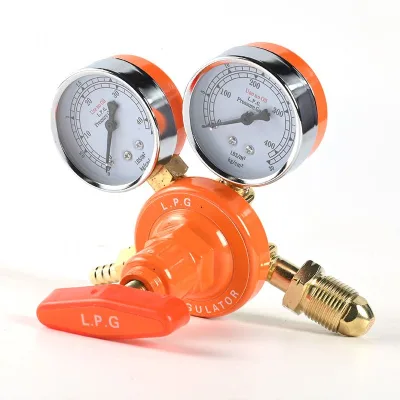


Comprehensive Sourcing Guide
Outdoor Propane Regulator Sourcing Guide
Sourcing outdoor propane regulators requires careful attention to material durability and pressure regulation accuracy, as these components directly impact the safety and efficiency of gas-powered equipment. Buyers must prioritize suppliers who demonstrate professional technical production capabilities, ensuring that each unit meets rigorous engineering standards for outdoor environments. The observed market signals indicate a strong demand from USA and Europe, suggesting that successful suppliers often align their manufacturing processes with Western safety expectations and quality benchmarks.
Procurement teams should evaluate the available customization options, as many listings offer tailored solutions for specific industrial or commercial applications. With product models ranging from NY0082 to HR-0503P, buyers can find specialized variants designed for distinct operational needs, including solenoid-controlled units or standard diaphragm structures. Understanding the specific model requirements early in the sourcing process helps in narrowing down the supplier pool to those who can consistently deliver the precise technical specifications required for your project.
Product Scope and Observed Listing Signals
The current market landscape for outdoor propane regulators features a diverse array of product models, including YMSS019, YMPH034-6, and QA03004, each catering to different installation and usage scenarios. These products are frequently described as having a modern style and rectangular shape, which may influence aesthetic integration into outdoor kitchens or commercial setups. The observed price range of 0.9 to 1000 USD reflects significant variation based on material quality, such as brass construction, and the inclusion of advanced features like solenoid control or specific pressure ratings.
Buyers should note that many suppliers offer flexible packaging options, including pallets, cartons, wooden boxes, and poly bags, which can impact logistics and storage requirements. The minimum order quantities (MOQ) observed range from 1 to 5000 units, providing flexibility for both small-scale procurement and large industrial contracts. Additionally, the availability of customizable services allows buyers to tailor regulators to specific inlet and outlet connection standards, ensuring compatibility with existing gas infrastructure without requiring extensive modification.
Technical Specifications to Verify
When evaluating technical specifications, buyers must verify the material composition, with brass being a common and durable choice for outdoor applications due to its resistance to corrosion. It is crucial to confirm the valve seat structure, such as single-seat designs, and the overall construction type, whether diaphragm or control-based, as these factors influence longevity and response time. The working pressure range, often cited as 0.1-2.5 Bar, must align with the operational requirements of the connected appliances to prevent under-performance or safety hazards.
Inlet and outlet connection standards are critical for ensuring seamless integration with existing gas lines. Common specifications include 7/8"-Lh inlet connections and M16X1.5-Lh outlet connections, though variations like W21.8-14" inlets exist for specialized applications. Buyers should also check the maximum inlet pressure ratings, which can range from 30 Bar to 250 Bar depending on the model, to ensure the regulator can handle the supply pressure without failure. Verifying the port size, such as 1/4 inch, is equally important for maintaining adequate gas flow rates.
Compliance and Safety Documentation
Safety compliance is paramount when sourcing propane regulators, as these devices manage flammable gases under pressure. Buyers should request documentation confirming adherence to relevant safety standards, with CE and CCC certifications being observed in some listings. These certifications indicate that the products have undergone testing for electrical and mechanical safety, although buyers must verify if these certifications apply to the specific model and intended market, particularly for exports to Europe or China.
It is essential to clarify the presence or absence of safety features such as overheating protection and automatic thermostats, as many observed models are listed without these advanced protections. Buyers must assess whether the basic regulatory function is sufficient for their application or if additional safety mechanisms are required. Ensuring that the supplier provides clear technical manuals and safety guidelines is crucial for proper installation and maintenance, reducing the risk of operational errors in outdoor environments.
Cost Drivers and Commercial Terms
Cost variations in propane regulators are driven by material quality, such as the use of brass versus cheaper alloys, and the complexity of the internal mechanism. Models with solenoid controls or specific pressure ratings often command higher prices due to the additional engineering and testing involved. Buyers should analyze the total cost of ownership, including shipping and packaging costs, as options like master cartons or wooden boxes can significantly impact logistics expenses.
Commercial terms, including MOQs and customization fees, play a significant role in the final procurement cost. Suppliers offering low MOQs may charge a premium per unit, while bulk orders can leverage economies of scale. Buyers should negotiate clear terms regarding customization, such as specific connection types or branding, to avoid unexpected charges. Understanding the lead times associated with customized orders is also vital for maintaining supply chain continuity, especially for large-scale projects.
Supplier Qualification and Quality Control
Supplier qualification should focus on their ability to produce consistent quality, as indicated by the observation that products are made by professional technical personnel. Buyers should request evidence of quality control processes, including material testing and pressure testing, to ensure that each regulator meets the specified working pressure and inlet pressure ratings. Suppliers who offer customizable standards should demonstrate their capability to maintain quality across different product variants and specifications.
It is advisable to conduct factory audits or request third-party inspection reports to verify the supplier’s manufacturing capabilities and quality management systems. Buyers should also assess the supplier’s responsiveness to technical queries and their ability to provide detailed product specifications. Establishing a clear communication channel for addressing quality issues or defects is crucial for maintaining long-term supplier relationships and ensuring consistent product performance in outdoor applications.
Long-Term Procurement Checks
Long-term procurement success depends on establishing robust performance monitoring and feedback loops with suppliers. Buyers should track the performance of regulators in the field, noting any issues related to pressure regulation, connection leaks, or material degradation. Regular reviews of supplier performance, including delivery times and product consistency, help identify potential risks and opportunities for improvement in the supply chain.
Maintaining a diversified supplier base can mitigate risks associated with single-source dependencies, especially for customized products with specific technical requirements. Buyers should periodically re-evaluate the market for new models or improved technologies, such as enhanced safety features or more durable materials. Continuous engagement with suppliers to discuss future needs and potential product upgrades ensures that the procurement strategy remains aligned with evolving operational requirements and safety standards.
FAQs
Can outdoor propane regulators be customized for specific applications?
Yes, customization is available for these regulators to meet specific operational needs. The products are produced by professional technical personnel to ensure quality. Buyers can request tailored specifications, including working pressure ranges and connection types, to ensure a perfect match for their intended use in hotels, households, or gas cookers.
What certifications are required for outdoor propane gas regulators?
These regulators typically hold CE and CCC certifications to ensure compliance with safety standards. The products are designed for outdoor use and feature brass construction with diaphragm structures. Buyers should verify that the specific model meets local regulatory requirements for gas appliances, ensuring safe operation for propane media in various environments.
What is the working pressure range for these propane regulators?
The standard working pressure range is 0.1 to 2.5 Bar for many models. Some variants support a maximum inlet pressure of up to 30 Bar or 250 Bar depending on the specific design. These regulators are engineered for ordinary temperature conditions and feature thread connections, ensuring stable gas flow for outdoor and indoor applications.
How are these regulators packaged for international shipping?
Packaging options include pallets, cartons, wooden boxes, and poly bags to suit different shipping requirements. Master cartons are also used for efficient logistics. This flexible packaging ensures the brass regulators remain protected during transit from China to destinations in the USA and Europe, maintaining product integrity until installation at the buyer's facility.
What materials are used in the construction of these regulators?
These regulators are primarily constructed from brass for durability and corrosion resistance. They feature single-seat valve seats and diaphragm structures for reliable control. The components are designed for propane gas media, ensuring long-term performance in outdoor settings. The modern style and rectangular shape also contribute to their aesthetic and functional integration.